


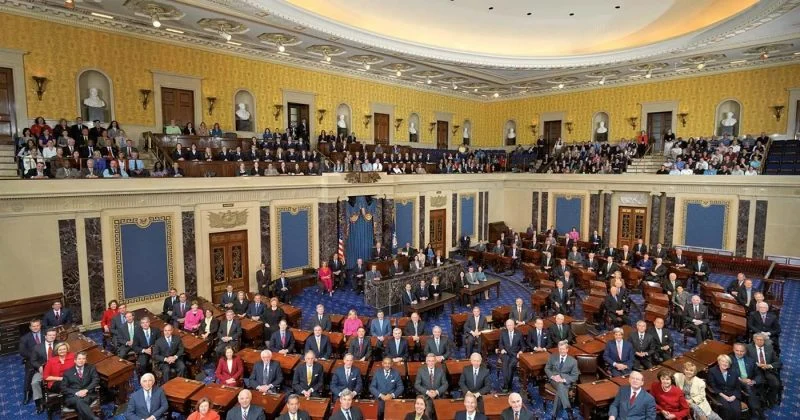
The United States Senate is currently navigating a complex legislative landscape as it weighs the future of the Digital Asset Market Clarity Act, a landmark piece of legislation intended to provide a comprehensive regulatory framework for the burgeoning cryptocurrency industry. While Senate leadership has expressed a desire to initiate the floor process before the upcoming summer recess, the likelihood of meeting the industry-preferred deadline of August 7 is diminishing. The challenges facing the bill are multi-faceted, involving a congested legislative calendar, deep-seated partisan disagreements over specific provisions, and the looming pressure of the November midterm elections.
Senate Majority Leader John Thune addressed the media on Thursday, signaling a cautious intent to move forward with the bill despite the ticking clock. Thune indicated that his primary goal is to at least begin the floor process for the Clarity Act, though he remained non-committal regarding a definitive timeline for a final vote. "I would like to at least get Clarity started," Thune remarked to reporters, adding a caveat that reflects the current uncertainty within the chamber: "We’ll see where the votes are." This statement underscores the delicate balancing act required to secure the 60-vote threshold necessary to overcome potential filibusters and advance the legislation in a narrowly divided Senate.
The Looming Legislative Deadline and Calendar Constraints
The push to pass the Digital Asset Market Clarity Act is framed by the Senate’s scheduled summer state work period, which is set to begin on August 10. Lawmakers are not expected to return to Washington until September 14, leaving a very narrow window for substantive legislative action. Industry advocates and congressional negotiators have long identified August 7 as a "practical deadline." The rationale behind this date is rooted in the political reality of an election year; once lawmakers return in mid-September, their focus is expected to shift almost entirely toward campaigning for the November midterms, leaving little room for complex, high-stakes financial regulation.
As of late Thursday, the bill had yet to enter formal floor consideration. The Senate’s current agenda is dominated by a backlog of other high-priority items, including the processing of various judicial nominations, a contentious Iran war powers resolution, and the massive annual defense authorization bill. These items traditionally command significant floor time, often pushing secondary or emerging policy issues like digital asset regulation to the periphery. By beginning the consideration process now, Thune hopes to preserve a path that allows the Senate to hit the ground running when they reconvene in September, even if a final passage is not achievable before the August break.
Internal Disputes and Policy Friction
The Digital Asset Market Clarity Act represents a significant undertaking, as it seeks to merge disparate proposals from the Senate Banking Committee and the Senate Agriculture Committee. The resulting draft aims to establish a unified set of rules governing digital asset exchanges, intermediaries, and issuers, while also defining the boundaries of federal oversight. However, the path to a consensus is blocked by several "poison pill" issues that have divided lawmakers along party lines.
One of the primary points of contention involves the treatment of stablecoin rewards. Stablecoins, which are digital assets pegged to a stable reserve such as the U.S. dollar, often offer users rewards or interest-like incentives for holding or staking the assets. Some Republican lawmakers have expressed opposition to the current regulatory treatment of these rewards, arguing that overly stringent rules could stifle innovation and drive the stablecoin market offshore. Conversely, many Democrats have raised concerns about consumer protection and the potential for these reward structures to bypass traditional banking regulations.
Another major hurdle is the proposed ethics restrictions on senior government officials and the enforcement mechanisms for those rules. The current draft includes provisions intended to prevent conflicts of interest among regulators who oversee the crypto industry. Democrats have largely objected to the proposal of giving the Department of Justice (DOJ) the primary responsibility for enforcing these ethics rules, preferring instead that oversight remain within the specific regulatory agencies or an independent ethics body. These disagreements have stalled negotiations, with Senator Cynthia Lummis noting that the most contentious provisions remain open to revision as proponents of the bill search for the Democratic support needed to reach the 60-vote mark.
The Regulatory Tug-of-War: SEC vs. CFTC
Central to the Digital Asset Market Clarity Act is the long-awaited clarification of the jurisdictional boundaries between the Securities and Exchange Commission (SEC) and the Commodity Futures Trading Commission (CFTC). For years, the digital asset industry has operated in a state of "regulation by enforcement," with both agencies asserting authority over different aspects of the market.
The Clarity Act seeks to provide a definitive legal framework that classifies digital assets as either securities or commodities based on their decentralization and utility. Generally, the bill leans toward granting the CFTC expanded authority over "digital commodities"—including major assets like Bitcoin and potentially Ethereum—while the SEC would retain oversight of assets that function more like traditional investment contracts.
The House of Representatives already approved its version of a market structure bill in July 2025, which leaned heavily in favor of CFTC jurisdiction. The Senate’s combined draft, released this week, attempts to find a middle ground but has yet to satisfy all stakeholders. The lack of clarity has been a significant pain point for institutional investors, who remain hesitant to enter the space without a clear understanding of which federal agency holds the reins.
A Chronology of Digital Asset Legislation
To understand the current state of the Digital Asset Market Clarity Act, it is essential to look at the timeline of events that brought the bill to the Senate floor:
- July 2025: The House of Representatives passes its version of the crypto market structure bill with bipartisan support, signaling a strong appetite for federal regulation.
- Late 2025 – Early 2026: The Senate Banking and Agriculture committees hold a series of hearings to reconcile the House bill with Senate priorities.
- Spring 2026: Negotiators from both parties work behind closed doors to draft a "consensus" bill that addresses stablecoin risks and agency jurisdiction.
- July 20, 2026: The Senate releases the combined draft of the Digital Asset Market Clarity Act.
- July 23, 2026: Senate Majority Leader John Thune expresses the desire to begin floor consideration but acknowledges the difficulty of passing it before the August 7 deadline.
- August 10, 2026: Scheduled start of the Senate summer state work period.
- September 14, 2026: Scheduled return of the Senate, leaving a final window for action before the midterm elections.
Economic and Market Implications of Regulatory Delay
The stakes for the Clarity Act are high, not just for the cryptocurrency industry, but for the broader U.S. financial system. According to recent market data, the total market capitalization of the digital asset industry continues to hover around the $2 trillion mark, with stablecoins alone accounting for over $160 billion in circulating value. The absence of a clear federal framework has led to a fragmented regulatory environment where individual states, such as New York with its BitLicense, have filled the void.
Industry leaders argue that the continued delay in passing federal legislation puts the United States at a competitive disadvantage. Jurisdictions like the European Union, through its Markets in Crypto-Assets (MiCA) regulation, and the United Kingdom have already established comprehensive rules, attracting firms that seek regulatory certainty. If the Senate misses the August window, the resulting uncertainty could lead to a further "brain drain" of blockchain talent and capital from the U.S. to more welcoming international hubs.
Furthermore, the failure to address stablecoin regulation leaves a potential systemic risk unaddressed. Without federal standards for reserves and audits, the stability of these assets remains a point of concern for the Federal Reserve and the Treasury Department. Proponents of the Clarity Act argue that bringing stablecoins into the federal regulatory fold is a matter of national economic security.
Official Responses and Stakeholder Reactions
The reaction to the potential delay has been mixed. Senator Cynthia Lummis, a long-time advocate for the industry, remains optimistic that a compromise can be reached. "We are closer than we have ever been," Lummis stated earlier this week. "The issues remaining are difficult, but they are not insurmountable. We are listening to our colleagues on both sides of the aisle to ensure this bill can pass with a strong majority."
On the other hand, consumer advocacy groups have urged the Senate not to rush the process. Organizations such as Americans for Financial Reform have expressed concern that the current draft may be too "industry-friendly," potentially weakening the SEC’s ability to protect retail investors from fraud and market manipulation. These groups have lobbied for stronger enforcement provisions and more robust transparency requirements for digital asset exchanges.
From the executive branch, the administration of President Donald Trump has signaled a general support for regulatory frameworks that encourage domestic innovation, though it has remained relatively quiet on the specific nuances of the Clarity Act’s stablecoin and ethics provisions. The Treasury Department has previously emphasized the need for "same risk, same regulation" when comparing digital assets to traditional financial instruments.
The Path Forward: September and Beyond
If the Senate fails to pass the Digital Asset Market Clarity Act by August 7, the path forward becomes significantly more arduous. Even if the bill is approved by the Senate in September, any amendments made to the House-passed version would require a "ping-pong" process where the House must re-approve the changes or the two chambers must form a conference committee to resolve differences.
This process takes time—a commodity that will be in short supply as the November midterm elections approach. Historically, major non-emergency legislation rarely passes in the weeks immediately preceding a national election. If the bill does not reach President Trump’s desk by the end of the current legislative session, the entire process may have to start from scratch in the new Congress, potentially delaying federal crypto regulation by another year or more.
The coming days will be critical. The focus will be on whether Leader Thune can clear enough of the Senate’s calendar to allow for a meaningful debate on the Clarity Act. While the August 7 deadline looks increasingly unlikely, the mere act of starting the floor process would signal to the markets and the international community that the United States is serious about codifying the future of digital finance. For now, the crypto industry and its observers remain in a state of watchful waiting, hoping that legislative clarity is not deferred yet again.














