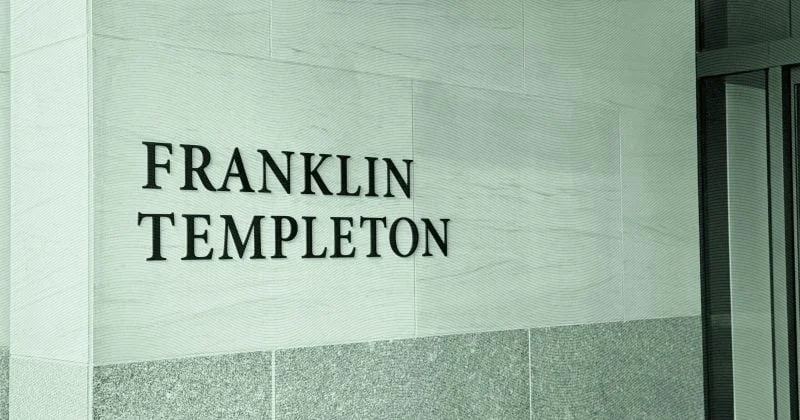
Franklin Templeton, a global investment management giant with over $1.5 trillion in assets under management, is poised to redefine the boundaries between traditional finance and blockchain technology. In a significant regulatory milestone, the firm has received a "no-action" letter from the U.S. Securities and Exchange Commission (SEC) staff, effectively clearing the path for its conventional investment funds to utilize tokenized assets for cash management and collateral purposes. This development marks a pivotal shift in how institutional liquidity is managed, signaling the beginning of a new era where blockchain-based vehicles are integrated directly into the plumbing of mutual funds and exchange-traded funds (ETFs).
The SEC No-Action Relief and Its Immediate Implications
The SEC’s Division of Investment Management issued the no-action letter on August 12, 2024, stating that it would not recommend enforcement action against Franklin Templeton funds that utilize Franklin Templeton Investor Services as a custodian for investments in the Franklin OnChain U.S. Government Money Fund (FOBXX). This relief is contingent upon a series of strict operational conditions designed to ensure investor protection and regulatory compliance.
While the SEC was careful to emphasize that the letter reflects a staff position and does not constitute formal Commission approval or a binding legal conclusion, the practical implications are profound. It provides a "safe harbor" for Franklin’s traditional fund managers to allocate cash balances and securities lending collateral into the firm’s proprietary tokenized money market fund. This integration allows the firm to leverage the efficiencies of distributed ledger technology (DLT) without exiting the regulated framework of the Investment Company Act of 1940.
The decision grants Franklin Templeton the flexibility to use the OnChain Fund as a primary vehicle for internal liquidity. By doing so, the firm can move toward a more "precise" management of cash, ensuring that idle capital is put to work more efficiently than traditional sweep accounts or standard money market instruments might allow.
Technological Architecture: The BENJI Token and Dual Recordkeeping
At the heart of this initiative is the Franklin OnChain U.S. Government Money Fund, which was the first U.S.-registered mutual fund to use a public blockchain to process transactions and record share ownership. The fund utilizes the "BENJI" token to represent shares, primarily operating on the Stellar blockchain, though the firm has also expanded its capabilities to the Polygon and Arbitrum networks.
The fund’s operational model is a hybrid system that bridges the gap between decentralized technology and centralized oversight. It employs an integrated recordkeeping system where the blockchain network records transactions and provides a layer of transparency regarding shareholder activity. However, to satisfy regulatory requirements, Franklin Templeton Investor Services maintains the official, legally binding record of ownership. This dual-layer approach ensures that while the fund benefits from the speed and automation of a blockchain, it remains fully compliant with federal securities laws regarding transfer agency and custody.
The use of the Stellar network is particularly noteworthy. Stellar was designed specifically for asset issuance and cross-border payments, offering high throughput and low transaction costs. By utilizing this infrastructure, Franklin Templeton can process share issuances and redemptions with a level of granularity that is difficult to achieve in the legacy financial system.
Operational Advantages: Liquidity, Yield, and Efficiency
The primary driver behind Franklin Templeton’s push into tokenization is the pursuit of operational excellence. Sandy Kaul, Franklin Templeton’s Head of Digital Assets and Innovation, has noted that the firm seeks to manage cash more precisely and capture higher yields for its investors. Traditional cash management often involves significant "friction"—delays in settlement, limited trading windows, and the need to maintain large, non-earning liquidity buffers to meet potential redemptions.
The OnChain Fund addresses these issues through several key features:
- Hourly Net Asset Value (NAV) Calculations: Unlike traditional money market funds that may only calculate NAV once or twice a day, the tokenized structure allows for more frequent valuations.
- Intraday Trading: The ability to trade shares throughout the day, rather than at a single closing price, provides fund managers with greater agility.
- Faster Settlement: Blockchain technology enables near-instantaneous settlement, moving closer to a T+0 environment compared to the standard T+1 or T+2 cycles prevalent in traditional markets.
- Lower Operational Costs: By automating many of the administrative tasks associated with recordkeeping and transfer agency, the firm anticipates a reduction in the total expense ratio of the fund over the long term.
According to the SEC letter, Franklin Templeton believes these capabilities provide tangible operational benefits over existing cash management vehicles. By reducing the "liquidity drag" on a portfolio, fund managers can keep a higher percentage of assets invested in their primary strategies, potentially enhancing overall returns for shareholders.
Chronology of Franklin Templeton’s Blockchain Evolution
Franklin Templeton’s journey into the digital asset space has been a multi-year strategic undertaking. The firm has consistently positioned itself as a "first mover" among traditional asset managers in the realm of tokenization.
- September 2019: Franklin Templeton filed a preliminary prospectus with the SEC for a government money market fund that would use blockchain technology for its official system of record.
- April 2021: The Franklin OnChain U.S. Government Money Fund (FOBXX) officially launched, marking a milestone as the first 1940 Act-registered fund to utilize a public blockchain.
- 2022–2023: The firm expanded the fund’s reach, integrating with additional blockchain networks including Polygon to broaden the accessibility of the BENJI token.
- April 2024: Franklin Templeton reported that its broader BENJI suite of tokenized products had reached $1.98 billion in assets under management (AUM), demonstrating significant institutional and retail appetite for the product.
- August 2024: The SEC Division of Investment Management issued the no-action relief, paving the way for the internal integration of tokenized assets within the firm’s massive portfolio of traditional funds.
Market Context: The Rise of Real-World Asset (RWA) Tokenization
Franklin Templeton does not operate in a vacuum. The broader financial industry is currently experiencing a "tokenization gold rush," as firms race to bring Real-World Assets (RWAs) onto the blockchain. According to data from various industry trackers, the market for tokenized U.S. Treasuries alone has surpassed $1.5 billion, driven by the high-interest-rate environment and the demand for safe, yield-bearing assets that can be held in digital wallets.
BlackRock, the world’s largest asset manager, launched its own tokenized fund, the BlackRock USD Institutional Digital Liquidity Fund (BUIDL), on the Ethereum network earlier in 2024. BUIDL quickly gained traction, amassing hundreds of millions of dollars in AUM within weeks. Other players, such as WisdomTree and Ondo Finance, have also launched competing products.
What distinguishes Franklin Templeton’s latest move is the focus on internal integration. While other firms are primarily marketing tokenized funds to external crypto-native investors or DAOs (Decentralized Autonomous Organizations), Franklin Templeton is looking inward. By using its tokenized fund as a building block for its own ETFs and mutual funds, it is essentially "dogfooding" its own technology to improve the performance of its core business.
Regulatory Analysis and Future Implications
The SEC’s no-action letter is a carefully calibrated document. It allows Franklin Templeton to move forward while maintaining a tight grip on the parameters of the experiment. One of the key conditions is the role of Franklin Templeton Investor Services as the custodian. This ensures that a regulated entity, subject to SEC oversight, remains responsible for the safekeeping of the assets, even if the "representation" of those assets exists on a public blockchain.
This development could serve as a blueprint for other asset managers. If Franklin Templeton can demonstrate that tokenized cash management leads to better fund performance and lower costs without compromising security, other firms will likely seek similar relief. This could lead to a systemic shift where the "plumbing" of the global mutual fund industry—currently worth over $60 trillion—is gradually migrated to blockchain-based systems.
Furthermore, Franklin Templeton has indicated plans to develop additional tokenized products. These could eventually include tokenized corporate bonds, municipal debt, or even private equity interests, all of which could serve as collateral or cash equivalents across its fund lineup. The firm could begin implementing this structure inside its conventional portfolios as early as the fourth quarter of 2024, pending approval from individual fund boards.
Conclusion: Bridging Two Worlds
The integration of the Franklin OnChain U.S. Government Money Fund into traditional portfolios represents a significant step toward the convergence of decentralized finance (DeFi) and traditional finance (TradFi). It moves the conversation beyond the speculative trading of cryptocurrencies and into the realm of structural financial innovation.
By utilizing the Stellar blockchain to facilitate more efficient cash management, Franklin Templeton is proving that tokenization is not just a buzzword, but a functional tool for institutional asset management. As the firm moves into the implementation phase in late 2024, the financial industry will be watching closely to see if the promised efficiencies of hourly NAVs and intraday liquidity translate into a competitive advantage in the crowded world of mutual funds and ETFs. For now, the SEC’s "no-action" stance provides the green light for one of the most ambitious experiments in the history of modern fund administration.