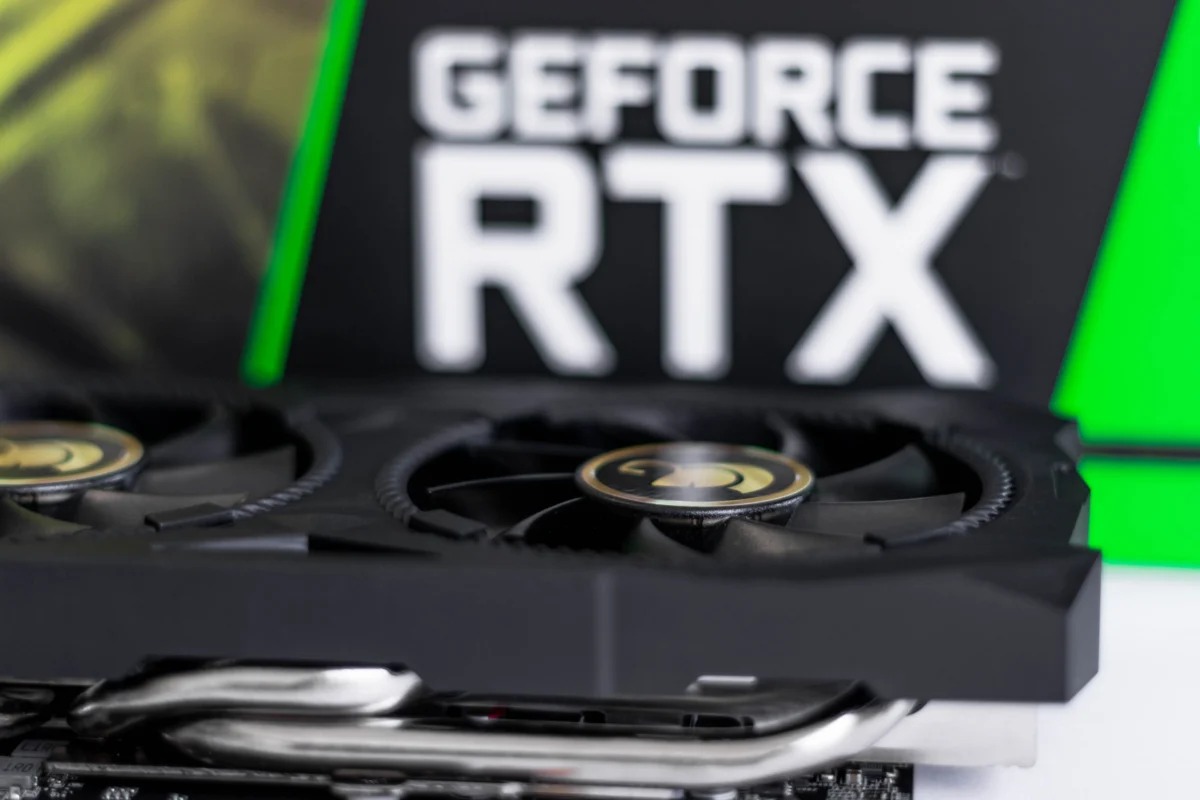
The secondary electronics market in China is currently experiencing a profound influx of high-end graphics processing units (GPUs) as cryptocurrency miners liquidate their hardware following a series of aggressive regulatory interventions by the Chinese government. This mass sell-off has driven the prices of popular graphics cards, such as the Nvidia GeForce RTX 3060, to as low as $270 per unit, a figure significantly below the manufacturer’s suggested retail price (MSRP) and a stark contrast to the inflated prices seen during the height of the 2021 mining boom. As the Chinese state intensifies its efforts to decouple its financial system from decentralized digital assets, the resulting hardware surplus is reshaping the global supply chain for gaming and professional computing equipment.
The Regulatory Catalyst: China’s Decisive Move Against Crypto Mining
The sudden availability of thousands of used GPUs is the direct result of a multi-pronged crackdown orchestrated by Chinese authorities. For years, China was the global epicenter of cryptocurrency mining, at one point accounting for over 65% of the total Bitcoin network hash rate. This dominance was fueled by access to inexpensive hydroelectric power in provinces like Sichuan and coal-based energy in Inner Mongolia and Xinjiang.
However, the tide turned in mid-2021 when the State Council of the People’s Republic of China, led by Vice Premier Liu He, announced a stern policy aimed at curbing Bitcoin mining and trading activities. The government cited concerns over financial stability, energy consumption, and the pursuit of carbon neutrality goals. Following this directive, regional authorities began a systematic shutdown of mining facilities. Inner Mongolia was the first to implement a ban, followed by Xinjiang, Qinghai, and eventually Sichuan. The "Great Mining Migration" saw large-scale industrial miners relocate their operations to more favorable jurisdictions such as Kazakhstan, Russia, and the United States. Conversely, smaller-scale operations and individual miners who lacked the capital to relocate have been forced to liquidate their assets, leading to the current saturation of the second-hand market.
Market Dynamics: A Drastic Shift in GPU Valuation
The sheer volume of hardware entering the market has disrupted the pricing stability of both new and used GPUs. On popular Chinese e-commerce and second-hand platforms like Xianyu (owned by Alibaba), the Nvidia RTX 3060—a card that was previously selling for double or triple its MSRP due to the global semiconductor shortage—has seen its price plummet.
Reports indicate that these cards are being offered for approximately $270, while more powerful models like the RTX 3070 and RTX 3060 Ti are being listed for roughly $400 and $350, respectively. This pricing is particularly noteworthy given that the RTX 30-series utilizes the Ampere architecture, which was the cutting-edge technology of the time. The sell-off is not limited to Nvidia products; AMD’s RDNA2 architecture cards, including the Radeon RX 6000 series, are also appearing in large quantities. Even older generations of hardware, such as Nvidia’s Pascal (GTX 10-series) and AMD’s Polaris (RX 400/500 series), are being offloaded by miners who had kept them in operation during the peak of Ethereum’s mining profitability.
Furthermore, the liquidation has extended into the mobile computing sector. During the height of the GPU shortage, many Chinese miners turned to gaming laptops equipped with RTX 3060 GPUs to bypass the scarcity of desktop components. These laptops are now appearing on the used market for approximately $1,000 per unit, as miners seek to recover whatever capital they can from their hardware investments.
The Caveat: Bulk Purchases and Technical Risks
While the low prices may appear enticing to gamers and PC enthusiasts, the reality of these listings is more complex. Most of the sellers are not looking for individual buyers. Instead, they are requiring bulk purchases, often stipulating a minimum order of 100 to 200 units. This suggests that the primary targets for these sales are other industrial-scale operations or hardware refurbishers rather than the general public.
Beyond the logistical hurdles of bulk buying, the technical condition of these GPUs remains a significant concern for potential buyers. Mining-used cards are typically subjected to rigorous, 24/7 operation, often in dense racks where thermal management may be suboptimal. While professional miners often undervolt their cards to maximize efficiency, the constant heat cycles and the strain on the Video Random Access Memory (VRAM) can lead to premature component failure. Specifically, the GDDR6 and GDDR6X memory modules used in the RTX 30-series are known to run hot, and prolonged mining can degrade the thermal pads and cooling fans. Consequently, these cards may have a significantly shortened lifespan compared to GPUs used for standard gaming or professional workloads.
The Broader Economic Context: Transition to Digital Yuan
The crackdown on private cryptocurrency mining is not merely a regulatory measure for energy conservation; it is also a strategic move to clear the path for the Digital Yuan (e-CNY). As the People’s Bank of China (PBOC) ramps up testing and deployment of its Central Bank Digital Currency (CBDC), the elimination of competition from decentralized cryptocurrencies like Bitcoin and Ethereum becomes a priority.

By removing the infrastructure for decentralized mining, China is effectively centralizing the digital asset landscape within its borders. The digital yuan is designed to provide the state with greater oversight of financial transactions, reduce the cost of domestic payments, and potentially challenge the dominance of the US dollar in international trade. The void left by the departure of Bitcoin miners is rapidly being filled by state-sponsored digital financial initiatives, signaling a permanent shift in China’s technological and economic policy.
Impact on the Global GPU Shortage and the Ethereum Merge
The influx of used cards in China coincides with a general cooling of the global GPU market. Data from European markets, particularly Germany, has shown that GPU prices have dropped by as much as 40% from their peaks. This trend is driven by several factors, including improved supply chains, the introduction of "Lite Hash Rate" (LHR) models by Nvidia—which are designed to be less efficient at mining—and the anticipation of the Ethereum "Merge."
The Ethereum network’s transition from a Proof-of-Work (PoW) consensus mechanism to Proof-of-Stake (PoS) represents a fundamental shift for the GPU market. Under PoS, the network no longer requires massive computational power from GPUs to secure transactions. As Ethereum was the primary driver of GPU mining profitability, its transition effectively removes the incentive for large-scale graphics card deployments in the crypto space. Nvidia CEO Jensen Huang has acknowledged this shift, noting that the increased availability of cards will eventually benefit the gaming community, which has been sidelined for nearly two years by high prices and low stock.
Bitcoin Market Performance and Institutional Sentiment
As the hardware market grapples with the Chinese sell-off, the underlying asset, Bitcoin, remains in a period of consolidation. At the time of reporting, Bitcoin is trading at approximately $33,000, reflecting a modest 2% gain over a 24-hour period but a slight decline on the weekly chart. The $35,000 resistance level has proven difficult to breach, as the market remains range-bound amid uncertainty.
The Chinese crackdown has had a dual effect on the Bitcoin network. Initially, it caused a significant drop in the network’s hash rate and a subsequent downward adjustment in mining difficulty. However, it also served as a "stress test," proving the network’s resilience as mining operations successfully relocated to other parts of the world. Institutional sentiment remains cautious but observant, with many analysts looking for a clear breakout above $35,000 to signal a return to bullish momentum.

Conclusion: A New Era for Hardware and Crypto
The mass dumping of Nvidia RTX 3060 GPUs in China marks the end of an era for the country’s dominance in the cryptocurrency mining sector. While the immediate effect is a localized crash in used hardware prices, the long-term implications are far-reaching. For gamers, the saturation of the used market, combined with the easing of the global chip shortage, suggests that the days of paying 300% above MSRP for a graphics card may be coming to an end.
For the cryptocurrency industry, the migration of mining power away from China represents a move toward greater geographical decentralization, potentially making the network more resilient to the policies of any single nation-state. However, the legacy of the Chinese mining boom will remain visible in the secondary markets for years to come, as thousands of "battle-worn" GPUs continue to circulate among bargain hunters and hardware enthusiasts worldwide. The intersection of state policy, technological evolution, and market economics has created a unique moment in the history of computing—one where the tools of digital gold mining are being sold off to the highest bidder in a race to exit a closing frontier.