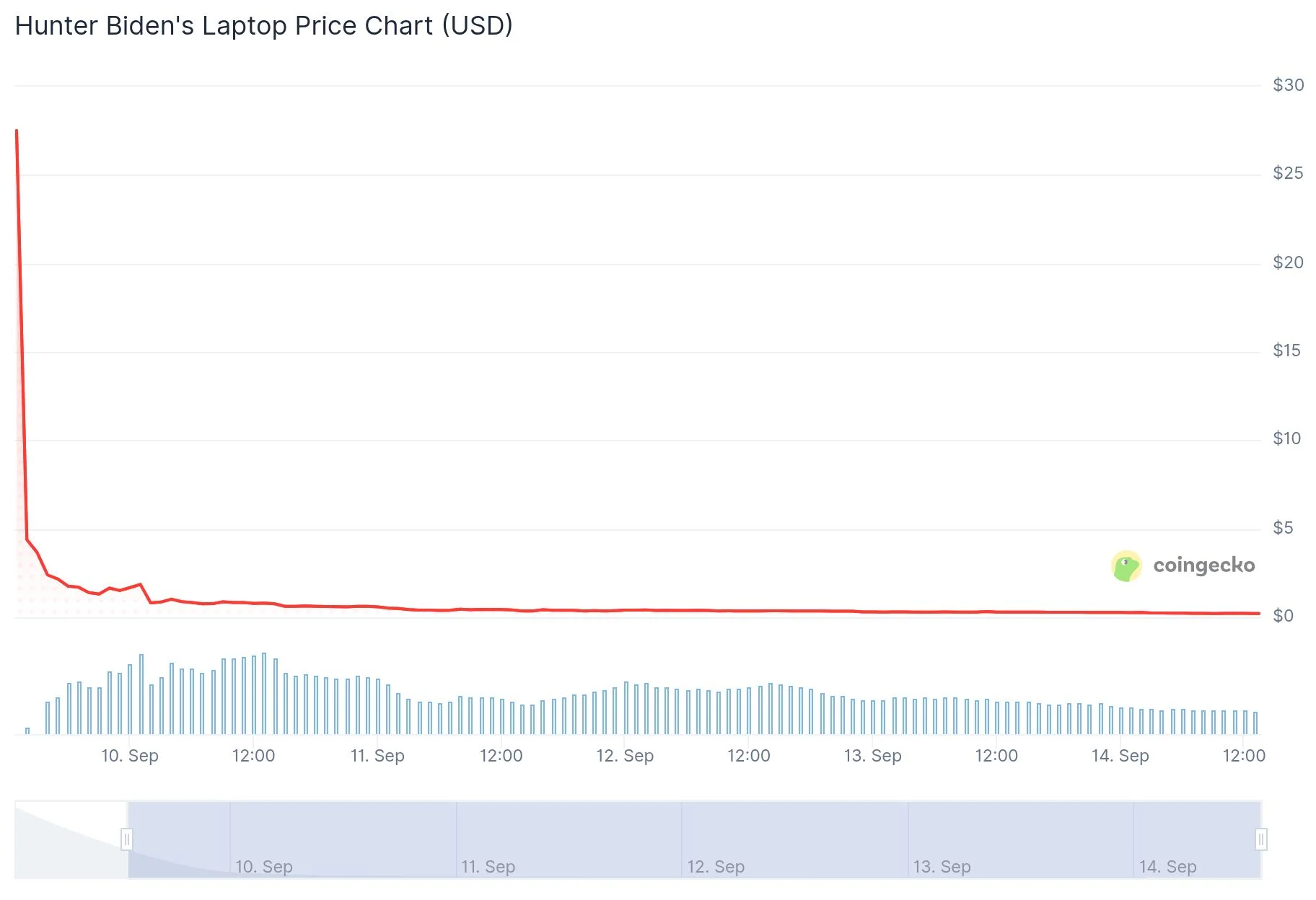
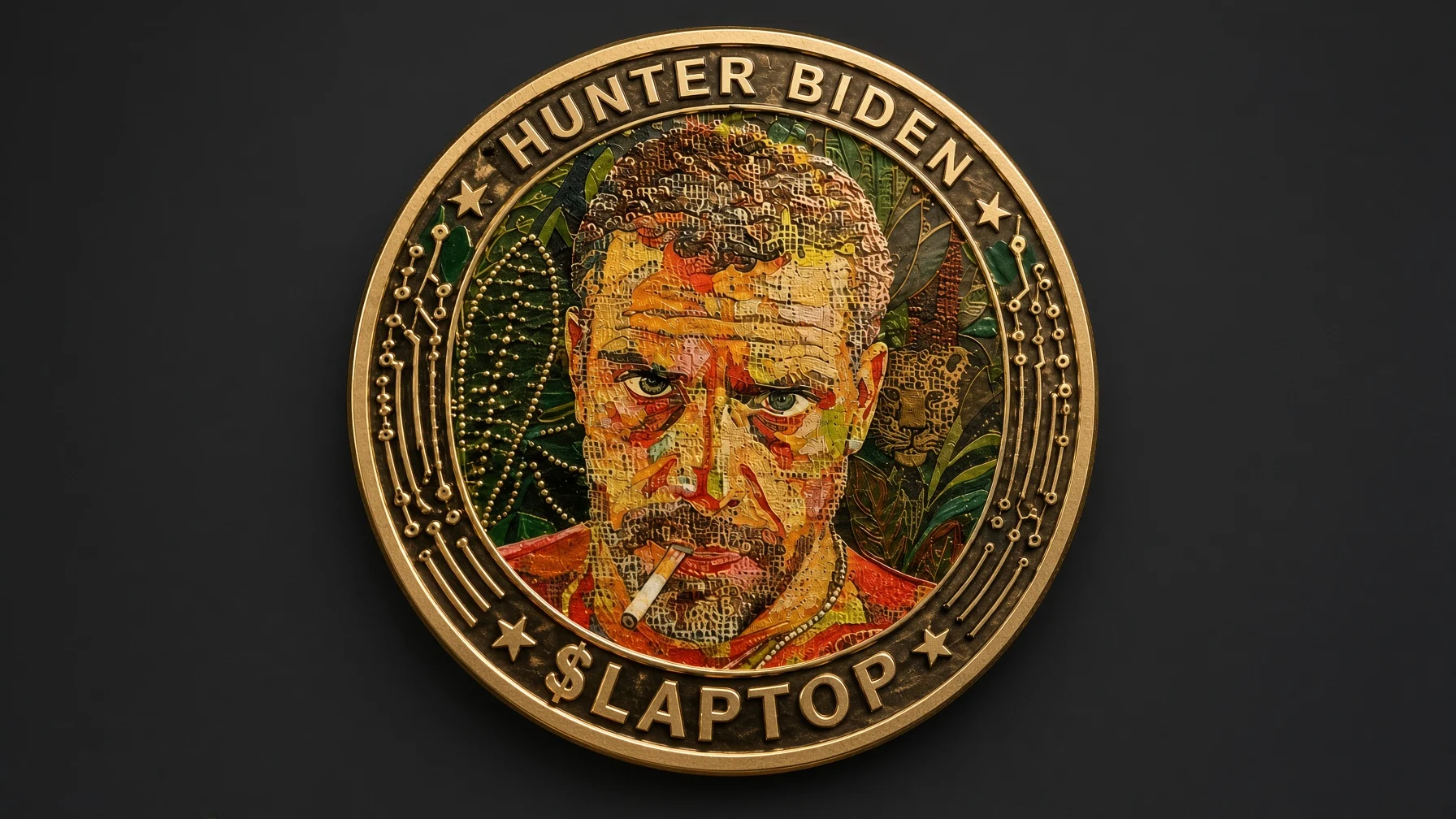
The highly anticipated Wednesday launch of Hunter Biden’s "$LAPTOP" meme coin culminated in a swift and devastating financial collapse, wiping out the investments of the vast majority of early participants within minutes of its debut. The cryptocurrency, intended by Biden to symbolize "resilience, redemption, and recovery" in his personal journey, instead became a stark illustration of the extreme volatility and inherent risks within the meme coin market. The catastrophic failure has drawn significant attention, not only due to the involvement of a prominent political figure’s son but also because of the dramatic wealth transfer from numerous small investors to a select few, alongside critical questions about market structure and accountability.
A Volatile Debut and Rapid Decline
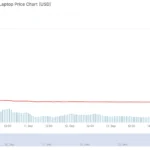
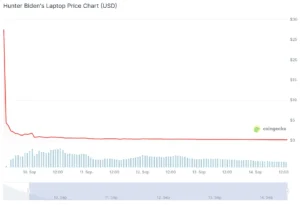
The initial trading session for the $LAPTOP token was characterized by extreme price swings and chaotic market conditions. Following its launch, the token’s price surged from an approximate starting point of $2.39 to an astonishing peak of $316 on some decentralized exchanges. Other data aggregators reported a maximum price around $190. Regardless of the precise peak, the ascent was fleeting, almost immediately followed by an equally dramatic plunge, with prices plummeting beneath the $4 threshold within minutes. This rapid contraction effectively evaporated the value for countless early investors who had entered the market at elevated prices.
During its brief zenith, the theoretical fully diluted market capitalization of the $LAPTOP token briefly soared to an astounding $144 billion, as documented by CoinDesk. This valuation, however, was fundamentally decoupled from the actual liquidity available in the market, making it an unsustainable and largely illusory figure. Hunter Biden himself remarked on this anomaly, noting that the temporary market capitalization even surpassed that of financial behemoths like BlackRock, which boasts a valuation exceeding $175 billion. He vividly described the token’s price trajectory as resembling "Mount Everest," highlighting the extreme and ultimately unsustainable nature of its initial spike.
The Role of Inadequate Liquidity and Market Making
Hunter Biden attributed the project’s catastrophic failure primarily to the actions, or inactions, of the designated market maker. He alleged that merely $5,000 in liquidity was provided at the time of launch, despite what he described as substantial buyer interest. This critically inadequate liquidity pool proved to be the Achilles’ heel of the project, creating an environment ripe for extreme price volatility. In cryptocurrency markets, liquidity refers to the ease with which an asset can be converted into cash without affecting its market price. A low liquidity pool means that even relatively small trades can cause drastic price movements, both upwards and downwards.
"There was a f—k up. The f—k up occurred in the first 30 seconds of launching the coin," Biden candidly acknowledged in a video statement shared on X (formerly Twitter) on Friday, two days after the launch. His statement underscored the immediate and profound impact of the liquidity shortfall, suggesting that the structural foundation for stable trading was absent from the outset. Market makers are crucial in cryptocurrency exchanges, particularly for new tokens, as they provide the necessary liquidity to facilitate smooth trading and prevent wild price swings. Their role is to place both buy and sell orders to ensure there’s always a counterparty for traders, thereby narrowing the bid-ask spread and stabilizing prices. The alleged failure to provide sufficient liquidity in this instance led to a "rug pull" like scenario, albeit one attributed to a technical or operational failure rather than explicit malicious intent from the project founders.
Background of the "$LAPTOP" Symbolism and Meme Coin Phenomenon
The choice of "$LAPTOP" as the token’s name is inextricably linked to the highly publicized "laptop scandal" that has shadowed Hunter Biden for several years. This scandal originated from a laptop allegedly belonging to Biden, which reportedly contained sensitive personal and business information. The contents of the laptop became a focal point in political discourse, particularly during the 2020 U.S. presidential election. For Biden, the symbol had reportedly evolved from a source of controversy into a representation of "resilience, redemption, and recovery" in his personal journey. His stated intention was to transform a negative public narrative into a positive symbol, using the meme coin as a vehicle for this message.
However, the context of meme coins themselves is critical to understanding the risks involved. Meme coins are cryptocurrencies that are often inspired by internet memes, pop culture references, or humorous themes. Unlike traditional cryptocurrencies like Bitcoin or Ethereum, which aim to solve specific technical or financial problems, meme coins often derive their value primarily from community sentiment, social media hype, and speculative trading. Their prices are notoriously volatile, driven by trends, influencer endorsements, and the fear of missing out (FOMO). Prominent examples include Dogecoin and Shiba Inu, which have seen astronomical gains and equally dramatic crashes. The inherent speculative nature of meme coins, combined with often limited utility and sometimes questionable underlying technology, makes them extremely high-risk investments, prone to rapid pumps and dumps.
Disparate Outcomes: A Few Winners Amidst Many Losers
The $LAPTOP launch created a stark divide among participants, yielding massive profits for a select few while inflicting significant losses on the vast majority. Blockchain intelligence firm Datavault AI’s analysis revealed a striking example: an unidentified trader managed to convert approximately $250,000 into an astounding $1.18 million in a matter of minutes. This represented a net gain of roughly $930,000, excluding transaction fees, highlighting the potential for rapid wealth accumulation in these volatile environments for those who time the market perfectly or have insider advantages.
In stark contrast, the story for most investors was one of financial ruin. Another investor who deployed a substantial sum of around $200,000 near the token’s price zenith was left holding tokens valued at a mere $2,000 following the collapse. This individual loss, representing a near-total wipeout, encapsulates the devastating impact on those caught in the market’s rapid descent.
Further analysis from blockchain analytics company Bubblemaps painted an even bleaker picture for the broader participant base. Their data indicated that approximately 80% of all participants sustained financial losses. In excess of 15,000 individual cryptocurrency wallets recorded negative outcomes, with the majority of individual losses remaining below $1,000. While these individual losses might seem modest, their cumulative effect represents a significant transfer of wealth. A small minority, however, profited handsomely. According to CryptoSlate, a concentrated group of just 88 wallets collectively generated a staggering $5.6 million from the launch event, underscoring the highly unequal distribution of gains in such volatile, low-liquidity scenarios. This pattern of a few "whales" profiting at the expense of numerous smaller, less experienced retail investors is a recurring theme in the meme coin space, often leading to accusations of market manipulation or unfair advantage.
Hunter Biden Accepts Accountability and Pledges Future Involvement
In the wake of the financial debacle, Hunter Biden publicly accepted accountability for the project’s failure. He disclosed that he had dedicated six months to the development of the $LAPTOP project, actively participating in all facets, including the token’s architecture and its public presentation strategy. This hands-on involvement, he argued, made him ultimately responsible for its outcome.
Biden emphasized that neither he nor his collaborators liquidated any tokens during the tumultuous launch period. He stated that team members were subject to a six-month lock-up period, explicitly prohibiting them from selling their holdings during the initial price spike. This detail was crucial in attempting to distinguish the event from a deliberate "rug pull," where developers intentionally drain liquidity after a pump. "This is my f—king token," Biden declared, reinforcing his personal stake and commitment. "At the end of the day, it’s my responsibility, and there was a f—k up."
Looking forward, Biden indicated that his team was taking steps to enhance liquidity and improve trading activity. He stopped short of announcing a concrete compensation plan for affected investors, a common expectation in such scenarios where a project fails spectacularly. However, he pledged his continued involvement with the project, stating, "I am in this to the end 100%, and I promise you that we’re gonna make it right." This promise, while offering a glimmer of hope, leaves many questions unanswered for those who suffered immediate losses. The mechanism by which he intends to "make it right" without a clear compensation strategy remains undefined, and the practical challenges of recovering value for thousands of small investors are considerable.
Broader Implications for the Cryptocurrency Market and Regulation
The "$LAPTOP" meme coin incident carries broader implications for the nascent and often unregulated cryptocurrency market. Firstly, it highlights the persistent issue of investor protection in an environment where sophisticated financial instruments are often launched with minimal oversight. The lack of robust regulatory frameworks for meme coins leaves retail investors particularly vulnerable to market manipulation, technical glitches, and the inherent risks of highly speculative assets. Regulatory bodies globally, including the Securities and Exchange Commission (SEC) in the U.S., have repeatedly warned about the dangers of investing in unregulated digital assets, particularly those promoted by celebrities or public figures.
Secondly, the incident could further fuel calls for stricter regulations on crypto launches, especially those involving public figures. The association of a politically prominent name like Hunter Biden with a failed crypto project inevitably draws more scrutiny than a typical, anonymous meme coin launch. This increased attention could accelerate efforts to define what constitutes a security in the crypto space, impose greater transparency requirements on project founders, and establish clearer guidelines for market makers and liquidity providers.
Finally, the $LAPTOP saga risks eroding trust in the broader cryptocurrency ecosystem. While proponents argue that crypto offers decentralization and financial innovation, incidents like this, where a few profit immensely while many suffer significant losses due to poor market structure or insufficient planning, reinforce skepticism among the general public and traditional financial institutions. For the crypto industry to mature and gain wider acceptance, it must address these recurring issues of volatility, investor vulnerability, and accountability, moving beyond the "Wild West" narrative towards a more stable and trustworthy environment. The challenge for Hunter Biden and his team now is not just to "make it right" for their investors, but to demonstrate how such a project can navigate the complex landscape of decentralized finance responsibly.