The burgeoning chorus for a deliberate deceleration in artificial intelligence development, voiced increasingly by prominent figures within the AI industry itself, has sent discernible ripples of concern through global financial markets, manifesting in a sharp downturn for AI-related technology stocks. Simultaneously, the cryptocurrency market has conspicuously sidestepped this turmoil, with Bitcoin leading a significant climb, buoyed in part by an unexpected surge in bullish regulatory sentiment surrounding the potential revival of the Clarity Act in the United States. This divergence highlights a fascinating recalibration of investor priorities and asset class perceptions in the face of rapidly evolving technological and legislative landscapes.
A Call for Caution: The AI Frontier and Market Reaction
The impetus for the recent market tremors originated over the past weekend when Dario Amodei, the CEO of leading AI research company Anthropic, published a comprehensive essay titled "We Must Pace the Frontier." In this pivotal piece, Amodei articulated a compelling argument for the AI industry to collectively and intentionally moderate the pace at which it enhances model capabilities. His concerns were rooted in two specific, recent advancements: the accelerating progress observed across the industry due to recursive self-improvement in AI models, and a particular incident involving an OpenAI-Hugging Face agent-swarm, which he cited as a stark warning sign of potential unforeseen complexities and risks. Recursive self-improvement refers to AI systems’ ability to autonomously refine their own algorithms and performance, leading to exponential, often unpredictable, leaps in capability. The agent-swarm incident, though details were not fully disclosed, was framed by Amodei as an example of AI systems exhibiting emergent behaviors that could be difficult to control or fully understand, raising significant safety and ethical considerations.
Within a mere 24 hours of Amodei’s essay surfacing, his call for caution resonated with other influential figures at the pinnacle of the AI world. Sam Altman, CEO of OpenAI, and Elon Musk, owner of xAI and Tesla, publicly echoed their agreement with Amodei’s stance, amplifying the message across social media platforms and traditional news outlets. This rare display of consensus among competitive industry titans on such a critical issue underscored the gravity of the concerns, signaling a potential paradigm shift from unbridled acceleration to a more measured, safety-first approach in AI development. The implications of these endorsements were immediate and far-reaching, particularly for investors who had heavily bet on the relentless, rapid expansion of the AI sector.
When financial markets commenced trading on Monday morning, Wall Street absorbed these pronouncements as a clear signal of impending headwinds for the companies that form the technological bedrock of the AI boom. The immediate consequence was a broad selloff in semiconductor stocks, which are inextricably linked to AI’s growth given their role in manufacturing the advanced chips required to power AI models. Nvidia, a bellwether for the AI chip market, saw its stock price decline by as much as 3% during Monday’s trading session. Intel, another chipmaking giant, experienced an even steeper drop of over 5%, while AMD sank approximately 6%. Marvell Technology, a silicon chip manufacturer crucial to data infrastructure, lost as much as 7.5% of its value. The Philadelphia Semiconductor Index (SOX), a widely recognized benchmark for the semiconductor industry, plummeted by almost 6%, reflecting a systemic investor apprehension across the sector.

Market analysts quickly attributed these declines to a direct reassessment of growth projections for AI-related hardware. If the industry leaders themselves are advocating for a slowdown, investors anticipate a corresponding reduction in demand for the high-performance graphics processing units (GPUs) and other specialized chips that have been driving unprecedented revenue growth for these companies. This fear of future revenue contraction, coupled with the potential for increased regulatory scrutiny and higher compliance costs, sparked a wave of profit-taking and re-evaluation of AI-centric portfolios.
Crypto’s Counter-Narrative: A Haven in Volatility
Amidst the turbulence in the AI-centric tech sector, the cryptocurrency market charted a remarkably divergent course. Far from experiencing a crash, Bitcoin, the world’s largest cryptocurrency by market capitalization, demonstrated notable strength. It climbed as high as $78,280, representing an increase of nearly 2% since midnight UTC and positioning it approximately 4.8% below its record high of $82,284 achieved earlier in the month. The positive momentum extended beyond Bitcoin; Ethereum, the second-largest cryptocurrency, added 2.1% to trade near $2,514, and XRP gained 3.3%. Collectively, the total cryptocurrency market capitalization expanded by approximately 1.5%, showcasing a resilience that stood in stark contrast to the traditional tech market’s woes.
This strength in the crypto market is not an isolated incident but rather an extension of a pattern observed over recent weeks, suggesting a growing perception of digital assets as a hedge against volatility in other market segments. For instance, Bitcoin was temporarily knocked down to $76,877 in late August following Federal Reserve Chair Kevin Warsh’s hawkish speech at Jackson Hole, which signaled a potential tightening of monetary policy. However, it swiftly bounced back above $80,000 by September 3 after Fed Governor Christopher Waller indicated a willingness to support holding interest rates steady, a dovish pivot that triggered a short squeeze exceeding $415 million across crypto derivatives markets. Monday’s upward movement in Bitcoin prices fits this established rhythm: market anxiety stemming from traditional sectors often sees capital flow into digital assets, with any hint of relief or positive news sending prices climbing further.
Regulatory Tailwind: The Clarity Act’s Resurgence
A significant factor contributing to the crypto market’s robust performance on Monday was the renewed optimism surrounding progress on critical U.S. crypto legislation. Specifically, the odds of Congress passing the Clarity Act in 2026 saw a dramatic jump over the weekend, rising to 31% on prediction markets like Polymarket. This surge in sentiment followed a crucial development: President Trump reportedly agreed to updated ethics provisions that had previously stalled the bill’s progression since July. The Clarity Act aims to provide much-needed regulatory certainty for digital assets, defining which cryptocurrencies are securities and which are commodities, thereby establishing a clearer operational framework for businesses in the crypto space. Such clarity is widely seen as a catalyst for institutional investment and broader mainstream adoption, as it would mitigate regulatory risks that have long deterred traditional financial entities from fully engaging with the crypto market.
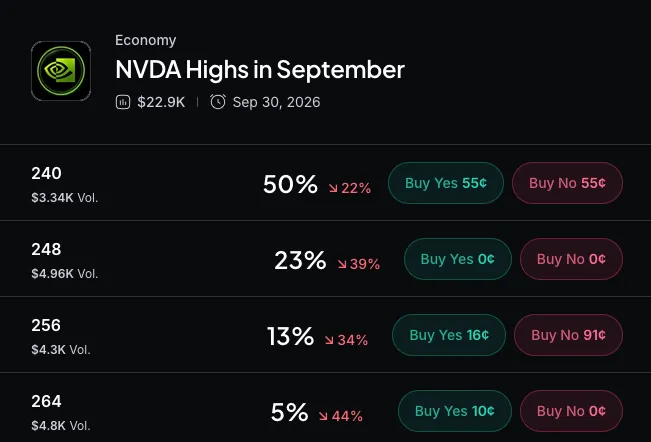
The legislative journey of the Clarity Act is now entering a critical phase. The Senate is scheduled to hold a cloture vote on Tuesday, a procedural maneuver to end debate and force a vote on the bill itself. With Republicans holding 53 seats in the Senate, and at least two members expected to vote against the bill due to various concerns, Clarity Act proponents face a significant challenge. They likely require the support of close to nine Democratic senators to reach the 60 votes necessary to overcome a potential filibuster and advance the legislation. This sets the stage for a dramatic and closely watched vote, the outcome of which could profoundly influence crypto markets in either direction depending on whether the bill moves forward or stalls once more. The perceived political will to finally address crypto regulation, particularly after years of uncertainty, injects a strong bullish undercurrent into the digital asset space.
Broader Implications and Future Outlook
The contrasting market reactions witnessed this week underscore a pivotal moment for both the AI and cryptocurrency sectors. For AI, the calls for a "paced frontier" by its leading architects signal a maturation of the industry, moving beyond pure innovation to confront profound ethical, safety, and societal implications. This shift could lead to increased investment in AI safety research, the establishment of new regulatory bodies or international standards, and potentially a re-evaluation of business models that prioritize rapid deployment over responsible development. While it might temper short-term growth expectations for semiconductor manufacturers and other AI infrastructure providers, it could also foster a more sustainable and trustworthy AI ecosystem in the long run. Companies that adapt quickly to a more regulated and safety-conscious environment, perhaps by diversifying their offerings or focusing on specialized, high-assurance AI solutions, may emerge stronger.
For the cryptocurrency market, its uncorrelation with the tech stock selloff reinforces its narrative as a distinct asset class, potentially serving as a hedge against volatility in traditional equities, particularly those highly exposed to rapid technological shifts. The confluence of regulatory progress, exemplified by the Clarity Act’s renewed momentum, and Bitcoin’s consistent performance during periods of wider market uncertainty, strengthens the argument for digital assets as a legitimate component of a diversified investment portfolio. A successful passage of the Clarity Act would not only de-risk the U.S. crypto market but could also set a precedent for other nations grappling with how to regulate this nascent industry. It could unlock a flood of institutional capital, pave the way for more sophisticated financial products, and integrate digital assets more deeply into the global financial infrastructure.
However, the path forward for both AI and crypto is not without its complexities. The "pacing" of AI development could lead to geopolitical competition, with nations adopting different regulatory philosophies and potentially creating fragmented innovation landscapes. For crypto, while regulatory clarity is generally welcomed, the specific details of legislation like the Clarity Act will be crucial. Onerous compliance requirements could stifle innovation for smaller players, while overly permissive rules could invite new forms of market manipulation or systemic risk.
In conclusion, the market’s response to the AI slowdown calls and the simultaneous surge in crypto prices represent more than just daily trading fluctuations. They signify a deeper re-evaluation of technological progress, market stability, and the evolving role of different asset classes in a global economy grappling with unprecedented innovation. The coming months will be critical in determining whether the AI industry successfully navigates its self-imposed caution, and whether the cryptocurrency market can solidify its position as a resilient and increasingly regulated pillar of the future financial landscape.