The nascent landscape of blockchain interoperability is undergoing a significant evolution with the emergence of the Open Intents Framework (OIF). Launched in February 2025, this collaborative initiative spearheaded by the Ethereum Foundation, in partnership with protocol specialists Hyperlane and Bootnode, is rapidly garnering attention. The OIF is designed to serve as a foundational, shared infrastructure for the seamless construction and execution of cross-chain intents, a novel approach to inter-blockchain communication. Its growing adoption is underscored by the backing of over 30 prominent teams within the Web3 ecosystem, including major Layer 2 scaling solutions like Arbitrum, Optimism, Polygon, ZKsync, and Starknet. This broad coalition of support signals a collective move towards establishing a neutral, open standard for cross-chain interactions, deliberately steering clear of proprietary solutions.
The Genesis of Cross-Chain Intents
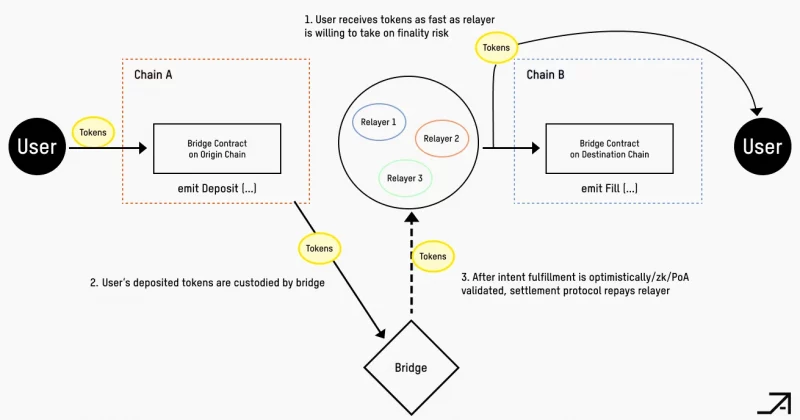
The concept of "intents" in the blockchain space represents a paradigm shift from traditional transaction-based communication. Instead of a user specifying every granular step of a cross-chain operation – such as initiating a token swap on Chain A and then a liquidity provision on Chain B – an intent allows users to declare their desired outcome. For example, a user might express an intent to swap 100 ETH for USDC, regardless of which chain currently holds their ETH or where the swap is most optimally executed. This abstraction empowers users by simplifying complex multi-chain operations and delegating the execution details to sophisticated decentralized systems.
The OIF provides the essential technical framework that enables these cross-chain intents to function across a diverse array of blockchain networks. Its comprehensive toolkit comprises smart contracts, open-source "solvers" (entities responsible for fulfilling intents), aggregators, and a Software Development Kit (SDK). Developers can integrate this SDK into their applications without requiring explicit permission from any central entity, fostering an environment of open innovation. At its architectural core, the OIF relies on three fundamental contract types: InputSettler, OutputSettler, and Oracle contracts. These components, unified by an interoperability SDK, form the backbone of the framework’s cross-chain capabilities.
Technical Pillars of the Open Intents Framework
The OIF’s design is deeply rooted in established standards and innovative architectural choices. It builds upon the ERC-7683 standard, a crucial specification that defines the standardized structure for cross-chain intents. This standardization ensures that intents submitted to the framework are interpretable and processable by any compliant solver. When a user submits an intent, such as the aforementioned cross-chain token swap, a competitive ecosystem of solvers springs into action. These solvers, incentivized by the opportunity to profit from efficient execution, race against each other to fulfill the user’s request in the most optimal manner possible, considering factors like gas costs, slippage, and execution speed.
The framework’s practical implementation is already visible across various blockchain networks. Deployments are live on key testnets, including Ethereum Sepolia and Optimism Sepolia, allowing developers to experiment and build with the OIF. Under ideal network conditions, solver-fulfilled orders are reportedly completing within a rapid timeframe of 10 to 60 seconds, demonstrating the potential for near-instantaneous cross-chain operations. This speed is a critical factor in enhancing user experience and enabling real-time applications that were previously constrained by the inherent latency of multi-chain interactions.
Coinbase’s Strategic Entry and the Neutrality Imperative
A significant endorsement for the Open Intents Framework arrived in September 2025 with the announcement that Coinbase Payments had become a core contributor. The payments division of the prominent cryptocurrency exchange is now actively involved in refining and standardizing cross-chain asset transfers through the OIF. This collaboration signifies a major step towards mainstream adoption, as a leading financial institution in the crypto space recognizes the potential of a standardized, open-source approach to interoperability.
A defining characteristic of the OIF’s design is its deliberate modularity and permissionless nature. This architectural choice means that any development team is free to deploy and extend the framework’s contracts without the need for approval from a central governing body. This commitment to decentralization is further emphasized by the absence of a native governance token, protocol fee extraction, or any form of vendor lock-in. Such a model actively combats the concentration of power and ensures that the infrastructure remains accessible and adaptable to the evolving needs of the Web3 ecosystem. The production-ready contracts have undergone extensive testing on various testnets and mainnets, with ongoing security audits and the planned development of additional solver capabilities slated for later in the year, underscoring a commitment to robustness and continuous improvement.
The Strategic Significance of a Tokenless Design
The decision to launch the Open Intents Framework without a dedicated token or associated cryptocurrency asset is a deliberate and strategic one. This "tokenless" approach is fundamental to positioning the OIF as a truly neutral and impartial infrastructure layer. For developers building on or integrating with the OIF, this design choice eliminates the complexities and potential uncertainties associated with navigating tokenomics. They are spared the need to grapple with staking requirements, fluctuating token values, or governance mechanisms that can alter fee structures or protocol rules based on token holder votes.
While the absence of a token might initially seem counterintuitive in a crypto-native space, it addresses a critical challenge in bootstrapping decentralized networks. Typically, a native token serves as a direct financial incentive mechanism to encourage participation and secure the network. However, the OIF’s model eschews this approach. Instead, it relies on the inherent competitive dynamics of the open market. Solvers are motivated to participate and operate efficiently because they stand to profit from successfully fulfilling user intents. This competitive pressure, driven by the pursuit of execution efficiency and cost-effectiveness, is intended to naturally drive the development of a robust and performant network of solvers, ultimately benefiting the end-users who submit their intents. This indirect incentive structure is a bold experiment in decentralized coordination, aiming to achieve scalability and resilience without the complexities and potential conflicts of interest often associated with token-based governance.
Broader Implications for the Blockchain Ecosystem
The rise of the Open Intents Framework has far-reaching implications for the future of blockchain technology and decentralized applications. By providing a standardized, permissionless, and neutral infrastructure for cross-chain intents, the OIF has the potential to unlock a new era of seamless interoperability. This could lead to:
- Enhanced User Experience: Users will no longer need to be blockchain experts to perform complex multi-chain operations. The intent-based model simplifies interactions, making decentralized applications more accessible to a wider audience.
- Increased Liquidity and Capital Efficiency: With smoother cross-chain asset transfers and swaps, liquidity can flow more freely between different networks. This can lead to more efficient capital allocation and deeper markets across the entire Web3 ecosystem.
- Innovation in dApp Development: Developers can leverage the OIF to build sophisticated cross-chain applications that were previously technically challenging or impossible. This could spur innovation in areas like decentralized finance (DeFi), gaming, and supply chain management.
- Reduced Fragmentation: The OIF aims to act as a unifying layer, mitigating the fragmentation of liquidity and user bases across disparate blockchain networks. This can lead to a more cohesive and interconnected Web3 landscape.
- A More Resilient and Decentralized Future: By prioritizing open standards and permissionless access, the OIF contributes to a more decentralized and resilient blockchain ecosystem, reducing reliance on single points of failure or control.
The collaborative spirit behind the OIF, with contributions from leading Layer 2 solutions and major industry players like Coinbase, suggests a growing consensus on the need for standardized, open-source solutions in the interoperability space. While challenges remain in scaling and ensuring the security of such complex systems, the Open Intents Framework represents a significant stride towards a truly interconnected and user-friendly blockchain future. Its tokenless, intent-centric approach offers a compelling vision for how Web3 can evolve beyond its current limitations.