The South Korean government is reportedly moving toward a significant recalibration of its stance on digital assets, with financial authorities engaging in high-level discussions to potentially lift the blanket ban on Initial Coin Offerings (ICOs) that has been in place since late 2017. According to reports emerging from the region, including insights from The Korea Times, a multi-ministerial effort is underway to establish a framework that would allow token sales under specific, strictly regulated conditions. This development marks a pivotal departure from the previous year’s hardline approach, which saw the nation become one of the most restrictive environments for cryptocurrency globally, despite possessing one of the highest per-capita trading volumes.
The discussions involve a coalition of influential bodies, including the Financial Services Commission (FSC), the Ministry of Strategy and Finance, the Ministry of Justice, and the National Tax Service. An anonymous source familiar with the matter indicated that the primary objective is to transition from a total prohibition to a conditional permission model. This shift is viewed by industry analysts as an attempt to harmonize the government’s desire to foster the "Fourth Industrial Revolution" through blockchain technology while simultaneously mitigating the risks of speculative fervor and financial crime.
The Evolution of South Korea’s Regulatory Landscape
To understand the magnitude of this potential policy reversal, one must look back at the volatile climate of 2017. During that period, South Korea emerged as a global epicenter for cryptocurrency speculation. The "Kimchi Premium"—a phenomenon where Bitcoin and other assets traded at significantly higher prices on Korean exchanges compared to global averages—became a symbol of the country’s unbridled enthusiasm. At its peak, South Korean trading accounted for nearly 20% of global Bitcoin volume, despite the country representing a much smaller fraction of the global economy.
In September 2017, the FSC took a drastic step by banning all forms of ICOs, regardless of the project’s technical merit or compliance efforts. The regulator cited concerns over the increasing risk of financial scams, money laundering, and the potential for a speculative bubble that could harm retail investors. This move was followed by a series of aggressive statements from political figures, including the Minister of Justice, who at one point suggested the possibility of shutting down all domestic cryptocurrency exchanges. These announcements triggered massive sell-offs, contributing to a sharp decline in global cryptocurrency valuations and earning South Korea a reputation as a primary source of "FUD" (Fear, Uncertainty, and Doubt) in the digital asset space.
However, the beginning of 2018 saw a cooling of this rhetoric. Following a massive public outcry—including a petition to the Blue House that garnered over 220,000 signatures—the government began to adopt a more nuanced tone. The current discussions regarding ICOs suggest that the administration of President Moon Jae-in is seeking a middle ground that protects investors without stifling the burgeoning domestic blockchain sector.
Official Statements and the FSC’s "Two-Track" Approach
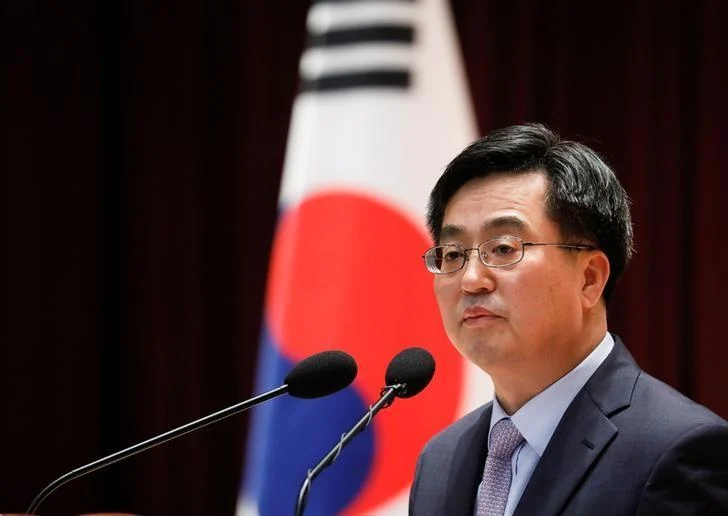
Kang Young-soo, a key official overseeing cryptocurrency trading policies at the Financial Services Commission, recently addressed the rumors of a policy shift. While Kang maintained a cautious stance, his comments during an industry forum at the National Assembly reflected a more open-minded perspective than his predecessors. He noted that while there is no official government policy specifically targeting the legality of every individual ICO, the FSC is actively monitoring the situation and listening to third-party views.
"The financial authorities have been talking to the country’s tax agency, justice ministry, and other relevant government offices about a plan to allow ICOs in Korea when certain conditions are met," a source told local media. This implies that the government is moving away from a "ban-first" mentality toward a "regulate-and-monitor" framework.
Kang Young-soo further emphasized that the government is pursuing what many call a "two-track" approach. This strategy involves strictly regulating the speculative aspects of cryptocurrency trading while aggressively promoting the development of blockchain technology. "Yes, we have to have plans on how to advance blockchain-related technologies and effectively regulate crypto-trading. This is a separate issue," Kang stated. This distinction is crucial; it suggests that South Korea views blockchain as a critical infrastructure for the future, independent of the volatile price action of individual tokens.
Chronology of South Korean Crypto Regulation
The path to this potential legalization has been marked by several key milestones that have shaped the current market environment:
- September 2017: The FSC issues a blanket ban on ICOs, citing the need to protect investors from "unproductive speculation" and fraudulent schemes.
- December 2017: The government announces emergency measures to curb speculation, including a ban on opening anonymous cryptocurrency accounts.
- January 2018: The Ministry of Justice causes a market crash by suggesting a total shutdown of exchanges, a statement later walked back by the Blue House.
- January 30, 2018: The "Real-Name Verification System" is implemented. This required all cryptocurrency traders to link their exchange accounts to verified bank accounts at specific major lenders, effectively ending anonymous trading.
- February 2018: The government responds to the Blue House petition, clarifying that while they will not ban trading, they will strictly regulate it to prevent illegal activities.
- March 2018: Reports surface regarding the inter-ministerial talks to lift the ICO ban, signaling a major policy pivot.
Strengthening Anti-Money Laundering (AML) and KYC Protocols
Despite the potential lifting of the ICO ban, the South Korean government has made it clear that there will be no compromise on security and transparency. The existing Anti-Money Laundering (AML) and Know Your Customer (KYC) laws remain the bedrock of the country’s regulatory framework.
Currently, foreigners and minors are still prohibited from trading on South Korean exchanges. This policy was enacted to prevent capital flight and to ensure that the domestic market does not become a conduit for international money laundering. The FSC has signaled that any new ICO framework would likely require issuers to adhere to the same rigorous standards as traditional financial institutions. This includes providing detailed whitepapers, undergoing third-party audits, and ensuring that all participants are fully identified through the real-name verification system.
The involvement of the National Tax Service in these discussions also points to a future where cryptocurrency gains are subject to formal taxation. By bringing ICOs into the legal fold, the government can create a structured tax regime, potentially generating significant revenue while further legitimizing the industry.
Economic Implications and the Global Context
The potential legalization of ICOs in South Korea carries significant implications for both the domestic and global economies. Domestically, the ban forced many promising Korean blockchain startups to move their operations overseas to jurisdictions like Singapore or Switzerland. This "brain drain" deprived South Korea of potential tax revenue and job creation in a high-tech sector. By allowing ICOs domestically, the government could incentivize these companies to return, fostering a local ecosystem of innovation.
On a global scale, South Korea’s shift toward a more tolerant stance could provide a boost to market confidence. As one of the world’s most tech-savvy nations, South Korea’s regulatory choices often serve as a bellwether for other Asian markets. If South Korea successfully implements a conditional ICO framework, it could provide a blueprint for other nations—such as India or even China—that are currently grappling with how to handle digital asset offerings.
Supporting Data and Market Sentiment
Data from market analysts suggests that the South Korean public remains highly engaged with digital assets despite the regulatory hurdles. According to a survey conducted earlier this year, nearly 5% of the South Korean population had invested in or used cryptocurrencies. Furthermore, the "Kimchi Premium," while reduced from its January peaks of 40-50%, continues to reappear during periods of high volatility, indicating that domestic demand remains robust.
The market response to the news of potential ICO legalization has been cautiously optimistic. Trading volumes on major Korean exchanges like Bithumb, Upbit, and Korbit have stabilized as investors look for signs of a more predictable regulatory environment. Analysts argue that a clear, legal pathway for ICOs would reduce the "regulatory risk" premium that has weighed on the Korean market, potentially leading to more stable and sustainable growth.
The Role of Blockchain in the National Strategy
The South Korean government’s interest in blockchain extends far beyond the financial sector. The Ministry of Science and ICT has already pledged millions of dollars toward blockchain research and development. From supply chain management to electronic voting and public administration, the government sees blockchain as a transformative tool for increasing transparency and efficiency.
Kang Young-soo’s remarks at the National Assembly underscore this sentiment. By separating the regulation of trading from the advancement of technology, the government aims to become a leader in the underlying "plumbing" of the digital economy. Allowing ICOs is seen by many as a necessary step in this direction, as it provides the funding mechanism for decentralized applications (dApps) and infrastructure projects that could define the next decade of technological progress.
Conclusion and Future Outlook
While the FSC has not yet released a formal timeline for the lifting of the ICO ban, the evidence of a policy shift is mounting. The transition from a total ban to a conditional, regulated environment reflects a growing maturity in the government’s understanding of the digital asset space. By involving multiple ministries, including the tax and justice departments, the South Korean government is signaling that it intends to create a comprehensive and durable framework.
For the cryptocurrency community, this development is a welcome sign of progress in one of the world’s most important markets. However, the path forward will likely be characterized by stringent oversight and high barriers to entry. The "wild west" era of unregulated token sales in South Korea is almost certainly over, to be replaced by a sophisticated regime that seeks to balance the risks of innovation with the necessity of investor protection. As the FSC and other ministries continue their deliberations, the global financial community will be watching closely to see if South Korea can successfully navigate the complexities of the digital age.