The Reawakening of Privacy Coins: A Sector-Wide Reassessment
For years, privacy coins like Dash, Zcash, and Monero were relegated to the periphery of the cryptocurrency market. Often misunderstood and frequently targeted by regulatory bodies due to concerns about their potential use in illicit activities, these digital assets faced significant headwinds. Many exchanges delisted them, compliance teams viewed them with apprehension, and investors largely shunned them, perceiving them as remnants of an earlier, less regulated crypto era. This prevailing sentiment began to erode in late August and early September 2026, as a confluence of events signaled a profound shift in how the market, and potentially institutions, perceive the value proposition of financial privacy in the digital age.
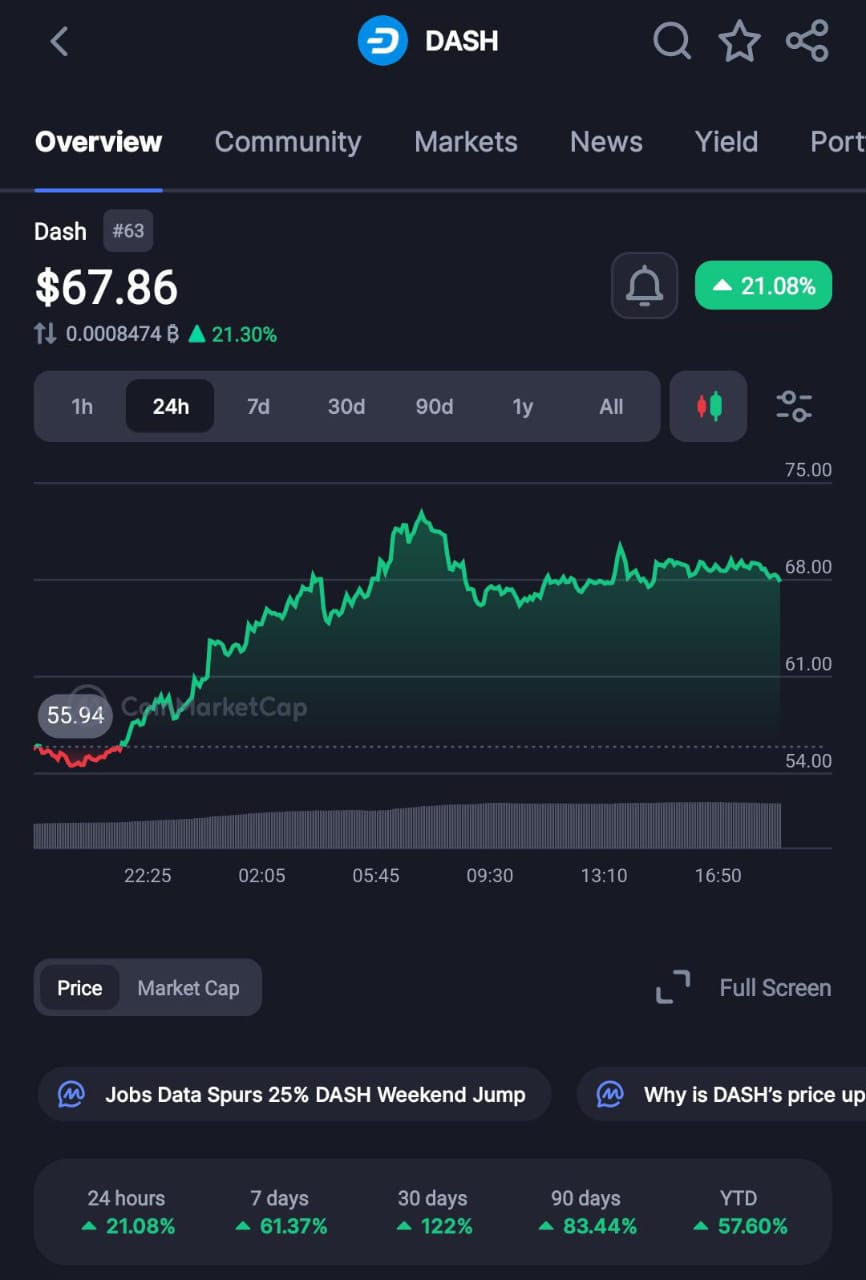
The dramatic turnaround observed in early September saw Dash surge by 29% in a single session, mirroring a broader rally across the privacy coin sector. This was prominently led by Zcash (ZEC), which notably broke past the psychological barrier of $1,000 within the same timeframe. While a 29% single-day increase is striking, it is crucial to understand that this was not an isolated incident but rather the sharpest leg of a rally that had been steadily building for approximately three weeks, pushing Dash’s value up by over 85% since mid-August. This sustained upward momentum suggests a more fundamental shift in market dynamics rather than a speculative pump. Investors can monitor Dash’s real-time price, market capitalization, and trading volume on platforms like CoinMarketCap for ongoing insights.
Zcash’s Breakthrough: A Catalyst for the Sector
Zcash’s extraordinary performance on September 4, 2026, served as a primary catalyst for the broader privacy coin rally. ZEC recorded an intraday high exceeding $1,021, marking its first breach of the $1,000 threshold in ten years. This propelled its market capitalization towards an impressive $17 billion, a valuation that briefly saw it overtake Dogecoin as the tenth-largest cryptocurrency by market cap. The impetus behind Zcash’s remarkable ascent was largely attributed to Grayscale’s conversion of its long-standing Zcash Trust into a spot Exchange Traded Fund (ETF). This ETF, which began trading on NYSE Arca on August 25, 2026, represented a watershed moment. For the first time, institutional and retail investors gained access to a regulated, brokerage-friendly investment vehicle offering exposure to a privacy coin.
The introduction of a spot Zcash ETF by a reputable financial institution like Grayscale signifies a critical step towards mainstream acceptance and institutional validation for privacy-focused digital assets. Historically, regulatory uncertainty has been a major deterrent for institutional capital. A regulated ETF provides a familiar and compliant wrapper for investors who might otherwise be hesitant to directly hold or trade privacy coins. This move by Grayscale, a prominent player in the digital asset investment space, suggests a potential re-evaluation by financial regulators regarding the viability and legitimate applications of privacy technology within the crypto ecosystem.
The market reaction to the Grayscale Zcash ETF was immediate and powerful. Approximately $34.5 million worth of ZEC short positions were liquidated as the breakout gained momentum. This forced buying dynamic, where short-sellers are compelled to purchase the underlying asset to cover their positions, significantly accelerated Zcash’s upward trajectory. The psychological impact of a sector leader like Zcash shattering a decade-old price barrier cannot be overstated. When such a significant event occurs, it tends to draw capital and attention not just to the leading asset but also to other projects within the same category, particularly those sharing the "privacy" label. This "spillover" effect is a common phenomenon in cryptocurrency markets, where the success of one asset often brings renewed interest to its peers.
Dash’s Resurgence: A Confluence of Catalysts
While Zcash provided the initial spark, Dash’s impressive rally was underpinned by a unique convergence of its own internal catalysts, meticulously planned and executed. The timing of these events perfectly aligned with the broader market shift, amplifying Dash’s momentum.
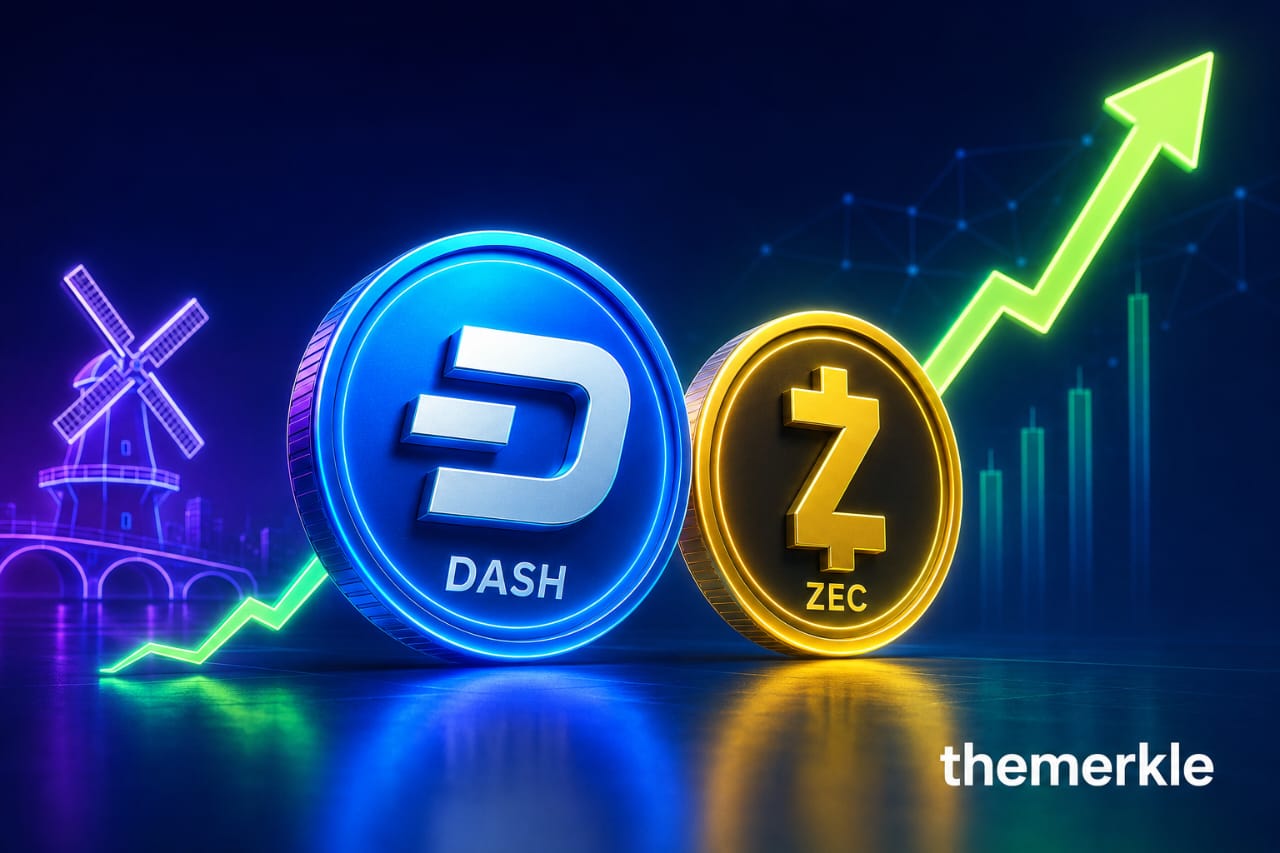
DashCon 2026: A Decade of Development Unveiled
A major factor contributing to Dash’s renewed visibility and investor interest was DashCon 2026, the project’s first official conference since 2019. Held in Amsterdam on Thursday, September 3, 2026, at De Hallen Studios, this event was a genuinely rare occurrence for a project that has historically prioritized heads-down development over public gatherings. The seven-year hiatus between conferences underscored the significance of DashCon 2026, positioning it as a comprehensive showcase of the extensive development work undertaken by the project since its last gathering in Zurich.
The conference served as a platform to highlight years of accumulated innovation, including significant advancements like DashSpend, which facilitates global bill payments, and the Evolution upgrade, a substantial overhaul of the Dash platform designed to improve usability and functionality. The event’s agenda was carefully curated to demonstrate the tangible progress and maturity of the Dash ecosystem. Organized in partnership with CryptoCanal, an Amsterdam-based entity known for events like the former ETHDam conference (now rebranded as Common S3nse, which ran at the same venue immediately after DashCon on September 4 and 5), DashCon benefited from professional event management and a strategic co-location that likely attracted a broader audience. Dash’s official announcement of the conference emphasized its role as an opportunity to finally present years of dedicated development work to a community that had not had an in-person gathering in years. A first conference in seven years, coinciding with a sector-wide rally, created a potent synergy that compounded momentum rather than diffusing it.
Technical Advancement: Dash Platform v1.1 Mainnet Activation
Layered on top of the conference and the overarching privacy narrative was a concrete technical catalyst: the mainnet activation of Dash Platform v1.1 on September 4, 2026. This significant upgrade introduced decentralized data storage and on-chain usernames to the Dash network. This expansion moves Dash beyond its original identity as a purely payments-focused cryptocurrency, evolving it into a more robust infrastructure capable of supporting broader Web3-style applications.
The integration of decentralized data storage allows for censorship-resistant and tamper-proof data management directly on the blockchain, opening doors for a new generation of decentralized applications (dApps) to be built on Dash. On-chain usernames, meanwhile, simplify user interaction with the network, making it more accessible and user-friendly by replacing complex cryptographic addresses with human-readable identifiers. This strategic enhancement demonstrates Dash’s commitment to continuous innovation and its ambition to compete in the evolving landscape of decentralized finance (DeFi) and Web3. The details of hard forks and platform release history are publicly accessible on Dash’s official roadmap page, providing transparency into its development trajectory.
Enhanced Privacy Features: Shielded Transactions
Coinciding with the platform activation, there was a noticeable uptick in activity around Dash’s shielded transaction pool. This renewed interest in its privacy features is particularly pertinent given the broader market’s re-engagement with the privacy narrative. New mobile privacy features are also slated to enter Android beta testing later in the month, further enhancing the project’s commitment to user privacy.
Dash itself has described shielded transactions as the most significant privacy overhaul in its more than twelve years of existence. While Dash has always offered features like PrivateSend for enhanced transaction privacy, shielded transactions (similar to Zcash’s zk-SNARKs) offer a much stronger, cryptographic guarantee of confidentiality. The increased usage of this feature, occurring precisely as the broader privacy narrative heats up, is not a mere coincidence. It suggests that users are increasingly valuing and utilizing the robust privacy tools that Dash offers, further validating the project’s core mission and its long-term development efforts.
The Broader Narrative: From Forgotten to Flipped
The journey of privacy coins from being a "forgotten category" to a re-emerging sector is a complex story rooted in both technological innovation and regulatory challenges. Historically, privacy coins faced significant stigma due to the perception that their anonymity features could be exploited for illicit activities such as money laundering or financing terrorism. This perception led to increased scrutiny from international regulatory bodies like the Financial Action Task Force (FATF), whose guidelines often pushed for strict Know Your Customer (KYC) and Anti-Money Laundering (AML) compliance across crypto exchanges.
Many exchanges, particularly those seeking to operate within regulated jurisdictions, responded by delisting privacy coins to mitigate regulatory risk. This created a vicious cycle: reduced liquidity, limited access for legitimate users, and reinforced the narrative of privacy coins being "problematic." However, the underlying demand for financial privacy has always persisted. In an increasingly digital and surveilled world, individuals and businesses are recognizing the importance of controlling their financial data. The ability to transact without every detail being publicly visible on an immutable ledger is a powerful value proposition, not just for illicit actors but also for businesses protecting trade secrets, individuals safeguarding their financial independence, or even governments conducting sensitive operations.
The recent Grayscale Zcash ETF approval suggests a potential shift in regulatory thinking or, at the very least, a successful navigation of existing frameworks by a major institutional player. It implies that privacy technology, when structured correctly and perhaps within specific regulatory envelopes, can coexist with compliance requirements. This evolving understanding is crucial for the long-term viability and growth of the privacy coin sector.
Dash’s Enduring Legacy: A Decade of Development
Dash’s longevity in the volatile cryptocurrency market is a testament to its consistent development and foundational principles. Launched in January 2014 as a fork of Litecoin, it initially went by the name XCoin before rebranding to Darkcoin and eventually to Dash. This history is important contextually; Dash is not a new entrant capitalizing on a fleeting trend but a project with more than a decade of continuous development, iteration, and community building.
From its inception, Dash focused on being a fast, secure, and user-friendly digital cash. Its early innovations included InstantSend, which allows for near-instant transaction confirmation, and PrivateSend (now enhanced by shielded transactions), providing optional privacy features. The project’s decentralized autonomous organization (DAO) governance model, funded by a portion of block rewards, has enabled a self-sustaining ecosystem for development and community initiatives. This long-term commitment to its roadmap and core principles has allowed Dash to build a robust network and a dedicated community, positioning it to capitalize on shifts in market sentiment towards privacy.
Technical Market Dynamics and Investor Confidence
The sharp price appreciation in Dash would not have materialized without favorable technical conditions. Dash successfully broke out of a weeks-long trading range, characterized by consolidation, on exceptionally strong volume. This technical confirmation is critical, as breakouts accompanied by high trading volume are generally considered more credible signals that new capital is genuinely entering a position. Such moves indicate strong conviction from a broader base of investors, rather than a handful of large wallets manipulating prices in a thin market.
Conversely, a price surge on low volume can be easily reversed, as it often indicates a lack of widespread support. The substantial volume behind Dash’s recent rally suggests a more sustainable momentum. However, it is also crucial to acknowledge that Dash, like many mid-cap cryptocurrencies, possesses significantly thinner liquidity compared to giants like Bitcoin or Ethereum. This lower liquidity can amplify price movements in both directions, making rallies more aggressive but also potentially making downturns sharper. A 29% single-session pump on a lower-liquidity asset requires a fraction of the capital that would be needed to move Bitcoin or Ethereum by the same percentage. This characteristic necessitates careful monitoring of future trading volumes and market depth.
Beyond Dash: A Sector-Wide Reassessment
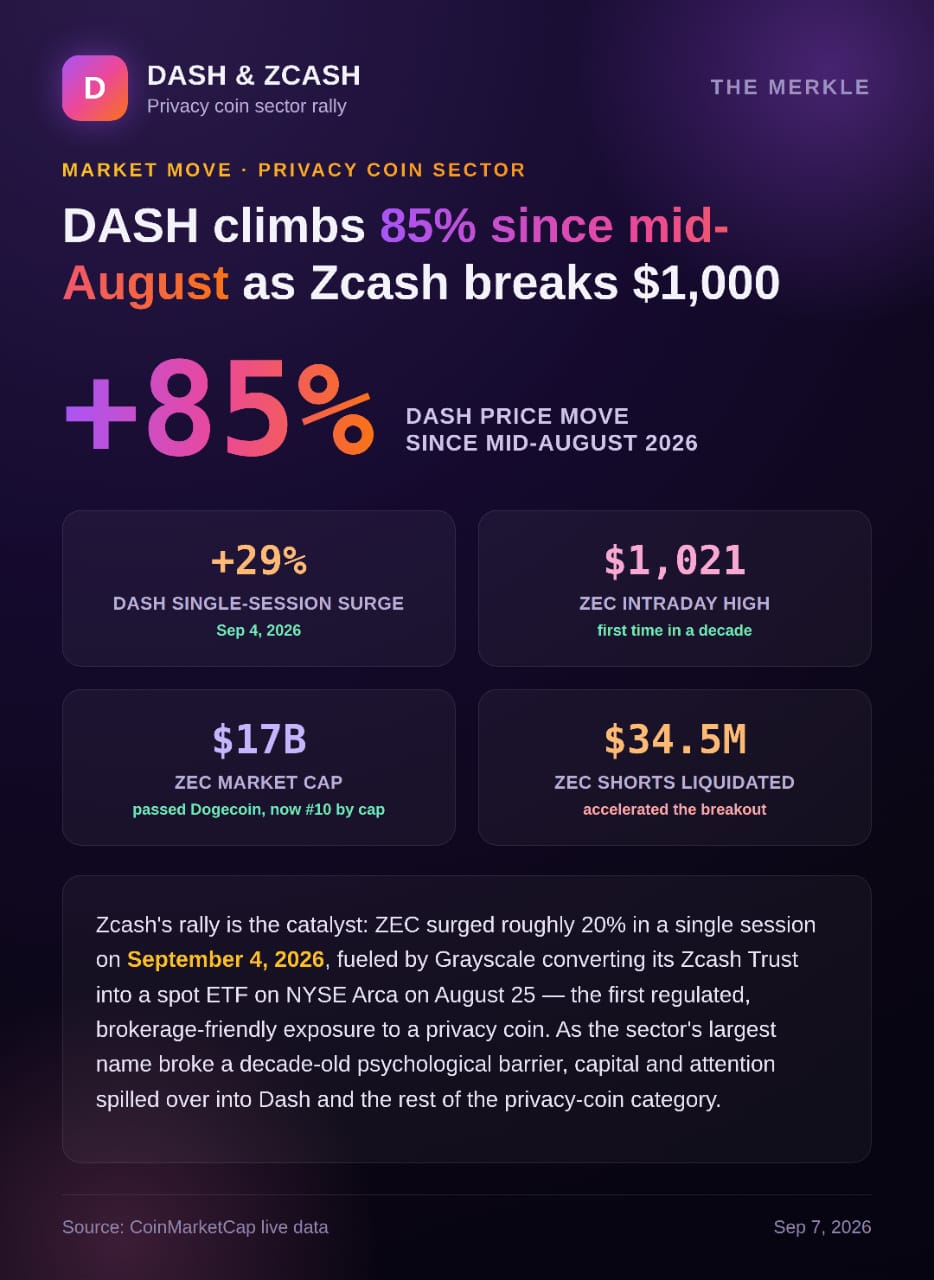
The most critical caveat in this analysis is that Dash’s rally is not an isolated phenomenon but deeply intertwined with a broader re-evaluation of the entire privacy coin sector. Zcash’s institutional validation through the Grayscale ETF acted as a powerful primary driver, attracting significant attention and capital. This attention then spilled over into other privacy-focused assets, with Dash being a prime beneficiary due to its own concurrent, fundamental catalysts.
This interconnectedness means that while Dash’s internal developments (DashCon, Platform v1.1, shielded transactions) are legitimate and verifiable, a substantial portion of its recent momentum is derived from the sector-wide narrative shift. This is a real and interesting setup: a perfect storm of long-awaited internal milestones aligning with a major external validation for the sector.
Expert Commentary and Industry Reactions
While no direct quotes from Dash or Zcash officials were provided in the original content, it is reasonable to infer the sentiment. Developers and community members associated with Dash would likely express satisfaction at the market’s validation of their years of dedicated, "heads-down" development. The sentiment would likely be one of vindication, demonstrating that their long-term roadmap and commitment to privacy and usability are now being recognized.
Market analysts, observing the Grayscale Zcash ETF, would likely highlight the potential for increased institutional participation in the privacy coin space. They might point to an evolving understanding of digital privacy’s importance and the increasing sophistication of regulatory compliance frameworks that allow for such products. The conversation among experts would likely shift from "can privacy coins exist?" to "how can privacy coins integrate into the broader financial system compliantly?"
Challenges and Future Outlook
Despite the impressive rally and positive developments, the road ahead for Dash and the broader privacy coin sector still presents challenges. Sustaining momentum will require continued product adoption, a consistent demonstration of real-world utility, and ongoing engagement with regulatory bodies to ensure long-term viability. The regulatory landscape remains dynamic, and while the Grayscale ETF marks a positive step, privacy coins will likely continue to face scrutiny.
Investors should closely monitor not only price charts but also fundamental metrics such as trading volume, market liquidity, and, most importantly, actual product adoption and usage statistics for DashSpend, the Dash Platform, and shielded transactions. A rally built partly on sector-wide spillover, while powerful, can also unwind quickly if that attention moves elsewhere or if fundamental adoption doesn’t keep pace with speculative interest. The differentiation between genuine, fundamental growth and speculative market movements will be crucial in determining the long-term success of Dash and the re-emerging privacy coin category.
Disclosure: This is not trading or investment advice. Always conduct thorough research before purchasing any cryptocurrency or investing in any services.