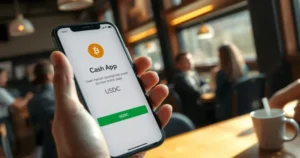
Cash App, a leading consumer finance platform operated by Jack Dorsey’s fintech giant Block, has taken a significant leap into the digital asset economy by initiating the rollout of stablecoin payment functionalities. Beginning May 27th, approximately 15 million of Cash App’s nearly 60 million monthly active users gained the ability to send and receive USD Coin (USDC), a move that positions the platform as one of the largest consumer-facing entities to embrace stablecoin transactions. This groundbreaking integration leverages the high-speed and low-cost infrastructure of the Solana blockchain, allowing users to seamlessly convert USDC into their existing U.S. dollar balances within the app. The phased rollout is expected to reach its complete user base by the end of the current week, marking a pivotal moment in the mainstream adoption of cryptocurrency for everyday transactions.
Seamless Integration and User Experience
The technical architecture underpinning Cash App’s USDC integration is designed for maximum user convenience, eschewing the complexities often associated with cryptocurrency management. Each Cash App user is provided with a unique blockchain deposit address specifically for USDC transactions. This means that individuals outside the Cash App ecosystem can directly send USDC to a Cash App account using any standard Solana-compatible wallet, fostering broader interoperability.
Crucially, the conversion between USDC and fiat U.S. dollars is handled instantaneously and automatically within the Cash App interface. Users are not required to manage separate cryptocurrency wallets, navigate intricate bridging protocols between different blockchains, or contend with the often unpredictable and prohibitive costs of network transaction fees, commonly known as gas fees. This streamlined approach aims to eliminate common barriers to entry for cryptocurrency payments, making the experience akin to traditional digital money transfers.
Block’s strategic decision to utilize the Solana blockchain as the settlement layer for USDC transactions is rooted in the network’s inherent advantages. Solana has gained recognition for its impressive transaction speeds and remarkably low transaction costs. In contrast, conducting small transactions on the Ethereum mainnet, especially during periods of network congestion, can become economically unviable due to elevated gas fees. Solana’s ability to facilitate transactions for fractions of a cent makes micropayments a practical reality, aligning perfectly with the goal of enabling frequent, low-value transactions for everyday consumers. This efficiency is paramount for a platform like Cash App, which serves a broad demographic with diverse spending habits.
Evolution from Bitcoin to a Comprehensive Digital Asset Ecosystem
Cash App’s journey into digital assets began years ago with its robust support for Bitcoin (BTC). Users have long been able to buy, sell, and make payments using Bitcoin, often facilitated by the Lightning Network for faster and cheaper transactions. The introduction of USDC represents a significant strategic expansion beyond a singular digital asset. While Bitcoin is widely regarded as a valuable store of value and a speculative investment, its price volatility can present challenges for immediate, precise payments. Sending a fixed amount of $50, for instance, carries the risk of its value fluctuating between the moment of sending and the time of receipt, a concern that stablecoins aim to mitigate.
USDC, issued by Circle, is designed to maintain a stable value, pegged at a 1:1 ratio with the U.S. dollar. Its stability is underpinned by reserves consisting of cash and short-dated U.S. Treasury securities, providing a degree of institutional backing and regulatory compliance. This stability makes it an ideal medium for transactional purposes, where predictable value is essential.
The initial announcement of Block’s intentions to integrate stablecoin support, including USDC on Solana, dates back to November 2025. At that time, the company outlined plans to enhance its existing Bitcoin payment features alongside the introduction of stablecoin capabilities. The current May rollout effectively delivers on this strategic roadmap, aligning with the projected timeline when Block indicated the feature would become available in early 2026. This sustained commitment to product development and delivery underscores Block’s long-term vision for its financial ecosystem.
Implications for Investors and the Broader Digital Asset Landscape
The integration of USDC payments by a platform with a user base approaching 60 million monthly active users carries profound implications for various stakeholders within the digital asset ecosystem.
For Solana: The widespread adoption of USDC payments through Cash App is poised to generate a substantial increase in transaction volume on the Solana blockchain. As Cash App progressively rolls out these capabilities to its entire user base, Solana could witness a significant surge in network activity, potentially bolstering its position as a leading blockchain for consumer-facing applications. Data from Solana’s network explorers typically show transaction counts in the tens of millions daily, and a platform like Cash App could add a considerable percentage to this figure.
For USDC Issuer Circle: This partnership represents a momentous occasion for Circle, the issuer of USDC. Cash App’s extensive reach could significantly amplify USDC’s circulation and daily transaction volume, thereby strengthening its competitive standing against Tether’s USDT, the dominant stablecoin in the market. The broader adoption of USDC in consumer-facing applications is critical for Circle’s strategy to solidify its position as a trusted and widely utilized digital dollar.
For Block: The introduction of stablecoin payments opens up new avenues for revenue generation for Block. The company could potentially earn revenue from conversion spreads on fiat-to-stablecoin exchanges, nominal transaction fees, or even by generating yield on the USDC reserves held on behalf of its users. This diversification of revenue streams, building upon the already substantial income derived from Cash App’s Bitcoin trading services, further solidifies Block’s financial resilience and growth prospects.
The broader trend of major financial technology companies embracing stablecoins is becoming increasingly evident. PayPal, another significant player in the payments space, has launched its own stablecoin, PayPal USD. Stripe, a dominant force in online payment processing, acquired the stablecoin infrastructure provider Bridge, signaling its commitment to this emerging technology. Cash App’s move further validates the growing utility and mainstream appeal of stablecoins for consumer transactions.
Regulatory Landscape and Competitive Dynamics
The regulatory environment surrounding stablecoins in the United States remains a critical factor to monitor. Legislation governing stablecoins is still in flux, and any future regulatory framework could introduce new requirements that alter the economic calculus of offering such services. The potential for regulatory changes adds an element of uncertainty to the long-term outlook for stablecoin adoption.
However, the competitive advantage that stablecoins offer, particularly in the remittance market, is undeniable. Traditional remittance services, such as Western Union, typically charge fees in the range of 5-10% for international money transfers. Stablecoin-based solutions, with their significantly lower transaction costs, present a formidable competitive threat to these incumbents. Cash App’s ability to facilitate near-instantaneous, low-cost cross-border payments using USDC could disrupt established remittance corridors, offering a more affordable and efficient alternative for millions of users.
The strategic importance of this integration cannot be overstated. By enabling stablecoin payments, Cash App is not merely adding another feature; it is fundamentally expanding the utility of its platform and aligning itself with the future of digital finance. The seamless integration, coupled with the inherent stability and efficiency of USDC on the Solana blockchain, sets a new benchmark for consumer-grade cryptocurrency adoption, potentially accelerating the transition towards a more digitally native financial landscape. The success of this initiative will likely serve as a catalyst for further innovation and adoption across the fintech and digital asset sectors.
A Deeper Dive into the Technical Underpinnings
The choice of Solana as the settlement layer is a testament to the blockchain’s maturation and its ability to handle high transaction throughput. Solana’s architecture, which employs a combination of proof-of-history (PoH) and proof-of-stake (PoS) consensus mechanisms, allows for rapid block finality and significantly reduced latency. This is a critical factor for a payment application where users expect near-instantaneous confirmations. For context, Solana can process thousands of transactions per second, a stark contrast to the limitations often experienced on other blockchains, particularly during peak demand.
The integration also highlights a nuanced understanding of user behavior and the desire for a simplified financial experience. By abstracting away the complexities of blockchain technology – such as managing private keys, understanding wallet addresses beyond their own deposit address, and monitoring gas prices – Cash App is effectively creating a "crypto-native" experience that feels familiar to users accustomed to traditional banking apps. The "no separate crypto wallet to manage" aspect is particularly significant, as it removes a major hurdle that has historically deterred mainstream adoption of cryptocurrencies.
Furthermore, the automatic conversion mechanism is a stroke of user-centric design. When a user receives USDC, it is instantly converted to their USD Cash balance, making the digital asset immediately spendable within the Cash App ecosystem or transferable to their bank account. This eliminates the need for users to actively decide when to convert their crypto, thus reducing decision fatigue and potential errors.
The Strategic Significance of Stablecoin Expansion
Cash App’s expansion into stablecoin payments marks a pivotal moment in its evolution from a peer-to-peer payment app to a comprehensive financial super-app. The platform’s initial foray into Bitcoin was a pioneering move, but its success was often limited by Bitcoin’s price volatility for everyday transactions. Stablecoins like USDC offer a solution to this problem by providing the stability of fiat currency while leveraging the underlying benefits of blockchain technology, such as transparency, security, and reduced transaction costs.
The timing of this rollout is also noteworthy. As regulatory clarity around digital assets slowly emerges, and as institutional interest continues to grow, platforms like Cash App are strategically positioning themselves to capture a significant share of the burgeoning digital economy. By offering a stable and user-friendly way to interact with digital dollars, Cash App is not only catering to existing cryptocurrency enthusiasts but also paving the way for a broader segment of the population to experience the benefits of blockchain-based finance.
The long-term implications for financial inclusion are also substantial. For individuals who are unbanked or underbanked, stablecoin payments through accessible platforms like Cash App could provide greater access to financial services, remittances, and savings opportunities, often at a lower cost than traditional alternatives. The ability to send and receive value globally with greater efficiency and lower fees can have a transformative impact on economic empowerment.
The integration also serves as a powerful endorsement of the Solana ecosystem. By choosing Solana for its stablecoin operations, Cash App is signaling confidence in the network’s scalability, reliability, and cost-effectiveness. This endorsement could attract further developer activity and investment into Solana, fostering its continued growth and innovation.
In conclusion, Cash App’s comprehensive integration of USDC stablecoin payments represents a significant milestone in the mainstream adoption of digital assets. By prioritizing user experience, leveraging the strengths of the Solana blockchain, and expanding its digital asset offerings beyond Bitcoin, Cash App is not only solidifying its position as a leader in the fintech space but also actively shaping the future of consumer finance. The move has far-reaching implications for the digital asset ecosystem, traditional financial institutions, and the millions of users who stand to benefit from more efficient, affordable, and accessible payment solutions.