Ethereum co-founder Vitalik Buterin has unveiled a significant update to the network’s roadmap, signaling a strategic pivot towards enhanced security, privacy, and the integration of artificial intelligence (AI) in the face of emerging technological challenges and evolving market demands. This recalibration, temporarily dubbed the "strawmap," prioritizes critical areas such as quantum resistance and robust transaction privacy, while other development pathways are being reassessed for future integration. The move comes at a time when the broader cryptocurrency landscape is grappling with increased security threats and the looming specter of quantum computing’s potential to undermine current cryptographic standards.
Ethereum’s Strategic Reorientation Towards Quantum Resistance and Enhanced Privacy
In a move that underscores the dynamic nature of blockchain development, Vitalik Buterin, a central figure in the Ethereum ecosystem, has initiated a strategic re-evaluation of the network’s developmental priorities. This has resulted in a temporary alteration of the 2023 roadmap, now referred to as the "strawmap," with a pronounced emphasis on addressing the impending threat of quantum computing and bolstering transaction privacy. This strategic shift reflects a proactive approach to fortifying Ethereum against future vulnerabilities and enhancing its appeal to a wider user base, including institutions that often prioritize stringent security and privacy protocols.
The urgency behind this recalibration is palpable. The cryptocurrency market has witnessed a significant uptick in security breaches in recent months, with billions of dollars lost to sophisticated hacks and exploits. These incidents have amplified concerns about the inherent security of blockchain networks and the robustness of their underlying cryptographic mechanisms. Furthermore, the rapid advancements in artificial intelligence are presenting both opportunities and challenges, prompting developers to explore how AI can be leveraged to improve network efficiency, security, and user experience, while also considering its potential implications for the future of cryptography.
A primary driver for this roadmap adjustment is the imminent threat posed by the advent of quantum computing. While still largely theoretical for widespread practical application, the development of powerful quantum computers could render current public-key cryptography, the bedrock of most digital asset security, obsolete. Researchers and industry experts have issued increasingly urgent warnings, with some reports suggesting that the timeline for this "quantum leap" could be as short as three years. This necessitates a swift transition to quantum-resistant cryptography to safeguard the integrity and security of blockchain networks like Ethereum.
Buterin’s vision for Ethereum in this post-quantum era is one of resilience and adaptability. The network is being engineered to be quantum-safe, with a clear prioritization of security measures that also enhance privacy. This dual focus is crucial, as it aims to ensure that Ethereum not only withstands the cryptographic challenges of quantum computing but also meets the growing demand for greater anonymity and confidentiality in digital transactions. The goal is to achieve these advancements while maintaining Ethereum’s core principles of scalability and censorship resistance, ensuring a robust and user-friendly platform for the future.
The Quantum Threat: A Looming Challenge for Digital Assets
The prospect of quantum computers capable of breaking current encryption algorithms represents a significant existential threat to the digital asset industry. The cryptographic foundations of most cryptocurrencies, including Ethereum, rely on mathematical problems that are computationally infeasible for classical computers to solve within a reasonable timeframe. However, quantum computers, by leveraging principles of quantum mechanics, could potentially solve these problems exponentially faster, thereby compromising the security of digital wallets, transaction histories, and the overall integrity of blockchain networks.
The timeline for the widespread availability of cryptographically relevant quantum computers remains a subject of intense scientific research and debate. However, a growing consensus among experts suggests that the threat is not a distant one. Reports from various research institutions and government agencies have highlighted the increasing pace of quantum computing development, leading to projections that the "Quantum Apocalypse" or "Q-Day" – the point at which quantum computers can break current cryptography – could occur within the next decade, with some estimates placing it even sooner. This has spurred a global race among researchers and corporations to develop and implement quantum-resistant cryptographic algorithms.
The implications for the cryptocurrency market are profound. If blockchains are not adequately prepared for the quantum era, private keys could be compromised, leading to the theft of digital assets on an unprecedented scale. Furthermore, the immutability of historical transaction data could be jeopardized, potentially undermining the trust and transparency that are fundamental to blockchain technology. This has led to a concerted effort within the blockchain community to transition to "post-quantum cryptography" (PQC), a field of cryptography designed to be resistant to attacks from both classical and quantum computers.
Ethereum’s Proactive Stance and the "Lean Ethereum" Initiative
Vitalik Buterin has been a vocal advocate for proactive measures against the quantum threat. As early as January of this year, he urged developers to begin adopting quantum-safe cryptography. This call to action was not merely rhetorical; the Ethereum Foundation has since established a dedicated team to focus on this critical area. This organizational commitment underscores the seriousness with which the Ethereum community is approaching the quantum challenge.
Furthermore, Buterin has championed the concept of "Lean Ethereum," a development philosophy aimed at streamlining and optimizing the network’s architecture and protocols. Within this framework, he has specifically addressed quantum safety. His recent proposal on "Lean Ethereum" last month detailed strategies for integrating quantum-resistant cryptographic primitives in a manner that minimizes overhead and maintains efficiency. This approach recognizes that simply replacing existing cryptographic algorithms with their quantum-resistant counterparts may not be sufficient; a holistic redesign that considers the performance implications is essential for a practical and scalable solution.
The proactive stance of Ethereum on quantum safety has drawn comparisons with other major blockchain networks, notably Bitcoin. While Bitcoin also faces the quantum threat, its development roadmap has historically been characterized by a more decentralized and sometimes slower pace of consensus-driven change. Concerns have been raised about Bitcoin’s ability to adapt to quantum threats, particularly concerning the management of dormant coins that have not been moved for extended periods. These older UTXOs might be more vulnerable if their associated private keys are compromised by quantum attacks. The urgency of the quantum threat has been amplified by recent reports, such as those from Google researchers, which have further rattled crypto holders regarding the potential risks.
Buterin’s detailed enumeration of priorities within the "strawmap" provides a clear roadmap for Ethereum’s future development in this regard:
-
First-class attention to strong privacy: This encompasses several key areas, including keyed nonces and recent roots, which are crucial for enhancing transaction privacy and security by ensuring that each transaction is uniquely identifiable and preventing replay attacks. Aspects of FOCIL (Forward-Compatible Information Layer) are also being considered, suggesting an effort to build privacy solutions that are adaptable to future technological advancements. The development of a "lean privacy pool" and "wormholes" indicates a focus on creating more efficient and secure methods for obscuring transaction details and facilitating cross-chain privacy.
-
Aggressive scaling in the context of post-quantum: This acknowledges that the integration of quantum-resistant cryptography must be balanced with the need for scalability. The mention of "leanSPHINCS signatures and aggregation" points to the adoption of advanced cryptographic techniques like SPHINCS+, a stateless hash-based signature scheme that is inherently quantum-resistant. Aggregation techniques aim to reduce the size of these signatures, thereby improving transaction throughput and reducing gas costs. The concept of "zkzk frames" likely refers to the integration of zero-knowledge proofs (ZKPs) within a nested framework, enabling advanced privacy and scalability solutions that are also quantum-resistant.
-
Lean-ification of the spec, to assist in formal verification (full FV of everything is only possible because of modern AI): This highlights the critical role of formal verification in ensuring the correctness and security of complex cryptographic systems. By simplifying the specification (lean-ification), it becomes more amenable to rigorous mathematical proof. The acknowledgment that "full FV of everything is only possible because of modern AI" points to the burgeoning integration of AI tools and techniques in the development and verification process, enabling developers to achieve a higher level of assurance for the network’s security properties.
The Role of AI in Securing Ethereum’s Future
The mention of modern AI’s role in formal verification is particularly noteworthy. As blockchain protocols become increasingly complex, traditional methods of testing and verification can become prohibitively time-consuming and resource-intensive. AI, with its capacity for pattern recognition, anomaly detection, and automated reasoning, offers a powerful new toolkit for identifying vulnerabilities and proving the correctness of cryptographic algorithms and smart contracts. This integration of AI into the development lifecycle can significantly accelerate the process of building secure and reliable systems, especially in the context of implementing complex quantum-resistant cryptography.
Furthermore, AI could play a crucial role in monitoring network activity for suspicious patterns that might indicate an impending quantum attack or other sophisticated exploits. Predictive analytics powered by AI could potentially identify subtle anomalies that human analysts might miss, allowing for preemptive security measures.
Market Implications and the Path Forward
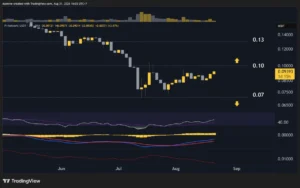
Ethereum has experienced a period of price consolidation in recent months, largely influenced by macroeconomic factors and the broader sideways trend in the cryptocurrency market. The largest altcoin by market capitalization has traded below the $1,900 mark, although it saw a notable spike in August, achieving monthly gains exceeding 4%.
The successful implementation of these ambitious roadmap updates, particularly the achievement of quantum-safe status and robust privacy features, could have a significant impact on Ethereum’s market position. A demonstrably secure and private network is likely to attract greater interest from institutional investors, who often face regulatory hurdles and internal risk-aversion policies that prioritize robust security and privacy. This influx of institutional capital, coupled with enhanced utility and user confidence, could propel Ethereum out of its current price range and into a new phase of growth.
The journey towards a quantum-safe and highly private Ethereum is undoubtedly complex and will require sustained effort and innovation from the development community. However, with Vitalik Buterin at the helm of strategic direction and a dedicated focus on these critical areas, Ethereum appears to be positioning itself not only to withstand future technological challenges but also to set a new standard for security and privacy in the decentralized web. The "strawmap" represents a significant step in this ongoing evolution, underscoring Ethereum’s commitment to a secure, private, and scalable future.