


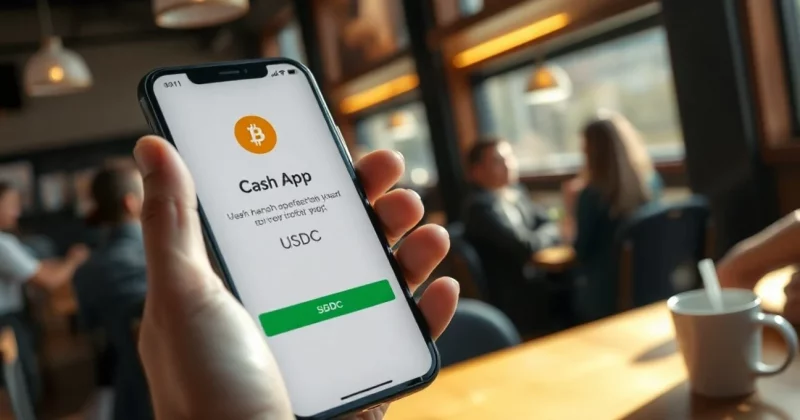
Cash App, the widely adopted financial platform operated by Jack Dorsey’s fintech giant Block, has officially begun rolling out its much-anticipated stablecoin payment functionality, marking a significant milestone in the mainstream adoption of cryptocurrencies for everyday transactions. As of May 27th, approximately 15 million of Cash App’s nearly 60 million monthly active users gained access to the ability to send and receive USD Coin (USDC), a stablecoin pegged 1:1 to the U.S. dollar. This strategic move positions Cash App among the largest consumer-facing platforms to embrace stablecoin payments, fundamentally expanding the utility of digital assets beyond speculative trading and into the realm of practical commerce.
The integration leverages the high-performance capabilities of the Solana blockchain for transaction settlement, a choice driven by its renowned speed and exceptionally low transaction costs. This synergy allows Cash App users to seamlessly convert incoming USDC directly into their existing U.S. dollar balance within the app, a process designed for maximum user convenience and minimal friction. The rollout, which commenced this week, is slated for full availability across the entire user base by the end of the current week, signifying a rapid and efficient deployment strategy by Block.
The Mechanics of Seamless Stablecoin Integration
At the heart of this innovation lies a user-friendly architecture that abstracts away much of the complexity typically associated with cryptocurrency transactions. Each Cash App user is provisioned with a unique blockchain deposit address specifically for USDC. This feature is particularly noteworthy as it enables individuals outside the Cash App ecosystem, utilizing standard Solana wallets, to directly send USDC to a Cash App account. This broadens the potential for peer-to-peer transfers and merchant payments, irrespective of whether the sender or receiver is a current Cash App customer.
The operational magic of the integration lies in its automated conversion process. Upon receiving USDC, the transaction is instantly settled on the Solana network, and the equivalent U.S. dollar value is automatically reflected in the user’s Cash App balance. This eliminates the need for users to manage separate cryptocurrency wallets, engage in complex cross-chain bridging, or worry about fluctuating gas fees, which can often render smaller transactions economically unviable, especially on more congested blockchain networks.
Block’s deliberate selection of Solana as the settlement layer underscores a pragmatic approach to optimizing the user experience. The Ethereum mainnet, while a dominant force in the cryptocurrency space, has historically grappled with periods of intense network congestion, leading to transaction fees that could easily exceed the value of small payments. In contrast, Solana’s transaction costs, often fractions of a cent, make micro-payments not only feasible but economically sensible. This efficiency is crucial for a platform like Cash App, which aims to facilitate a wide range of monetary exchanges, from small peer-to-peer transfers to potential merchant payments.
Evolving Beyond Bitcoin: A Comprehensive Digital Asset Strategy
Cash App’s journey into digital assets began years ago with robust support for Bitcoin (BTC). Users have long been able to buy, sell, and make payments using Bitcoin, notably through the integration of the Lightning Network, which offers faster and cheaper Bitcoin transactions. The addition of USDC represents a significant strategic pivot, moving beyond Bitcoin’s primary role as a store of value and speculative asset. While Bitcoin excels in these areas, its price volatility can be a deterrent for transactions requiring exact value settlement. Sending $50 today might not equate to $50 by the time the recipient accesses it if the price of Bitcoin experiences a significant swing.
USDC, on the other hand, offers stability. Pegged 1:1 to the U.S. dollar and backed by a reserve of cash and short-dated U.S. Treasuries managed by its issuer, Circle, USDC provides a predictable and stable unit of account. This stability is paramount for a payment platform aiming to serve the daily financial needs of its users. The introduction of USDC directly addresses the need for a digital currency that retains its value over time, making it an ideal medium for remittances, bill payments, and everyday purchases.
The roadmap for this stablecoin integration was first unveiled by Block in November 2025, outlining plans to incorporate USDC support on Solana alongside enhancements to its existing Bitcoin payment infrastructure. The current rollout, arriving in early 2026, aligns with the timeline Block initially projected, demonstrating a commitment to executing its strategic vision for a more comprehensive digital asset ecosystem.
Implications for Investors and the Digital Asset Landscape
The ramifications of a platform with nearly 60 million monthly active users integrating stablecoin payments are substantial and far-reaching. For Solana, this partnership signifies a potential explosion in transaction volume. As Cash App scales USDC payments across its entire user base, the Solana blockchain is poised to experience a significant surge in activity, solidifying its position as a viable infrastructure for mainstream financial applications. This increased demand could translate into greater network utility and potentially higher token value for SOL, Solana’s native cryptocurrency.
For Circle, the issuer of USDC, this collaboration with Cash App is a watershed moment. The integration is expected to dramatically boost USDC’s circulation and daily transaction volume, significantly strengthening its competitive standing against Tether (USDT), the dominant stablecoin in the market. Increased adoption through a platform as prominent as Cash App could attract more users and businesses to the USDC ecosystem, fostering broader acceptance and utility.
Block itself stands to unlock new revenue streams through this stablecoin integration. Potential avenues include earnings from conversion spreads when users buy or sell USDC, transaction fees, or yield generated from holding USDC reserves on behalf of users. Cash App’s existing Bitcoin trading feature already contributes meaningfully to Block’s revenue, and the addition of stablecoin services promises to diversify and enhance its financial performance.
This development places Cash App in esteemed company within the evolving digital payments landscape. PayPal has already launched its own stablecoin, and Stripe has acquired companies specializing in stablecoin payment solutions. The entry of Cash App, routing consumer transactions through Solana, further validates the growing trend of traditional financial services embracing and integrating blockchain technology and digital currencies.
However, the path forward is not without its challenges, particularly concerning regulatory frameworks. The regulatory landscape for stablecoins in the United States remains dynamic and subject to potential legislative changes. Future regulations could impose new requirements or alter the economic feasibility of offering such services. The potential for stablecoins to disrupt legacy remittance services, which often charge fees in the range of 5-10%, is significant. Companies like Western Union could face intensified competition as stablecoins offer a potentially more cost-effective alternative for international money transfers.
A Strategic Vision for Financial Inclusion
The integration of USDC on Cash App represents more than just a technological upgrade; it signifies a strategic vision to democratize access to stable digital currencies and enhance financial inclusion. By abstracting away the complexities of blockchain technology, Cash App is making it easier for millions of users, many of whom may be new to cryptocurrencies, to engage with a stable digital asset. This can be particularly impactful for individuals in regions with volatile local currencies or limited access to traditional banking services.
The ability to hold and transact in a U.S. dollar-pegged asset can provide a hedge against inflation and currency devaluation, offering a more stable financial foundation for individuals and families. Furthermore, the low transaction costs associated with Solana open doors for new use cases, such as facilitating small, regular payments for goods and services, or enabling remittances to be sent and received with minimal fees, thereby maximizing the value for recipients.
The choice of Solana also highlights a growing trend of established financial platforms looking beyond the most well-known blockchains. While Ethereum remains a cornerstone of the decentralized finance (DeFi) ecosystem, its scalability challenges have prompted many to explore alternative networks that offer higher throughput and lower costs. Solana’s architecture, with its focus on speed and efficiency, has proven attractive for applications requiring high transaction volumes and near-instantaneous settlement.
As Cash App continues to roll out this feature to its entire user base, the true impact on transaction volumes and user adoption will become clearer. However, the initial steps taken by Block signal a strong belief in the future of stablecoins as a mainstream payment method. This move by Cash App is likely to encourage further innovation and adoption from other financial institutions, accelerating the broader integration of digital currencies into the global financial system. The company’s commitment to building out a comprehensive digital asset suite, from Bitcoin to stablecoins, positions it as a key player in shaping the future of payments and financial services.
Background and Chronology of the Integration
The journey to integrating USDC on Cash App began with Block’s strategic announcements and product development efforts.
- November 2025: Block officially announces its intention to integrate USDC support on the Solana blockchain. This announcement sets the stage for expanding Cash App’s cryptocurrency offerings beyond Bitcoin. The company also indicates plans to enhance its existing Bitcoin payment features, signaling a commitment to a multi-faceted digital asset strategy.
- Early 2026 (Projected Launch): Block initially projects the stablecoin feature to launch in early 2026, providing a target timeline for development and deployment.
- May 27, 2026: Cash App commences the phased rollout of USDC send-and-receive functionality. This initial rollout targets approximately 15 million users, representing about 25% of its monthly active user base. The feature is confirmed to utilize the Solana blockchain for transaction settlement.
- End of the Week of May 27, 2026: The rollout is expected to reach full availability for all of Cash App’s nearly 60 million monthly active users, signifying the completion of the initial deployment phase.
This timeline demonstrates a methodical approach to product development and deployment, moving from announcement to pilot testing and finally to a full-scale launch. The swiftness of the rollout after the initial announcement reflects the maturity of the underlying technology and Block’s confidence in its seamless integration into the Cash App user experience.
Official Statements and Industry Reactions (Inferred)
While direct quotes from Block or Circle executives regarding the May 27th rollout were not provided in the source material, industry analysis and the nature of such a significant partnership allow for inferred reactions and expectations.
From Block’s perspective, this move is a logical extension of its mission to make financial services more accessible and equitable. Jack Dorsey, a vocal proponent of Bitcoin and decentralized technologies, has consistently advocated for empowering individuals with greater control over their finances. The integration of USDC aligns with this philosophy by offering a stable and widely accessible digital currency option. Block likely views this as a critical step in building out a comprehensive digital asset ecosystem that caters to a broad spectrum of user needs, from long-term value storage with Bitcoin to everyday transactional utility with USDC.
Circle, as the issuer of USDC, would undoubtedly view this partnership as a monumental win. A spokesperson for Circle, if queried, would likely express excitement about the opportunity to bring the stability and utility of USDC to Cash App’s vast user base. They would emphasize USDC’s role in facilitating secure and efficient transactions and highlight how this integration further solidifies USDC’s position as a leading stablecoin in the global market. Circle’s objective is to see USDC become a ubiquitous medium of exchange, and a partnership with a platform of Cash App’s scale is a significant catalyst for achieving that goal.
Competitors and other players in the fintech and crypto space are likely observing this development with keen interest. The move by Cash App validates the strategy of integrating stablecoins into mainstream payment platforms. It could spur further innovation and partnerships across the industry, potentially leading to increased competition and more user-friendly digital currency solutions. The broader impact is a step-change in how digital currencies are perceived and utilized by everyday consumers, moving them from niche assets to integral components of the financial landscape.
Broader Impact and Future Implications
The integration of USDC by Cash App is a significant event with far-reaching implications for the cryptocurrency industry, the fintech sector, and the broader financial ecosystem.
For Cryptocurrency Adoption: This initiative serves as a powerful endorsement of stablecoins as a practical tool for everyday financial activities. By demystifying stablecoin transactions and embedding them within a familiar application, Cash App is lowering the barrier to entry for millions of potential new users. This could accelerate the mainstream adoption of cryptocurrencies, moving beyond speculative investment to functional utility.
For Blockchain Technology: The reliance on Solana for transaction settlement highlights the growing importance of scalable and cost-effective blockchain infrastructure. As more mainstream applications explore blockchain integration, the demand for networks capable of handling high transaction volumes with low fees will continue to rise. Solana’s performance in this partnership will be closely watched and could pave the way for further adoption by other major financial platforms.
For Financial Inclusion: Stablecoins like USDC, when made accessible through platforms like Cash App, can be transformative for financial inclusion. They offer individuals in underserved regions or those with limited access to traditional banking a stable and secure way to store and transfer value. This can empower individuals to participate more fully in the global economy, send remittances more efficiently, and build financial resilience.
For Regulatory Landscape: As mentioned, the regulatory environment for stablecoins is still evolving. This significant integration by a major fintech player will undoubtedly draw further attention from regulators. Future legislation will likely aim to balance innovation with consumer protection, potentially shaping the operational models and economic viability of stablecoin services. The success and scale of this Cash App integration could influence the direction of these regulatory discussions.
For Competitive Dynamics: The move intensifies competition among payment platforms and digital asset service providers. As PayPal and Stripe have also made strategic plays in the stablecoin space, Cash App’s integration signals a race to capture market share and offer comprehensive digital currency solutions. This competitive pressure is likely to benefit consumers through improved services and potentially lower fees.
In conclusion, Cash App’s leap into stablecoin payments on the Solana blockchain is a watershed moment. It represents a bold step towards integrating digital currencies into the fabric of everyday commerce, driven by a commitment to user experience, technological innovation, and financial empowerment. The implications of this move will ripple through the financial world for years to come, shaping how we think about and utilize money in the digital age.














