


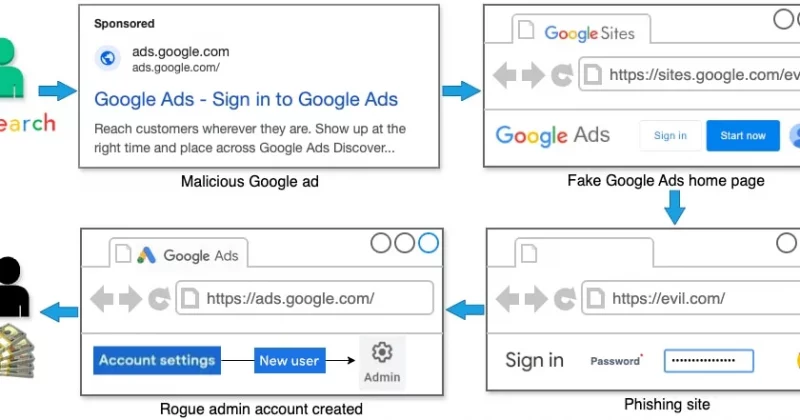
A seasoned cryptocurrency trader, known by the handle @ika_xbt, has reportedly suffered a devastating loss, seeing their entire digital asset portfolio, valued at over $400,000, vanish after falling victim to a highly deceptive phishing campaign. The incident, which came to light on May 26, involved a fraudulent Google advertisement that meticulously mimicked the official website of Uniswap, a leading decentralized exchange (DEX). This sophisticated scam exploited user trust in search engine results, leading to the irreversible loss of funds due to the inherent nature of blockchain transactions.
The attackers’ modus operandi involved purchasing sponsored advertisements on Google, specifically targeting users searching for "Uniswap." When individuals entered the search query, the malicious link, disguised as a legitimate Uniswap listing, appeared prominently at the top of the search results, often above the actual, organic link to the DEX. The fraudulent website was a near-perfect replica of the genuine Uniswap interface, designed to lull users into a false sense of security. Once a user connected their cryptocurrency wallet to this imposter site and subsequently approved a transaction, the attackers’ malicious smart contract was activated, draining all accessible funds from the compromised wallet.
The Anatomy of the Scam: Exploiting Trust, Not Technology
The mechanics of this particular phishing operation are disturbingly straightforward yet highly effective. By leveraging Google’s advertising platform, the perpetrators positioned their fake website directly in the path of unsuspecting users actively seeking to engage with Uniswap. The visual fidelity of the cloned website was crucial to its success, making it nearly indistinguishable from the authentic platform.
The critical moment of compromise occurs when a user connects their wallet and authorizes a transaction. This action grants the malicious smart contract permission to interact with the user’s assets. Unlike traditional financial systems, the blockchain operates on principles of immutability and decentralization, meaning there is no central authority to appeal to, no customer service hotline to contact, and no chargeback mechanism to reverse erroneous or fraudulent transactions. Once a transaction is confirmed on the blockchain, it is permanent.
In @ika_xbt’s case, a single, seemingly innocuous transaction approval was sufficient to deplete their entire portfolio. It is crucial to understand that this attack did not exploit any vulnerabilities within Uniswap’s core smart contracts or its underlying infrastructure. The protocol itself remained secure. Instead, the scam preyed on human psychology, specifically the trust users place in established search engines and the perceived legitimacy of sponsored results. The attackers essentially weaponized Google’s search advertising system to facilitate their criminal enterprise.
A Recurring Nightmare: The Escalation of Google-Led Crypto Phishing
This incident is not an isolated event but rather part of a disturbing and escalating trend. The Security Alliance, known as SEAL, has reported a significant surge in Google Search phishing campaigns targeting various cryptocurrency protocols since March 2026. The established pattern is alarmingly consistent: attackers acquire prominent ad placements on search engines, meticulously clone the interfaces of popular DeFi platforms, and then patiently await unsuspecting users to connect their wallets.
The financial repercussions of these campaigns have been substantial. As recently as February 2026, similar phishing attacks executed through Google sponsored ads resulted in six-figure losses for investors. A more significant incident occurred in July 2025, when a comparable scheme led to the theft of approximately $1.2 million in digital assets. These figures underscore the growing sophistication and profitability of these scams.
Prominent figures within the cryptocurrency space have repeatedly voiced their concerns. Hayden Adams, the founder of Uniswap, has been particularly vocal, criticizing search engine providers for their perceived inaction in combating fraudulent advertisements that proliferate on their platforms. His frustration is a sentiment echoed by many in the industry who believe that search engines have a responsibility to vet advertisers more rigorously, especially when dealing with financial services and digital assets.
The Chronology of a Devastating Loss:
While the exact timeline of @ika_xbt’s experience is not fully detailed in the initial report, the emergence of the phishing campaign on May 26 serves as a critical marker. It is understood that the attacker acquired Google ad placements that would have been active for a period leading up to and potentially beyond this date. The process would have involved:
- March 2026 Onwards: SEAL notes a significant increase in Google Search phishing campaigns targeting crypto.
- Pre-May 26, 2026: Attackers likely identify Uniswap as a target and begin developing a sophisticated phishing website, meticulously cloning its interface.
- Leading up to May 26, 2026: The attackers purchase sponsored ad space on Google, targeting the keyword "Uniswap."
- May 26, 2026: The phishing campaign becomes active and publicly visible. @ika_xbt, searching for Uniswap, encounters the fraudulent ad.
- During the Active Campaign: @ika_xbt clicks the malicious ad, navigates to the fake Uniswap site, connects their wallet, and approves a transaction.
- Post-Approval: The malicious smart contract executes, draining @ika_xbt’s entire portfolio.
- Discovery: Two wallets linked to the attackers are identified, holding approximately 146 ETH (around $306,000 at the time of discovery), with total stolen funds exceeding $400,000.
The Implications for Investors: Navigating the Perilous Waters of DeFi
The incident involving @ika_xbt serves as a stark and urgent reminder of the inherent risks associated with decentralized finance and the critical need for heightened vigilance among cryptocurrency investors. The irreversible nature of blockchain transactions, while a cornerstone of its security and autonomy, becomes its most significant liability in the face of human error or malicious intent.
In traditional finance, robust fraud protection mechanisms, including chargebacks, reversals, and insurance, exist precisely to mitigate the consequences of mistakes, scams, or system failures. DeFi, by its very design, forgoes these centralized safeguards in favor of user control and autonomy. This offers unparalleled freedom but also places the onus of security entirely on the individual.
Key Safeguards for Investors:
-
Bookmark Critical URLs: The most effective and cost-free defense against this type of phishing attack is to proactively bookmark the official URLs of all DeFi protocols you regularly use. Before initiating any transaction, verify that you are on the correct, bookmarked website. This simple habit bypasses the need to rely on search engine results, which can be easily manipulated.
-
Hardware Wallet Vigilance: Users of hardware wallets, such as Ledger or Trezor, possess a partial but significant advantage. Many hardware wallets require explicit, on-device confirmation of transaction details before signing. This provides a crucial final checkpoint, allowing users to carefully review the recipient address, the amount, and the contract interaction before committing. However, this is not an infallible solution. Users must remain diligent and scrutinize every detail presented on their hardware wallet’s screen, as even sophisticated users can be tricked into approving malicious transactions if they are not paying close attention.
-
Understanding Blockchain’s Irreversibility: Investors must internalize the concept that blockchain transactions are final. There is no "undo" button. This fundamental characteristic necessitates a proactive and security-conscious approach to all digital asset interactions.
The Broader Impact and Ethical Considerations:
The proliferation of these Google-driven phishing scams raises critical questions about the responsibility of technology platforms in safeguarding their users. While Google’s business model relies heavily on advertising revenue, the unchecked dissemination of fraudulent financial advertisements poses a significant threat to the burgeoning digital asset economy and the trust of its participants.
The lack of decisive action from search engines, as highlighted by Uniswap founder Hayden Adams, suggests a potential disconnect between the platforms’ advertising policies and the real-world consequences of allowing malicious actors to exploit their systems. The financial losses incurred by individuals like @ika_xbt are not merely statistics; they represent significant personal fortunes, often accumulated through diligent investment and risk management.
As the cryptocurrency market matures and attracts a wider audience, the need for robust, multi-layered security solutions becomes paramount. This includes not only technological advancements but also comprehensive user education and a greater sense of accountability from the platforms that facilitate access to the digital world. The current landscape, where sophisticated phishing campaigns can be launched with relative ease through widely trusted search engines, is unsustainable and demands urgent attention from both the industry and regulatory bodies.
The incident serves as a potent case study in the evolving threat landscape of digital finance. It underscores that the greatest vulnerabilities often lie not in the code of the protocols themselves, but in the human element and the trust placed in intermediary platforms. For investors, the message is clear: in the decentralized world, self-custody of assets also means self-custody of security, demanding constant vigilance and adherence to best practices.
Disclosure: This article was edited by the Editorial Team. For more information on how we create and review content, see our Editorial Policy.














