The burgeoning institutional embrace of Ethereum is reaching a pivotal juncture, with major financial players like BlackRock and Fidelity actively pursuing regulatory approval for spot Ether Exchange-Traded Funds (ETFs). This strategic push underscores a significant shift in how traditional finance views and engages with the second-largest cryptocurrency. BlackRock’s iShares Ethereum Trust, in particular, has demonstrated a remarkable influx of capital, amassing over $1 billion in Ether holdings within a mere nine days of its public debut, all while maintaining a consistent accumulation strategy with zero net selling. This sustained buying pressure, as highlighted by the on-chain intelligence platform Arkham on X, signals a strong conviction from one of the world’s largest asset managers in the long-term viability and value proposition of Ether.
Arkham’s report, disseminated via an X post, detailed the significant accumulation by BlackRock, noting that the financial giant has been acquiring Ether at an estimated average price of approximately $3,060 per coin. This consistent purchasing behavior, devoid of any divestment, suggests that BlackRock views its Ether holdings not as a transient speculative play, but as a foundational component within its broader investment portfolio. Such a deliberate and sustained acquisition strategy from a titan of traditional finance carries substantial weight in the digital asset ecosystem, potentially influencing market sentiment and attracting further institutional interest.
The Significance of BlackRock’s $1 Billion Accumulation
BlackRock’s unbroken streak of acquiring Ether is particularly noteworthy in the often volatile and unpredictable cryptocurrency market. In an environment characterized by rapid price fluctuations and opportunistic profit-taking, the commitment of over a billion dollars to a single digital asset represents a powerful endorsement. This move by BlackRock, alongside other major financial institutions, is widely interpreted as a testament to their growing confidence in Ether as a legitimate and valuable asset class. The sustained investment underscores a strategic belief in Ethereum’s underlying technology, its expanding ecosystem, and its potential for future growth.

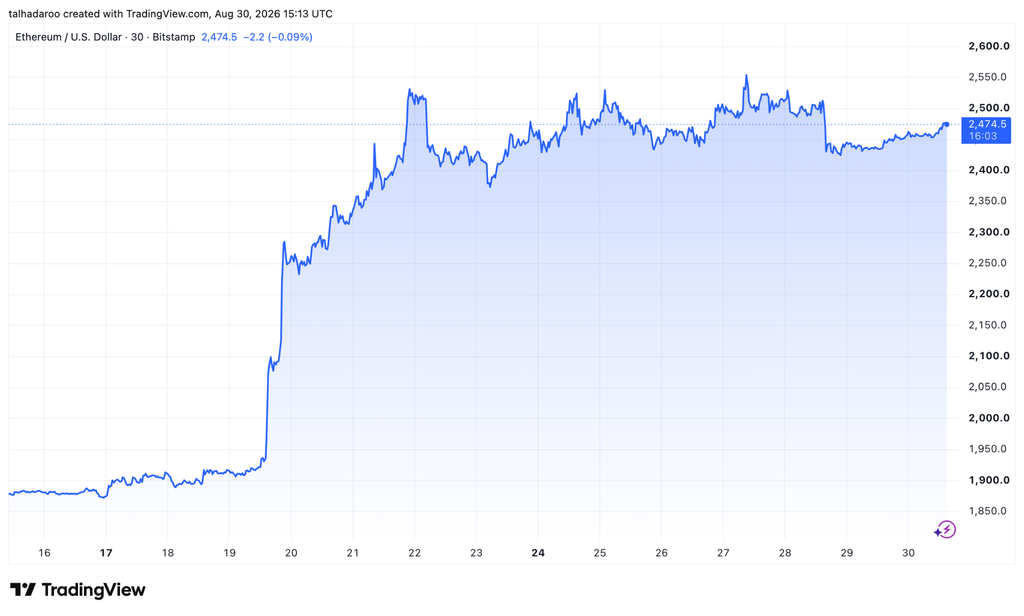
The timing of this significant accumulation also coincides with a notable resurgence in Ether’s market value. Over the preceding two weeks, the cryptocurrency experienced a substantial price recovery, marking an increase of more than 28%. This concurrent rise in both institutional investment and market price suggests a potential interplay between the two phenomena. As institutional capital flows in, it can contribute to price appreciation, which in turn can attract further interest from both retail and institutional investors. However, the consistent, zero-net-selling pattern observed in BlackRock’s activity points towards a more strategic, long-term accumulation rather than mere opportunistic trading driven by short-term price movements.
A Developing Regulatory Landscape for Ether ETFs
The groundwork for BlackRock’s substantial Ether holdings was laid with the Securities and Exchange Commission’s (SEC) approval of several spot Ether ETFs earlier this year. This regulatory milestone, following the successful launch of spot Bitcoin ETFs, marked a significant step towards integrating digital assets into mainstream investment products. Fidelity, another prominent financial institution, has also been actively pursuing its own spot Ether ETF, further emphasizing the growing institutional demand for regulated access to Ethereum. The SEC’s decisions on these applications are closely watched by the market, as they signal the regulator’s evolving stance on digital assets and their potential for broader adoption.
The approval process for these ETFs has been a multi-stage journey, involving extensive scrutiny and engagement with regulatory bodies. The initial approval of spot Bitcoin ETFs in January 2024 by the SEC, after years of anticipation, paved the way for similar applications for Ether. The success of these Bitcoin ETFs, which have seen significant inflows and trading volumes, has likely bolstered the confidence of issuers and the SEC in the viability of such products for Ether. The regulatory framework is designed to provide investors with a familiar investment vehicle, offering exposure to Ether without the complexities of direct digital asset custody.

Historical Context and Market Dynamics
The current institutional interest in Ethereum ETFs can be viewed as a natural progression following the establishment of similar products for Bitcoin. The success of Bitcoin ETFs has demonstrated a clear market appetite for regulated exposure to cryptocurrencies. Ethereum, as the second-largest cryptocurrency by market capitalization and the foundational platform for decentralized finance (DeFi) and non-fungible tokens (NFTs), represents the next logical step for institutional investors seeking to diversify their digital asset portfolios.
The Ethereum network itself has undergone significant transformations, most notably the transition to a Proof-of-Stake (PoS) consensus mechanism, known as "The Merge." This upgrade drastically reduced energy consumption and introduced staking rewards, making Ether a more attractive and sustainable asset from an environmental and economic perspective. These technological advancements, coupled with the expanding utility of the Ethereum blockchain, have contributed to its growing appeal among sophisticated investors.
Market Reactions and Investor Sentiment
The sustained accumulation by BlackRock has elicited a range of responses within the cryptocurrency community. While many view it as a positive indicator of institutional acceptance and a potential catalyst for future price appreciation, some voices urge caution. On-chain analytics platforms and social media discussions reveal a spectrum of opinions.

One perspective, as articulated by users on X, suggests that the apparent buying spree might be part of a broader market manipulation strategy, cautioning inexperienced traders against being drawn into a potentially inflated market. This sentiment stems from historical patterns where market rallies have been followed by sharp corrections, leading to significant losses for those who entered at peak prices. The argument posits that sustained accumulation, especially when unaccompanied by clear fundamental shifts, could be a precursor to a market downturn.
Conversely, another segment of the community interprets BlackRock’s consistent purchasing as evidence of a "quiet accumulation phase." This strategy, often employed by sophisticated investors, involves acquiring assets discreetly during periods of market consolidation or temporary price dips, aiming to maximize returns when an inevitable price rally occurs. Proponents of this view believe that such strategic buying from major institutions signals a strong underlying belief in the long-term potential of Ether, even if short-term price action appears less dynamic. This perspective emphasizes the value of assets that are being accumulated by entities with significant resources and market influence, viewing it as a strong signal of future price appreciation.
Broader Implications for the Digital Asset Market
The increasing institutional involvement in Ethereum, particularly through the pursuit of regulated ETF products and substantial direct holdings, carries significant implications for the broader digital asset market. Firstly, it lends further legitimacy to cryptocurrencies as an emerging asset class, potentially attracting a wider array of institutional investors, including pension funds, endowments, and asset managers who have previously been hesitant to engage directly with digital assets.
Secondly, the inflow of institutional capital can contribute to greater market stability and liquidity. As more significant players participate, trading volumes are likely to increase, and price volatility, while still a characteristic of the crypto market, may become more managed. This enhanced liquidity and stability can, in turn, foster further innovation and development within the Ethereum ecosystem.
Thirdly, the regulatory approvals for Ether ETFs represent a crucial step in the ongoing dialogue between traditional finance and the digital asset world. The SEC’s decisions, whether approving or denying applications, shape the regulatory landscape and provide clarity for both issuers and investors. Continued approvals for such products could set a precedent for other digital assets, accelerating their integration into mainstream financial products.
The growing interest from institutions like BlackRock and Fidelity in spot Ether ETFs is not merely a financial transaction; it represents a profound shift in perception and strategy. It signals a maturing market where digital assets are increasingly viewed through the lens of long-term investment potential rather than speculative novelty. As these institutional players continue to navigate the regulatory pathways and build their positions, the impact on Ethereum’s price, adoption, and its role within the global financial system is likely to be substantial and far-reaching. The coming months will be critical in observing how these developments unfold and what they portend for the future of digital asset investment.