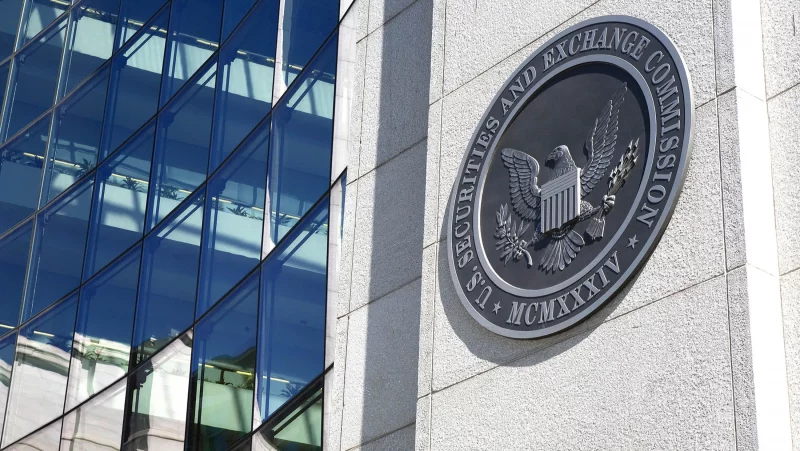
The United States Securities and Exchange Commission (SEC) staff, specifically through the Division of Corporation Finance, released an extensive set of Frequently Asked Questions (FAQs) on Friday, providing a new layer of interpretive guidance regarding the application of federal securities laws to the digital asset ecosystem. This latest communication targets several of the most contentious areas in the crypto-asset space, including the treatment of token buybacks, the classification of liquid staking receipt tokens, the nuances of crypto-related marketing, and the ongoing maintenance of decentralized blockchain networks. While the guidance explicitly states that it does not carry the force of law and has not been formally approved by the Commission itself, it serves as a critical roadmap for how the SEC’s staff intends to evaluate enforcement actions and compliance requirements for developers, exchanges, and decentralized finance (DeFi) protocols.
The publication builds upon the Commission’s March interpretations and seeks to refine the application of the Howey Test—the legal standard used to determine whether a transaction qualifies as an "investment contract." By providing specific scenarios where digital assets may or may not be viewed as securities, the SEC staff is attempting to address long-standing calls for regulatory clarity from the blockchain industry, even as the broader Commission continues its "regulation by enforcement" approach under Chairman Gary Gensler.
Detailed Clarification on Token Buybacks and Market Mechanics
One of the most significant portions of the new guidance concerns token buybacks. In traditional finance, stock buybacks are a common mechanism used by corporations to return value to shareholders, often signaling a company’s health and increasing the price of remaining shares. In the crypto sector, many protocols utilize similar mechanisms, often funded by transaction fees or protocol revenue, to reduce the circulating supply of a token.
The SEC staff clarified that when a blockchain network is already "functional," the mere act of announcing or executing a buyback of a non-security crypto asset does not, on its own, constitute a promise to perform "essential managerial efforts" under the Howey Test. This is a vital distinction for established decentralized protocols. If a network is decentralized and operational, the staff suggests that price appreciation resulting from a buyback may be attributed to market forces rather than the ongoing efforts of a centralized management team.
However, the analysis shifts significantly when a network is in its nascent stages. If a network is not yet functional, a buyback program could be viewed as a component of an investment contract. In these instances, the staff noted that if a buyback is marketed as a way to generate yield or guaranteed returns for token holders, it reinforces the "expectation of profits" prong of the Howey Test. This suggests that early-stage projects must be extremely cautious about how they structure and communicate supply-reduction mechanisms before their technology has reached a state of "sufficient decentralization" or functional utility.
Liquid Staking and the Emergence of Digital Tools
The guidance also provides a framework for evaluating liquid staking tokens (LSTs), which have become a cornerstone of the DeFi ecosystem. Liquid staking allows users to stake their assets to secure a network while receiving a "receipt token" that can be used in other financial applications.
According to the SEC staff, a staking receipt token that represents a digital commodity—and is not itself subject to an investment contract—can be treated as a "digital tool." This classification applies when the token serves primarily as a receipt for the underlying asset. The staff noted that in certain cases, receipt tokens issued by protocol-based liquid staking providers may be classified as digital commodities rather than securities, provided their value is tied directly to the operation of a functional crypto system and the broader market’s supply and demand.
This distinction is particularly relevant following the SEC’s recent enforcement actions against centralized staking-as-a-service providers. By differentiating between a "digital tool" (a receipt for a commodity) and a "security," the staff appears to be acknowledging that decentralized, protocol-level liquid staking functions differently than centralized investment schemes where a third party manages the staking process and takes a cut of the rewards.
Marketing Utility vs. Promoting Profit
Marketing and public communications have long been a focal point for SEC investigations. The new FAQs clarify that promoting the current utility or capabilities of a functional network generally does not amount to a promise of essential managerial efforts. This means that if a developer advertises that a network can process a certain number of transactions per second or supports specific smart contract functions, those statements are viewed as factual descriptions of existing technology rather than an invitation to invest based on the developer’s future work.
The guidance also addresses "aspirational statements." Developers often release roadmaps detailing future features or upgrades. The SEC staff indicated that such statements may fall outside the scope of an investment contract analysis if they do not promote potential profits. If the focus remains on the technological evolution of the network rather than the financial gain of the token holders, the risk of the asset being classified as a security is diminished. This provides a narrow but necessary window for developers to communicate their vision for a protocol without automatically triggering securities registration requirements.
Network Maintenance and the Role of Developers
A recurring question in the crypto industry is whether the continued involvement of a founding team in maintaining or improving a network makes the native token a security. The SEC staff has now stated that developers can continue to maintain, secure, and improve a functional network without these activities necessarily constituting the "essential managerial efforts" required to satisfy the Howey Test.
This suggests that once a network has reached a certain level of maturity and functionality, the technical contributions of the original developers are viewed more like the maintenance of public infrastructure rather than the profit-seeking activities of a corporate board. This clarification is a significant relief for decentralized autonomous organizations (DAOs) and core developer groups who feared that any upgrade to a protocol could be used as evidence of centralized control.
Secondary Markets and Promoter Status
The FAQs further address the role of secondary markets and trading platforms. The staff clarified that operating a secondary market for a crypto asset does not automatically categorize a trading platform as a "promoter" of that asset. To be considered a promoter, a platform must meet the specific definition outlined under Securities Act Rule 405.
This is a critical point for crypto exchanges, many of which have faced SEC lawsuits for allegedly acting as unregistered brokers and exchanges for securities. By clarifying that facilitating trade does not inherently make an entity a promoter, the staff provides a more nuanced view of the relationship between assets and the venues where they are traded. However, the platform must still ensure it does not engage in activities that would meet the Rule 405 criteria, such as actively marketing an asset for the purpose of driving investment.
Chronology of SEC Crypto Guidance
To understand the weight of this new guidance, it is essential to look at the timeline of the SEC’s regulatory trajectory:
- July 2017: The DAO Report. The SEC first applied the Howey Test to digital assets, concluding that DAO tokens were securities.
- April 2019: Framework for "Investment Contract" Analysis of Digital Assets. This was the first major attempt by SEC staff to provide a comprehensive set of factors to determine if a digital asset is a security.
- 2020–2023: A period of aggressive enforcement. High-profile cases against Ripple (XRP), LBRY, and Telegram set various legal precedents regarding secondary sales and initial offerings.
- March 2024: The SEC issues an interpretation regarding the custody of digital assets and the responsibilities of regulated entities.
- Present (Friday): The Division of Corporation Finance issues the current FAQs, refining the 2019 framework and addressing modern DeFi concepts like liquid staking and automated buybacks.
Supporting Data and Market Context
The need for this guidance is underscored by the massive growth in the sectors it addresses. As of late 2024, the liquid staking market represents a significant portion of the total value locked (TVL) in decentralized finance. Lido, the largest liquid staking protocol, holds over $25 billion in staked Ethereum (ETH). The classification of stETH (Lido Staked ETH) as a "digital tool" rather than a security has massive implications for the liquidity and tax treatment of millions of users.
Furthermore, token buybacks have become a standard practice for "blue-chip" DeFi protocols. Protocols like Maker (now Sky) and Aave have historically used millions of dollars in protocol revenue to buy back and burn their native tokens. According to data from various on-chain analytics platforms, buyback mechanisms have contributed to the removal of hundreds of millions of dollars worth of tokens from circulation over the past three years, acting as a "deflationary" force in the market.
Industry Reactions and Legal Implications
Legal experts and industry advocates have offered a mixed response to the news. While many welcome the granular detail, others point out the "non-binding" nature of the staff guidance.
"This is a step toward clarity, but it remains staff-level guidance," noted one prominent crypto attorney. "It doesn’t prevent the Commission from voting to sue a project, but it gives projects a much stronger ‘due process’ and ‘fair notice’ defense if they have followed these FAQs to the letter."
The Blockchain Association and other advocacy groups have long argued that the 1946 Howey Test is an ill-fitting tool for 21st-century software protocols. The new FAQs appear to be an attempt by the SEC staff to bridge that gap without requiring an act of Congress—something that remains elusive despite several pending bills in the House and Senate.
Analysis of Broader Impacts
The impact of this guidance will likely be felt in three main areas:
- DeFi Protocol Design: New projects are likely to structure their roadmaps to reach "functionality" faster, delaying buyback programs or aggressive marketing until the network is fully operational to avoid security status.
- Exchange Listings: Exchanges may use these FAQs as a checklist when deciding whether to list new tokens. Tokens that serve as "receipts" for commodities or those with buybacks on functional networks may face less friction for listing.
- Litigation Strategy: In ongoing cases like SEC v. Coinbase or SEC v. Binance, the defense teams will likely point to this guidance to argue that the SEC’s own staff recognizes that not all crypto activities—particularly those on functional networks—fall under securities laws.
By distinguishing between the marketing of "utility" and the marketing of "profit," the SEC is effectively telling the industry that it values the "tech" over the "speculation." While this has always been the SEC’s unofficial stance, the formalization of these views in a Division of Corporation Finance FAQ provides a more stable foundation for the industry to operate within the United States.
However, the distinction between a "functional" and "non-functional" network remains subjective. The SEC has not provided a binary metric (such as a specific number of nodes or users) to define functionality. This leaves a degree of "regulatory gray area" that will likely only be settled through further case law or legislative action. For now, the crypto industry has a more detailed, albeit unofficial, set of rules to follow as it navigates the complex waters of American financial regulation.