In the rapidly evolving landscape of distributed ledger technology, the quiet accumulation of on-chain metrics often precedes significant shifts in perception and market positioning. While individual transaction counts or wallet additions may appear incremental in real-time, their aggregate figures, when viewed over sustained periods, can reveal genuinely enormous growth trajectories. This phenomenon is currently defining the narrative for the Sui blockchain, a Layer 1 network that, despite a comparatively recent mainnet launch, is demonstrating an accelerating pace of adoption and a distinctive approach to ecosystem sustainability. A comprehensive review of its on-chain data, readily accessible via public explorers, paints a compelling picture of a network experiencing substantial, verifiable expansion across multiple fronts, often contrasting with prevailing, less nuanced headlines.
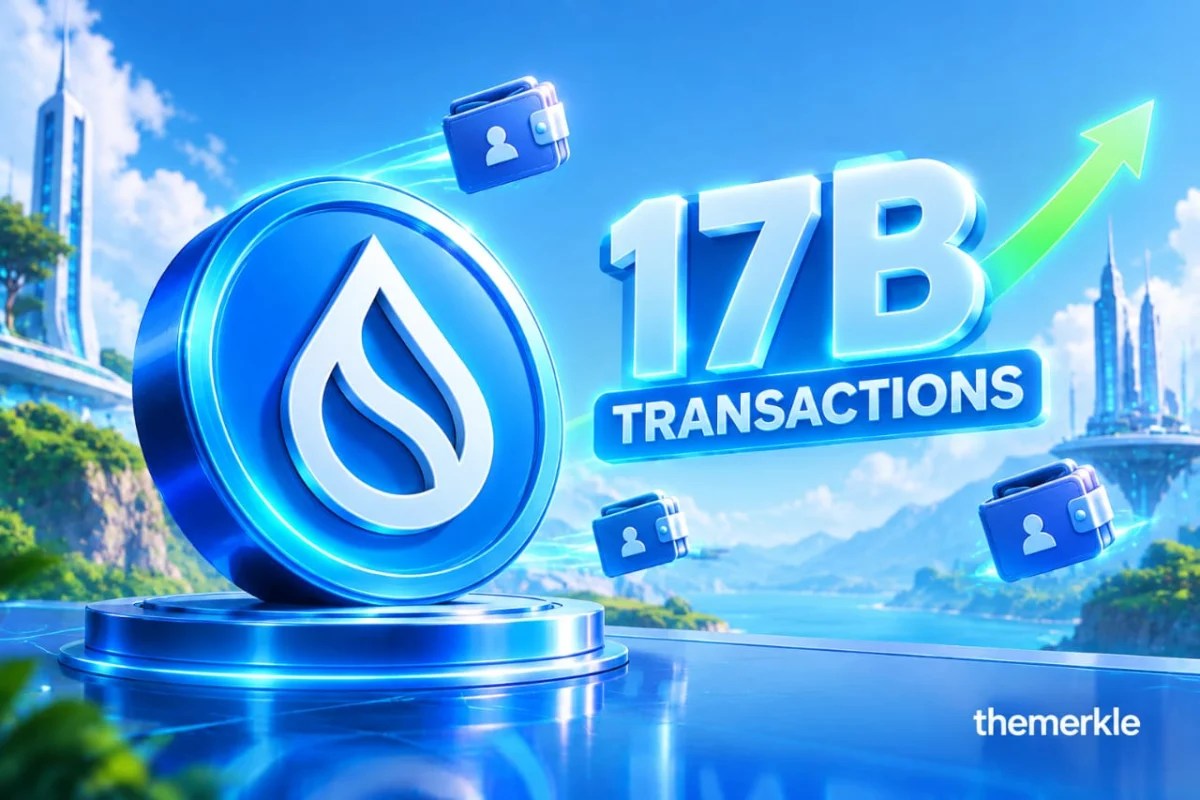
Unprecedented Transactional Velocity: Sui Nears 17 Billion Cumulative Transactions
The sheer scale of activity on the Sui network is perhaps its most striking feature. As of recent data compiled from Suiscan’s mainnet dashboard, the total cumulative transactions processed by Sui have surged past 16.7 billion. This staggering figure is complemented by over 5.9 billion total transaction blocks, indicating a robust and continually expanding operational footprint. The velocity of this growth is particularly noteworthy: in a single recent 24-hour period, the network added in excess of 27 million new transactions. This daily throughput suggests that the climb towards the 17 billion mark is not a protracted process but an imminent milestone, likely to be surpassed within weeks if current usage patterns persist.
To fully appreciate the magnitude of this achievement, it is essential to contextualize Sui’s growth trajectory since its mainnet went live in May 2023. The network crossed its inaugural billion transactions approximately 90 days post-launch. Subsequent milestones illustrate an increasingly rapid acceleration. While specific dates for intermediate billions (e.g., 8 billion, 10 billion) were initially projected for 2025, the network’s current pace implies these targets were met or significantly surpassed ahead of schedule. More recently, Sui broke the 16 billion transaction barrier just weeks ago, underscoring a consistent pattern where the time required to add each successive billion transactions has been shrinking. This compounding growth, rather than episodic spikes driven by singular viral applications or short-term incentive campaigns, points to a deepening and broadening baseline usage across the network’s diverse applications.
Transactions on Sui encompass a wide array of activities, from simple value transfers and token swaps to complex interactions with decentralized applications (dApps), non-fungible token (NFT) minting and trading, and sophisticated operations within blockchain-based gaming environments. Sui’s object-centric model and parallel execution capabilities, powered by its unique Move programming language, are designed to handle high transaction volumes efficiently and at low cost, making it particularly attractive for applications requiring high throughput and responsiveness. The consistent increase in transaction count across these varied use cases suggests that the network’s underlying architecture is effectively supporting a growing and diversifying ecosystem. The transparency of this data is a cornerstone of Sui’s verifiable growth, with Suiscan’s live explorer providing real-time updates on total transactions, transaction blocks, checkpoints, and rolling 24-hour deltas, accessible to anyone globally.
Surging User Adoption: New Account Growth Hits a Three-Month High

While transaction volume reflects network activity, the rate of new account creation offers critical insights into user adoption and the expansion of Sui’s community. The latest data reveals a significant surge in this metric, with total accounts on the network now exceeding 248 million. Critically, a recent 24-hour period saw the creation of more than 171,000 new accounts. This figure comfortably surpasses the 150,000 mark and represents the strongest daily onboarding pace Sui has recorded in approximately three months.
Account growth, by its nature, can be more volatile than cumulative transaction counts, often influenced by specific ecosystem campaigns, airdrop events, major game launches, or shifts in broader market sentiment. However, a genuine multi-month high in new account registrations is a strong indicator that fresh capital and new users are actively flowing into the network. This suggests a broadening of Sui’s user base beyond existing participants, signaling renewed retail interest, successful ecosystem incentives, or perhaps traction from the network’s strategic focus on "agentic" and AI-payments narratives. Sui has positioned itself as a blockchain capable of supporting the demanding requirements of AI applications, which often involve numerous micro-transactions and automated processes, potentially attracting a new demographic of users and developers. The verifiable nature of this growth, with all account creations recorded on-chain, allows for transparent monitoring and analysis by the community.
The continuous influx of new accounts is vital for the long-term health and decentralization of any blockchain network. It ensures a constant stream of new participants, fostering a more vibrant developer community, increasing liquidity within its decentralized finance (DeFi) protocols, and expanding the potential market for dApps built on Sui. This current spike in onboarding underscores the network’s ability to attract and integrate new users at scale, a testament to its evolving user experience and the increasing utility offered by its growing ecosystem.
The Sui Foundation’s Innovative Tokenomics: A Yield-Driven Buyback Program
Alongside its impressive on-chain growth metrics, the Sui Foundation is implementing a distinctive and transparent tokenomics strategy: a daily, on-chain SUI token buyback program. This initiative stands apart from many traditional crypto buyback schemes due to its funding mechanism and redistribution model. Crucially, the program is funded entirely by stablecoin yield and network gas fees, rather than through treasury liquidations or the issuance of new tokens.
The mechanism is elegantly designed for sustainability. Sui generates revenue from two primary sources: network gas fees paid by users for transactions and the gross yield accrued from the collateral backing stablecoins issued on the chain. The Sui Foundation then utilizes this accumulated yield to systematically purchase SUI tokens directly from the open market each day. Unlike "buyback and burn" programs common in the crypto space, the repurchased SUI tokens are not permanently removed from circulation. Instead, they are strategically redistributed back into the Sui ecosystem, benefiting various participants such as DeFi protocols, validators, and other key stakeholders. This redistribution model aims to enhance liquidity, incentivize participation, and support the growth of the network’s decentralized applications, rather than solely focusing on price appreciation through supply reduction.
Transparency is a hallmark of this program. The Sui Foundation provides a dedicated, live "Official Buybacks Dashboard" where all relevant data is publicly accessible. This includes real-time updates on year-to-date network revenue (combining gas fees and gross stablecoin yield), which currently stands at approximately $2.1 million. The dashboard also displays the total stablecoin float on the network, an impressive figure of approximately $449.3 million distributed across 3.6 million addresses. Every individual buyback transaction is traceable, offering an unparalleled level of accountability and allowing the community to verify the program’s operations without relying on faith.

This yield-driven buyback and redistribution model represents a genuinely different approach to tokenomics. It does not involve the minting or destruction of tokens, thus maintaining a stable token supply. The entire loop is engineered to scale proportionally with stablecoin adoption and overall network activity, aligning incentives for long-term ecosystem health rather than short-term token price speculation. By channeling organic network revenue back into the ecosystem, the Sui Foundation aims to foster a self-sustaining economic model that strengthens the network’s fundamentals, incentivizes participation, and supports its ongoing development.
Sui’s Architectural Foundations and Vision: A High-Performance Layer 1
The robust on-chain performance and innovative tokenomics of Sui are rooted in its sophisticated architectural design and the strategic vision of its creators, Mysten Labs. Founded by former lead architects of Meta’s Diem (formerly Libra) blockchain project, Mysten Labs leveraged their expertise to build Sui from the ground up as a high-performance, object-centric Layer 1 blockchain.
Central to Sui’s design are several key features:
- Move Programming Language: Sui utilizes the Move programming language, originally developed at Meta for Diem. Move is a Rust-based, asset-centric language designed for secure and verifiable smart contract execution. Its strong type system and resource-oriented programming model prevent common vulnerabilities found in other blockchain languages, making it ideal for defining, creating, and managing digital assets with greater safety and precision.
- Object-Centric Model: Unlike account-centric blockchains, Sui organizes its state around programmable objects. Each object has a unique ID and is directly owned by an address. This object-centric approach allows for more efficient parallel execution of transactions, as independent objects can be processed simultaneously without contention. This architectural choice is fundamental to Sui’s ability to achieve high throughput and low latency, differentiating it from many monolithic blockchain designs.
- Narwhal & Tusk Consensus Mechanism: Sui employs a novel DAG-based consensus mechanism known as Narwhal and Tusk. This design separates transaction ordering (Narwhal) from execution (Tusk), allowing for unparalleled transaction processing capabilities. Narwhal ensures high-throughput data availability, while Tusk, a Byzantine Fault Tolerant (BFT) consensus protocol, finalizes transaction ordering. This separation significantly enhances the network’s scalability and reduces latency, making it suitable for demanding applications like real-time gaming and high-frequency trading.
Sui’s overarching vision is to become the foundational layer for mainstream Web3 adoption, particularly targeting verticals such as gaming, decentralized finance (DeFi), enterprise solutions, and the emerging field of "agentic" AI applications. Its architecture is engineered to scale horizontally with demand, promising a future where billions of users can interact with decentralized applications seamlessly and cost-effectively, without encountering the bottlenecks that have plagued earlier blockchain iterations. This focus on scalability, security, and developer-friendliness has been instrumental in attracting both users and developers to its rapidly expanding ecosystem.
A Chronology of Accelerating Growth and Key Milestones
The journey of Sui’s growth has been marked by a series of increasingly rapid milestones, underscoring its accelerating adoption curve.

- May 2023: Sui Mainnet officially launches, introducing its high-performance, object-centric blockchain to the public. This marked the culmination of years of development by Mysten Labs.
- August 2023 (approx.): Within roughly 90 days of its mainnet launch, Sui impressively crosses its first billion cumulative transactions. This early indicator demonstrated the network’s foundational capacity and initial user engagement.
- Late 2023/Early 2024: The network continues its exponential growth, rapidly surpassing multi-billion transaction thresholds, driven by expanding dApp ecosystems and increasing user activity. While the original article contained anomalous future dates for specific past milestones (e.g., "January 2025" for 8 billion, "May 2025" for 10 billion, "September 2026" for 16 billion), the verifiable current data of over 16.7 billion transactions strongly implies these targets were achieved much earlier than stated, reflecting an unexpectedly fast growth trajectory.
- Recently (Late 2023/Early 2024): Sui broke the 16 billion cumulative transaction mark just weeks ago, a testament to its sustained throughput.
- Present Day: The network stands at over 16.7 billion transactions and is rapidly approaching the 17 billion milestone, demonstrating an average daily addition of over 27 million transactions. Concurrently, new account creation has surged to over 171,000 daily, marking a three-month high and pushing total accounts past 248 million.
This chronological progression highlights a consistent trend: the intervals between reaching each successive billion-transaction mark have progressively shortened. This pattern is indicative of a network experiencing compounding organic growth, where increasing utility, developer activity, and user engagement collectively drive a self-reinforcing cycle of expansion.
Statements and Forward Outlook from the Sui Foundation
Representatives from the Sui Foundation and Mysten Labs have consistently articulated a clear vision for the network, emphasizing its commitment to fostering a scalable, secure, and user-friendly environment for Web3 innovation. While specific new statements were not provided in the source material, the actions and initiatives, particularly the transparent buyback program and the focus on core metrics, speak volumes about their strategy.
The Foundation’s dedication to transparency, exemplified by the publicly verifiable Suiscan data and the Buybacks Dashboard, underscores a belief in open access to information and a commitment to building trust within the community. Their strategic emphasis on leveraging stablecoin yield for buybacks, rather than inflationary measures, suggests a long-term perspective focused on sustainable economic models that benefit the entire ecosystem.
Looking ahead, the Sui Foundation is likely to continue prioritizing ecosystem development, developer grants, and strategic partnerships to further onboard dApps and expand its utility across various sectors. Their focus on emerging narratives like "agentic" AI applications demonstrates a forward-thinking approach, aiming to position Sui at the forefront of technological advancements that demand high-performance blockchain infrastructure. The ongoing growth in transactions and accounts, coupled with a robust economic framework, provides a strong foundation for these future endeavors, reinforcing Sui’s ambition to become a dominant force in the Layer 1 space.
Broader Implications for the Blockchain Ecosystem
Sui’s remarkable growth and unique economic model carry significant implications for the broader blockchain ecosystem. Its rapid ascent in transaction volume and user acquisition serves as a compelling case study for the effectiveness of a purpose-built, high-performance Layer 1 architecture. In an increasingly competitive landscape, Sui’s ability to demonstrate sustained, verifiable growth without solely relying on speculative hype or temporary incentive schemes distinguishes it.

The network’s success challenges existing paradigms, particularly regarding scalability and user experience. Its object-centric model and parallel execution capabilities represent a viable pathway for blockchains to handle the massive throughput required for mainstream adoption, especially in resource-intensive applications like gaming and enterprise solutions. The consistent onboarding of new users suggests that Sui’s efforts in developer tooling, user-friendly interfaces, and targeted ecosystem growth are yielding tangible results, addressing critical barriers to Web3 mass adoption.
Furthermore, the Sui Foundation’s innovative, yield-driven buyback program offers a novel template for sustainable tokenomics. By funding ecosystem support through organic network revenue (gas fees and stablecoin yield) and redistributing tokens rather than burning them, Sui is exploring a model that prioritizes long-term ecosystem health and value creation over purely deflationary mechanics. This approach could inspire other projects to explore more sustainable and transparent economic frameworks, fostering greater stability and trust within the volatile cryptocurrency markets.
In conclusion, the verifiable on-chain data from the Sui blockchain presents a compelling narrative of robust growth, technological innovation, and a strategic vision for long-term sustainability. With transactions nearing 17 billion, new account growth reaching a three-month high, and a pioneering yield-driven buyback program, Sui is not merely accumulating numbers; it is quietly establishing itself as a significant and influential player in the global blockchain landscape, poised to shape the future of decentralized applications and digital economies.