The digital asset landscape is currently navigating a complex intersection of retail enthusiasm and institutional pragmatism, as speculations regarding the next wave of exchange-traded funds (ETFs) gain momentum. While the market has long anticipated that institutional giants such as BlackRock might provide a liquidity "bailout" for the struggling altcoin sector, seasoned industry analysts are tempering these expectations. The prevailing sentiment among Wall Street strategists suggests a fundamental divergence between how retail investors and institutional behemoths perceive the value of cryptographic tokens. Rather than seeking to absorb the circulating supply of speculative altcoins, institutional focus is shifting toward the underlying infrastructure of high-performance blockchains and the burgeoning sector of tokenized real-world assets (RWAs).
The Institutional Pivot: From Speculation to Tokenization
The narrative that traditional finance (TradFi) will eventually rotate capital into a broad spectrum of altcoins is being increasingly challenged. Experts from Weiss Crypto and other research-heavy firms argue that firms like BlackRock and Fidelity view the majority of the altcoin market with skepticism. From an institutional perspective, many existing tokens are categorized as mere fundraising vehicles for decentralized projects rather than productive assets with intrinsic value.
This skepticism is rooted in the "decoupling" of token price from protocol utility. While a decentralized application (dApp) may generate significant volume, the associated token often lacks a direct mechanism for value capture that satisfies institutional risk-reward profiles. Consequently, the anticipated "altcoin season" driven by institutional buying may never materialize in the way retail participants expect. Instead, the integration of blockchain technology into Wall Street is expected to manifest through the direct listing of assets on Layer-1 networks.
Industry projections suggest a future where traditional stock exchanges could be bypassed. In this model, companies would choose to issue equity or debt directly on blockchains like Solana or Ethereum. This evolution would allow investors to hold direct ownership of assets in a digital format, rendering many speculative "intermediary" tokens obsolete. BlackRock’s recent foray into tokenization, specifically through its BUIDL fund on the Ethereum network, serves as a primary example of this strategy. The focus is on the efficiency of the ledger, not necessarily the appreciation of the volatile assets currently dominating the retail market.
The ETF Pipeline: Solana, XRP, and Beyond
Despite the cautious stance on direct token accumulation, the race to provide regulated investment vehicles for various cryptocurrencies is accelerating. Following the landmark approvals of Bitcoin and Ethereum spot ETFs earlier this year, the focus has shifted to "The Next in Line." Solana (SOL) has emerged as a frontrunner in this regard, with firms like VanEck and 21Shares already filing applications with the U.S. Securities and Exchange Commission (SEC).
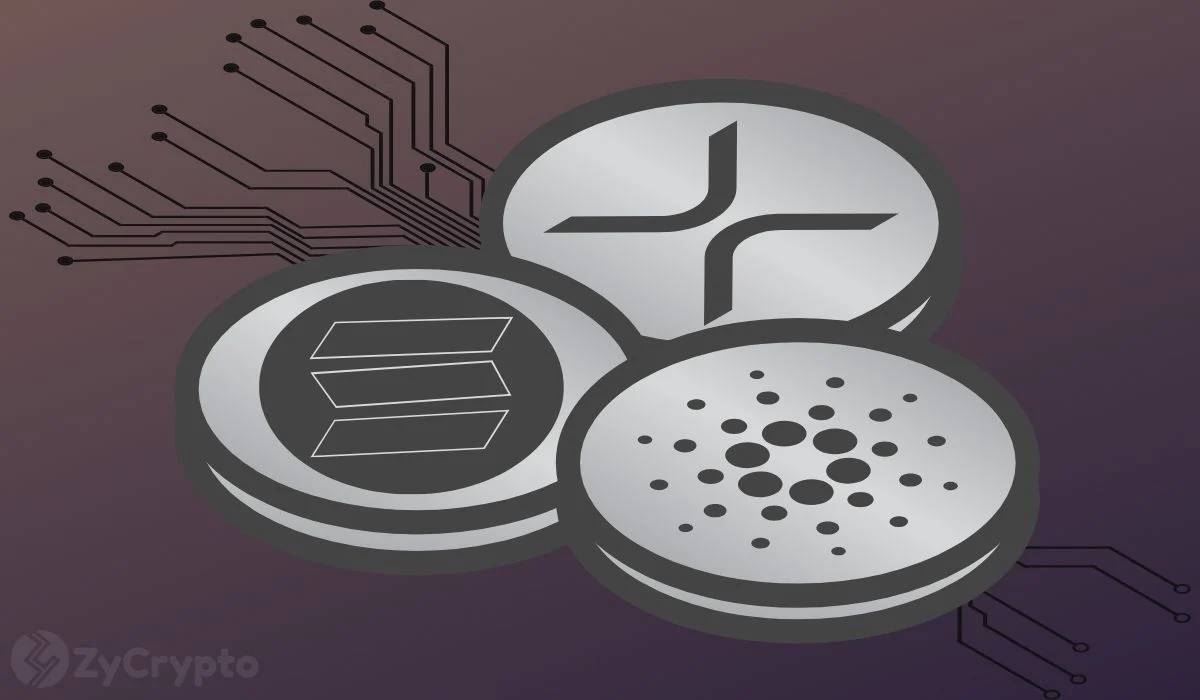
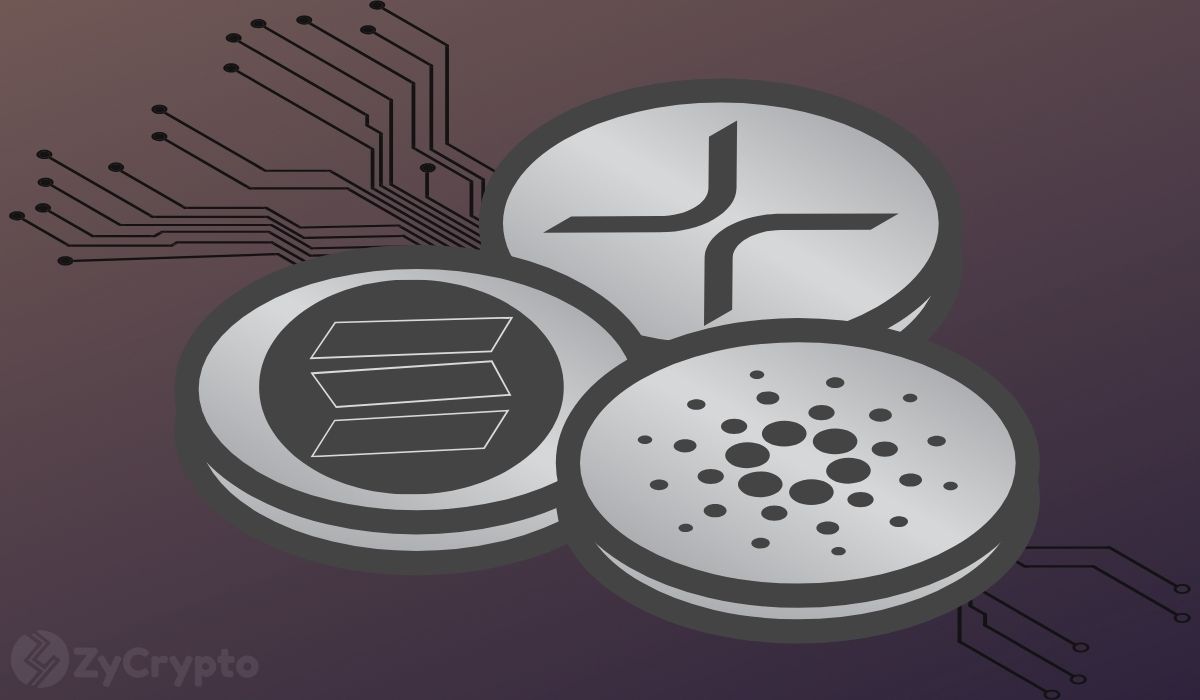
The push for a Solana ETF is seen as a litmus test for the SEC’s willingness to expand the crypto ETF wrapper to assets that the agency has previously labeled as securities in various lawsuits. However, the momentum does not stop with Solana. Market insiders suggest that proposals for XRP, Cardano (ADA), and even the meme-coin Shiba Inu (SHIB) are likely to reach the SEC’s desk in the near future.
For XRP, the path to an ETF is particularly notable given the multi-year legal battle between Ripple Labs and the SEC. With a federal court ruling that XRP is not a security when sold on public exchanges, the legal hurdles for an XRP ETF have diminished significantly compared to other altcoins. Similarly, Cardano’s robust academic approach to development and Shiba Inu’s massive community support have positioned them as candidates for issuers looking to capture niche market demand.
Market Stagnation: The Reality of the Altcoin Bear Cycle
While the ETF narrative provides a glimmer of hope, the current technical state of the altcoin market remains grim. Data indicates that approximately 84% of altcoins listed on Binance, the world’s largest cryptocurrency exchange, are currently trading below their 200-day moving average. This metric is widely regarded by technical analysts as a primary indicator of a long-term bearish trend.
This period of underperformance has persisted for nearly eight months, marking the second-longest streak of bearish dominance since 2020. The only period of greater sustained downward pressure was the ten-month "crypto winter" of the previous bear cycle. This prolonged stagnation has led to a significant drain in retail liquidity, as capital remains concentrated in Bitcoin or exits the ecosystem entirely.
The Altcoin Season Index, a popular metric tracked by CoinMarketCap, currently sits at 48/100. This score indicates that the market remains firmly in "Bitcoin Season," a phase where the primary cryptocurrency outperforms the vast majority of the top 50 altcoins. Furthermore, the Total 3 index—which measures the total market capitalization of all cryptocurrencies excluding Bitcoin and Ethereum—has continued to slide, suggesting that even the most established altcoins are struggling to find a floor.
Performance Breakdown of Top-Tier Assets
The downward pressure is not limited to small-cap "gems"; the industry’s heavyweights are also feeling the brunt of the macro-economic and regulatory headwinds.
-
Ethereum (ETH): The second-largest cryptocurrency by market cap recently dipped 2.54% to $1,579.21. Ethereum’s performance has been hampered by hawkish signals from central banks, which have maintained high interest rates to combat inflation. Additionally, Ethereum has exhibited a strong negative correlation with the S&P 500 recently, failing to act as a "risk-on" asset during brief rallies in the traditional equities market.
-
Binance Coin (BNB): BNB has faced a decline of 2.57%, following a technical breakdown below critical support levels. The asset’s utility is closely tied to the Binance ecosystem, which continues to navigate regulatory scrutiny across multiple jurisdictions, impacting investor confidence.
-
XRP: Trading at approximately $1.04, XRP has seen a decline of 2.36%. Traders are currently focused on defending the psychological support level of $1.00. While the legal clarity surrounding Ripple has provided some fundamental support, the asset remains susceptible to the broader market’s lack of momentum.
Chronology of Institutional Engagement
To understand the current state of the market, one must look at the timeline of institutional entry:
- January 2024: The SEC approves 11 spot Bitcoin ETFs, marking the official entry of Wall Street into the crypto sector.
- March 2024: BlackRock launches its first tokenized fund (BUIDL) on the Ethereum blockchain, signaling a shift toward RWA (Real World Assets).
- May 2024: The SEC unexpectedly approves the 19b-4 filings for spot Ethereum ETFs, clearing a major hurdle for the second-largest asset.
- June 2024: VanEck files for the first spot Solana ETF, followed quickly by 21Shares.
- Present Day: The market enters a period of "ETF exhaustion," where the excitement of new filings is offset by the reality of low altcoin liquidity and sustained high interest rates.
The Macroeconomic Overhang and Regulatory Uncertainty
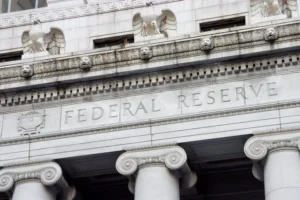
The broader economic environment continues to play a decisive role in the altcoin market’s inability to recover. With the Federal Reserve signaling a "higher for longer" approach to interest rates, capital remains expensive. In such an environment, investors prefer the relative safety of U.S. Treasuries or Bitcoin over the high-risk profiles of altcoins.
Regulatorily, the SEC under Chair Gary Gensler has remained steadfast in its view that most digital assets constitute investment contracts. While the approval of Ethereum ETFs suggested a potential softening of this stance, the agency’s ongoing litigation against major exchanges like Coinbase and Kraken continues to cast a shadow over the sector. The classification of Solana, Cardano, and other assets remains a point of contention that could delay or prevent the approval of their respective ETFs.
Future Implications and Strategic Outlook
The "Wall Street-fication" of the cryptocurrency market is a double-edged sword. On one hand, it provides a path toward legitimacy and massive capital inflows through regulated products like ETFs. On the other hand, it threatens to leave behind the original "altcoin" ethos of speculative retail trading.
As institutional players focus on high-performance Layer-1 networks for tokenization, the gap between "utility blockchains" and "speculative tokens" will likely widen. Projects that fail to demonstrate a clear role in the future of tokenized finance may find themselves permanently relegated to the fringes of the market.
For investors, the current environment serves as a test of conviction. Without meaningful catalysts—such as a definitive shift in Fed policy or a breakthrough in the SEC’s regulatory framework—the prolonged stagnation of the altcoin market is expected to continue. The next twelve months will be critical in determining whether the "ETF effect" can truly revitalize the broader crypto ecosystem or if it will remain a privilege reserved for a select few assets at the top of the pyramid. In the interim, the industry moves closer to a reality where the blockchain is the venue, and the assets are the very foundations of the global financial system.