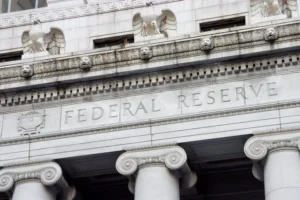
The Federal Open Market Committee (FOMC) released the minutes from its September 15 and 16 policy meeting, revealing a consensus among central bank officials that at least one more interest rate increase will likely be necessary before the end of the year to combat stubborn inflation and manage an unexpectedly resilient domestic economy. While the committee voted unanimously during the September session to raise the federal funds target range by 25 basis points to a level of 3.75% to 4%, the internal discussions underscored a growing concern that the current restrictive policy has yet to fully cool the inflationary heat radiating from several key sectors, most notably the burgeoning artificial intelligence infrastructure boom and volatile energy markets.
The detailed record of the two-day gathering highlights a complex economic landscape where traditional monetary levers are contending with new, structural shifts in capital investment. Despite the fastest tightening cycle in decades, Fed officials observed that financial conditions remain broadly supportive of growth, fueled by narrow corporate credit spreads and robust equity markets. This resilience, while positive for headline GDP, has complicated the central bank’s primary mission of returning inflation to its long-term 2% target, a goal that staff economists now project may not be fully realized until 2029.
Inflationary Pressures and the 2% Mandate
Central to the committee’s deliberations was the persistent gap between current price levels and the Federal Reserve’s stability mandate. According to the minutes, there was "broad concern" among participants that inflation had made "insufficient progress" toward the 2% objective. Fed staff provided updated estimates for the Personal Consumption Expenditures (PCE) price index, the central bank’s preferred inflation gauge. For August, headline PCE inflation was estimated at 3.8%, with core inflation—which strips out the volatile food and energy components—standing at 3.4%.
A significant technical note in the minutes revealed a forthcoming methodology change from the Bureau of Economic Analysis (BEA). Under the revised calculations, the August headline PCE would be adjusted downward to 3.6%, while the core figure would sit at 3.2%. Despite this statistical cooling, policymakers remained focused on the underlying drivers of price increases. Geopolitical tensions were cited as a primary catalyst for rising energy costs, which threaten to bleed into broader consumer prices through transportation and manufacturing channels.
Furthermore, business contacts reported to the Fed that the era of "transitory" price shocks has evolved into a more permanent environment of rising input costs. Participants noted that many corporations appear increasingly capable of passing these higher costs on to consumers, suggesting that inflation expectations may be becoming more entrenched than previously hoped. Consequently, staff economists revised their inflation forecasts upward for the 2026–2028 period, signaling a prolonged battle against price instability.
The AI Infrastructure Boom as a Macroeconomic Variable
One of the most striking elements of the September minutes was the explicit focus on the artificial intelligence (AI) sector as a significant macroeconomic driver. Policymakers pointed to the "surging investment in AI infrastructure" as a dual-edged sword. While such investment promises long-term productivity gains, its immediate effect has been to put upward pressure on prices and interest rates.
Some officials warned that the sheer scale of the AI buildout could push aggregate demand well above supply capacity over the medium term. This "AI-driven demand" is not limited to software development but extends to massive physical requirements: data centers, specialized semiconductors, and the massive energy loads required to power them. This surge in capital expenditure (CapEx) is reportedly impacting the bond markets.
During the period between the August and September meetings, Treasury yields rose by approximately 35 basis points across the curve, from two-year to 10-year maturities. Market commentary analyzed by the Fed staff suggested that "heavy borrowing" to finance AI-related infrastructure was a contributing factor to this rise in yields. As technology giants and infrastructure firms issue debt to fund these multi-billion-dollar projects, the increased supply of corporate and related government securities is exerting upward pressure on borrowing costs across the entire economy.
Labor Market Dynamics and Economic Resilience
Despite the increase in the federal funds rate to the 3.75%–4% range, the U.S. economy has shown remarkable durability. Officials generally judged the labor market to be "near full employment," a condition that typically supports higher wage growth and, by extension, sustained consumer spending. The staff’s updated growth outlook was strengthened, citing "robust business investment" and "solid consumer spending" as the primary pillars of the current expansion.
The minutes revealed a divide among officials regarding the current level of "restrictiveness" of the federal funds rate. Several participants argued that the policy rate might only be "mildly restrictive" or perhaps not restrictive at all, given the continued strength of the economy. This perspective led many to argue that a higher interest rate path would serve as "insurance" against a potential resurgence of inflation. Others viewed further tightening as a necessary step simply to satisfy their central economic outlook, which assumes a slowing of growth that has yet to fully materialize.
While mortgage rates have climbed to levels that are clearly "weighing on housing," the broader financial environment remains surprisingly accommodative. Narrow corporate credit spreads suggest that lenders are still willing to provide capital to businesses at relatively favorable rates, and the strength of the stock market has bolstered household wealth, potentially offsetting the "wealth effect" usually associated with higher interest rates.
Chronology of Recent Federal Reserve Actions
To understand the context of the September minutes, it is necessary to look at the trajectory of the FOMC’s policy over the preceding months:
- June Meeting: The committee held rates steady to assess the cumulative impact of previous hikes, though the "dot plot" suggested more increases were coming.
- July Meeting: The Fed resumed its tightening cycle with a 25-basis-point increase, citing continued economic strength and elevated inflation.
- August Economic Symposium (Jackson Hole): Chair Jerome Powell emphasized that the Fed would "proceed carefully" but remained prepared to raise rates further if the data warranted.
- September 15-16 Meeting: The committee unanimously raised the target range to 3.75%-4%. The minutes of this meeting, now released, show that the "pause" many investors hoped for is unlikely to be permanent.
- Current Outlook: The minutes confirm that the majority of officials see one more hike as "appropriate" before the conclusion of the calendar year.
Market Reaction and Analytical Implications
The release of the minutes has led market participants to recalibrate their expectations for the fourth quarter. The revelation that Fed staff do not see a return to 2% inflation until 2029 is a more hawkish projection than many private-sector economists had anticipated. It suggests a "higher for longer" regime that could persist even after the rate-hiking cycle officially concludes.
From a fact-based analytical perspective, the Fed is navigating a narrow corridor. If they fail to hike again, they risk allowing AI-driven investment and energy shocks to de-anchor inflation expectations. Conversely, if they over-tighten, they risk a hard landing for the housing sector and small businesses that do not have the same access to capital as the tech giants driving the AI boom.
The "AI factor" is particularly noteworthy for investors. It suggests that the tech sector is no longer just a component of the stock market but a structural driver of national monetary policy. The demand for capital to build out the digital frontier is competing with the Fed’s efforts to drain liquidity from the system, creating a tug-of-war that is manifesting in the 35-basis-point surge in Treasury yields.
Looking Ahead: The October Meeting
The FOMC emphasized that the path forward remains data-dependent. "Another hike is not predetermined," the minutes stated, noting that future decisions will hinge on the "incoming data and changes in the economic outlook and balance of risks."
The next policy meeting is scheduled for October 27 and 28. Between now and then, the committee will be closely watching several key indicators:
- PCE and CPI Data: To see if the August estimates hold or if inflation continues to surprise to the upside.
- Employment Reports: To determine if the "full employment" status begins to show signs of cooling.
- Energy Prices: To gauge the impact of ongoing geopolitical volatility on the domestic supply chain.
- Credit Spreads: To see if the "supportive financial conditions" mentioned in the minutes begin to tighten in response to the higher Treasury yields.
As the Federal Reserve approaches its final two meetings of the year, the minutes make one thing clear: the central bank is prepared to prioritize its inflation mandate over economic growth, even as new technological revolutions like AI rewrite the rules of economic demand. The era of low interest rates remains a distant memory, replaced by a strategic, cautious, yet resolute push toward the 2% stability target.