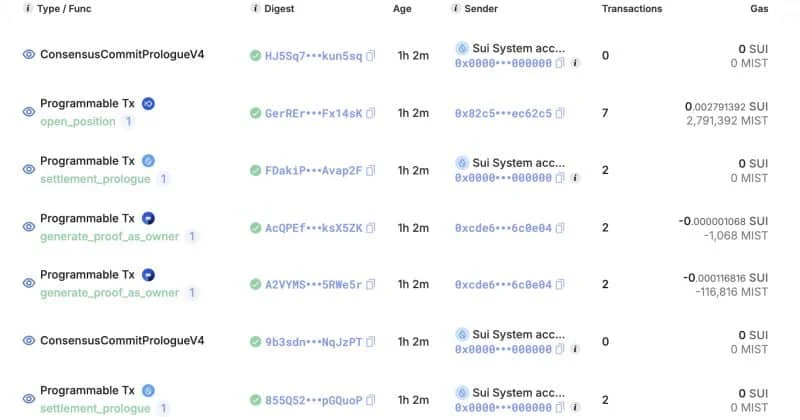
The Sui mainnet has successfully returned to full operational status following a significant disruption that lasted approximately 5 hours and 55 minutes. The incident, stemming from a critical bug in the network’s latest software release, brought transaction processing to a halt, underscoring ongoing challenges in maintaining consistent uptime for the high-throughput Layer 1 blockchain. Validators collectively collaborated to implement a fix and deploy a patched version of the software, restoring normal checkpoint production on May 29. The root cause has been identified as a flaw within the gas charging logic introduced in Sui’s 1.72 release, which governs the calculation of transaction fees, leading to a complete cessation of new block finalization across the network.
The Genesis of the Disruption: A Gas Fee Conundrum
The network’s operational standstill commenced on May 28, when validators who had upgraded to the 1.72 release encountered the critical bug. This malfunction prevented the production of new checkpoints, the fundamental building blocks of the blockchain. Consequently, no new transactions could be finalized, effectively freezing the Sui network in its tracks. The recovery process proved to be more complex than a simple software rollback. Sui’s robust consensus mechanism necessitates that validators controlling over two-thirds of all staked tokens must successfully upgrade to the patched software before the chain can resume its normal operations. This distributed consensus requirement, while designed for security and decentralization, can introduce complexities and delays during critical recovery phases.
Despite the prolonged downtime, Sui’s inherent safety mechanisms proved effective. Crucially, no user funds were compromised or lost during the approximately six-hour disruption. The network’s architectural design also ensured that no data inconsistencies or corruption occurred while the chain was in a stalled state. This resilience in safeguarding assets and data integrity is a testament to the underlying principles of blockchain technology, even in the face of operational setbacks.
However, the impact on the vibrant decentralized finance (DeFi) ecosystem built upon Sui was palpable. During the outage, DeFi protocols experienced a complete freeze. Users were unable to adjust their existing positions, execute new trades, or initiate critical actions such as liquidations, which are essential for maintaining the stability of many DeFi lending and derivatives platforms. This paralysis within the DeFi layer highlights the direct and often immediate consequences of Layer 1 network instability on its user-facing applications.
A Troubling Pattern: Recurring Incidents and Validator Coordination
This recent outage is not an isolated incident for the Sui network. It follows a similar, prolonged downtime experienced on January 14 of the same year, which lasted for approximately six hours. That earlier incident was attributed to a bug within the consensus commit mechanism. The recurrence of multi-hour network stalls within a relatively short timeframe of approximately five months has raised concerns among observers and investors regarding the network’s stability and the efficacy of its software development and deployment processes.
Both significant incidents share a common thread: a bug introduced via a software update, followed by a concerted and time-consuming effort to coordinate validator upgrades across the distributed network. This pattern suggests potential vulnerabilities in the rigorous testing or rollout procedures for new software releases, particularly those impacting core network functionalities like gas charging or consensus.
The market’s reaction to the latest outage was swift and reflective of investor sentiment. During the approximately six-hour downtime, the price of the SUI token experienced a noticeable decline, reportedly falling to around $0.89, representing a loss in the range of 6-8%. Following the restoration of normal operations, the SUI token saw a partial recovery, indicating that the market is sensitive to such disruptions but also willing to re-evaluate its position once stability is re-established. This price volatility serves as a real-time indicator of how network reliability directly influences investor confidence and asset valuation in the cryptocurrency space.
Implications for Investors and the Sui Ecosystem
Sui has ambitious aspirations, positioning itself as a high-throughput Layer 1 blockchain designed to support the demanding requirements of advanced DeFi applications and, crucially, to attract institutional capital. The total value locked (TVL) within the Sui ecosystem has demonstrated significant growth, reaching hundreds of millions of dollars since the network’s launch. This growth trajectory underscores the potential and promise of the platform.
However, recurring network stability issues present a significant hurdle to realizing these ambitions. For traders and investors, the observed price action – a sharp decline during the outage followed by a partial recovery – suggests a potential market playbook. If a third major incident of this magnitude were to occur, it is plausible that the market could react with a similar pattern of sell-off and subsequent, possibly more hesitant, recovery. Such a pattern, if repeated, could erode investor confidence and deter new capital from entering the ecosystem.
The repeated challenges in maintaining consistent uptime raise critical questions for the Sui development team and its validators. While the network’s safety guarantees and data integrity have held firm, the operational disruptions themselves can have a chilling effect on adoption and the development of complex, time-sensitive applications. For DeFi protocols, the ability to execute transactions reliably and predictably is paramount. Even short periods of downtime can lead to significant financial losses for users and damage the reputation of the protocols themselves.
The Path Forward: Enhancing Stability and Trust
The Sui Foundation and the development team face the immediate challenge of addressing the root causes of these recurring outages. This likely involves a comprehensive review of their software development lifecycle, including more rigorous pre-release testing, enhanced simulation environments, and potentially more granular rollout strategies for critical updates. The coordination of validator upgrades, while a decentralized necessity, also needs to be streamlined to minimize the window of vulnerability during such events.
Furthermore, transparent communication with the community and investors is crucial. Clearly articulating the steps being taken to prevent future incidents, the lessons learned from past disruptions, and the roadmap for enhancing network resilience will be vital in rebuilding and maintaining trust. The cryptocurrency market is inherently volatile, but the stability of the underlying infrastructure is a foundational element upon which long-term value and adoption are built.
The incident also serves as a broader case study for the challenges inherent in developing and scaling new blockchain technologies. The pursuit of high throughput and scalability, while desirable, must be balanced with robust testing, meticulous deployment, and a deep understanding of the potential failure points within complex distributed systems. As Sui continues to evolve, its ability to demonstrate consistent and reliable performance will be a key determinant of its success in the competitive Layer 1 blockchain landscape. The recent outage, while resolved, serves as a potent reminder of the ongoing work required to solidify its position as a stable and trustworthy platform for the future of decentralized finance and beyond.