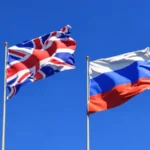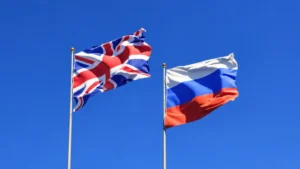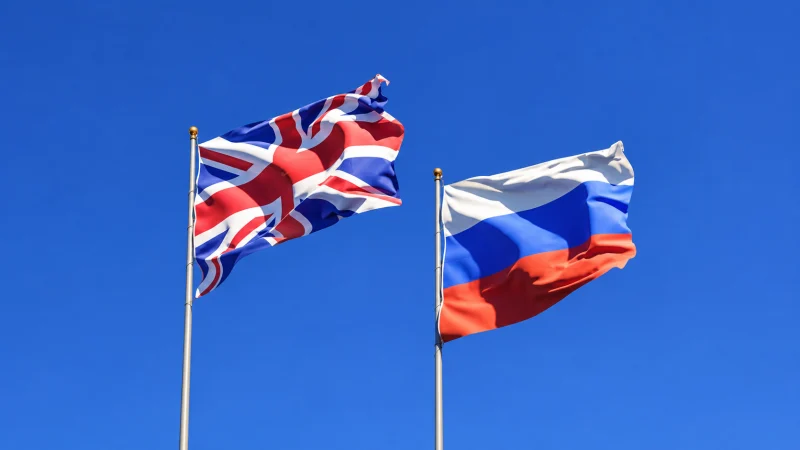
The British government has significantly expanded its economic pressure on the Russian Federation, targeting a sophisticated network of cryptocurrency exchanges and payment platforms suspected of facilitating the circumvention of international financial restrictions. According to a detailed analysis report from blockchain intelligence firm TRM Labs, the UK’s Foreign, Commonwealth & Development Office (FCDO) unveiled a comprehensive sanctions package on October 8, 2024, aimed at dismantling the digital and physical infrastructure that sustains Russia’s military-industrial complex and its ability to process international payments despite global isolation. This latest round of enforcement includes 38 new designations, focusing specifically on Russian oil revenue, the so-called "shadow fleet" of maritime vessels, military suppliers, and the evolving financial architecture that utilizes crypto-assets to bypass the SWIFT banking system.
Among the primary targets of this enforcement action are the corporate entities behind prominent crypto-service providers, including Xeltox Enterprises Ltd, the owner of Cryptomus and Heleket, and the Kyrgyzstan-based exchange TokenSpot. The designations represent a strategic shift by the UK’s Office of Financial Sanctions Implementation (OFSI) to address the "phoenix-like" nature of crypto-enabled evasion, where services frequently rebrand or utilize parallel infrastructures to evade detection.
The Architecture of Evasion: Xeltox Enterprises and the Cryptomus-Heleket Nexus
A central pillar of the UK’s recent sanctions package is the targeting of Xeltox Enterprises Ltd, a company registered in British Columbia, Canada. The UK government identified Xeltox as a critical provider of financial services that support Russia’s destabilizing activities. Xeltox operates primarily through Cryptomus, a well-known crypto payment gateway, and Heleket, a secondary platform that TRM Labs asserts is operationally inseparable from its predecessor.
The relationship between Cryptomus and Heleket serves as a textbook example of how Russian-linked financial networks adapt to regulatory pressure. TRM Labs’ investigation, which began in early 2024, concluded with high confidence that the two platforms share more than just a corporate parent. The analysis revealed identical technical infrastructure, overlapping personnel, shared liquidity sources, and mirrored branding strategies.
The timing of Heleket’s emergence is particularly telling. The platform was launched in January 2025, just one month before Cryptomus announced the implementation of mandatory Know Your Customer (KYC) identity checks. In the world of illicit finance, the introduction of identity verification often triggers a migration of high-risk users. TRM Labs observed a corresponding shift in blockchain volume: as Cryptomus’s activity dipped following the KYC announcement, Heleket’s volume surged. This suggests that Heleket was intentionally positioned as a "no-KYC" alternative to capture the traffic that could no longer operate anonymously on Cryptomus.
Furthermore, the scale of transactions involving sanctioned entities is staggering. TRM’s April 2024 analysis indicated that Cryptomus received more than $204 million from Garantex—a Russian exchange sanctioned by the U.S. and UK for its role in money laundering—and sent approximately $101 million back to the same entity. These flows highlight the platform’s role as a vital bridge between the sanctioned Russian economy and the broader digital asset ecosystem.
TokenSpot and the Central Asian Connection
The sanctions also turned their focus toward Central Asia, specifically targeting TokenSpot, an exchange based in Kyrgyzstan. The UK government designated TokenSpot for its role in supporting the Russian financial services sector, but the implications go deeper. TRM Labs assessed with high confidence that TokenSpot serves as a front company for Grinex, an entity the firm considers to be a likely successor to the heavily sanctioned Garantex.
The technical evidence linking TokenSpot to Grinex is robust. Analysts identified six specific TRON blockchain addresses attributed to both exchanges, along with shared infrastructure used for collecting customer deposits and managing transaction fee balances. The coordination between the two entities was further evidenced by synchronized service interruptions; in April 2024, both platforms announced maintenance and downtime within nearly identical windows, suggesting they were managed by the same technical team.
The financial data regarding TokenSpot illustrates its function as a high-capacity funnel for Russian capital. According to TRM Labs, TokenSpot facilitated more than $950 million in combined transactions to Grinex, Garantex, and the A7 network. The A7 network, in particular, was identified as TokenSpot’s largest external counterparty, receiving approximately $679.5 million. This network is believed to be a key node in Russia’s efforts to procure sensitive technology and settle international trade accounts outside the purview of Western regulators.
Expansion of the Sanctions List: Beyond Digital Assets
While the crypto-related designations have garnered significant attention, the October 8 package is a multi-layered assault on Russian economic lifelines. The UK also designated Tsunami Payments and Processing KG, both registered in Kyrgyzstan, for their roles in the facilitation of cross-border payments for Russian clients. These entities, along with Processing KG director Ulan Bukabaev, represent the physical and corporate "rails" that connect the Russian domestic market to international suppliers.
Domestically, the UK targeted Russian-based companies including Planeta and the Moscow-based bank Stolichny Kredit. These designations are intended to further insulate the UK’s financial system from Russian influence and to signal to the international banking community that any engagement with these firms carries significant legal and financial risk.
A significant portion of the sanctions package was also dedicated to the "shadow fleet"—the collection of aging oil tankers that Russia uses to transport crude oil above the G7-imposed price cap. By sanctioning these vessels and their operators alongside crypto-exchanges, the UK is acknowledging the synergy between physical trade and digital payment settlement in Russia’s current economic strategy.
Chronology of Enforcement and Adaptation
The evolution of these sanctions reflects a long-term "cat-and-mouse" game between Western regulators and Russian financial operatives.
- February 2022: Following the invasion of Ukraine, the UK and its allies imposed sweeping sanctions on major Russian banks and prohibited the use of SWIFT.
- April 2022: The U.S. and UK sanctioned Garantex, the largest Russian crypto exchange, for facilitating illicit flows.
- 2023-2024: Russian entities began shifting toward smaller, decentralized, or "gray market" exchanges in jurisdictions with perceived regulatory leniency, such as Kyrgyzstan and the UAE.
- January 2025: Heleket is launched as a "parallel brand" to Cryptomus.
- February 2025: Cryptomus implements mandatory KYC, leading to a migration of volume to Heleket.
- April 2024: TRM Labs identifies the operational links between Cryptomus, Heleket, TokenSpot, and Grinex.
- October 8, 2024: The UK FCDO formalizes the designations of these entities, effectively cutting them off from the British financial system and alerting global compliance teams.
Analysis of Implications for the Global Crypto Industry
The UK’s move carries profound implications for the global cryptocurrency industry and the broader financial services sector. First and foremost, it underscores the increasing sophistication of blockchain forensics. The ability of firms like TRM Labs to trace shared infrastructure, liquidity pools, and even the timing of server maintenance demonstrates that the "anonymity" of blockchain is a double-edged sword for those attempting to evade sanctions.
For compliance departments at global exchanges and financial institutions, these designations serve as a call to action. The UK government and TRM Labs have urged compliance teams to conduct retrospective reviews of their historical exposure to these newly sanctioned entities. This involves not only blocking current addresses but also identifying "successor services"—new brands that may emerge using the same underlying technology or personnel as Xeltox or TokenSpot.
The focus on Kyrgyzstan and other Central Asian nations highlights a shifting geographic front in the economic war. As Russia finds it harder to operate in traditional financial hubs like London or New York, it has increasingly relied on "middleman" jurisdictions. By sanctioning firms in Kyrgyzstan, the UK is putting pressure on these nations to tighten their own regulatory frameworks or risk being cut off from Western markets themselves.
Official Responses and Geopolitical Context
While the Russian government has historically dismissed Western sanctions as "illegal" and "ineffective," the sheer volume of capital moving through these exchanges suggests they are vital for the Russian economy’s survival. In previous statements, the Russian Central Bank has expressed a cautious but growing interest in using digital assets for international settlements to bypass the dollar-dominated system.
A spokesperson for the UK government stated that these measures are part of a coordinated effort to "starve Putin’s war machine of the resources it needs." The UK’s Foreign Secretary has repeatedly emphasized that the goal is to make it as difficult and expensive as possible for Russia to conduct international trade.
From a regulatory standpoint, the UK’s action aligns with the broader international strategy of the Financial Action Task Force (FATF), which has been pushing for stricter "Travel Rule" compliance and KYC standards across the crypto sector. The exposure of the Cryptomus-Heleket migration tactic serves as a warning to other platforms that attempting to circumvent KYC requirements through secondary brands will not go unnoticed.
Conclusion: The Future of Economic Deterrence
The UK’s October 8 sanctions package represents a maturing of economic statecraft in the digital age. By targeting the intersection of maritime trade, traditional banking, and cryptocurrency, the UK is attempting to close the loopholes that have allowed the Russian economy to remain resilient.
The findings by TRM Labs highlight a recurring pattern: Russian-linked services are highly adaptable, often adopting new identities or shifting activity to parallel platforms the moment enforcement actions are taken. However, as the digital paper trail becomes clearer and the cooperation between private intelligence firms and government agencies strengthens, the window for such evasion is narrowing.
For the cryptocurrency industry, this serves as a reminder that "neutrality" is no longer a viable regulatory stance. As digital assets become central to geopolitical conflict, the pressure on exchanges to maintain rigorous compliance standards and to proactively monitor for sanctioned activity will only intensify. The UK’s latest move is not just a strike against a few exchanges; it is a signal that the digital frontier is now a primary battlefield in the global sanctions regime.