The Ethereum Name Service (ENS) Decentralized Autonomous Organization (DAO) has officially ratified the "Activate ENSv2" proposal, marking a pivotal moment in the evolution of human-readable cryptocurrency addresses. The decisive vote concluded with an overwhelming 1.69 million ENS tokens cast in favor of the upgrade, against a singular opposing wallet contributing 24.94 ENS. Critically, the proposal successfully cleared its required quorum by an impressive 69%, a threshold that had appeared uncertain just days prior. This landmark decision sets the stage for the execution of 15 complex smart contract calls, anticipated around October 27, which will fundamentally reshape how .eth names are registered and managed on the Ethereum blockchain.
The passage of ENSv2 represents a significant architectural shift for one of Web3’s most foundational services. ENS functions as a distributed, open, and extensible naming system based on the Ethereum blockchain, translating complex hexadecimal wallet addresses into user-friendly names like "alice.eth." Since its inception, ENSv1 has facilitated millions of these registrations, becoming an indispensable layer of user experience within the decentralized ecosystem. However, as the Ethereum network matured and the demands for more sophisticated functionalities grew, the need for an upgraded infrastructure became apparent. ENSv2 aims to address these evolving requirements by introducing enhanced features, improved gas efficiency, and a more modular, future-proof design, promising a more robust and scalable naming service for the next generation of Web3 users.
A Deeper Dive into the Activation Proposal
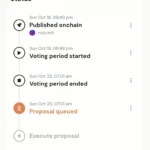
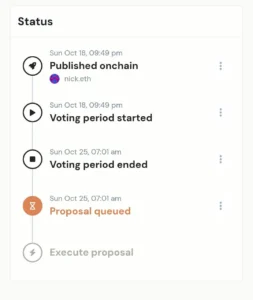
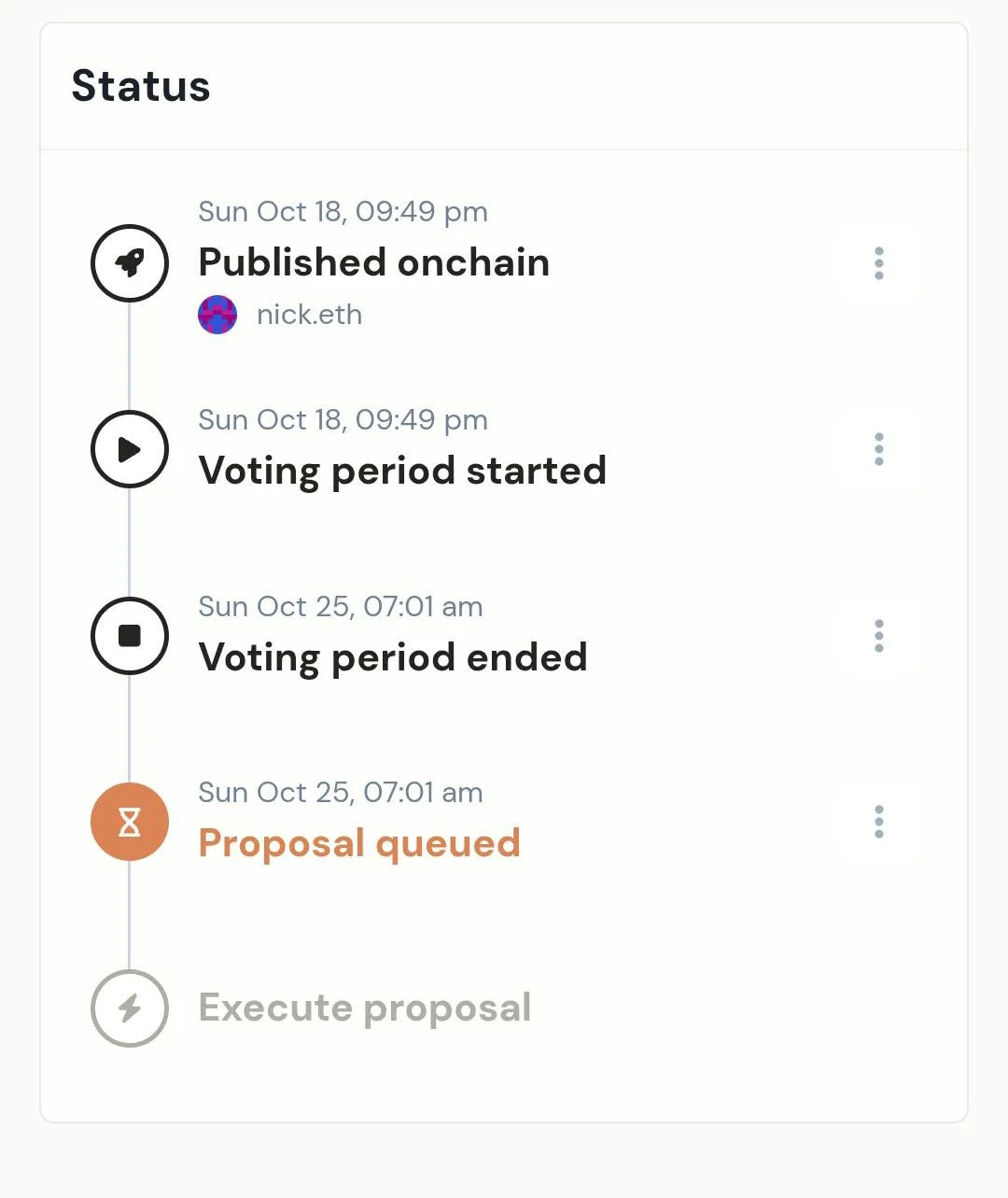
The "Activate ENSv2" proposal (Proposal ID: 51915723803355532053585313225201979004629663092454892570706465301184496475762) was formally published on-chain by nick.eth, a prominent figure and co-founder within the ENS ecosystem, on October 18. Voting subsequently opened on the same evening. For the proposal to pass, it required two key conditions: a minimum of 1 million ENS votes in favor, representing approximately 1% of the total ENS supply, and a simple majority of votes cast. The core objective of this proposal is to initiate the transition from the legacy ENSv1 registrar to the new ENSv2 architecture. This transition is not merely an incremental update but a comprehensive overhaul designed to "freeze new .eth registrations on the v1 registrar" and lay the groundwork for a more advanced, efficient, and secure naming system. The 15 contract calls embedded within the proposal are the technical blueprint for this migration, meticulously designed to transfer control, update registries, and decommission outdated functionalities.
Chronology of a Decisive Vote
The journey to approval was not without its moments of tension. When voting commenced on October 18, initial participation was modest, with only six wallets casting a combined total of 531,252 ENS votes. By October 20, support had edged up to approximately 619,420 votes. While this represented a growing interest, it still left the proposal approximately 380,000 votes short of the crucial 1 million ENS quorum threshold, leading to concerns about voter engagement and the potential for the upgrade to stall.

However, the final days of the voting period witnessed a dramatic surge in participation. Over the subsequent five days, more than 1 million additional votes poured in, nearly tripling the total support for the proposal. This late influx demonstrated a strong, albeit last-minute, commitment from the ENS community to see the v2 upgrade through. The voting period officially concluded on October 25 at approximately 06:01 UTC. Immediately following its conclusion, the proposal was queued on Tally, initiating a mandatory two-day timelock period before execution could proceed. This timelock, a standard security feature in DAO governance, provides a window for final scrutiny and ensures transparency before irreversible on-chain actions are taken.
Understanding the Voting Dynamics: Concentration and Quorum
While the final vote count undeniably surpassed the required quorum, a closer examination of the voting dynamics reveals a significant concentration of influence. Out of the 62 addresses that voted in favor of the proposal, a substantial portion of the "For" votes originated from a handful of large holders or delegates. Specifically, the three largest wallets collectively cast approximately 570,780 ENS votes. This figure alone accounts for a striking 33.8% of the total "For" votes and an even more pronounced 57% of the votes needed to meet the quorum. When including the contribution of coltron.eth, who added another 117,920 votes, a mere four delegates were responsible for over 40% of the final affirmative tally.
This concentration of voting power is a recurring theme in many DAO governance models and often sparks debate within decentralized communities. While it ensures that proposals can pass efficiently, especially those with clear technical backing, it also raises questions about the true breadth of community consensus and the potential for influence by a limited number of stakeholders. Several prominent figures involved in the vote are deeply entrenched in the ENS ecosystem. Jeff Lau, a co-founder of ENS, participated, as did liubenben.eth, who publicly advocated for the upgrade on the proposal’s official forum thread. On the same forum, the delegate team FireEyes expressed their intent to vote yes but simultaneously voiced concerns regarding the growing concentration of voting power within the ENS DAO, particularly highlighting the influence wielded by ENS Labs’ delegated voting power. These discussions underscore the ongoing tension between efficient governance and the ideals of broad decentralization.
Despite these observations regarding vote concentration, the outcome remains unambiguous: opposition was virtually non-existent, and the turnout significantly exceeded the quorum requirement. The community, through its governance mechanism, has signaled a clear mandate for the ENSv2 transition. However, the fact that a proposal reshaping the core registrar of ENS passed with the active participation of only 62 wallets, with a few large entities capable of single-handedly covering a substantial portion of the quorum, will likely continue to fuel discussions about voter engagement and delegate representation within the DAO.
The Technical Blueprint: Unpacking the 15 Contract Calls
The heart of the "Activate ENSv2" proposal lies in its 15 distinct contract calls, all designed to execute in a single, atomic transaction from the DAO timelock address (0xFe89cc7aBB2C4183683ab71653C4cdc9B02D44b7). These calls are meticulously sequenced to ensure a smooth and secure transition. The forum post categorizes these calls into logical groups, providing a high-level overview of their purpose.

A critical aspect of these calls is their precise ordering. For instance, calls 12 and 13, which pertain to ownership transfer, must necessarily precede call 14. This sequencing is vital because once ownership of the v1 registrar is transferred to ETHRenewerV1, the previous owner loses the ability to add or remove controllers. This ensures that the transition of authority is clean and irreversible in its immediate context.
The proposal’s summary broadly states that it "freezes new .eth registrations on the v1 registrar." However, a detailed examination of calls 7 through 11 reveals a more profound change than a simple pause. These calls specifically target and remove various controllers from the v1 registrar. In effect, this action removes every existing account and contract that previously held controller authority over the v1 registrar. This includes not only publicly known entities but also an older multisig wallet that many users might not have realized still retained such power. After call 14 executes, the v1 registrar will be severely restricted in its functionality, capable only of facilitating renewals via the ETHRenewerV1 contract and managing the reclamation of expired names through the Graveyard contract. This effectively deprecates the v1 registrar for new registrations and significantly limits its operational scope.
The forum post openly discusses the trade-offs inherent in this transition. While the "freeze" on new v1 registrations can theoretically be reversed before the full migration to v2 commences (e.g., by the DAO having ETHRenewerV1 return registrar ownership and re-adding old controllers), certain aspects of the change are irreversible. For instance, v1 tokens that have been migrated and are held by the Graveyard contract "cannot be returned." Furthermore, the v1 emergency disable path, a critical security mechanism in the original design, will no longer apply after the handover, necessitating new security paradigms for the v2 ecosystem. During this interim transition period, ENS Labs will temporarily hold administrative rights over v2, and the security council will oversee the intermediate resolver proxy, highlighting a centralized control point during the critical migration phase before full decentralization is re-established under DAO governance for v2.
Security and Scrutiny: Blockful’s Independent Review
Recognizing the critical nature of these on-chain actions, Blockful, a respected delegate team within the ENS DAO, undertook an independent review of the proposal. They meticulously rebuilt all 15 calls directly from the on-chain calldata, verifying that they precisely matched the published proposal. This rigorous process is crucial in decentralized governance to prevent discrepancies between the proposed human-readable actions and the actual code executed on the blockchain.
Blockful’s review, shared on the official forum thread, also flagged several "open items" for community awareness and future consideration. These included:
- The broad scope of certain v2 admin roles, which might be more expansive than strictly necessary for long-term operations.
- The temporary centralization of control over the intermediate resolver proxy by the security council during the transition.
- The need for clear documentation and communication regarding the new security model post-v1 emergency disable path removal.
These points, despite being highlighted, did not deter voters from approving the proposal. They are now on record as key considerations for ENS Labs’ subsequent work, particularly a planned proposal approximately one month after v2 launch. This follow-up proposal is intended to refine and potentially reduce the scope of v2 roles that are broader than required for the long-term, signaling a commitment to progressively decentralize control once the new system is stable.

The Timelock Opens: What Happens Next?
With the proposal successfully queued on October 25 at approximately 06:01 UTC, the two-day timelock period is set to conclude. This means that anyone can initiate the execution of the 15 contract calls from around 06:00 UTC on October 27. All calls will be bundled into a single transaction originating from the DAO timelock address, ensuring atomic execution.
Users should be aware of a brief, but important, operational gap during this transition. Immediately upon the transaction’s execution, new .eth registrations on the v1 registrar will cease. Critically, new registrations will not be immediately available on v2 either, creating a temporary hiatus until ENSv2 officially goes live. ENS Labs estimates this gap to last "a few hours." During this interim period, existing renewals will continue to function normally through the ETHRenewerV1 contract, and other existing name operations on v1 will also remain operational.
Following the execution of the initial 15 calls, ENS Labs will undertake a final synchronization process. This will involve ensuring all data is correctly migrated and aligned between the old and new systems. Once this sync is complete, v2 registrations will officially open, the primary .eth resolver will be switched to point to the new ENSv2Resolver, and all v2 administrative roles will be progressively handed over to the DAO, completing the decentralization of control.
To ensure transparency and verify the successful implementation of the proposal, the forum post outlines several checks that anyone can perform post-execution:
- Confirm that the owner of the v1
BaseRegistraris indeedETHRenewerV1. - Verify that the five removed controllers (from calls 7-11) now show as having
falseauthority. - Confirm that
ETHRenewerV1andGraveyardshow as havingtrueauthority. - Check that the .eth resolver points to the
ENSV2Resolver.
These checks provide a crucial mechanism for community oversight, allowing anyone to confirm that the executed on-chain actions precisely match what was approved by the 62 voting wallets.
Implications and Future Outlook for ENS and Web3 Identity

The successful activation of ENSv2 carries significant implications for the entire ENS ecosystem and the broader Web3 landscape. For users, the transition promises a more streamlined, efficient, and potentially feature-rich experience. While the immediate impact will be the shift in registration mechanics, ENSv2’s modular architecture is designed to support future innovations, such as enhanced interoperability, more flexible naming conventions, and potentially lower gas costs for certain operations. This upgrade solidifies ENS’s position as a critical piece of Web3 infrastructure, comparable to DNS in the traditional internet, facilitating human-readable interactions across a multitude of decentralized applications.
From a governance perspective, the vote highlights both the strengths and ongoing challenges of decentralized decision-making. The ability of the DAO to orchestrate such a complex, protocol-level upgrade demonstrates the power of collective ownership and on-chain governance. However, the concentration of voting power, while efficient, also underscores the need for continued efforts in fostering broader participation and ensuring that the voice of smaller token holders is adequately represented, perhaps through more robust delegation mechanisms or active community engagement initiatives. The concerns raised by delegates like FireEyes are not unique to ENS but resonate across the DAO space, prompting continuous introspection on the balance between efficiency and true decentralization.
Ultimately, ENSv2 is more than just a technical upgrade; it’s a foundational step towards a more mature, scalable, and user-friendly decentralized identity layer on Ethereum. As Web3 continues to evolve, the ability to manage digital identities and resources with ease and security will be paramount. By successfully navigating this significant transition, ENS is positioning itself to remain at the forefront of this evolution, ensuring that the human-readable gateway to the decentralized web remains robust, innovative, and aligned with the community’s vision for a decentralized future. The execution around October 27 will not just be a technical event but a symbolic leap forward for the entire Ethereum Name Service.
Disclosure: This is not trading or investment advice. Always do your research before buying any cryptocurrency or investing in any services.
Follow us on Twitter @themerklehash to stay updated with the latest Crypto, NFT, AI, Cybersecurity, and Metaverse news!