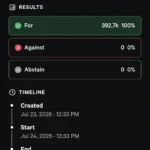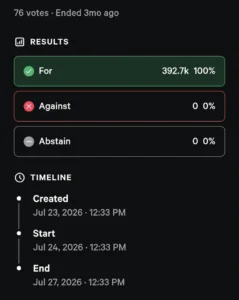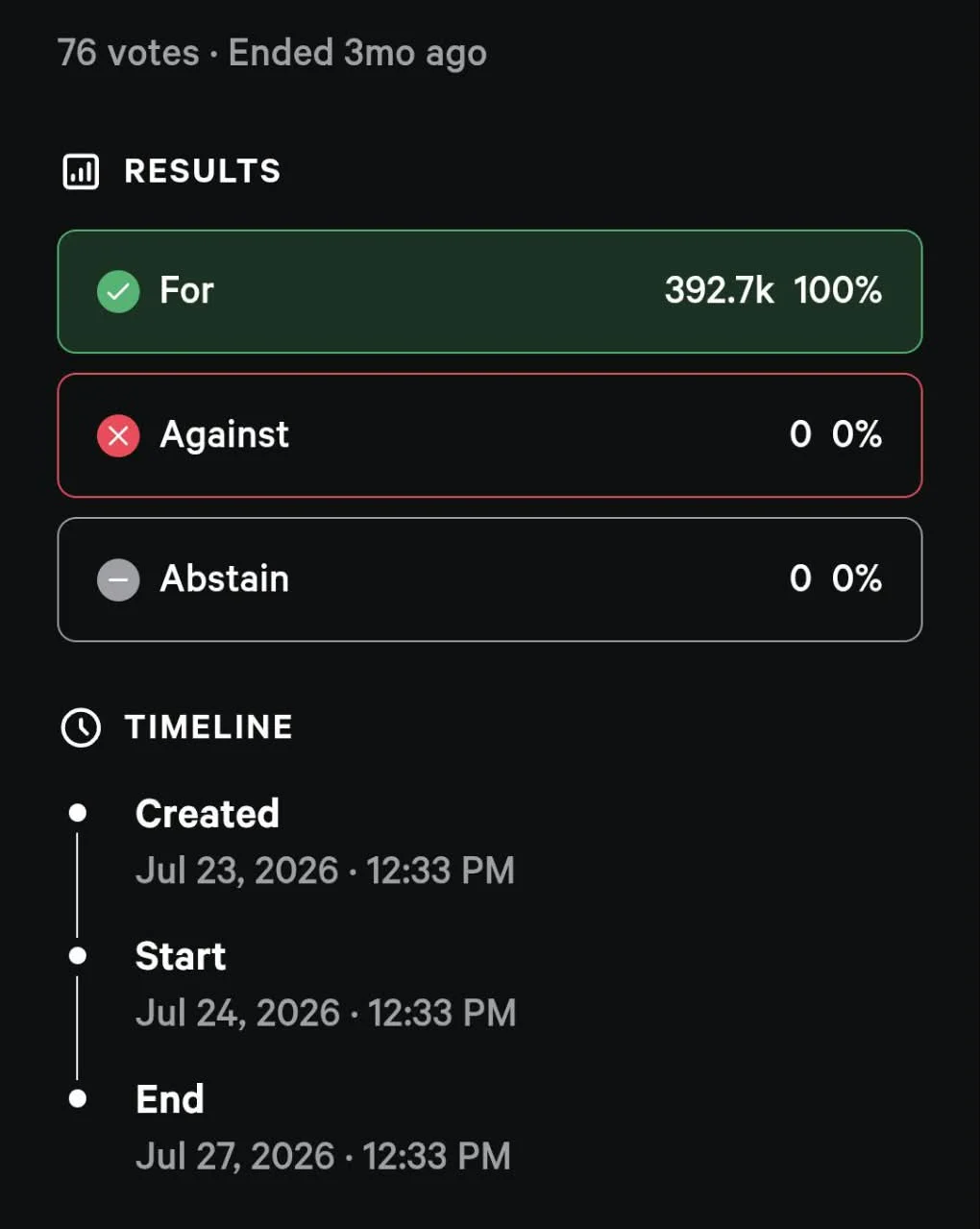
In July, a significant development in the decentralized finance (DeFi) landscape saw Tempo, a payments blockchain incubated by tech giants Stripe and Paradigm, approach the Aave community with a compelling proposition. The offer aimed to entice Aave, widely recognized as DeFi’s largest lending protocol, to deploy its cutting-edge V4 iteration onto Tempo’s network. To sweeten the deal and secure community approval, Tempo made two distinct promises: depositors of its native stablecoin, pathUSD, would receive a yield closely aligned with the US benchmark interest rate (SOFR) for a full year, and the deployment would actively contribute to the growth and adoption of Aave’s own GHO stablecoin. The Aave community, through a preliminary "temp check" vote, overwhelmingly signaled its approval, paving the way for further integration.
However, a critical juncture has now been reached. Three months after the initial affirmative vote, the formal Aave Request for Final Comment (ARFC) proposal, detailing the technical specifications and operational parameters for Aave V4’s deployment on Tempo, was released on October 16, 2026. A thorough review of this formal document reveals a striking absence: neither the promised SOFR-pegged yield for pathUSD depositors nor the explicit strategy for GHO stablecoin growth appears within its pages. This discrepancy has raised immediate questions among community members and observers, casting a shadow of uncertainty over a potentially landmark partnership between DeFi and traditional financial infrastructure.
The Genesis of a Partnership: Aave and Tempo’s Initial Overture
Aave stands as a titan in the DeFi ecosystem, a decentralized lending and borrowing protocol that has consistently maintained one of the highest Total Value Locked (TVL) across various blockchain networks. Its innovative approach to liquidity pools, flash loans, and governance via the Aave DAO (Decentralized Autonomous Organization) has positioned it as a cornerstone of digital asset finance. As of late 2026, Aave’s TVL often fluctuates in the tens of billions of dollars, making its strategic decisions impactful for the entire DeFi sector. The protocol’s evolution towards Aave V4, with its "hub and spoke" architecture designed for greater flexibility and scalability, represents a significant leap in its capabilities, enabling tailored markets and improved risk management across diverse blockchain environments.
Tempo, on the other hand, represents a novel entrant in the blockchain space, specifically engineered as a Layer 1 network dedicated to payments. Its incubation by Stripe, a global leader in online payment processing, and Paradigm, a prominent crypto investment firm, immediately conferred significant credibility and strategic backing. Tempo’s vision is ambitious: to bridge the gap between traditional enterprise finance and blockchain technology, focusing on high-volume, low-cost transactions for use cases such as cross-border payments, international remittances, payroll processing, and corporate treasury management. The network officially launched its Mainnet on March 18, 2026, operating with a unique chain ID of 4217. A distinctive feature of Tempo is its gas fee model, which deviates from the typical native token approach. Instead, transaction fees are paid in dollar-pegged stablecoins, with pathUSD serving as the default. Tempo also boasts a built-in stablecoin exchange and follows the TIP-20 standard for its stable assets, underscoring its design as a payments-centric platform. Prior to its Mainnet launch, Tempo had already secured substantial funding, raising $500 million at a valuation of $5 billion, highlighting investor confidence in its potential to revolutionize payment infrastructure. Matt Huang, a co-founder of Paradigm, leads the network as its CEO, further cementing its ties to established figures in the crypto and tech investment world.
The initial engagement between Tempo and the Aave DAO occurred in July 2026, through a "temp check" proposal. This preliminary stage in Aave’s three-step governance process (temp check, ARFC, on-chain vote) serves to gauge community sentiment before significant resources are expended on formal proposals. Tempo’s pitch was compelling, directly addressing Aave’s community with tangible benefits. It promised to incentivize pathUSD deposits on Aave with a yield approximating the Secured Overnight Financing Rate (SOFR) for a full year. SOFR, a broad measure of the cost of borrowing cash overnight collateralized by Treasury securities, serves as a crucial benchmark for various financial products and is seen as a stable, transparent rate in traditional finance. This commitment was framed as a way to attract significant liquidity to Aave on Tempo, directly benefiting depositors. Furthermore, Tempo articulated a plan to facilitate the growth of Aave’s GHO stablecoin by leveraging its enterprise network for business-to-business (B2B) credit solutions, providing a clear utility path for GHO within a real-world payments context. The Aave community, recognizing the potential for expanding its reach into enterprise applications and fostering GHO adoption, responded positively, with the temp check passing on Snapshot with significant support.
The Formal Proposal: A Shift in Details and a Lack of Engagement
The formal ARFC for deploying Aave V4 on Tempo was officially posted to Aave’s governance forum on October 16, 2026, under the account "Tempo." The ARFC document is designed to provide precise details of what would be launched, outlining the technical specifications, market configurations, and operational parameters for a proposed deployment. Its summary was notably concise: a single sentence proposing to "deploy Aave Protocol V4 on Tempo Mainnet."
However, upon closer inspection, the ARFC presented a significant departure from the initial promises that had secured the community’s provisional approval. The document made no mention of the SOFR-pegged yield for pathUSD depositors, nor did it outline any specific incentive strategy. Crucially, the plans for growing Aave’s GHO stablecoin through B2B credit on Tempo were also conspicuously absent. These omissions immediately raised red flags for those who had voted in July based on the previously communicated benefits.
Adding to the concerns was the observed lack of community engagement with the ARFC. Despite the high-profile nature of the proposed integration—connecting DeFi’s largest lending protocol with a blockchain backed by Stripe and Paradigm—the thread had garnered only around 200 views and a single reply by the time of review. This low level of interaction stands in stark contrast to the robust discussions typically seen on Aave’s governance forum for proposals of such strategic importance. The single reply, from a delegate named Artilugio, directly questioned the absence of the "incentive strategy," quoting the original temp check’s commitment that a successful vote would lead to an ARFC covering this very aspect. As of the time of reporting, this pertinent query remains unanswered, highlighting a potential communication gap or an oversight in addressing community expectations.
Tempo’s Vision and Technical Foundations
Tempo’s formal proposal reiterates its core identity as a Layer 1 blockchain purpose-built for payments. Its incubation by Stripe and Paradigm underscores its strategic positioning to attract traditional enterprises and fintechs seeking efficient, compliant, and scalable blockchain solutions. The proposal explicitly lists several prominent companies, including DoorDash, Deel, Shopify, and MoneyGram, as partners or collaborators in its development and adoption efforts. These partnerships are critical for Tempo’s focus on real-world use cases like cross-border payments, which in 2026 represent a multi-trillion-dollar market ripe for disruption; remittances, a lifeline for global communities; corporate payroll systems, demanding high throughput and reliability; and treasury management, where efficient asset allocation and settlement are paramount.
Technically, Tempo’s design prioritizes stability and ease of use for enterprise clients. The absence of a native gas token simplifies fee management, as all fees are denominated and paid in dollar stablecoins. pathUSD, issued by Bridge, is the default stablecoin for these transactions. This design choice aims to mitigate the volatility associated with speculative native tokens, offering predictability in transaction costs, which is a key requirement for businesses. The chain’s built-in stablecoin exchange further facilitates seamless conversion and liquidity for various stable assets, all adhering to the TIP-20 standard. These technical choices are designed to make Tempo an attractive and user-friendly environment for businesses accustomed to the stability of fiat currencies and predictable operational costs.
The ARFC outlines four primary strategic motivations for Aave to deploy on Tempo:
- Reaching Traditional Enterprises and Fintechs: Expanding Aave’s user base beyond crypto-native entities to tap into the vast market of traditional businesses.
- Listing Real-World Assets (RWAs) Available on Tempo: Integrating tangible assets and their associated financial instruments, tokenized on Tempo, into Aave’s lending markets. This represents a significant trend in DeFi, bridging physical and digital economies.
- Growing Stablecoin Liquidity: Enhancing the overall liquidity of stablecoins within the Aave ecosystem by attracting new capital flows from Tempo’s payment-focused users.
- Earning More Revenue for the Aave DAO: Generating additional protocol fees and revenue streams from lending activities on Tempo, benefiting Aave’s decentralized autonomous organization and its token holders.
Aave V4 and the Proposed Market on Tempo
Aave V4 introduces a sophisticated "hub and spoke" architectural model, a significant evolution from previous iterations. This design allows for a central pool of liquidity (the "hub") to serve multiple, independent markets (the "spokes"), each with its own customized risk parameters, asset listings, and operational rules. This modularity is crucial for accommodating diverse assets and risk profiles, particularly when integrating with enterprise-focused blockchains or Real-World Assets (RWAs). For its initial deployment on Tempo, the proposal outlines a modest starting market comprising one hub and two spokes.

According to the ARFC’s tables, the proposed initial assets for Aave V4 on Tempo are:
- wBTC: A wrapped version of Bitcoin, allowing the flagship cryptocurrency to be used within the Aave protocol on Tempo.
- OUSD: Listed as a Real-World Asset (RWA). The proposal does not provide details on who issues OUSD, what specific real-world assets back it, or its underlying legal structure and collateralization mechanism.
- PRIME: A single stablecoin available for borrowing. Similar to OUSD, the ARFC omits critical information regarding PRIME’s issuer, its backing, and its stability mechanisms.
This proposed initial market is notably small and narrow, particularly given the broad enterprise focus of Tempo and Aave’s stature. The inclusion of an RWA (OUSD) from day one is significant but also underscores the immediate need for transparency regarding its backing and risk profile. The ARFC does state that more assets may be added before launch, subject to rigorous risk review by Aave’s designated service providers.
However, a glaring inconsistency emerges concerning pathUSD. The ARFC’s narrative text explicitly states that the hub will allow pathUSD and OUSD to be borrowed. Yet, pathUSD, Tempo’s default fee token and the stablecoin initially promised a SOFR-pegged incentive, does not appear in any of the detailed market configuration tables. This omission is particularly problematic as pathUSD was central to Tempo’s original incentive offering, designed to bootstrap liquidity for Aave on its network. Its absence from the market configuration raises fundamental questions about the actual market structure and whether the initial incentives, even if re-introduced, would have a relevant asset to apply to within the Aave protocol on Tempo.
Unanswered Questions and Community Concerns
The divergence between the initial "temp check" proposal and the formal ARFC has naturally led to a resurgence of previously raised concerns and new questions from the Aave community. The explicit omission of the SOFR-pegged yield for pathUSD and the GHO growth strategy is the most immediate point of contention. As delegate Artilugio highlighted, the original commitment was for the ARFC to cover the "incentive strategy," a commitment that now appears unfulfilled. The lack of a response to such a direct and critical question further compounds the community’s unease.
Beyond the incentives, the ARFC also notably omits crucial risk parameters. It merely states that initial listings and parameters will be updated following analysis from the DAO’s risk service providers, with a LlamaRisk review preceding an ARFC Snapshot vote. This deferral leaves several fundamental risk questions, initially posed by delegates in July, unanswered.
Specifically, delegate MconnectDAO had raised vital inquiries regarding:
- Loss-sharing mechanisms: How would losses be distributed among Tempo, the Aave DAO, and individual users in the event of failures specific to Tempo, such as a chain exploit, a bridge vulnerability, or issues with the legal structure underpinning a real-world asset? This question is particularly pertinent given the novel nature of payments-focused blockchains and the complexities of RWAs.
- Tempo’s security model: A comprehensive overview of Tempo’s validator set, the results of any security audits, and its overall security architecture. Transparency on these fronts is crucial for Aave to assess the underlying security of its deployment.
- Contractual backing for incentives: Whether the promised SOFR incentive was backed by any formal, legally binding contractual commitment, or if it was merely a good-faith promise.
Another delegate, Abel189, had also requested measurable success targets for the deployment, including projections for liquidity retention once any initial incentives concluded. This point addresses the sustainability of liquidity on Aave’s Tempo market beyond short-term boosts.
The ARFC’s failure to address any of these critical points is a significant oversight. The inclusion of an RWA like OUSD from day one makes the loss-sharing question even more pressing than it was in July. RWAs introduce a new layer of legal and operational risk that differs from purely digital assets, requiring clear frameworks for dispute resolution and liability. The absence of such details in a formal proposal, especially one destined for an on-chain vote, represents a notable gap in due diligence and transparency.
Broader Strategic Implications for Aave and DeFi
The unfolding situation with Aave’s proposed deployment on Tempo holds broader implications not just for the Aave protocol, but for the wider DeFi ecosystem and its ongoing integration with traditional finance. Aave’s strategic direction is clear: it aims to position itself as the default lending layer across a diverse array of payments-focused blockchains being developed by corporate entities. Evidence of this strategy can be seen in other active proposals, such as the ARFC to deploy Aave V4 on Arc, the stablecoin chain built by Circle, and ongoing V4 work on Avalanche, which also has a strong focus on enterprise and institutional adoption.
Among these potential deployments, Tempo stands out due to the formidable backing of Stripe and Paradigm, alongside its list of enterprise partners like DoorDash and Shopify. This combination suggests a high potential for real-world utility and significant liquidity influx from traditional financial systems. Consequently, the details of this particular integration matter immensely. A lending protocol plugging into a blockchain designed for high-stakes operations like payroll and treasury management requires unequivocal clarity on critical aspects: the nature and quality of collateral, the specifics of any promised incentives, and a robust framework for responsibility and loss allocation. These answers are essential before a binding on-chain vote, not to be clarified retrospectively.
The governance process itself is also under scrutiny. For a DAO like Aave, maintaining community trust and ensuring that formal proposals accurately reflect initial commitments is paramount. Any deviation, particularly on key financial incentives, risks eroding this trust and could lead to reduced participation or increased skepticism in future governance initiatives.
Furthermore, the fate of Aave’s GHO stablecoin is intrinsically linked to such enterprise integrations. GHO is a crucial component of Aave’s long-term strategy, designed to be a decentralized, collateral-backed stablecoin that can expand Aave’s capabilities and offer a new primitive for DeFi. Its growth was explicitly tied to the Tempo deployment in the initial proposal, making its omission from the ARFC a significant setback for GHO’s projected adoption curve within the enterprise sector.
As the proposal moves towards the next steps—the LlamaRisk review and the ARFC Snapshot vote—all eyes will be on whether Tempo or the proposal authors address the community’s concerns. The potential return of pathUSD as a listed asset, the reintroduction of the SOFR incentive strategy, and a clear plan for GHO integration are the critical points to watch. The outcome will not only determine the success of this particular partnership but will also serve as a precedent for how DeFi protocols navigate complex integrations with traditional financial institutions, emphasizing the delicate balance between innovation, transparency, and robust governance.
Disclosure: This is not trading or investment advice. Always do your research before buying any cryptocurrency or investing in any services.