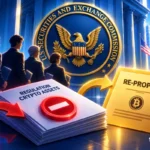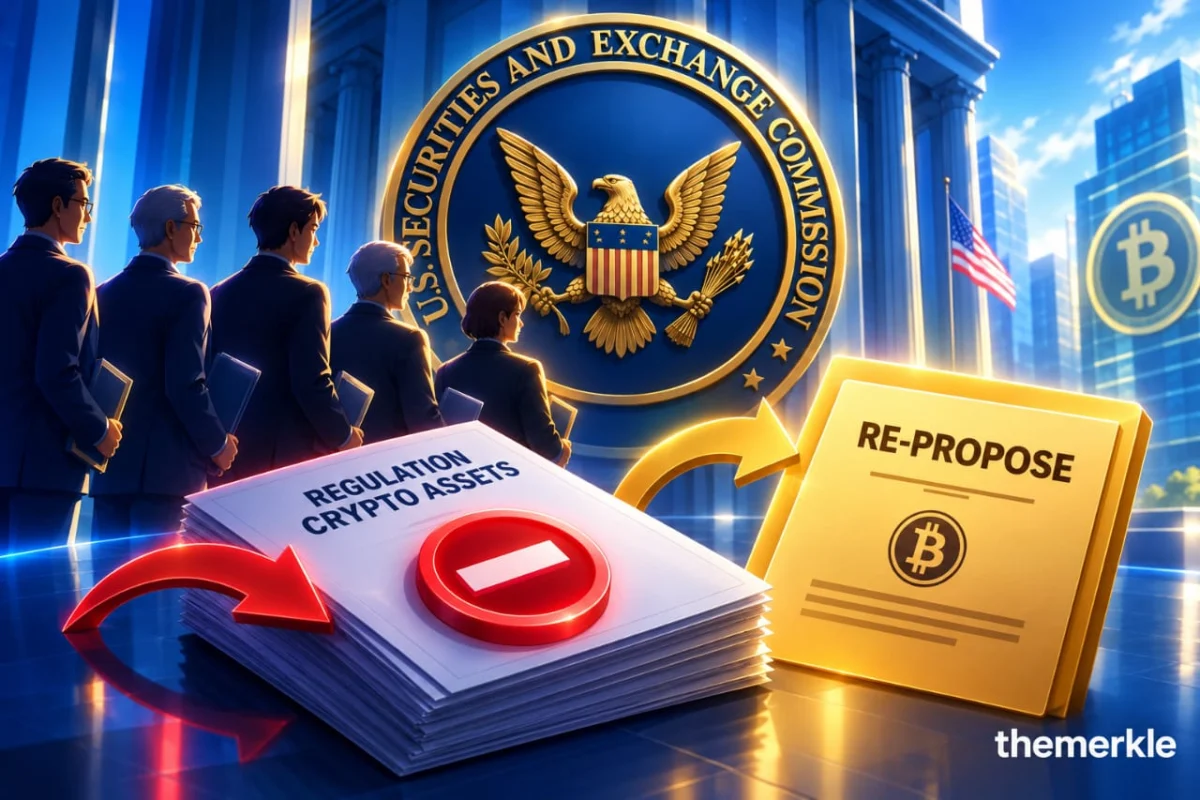
A formidable coalition of eminent corporate law scholars, operating collectively as the "Shadow SEC," has delivered a sharp administrative critique to the U.S. Securities and Exchange Commission (SEC), urging the immediate withdrawal and formal re-proposal of its contentious "Regulation Crypto Assets" (File No. S7-2026-27). This powerful intervention, detailed in "Shadow SEC Statement No. 15" submitted on October 7, 2026, comes just weeks before the official public comment period for the proposed rule was set to close on October 20, 2026. The group, comprising John Coates, John C. Coffee Jr., James D. Cox, Merritt B. Fox, and Joel Seligman, asserts that the SEC’s proposal fundamentally misunderstands the existing legal landscape for digital asset capital formation and critically compromises established investor protection safeguards.
The Genesis of Regulation Crypto Assets: A Regulatory Tightrope Walk
The SEC’s journey towards a comprehensive regulatory framework for crypto assets has been fraught with complexity and marked by an evolving understanding of a rapidly transforming industry. For years, the Commission has grappled with the challenge of applying existing, decades-old securities laws – primarily the Securities Act of 1933 and the Securities Exchange Act of 1934 – to novel digital assets and decentralized technologies. The core of this challenge often revolves around the "Howey Test," a Supreme Court precedent used to determine whether an asset constitutes an "investment contract" and, therefore, a security subject to SEC oversight.
The agency’s initial approach largely involved enforcement actions against specific projects deemed to have conducted unregistered securities offerings, coupled with guidance that often left the industry seeking clearer, more prescriptive rules. The accelerating pace of innovation, coupled with significant market volatility, high-profile bankruptcies, and widespread investor losses in recent years – including major events like the 2022 market downturn and subsequent collapses of prominent crypto firms – amplified calls for regulatory clarity and robust investor protection. It was against this backdrop that the SEC formally proposed "Regulation Crypto Assets" on August 21, 2026. The proposal aimed to establish a bespoke regulatory regime, including specific exemptions and a "safe harbor" framework, designed to address the unique characteristics of digital assets while ostensibly fostering innovation within a compliant environment.
The Commission’s intent, as articulated in its Proposing Release No. 33-11434, was to provide a tailored pathway for digital asset issuers to raise capital, thereby bridging perceived gaps between traditional securities offerings and the nascent crypto ecosystem. This proposed framework included conditional exemptions from certain registration requirements, contingent upon specific disclosures, operational safeguards, and ongoing reporting obligations. The SEC often highlights its dual mandate of protecting investors and facilitating capital formation, and "Regulation Crypto Assets" was presented as an attempt to balance these often-competing objectives in the digital asset space.
Shadow SEC’s Incisive Critique: Data Undermines the Need for a New Framework
The central pillar of Statement No. 15’s challenge lies in its contention that the SEC’s proposed "tailored exemptions" are not only unnecessary but also potentially counterproductive. The scholars argue that the existing statutory offering exemptions under the Securities Act of 1933 already provide robust and viable pathways for digital asset issuers to legally raise capital without the need for an entirely new "safe harbor" regime. This critique is not merely theoretical; it is grounded in the SEC’s own economic data embedded within its Proposing Release.
The Shadow SEC meticulously points out that the Commission’s internal figures demonstrate significant and active capital formation within the digital asset sector utilizing established exemptive pathways. For instance, the SEC’s own data, cited by the scholars, indicated that during the 2024-2026 period, digital asset issuers collectively raised an estimated $28 billion through Regulation D offerings, primarily through Rule 506(b) and Rule 506(c) private placements. These exemptions, designed for sophisticated investors or those meeting specific accreditation thresholds, have been widely adopted by numerous crypto projects, ranging from blockchain infrastructure providers to decentralized finance (DeFi) protocols, to secure substantial funding. Furthermore, smaller but notable amounts, approximately $850 million, were raised through Regulation A offerings, which allow non-reporting companies to offer and sell up to $75 million of securities in a 12-month period to a broader range of investors, including non-accredited individuals. Regulation Crowdfunding (Reg CF), designed for smaller offerings to retail investors, also saw digital asset projects raise around $120 million during the same timeframe, demonstrating its utility for grassroots capital formation in the crypto space.
These figures, the scholars contend, directly contradict the underlying premise of "Regulation Crypto Assets" – that existing federal securities laws stifle crypto innovation and that a new, bespoke framework is essential for capital formation. If issuers are already successfully raising billions of dollars through well-understood and legally established frameworks, then creating a new, conditional exemption regime risks introducing regulatory complexity, fostering uncertainty, and potentially weakening investor protections without offering a discernible advantage in capital formation utility. The scholars infer that the SEC’s own data implicitly suggests that the problem may not be a lack of pathways, but rather a lack of willingness by some issuers to comply with existing, robust investor protection frameworks. They argue that the proposed new regime could, in essence, reward non-compliance by offering a perceived "easier" path that bypasses some of the more rigorous requirements of established exemptions.
The "Free Pass" for Past Misconduct: A Perilous Precedent
Beyond the efficacy of existing capital formation pathways, the Shadow SEC’s critique zeroes in on a particularly egregious provision: proposed Rule 104. This rule, intended to govern bad actor disqualification provisions for entities seeking to transition into the new safe harbor framework, contains a glaring loophole that the scholars characterize as a procedural "free pass" for prior misconduct.
Specifically, Rule 104’s disqualification clauses do not apply to misconduct committed prior to the rule’s effective date. This means that entities or individuals who have previously engaged in unregistered offerings, securities fraud, market manipulation, or other serious securities violations would be permitted to enter the new regulatory framework without facing the standard statutory disqualifications that would otherwise bar them from participating in regulated securities offerings. The implications of this carve-out are profound and deeply concerning to the Shadow SEC.
Existing bad actor disqualification rules, such as those under Rule 506(d) of Regulation D, are fundamental to investor protection and market integrity. They are designed to prevent individuals and entities with a history of securities law violations from repeatedly engaging in conduct that harms investors and undermines public trust. The statutory intent behind these rules is clear: to ensure that those who access capital markets through exemptions maintain a clean record and adhere to fundamental principles of fair dealing. By explicitly excluding pre-existing bad conduct, Rule 104 would, in the scholars’ view, subvert this statutory intent. It effectively offers a "clean slate" to legacy offenders, potentially allowing individuals or entities with a documented history of non-compliance to re-enter the regulated market without accountability for their past transgressions.
This provision could create an uneven playing field, disadvantaging compliant entities while potentially rewarding those who previously flouted securities laws. Moreover, it sends a troubling message to the market: that past violations may be overlooked in the pursuit of regulatory "flexibility." This could erode investor confidence and foster a perception that the SEC is willing to compromise on fundamental investor safeguards to accommodate the digital asset industry. The scholars highlight that such a provision could inadvertently incentivize a "wait-and-see" approach to compliance, where bad actors might anticipate future regulatory amnesty rather than adhering to current laws.
The Urgent Call to Withdraw and Re-Propose
Given these fundamental structural flaws, the Shadow SEC’s demand is unequivocal: Coates, Coffee, Cox, Fox, and Seligman urge the Commission to withdraw the current draft of "Regulation Crypto Assets" entirely. Their call is not merely for minor amendments but for a comprehensive re-evaluation and re-proposal. They stipulate that any future iteration of Regulation Crypto Assets must explicitly close the Rule 104 "bad actor" loophole, incorporate rigorous statutory bad actor checks that align with established securities laws, and ensure that any potential exemptive safe harbor is fully consistent with and strengthens, rather than weakens, existing investor protection standards.
The scholars emphasize that a well-crafted regulatory framework for digital assets is indeed necessary, but it must build upon, rather than undermine, the bedrock principles of U.S. securities law. A framework that effectively legitimizes past non-compliance or creates redundant, less protective pathways risks doing more harm than good to both investors and the integrity of capital markets.
Broader Implications and the Road Ahead for Digital Asset Regulation
The intervention by the Shadow SEC arrives at a critical juncture for digital asset regulation in the United States. The SEC is facing immense pressure from various stakeholders – including industry participants, consumer advocates, and other government agencies – to establish clear rules for the crypto market. The comments submitted by these prominent academics represent a powerful administrative counterweight against any perceived dilution of traditional securities enforcement standards in the burgeoning digital asset markets.
For the Crypto Industry: The potential withdrawal and re-proposal of "Regulation Crypto Assets" could prolong regulatory uncertainty, which the industry has consistently cited as a major impediment to growth and innovation. While some might welcome a more robust and investor-protective framework, others might view further delays as hindering their ability to operate and raise capital legally. However, a re-proposed rule that genuinely addresses concerns about investor protection and market integrity could ultimately lead to greater long-term stability and legitimacy for the industry.
For Investors: The stakes for investor protection are immense. The scholars’ critique underscores the potential for significant harm if regulatory frameworks are introduced that fail to adequately protect retail investors from fraudulent schemes or opaque practices. A strong, clear, and consistently enforced regulatory environment is paramount to restoring and maintaining public trust in digital asset markets, especially in the wake of recent market upheavals.
For Regulatory Policy and the SEC: This challenge from respected academic authorities will inevitably influence the SEC’s deliberations. The Commission is legally obligated to consider all public comments, and the detailed, data-driven arguments from the Shadow SEC cannot be easily dismissed. The episode highlights the ongoing tension between fostering innovation and upholding investor protection, a balance that the SEC constantly seeks to strike. Furthermore, it underscores the intricate dance between various regulatory bodies, with the SEC, the Commodity Futures Trading Commission (CFTC), and state regulators all asserting jurisdiction over different aspects of the digital asset ecosystem. The outcome of this debate will likely set a significant precedent for how future novel technologies are integrated into existing regulatory structures.
As the SEC evaluates the deluge of public feedback following the October 20 comment deadline, the joint letter from these top legal academics stands as a crucial voice, advocating for the preservation of robust investor protections and the integrity of capital markets in the face of rapid technological change. The decision to either proceed with the current proposal, amend it, or withdraw and re-propose "Regulation Crypto Assets" will have far-reaching consequences, shaping the future trajectory of digital asset regulation in the United States for years to come. The discourse initiated by the Shadow SEC serves as a stark reminder that while innovation is vital, it must never come at the expense of accountability and investor trust.