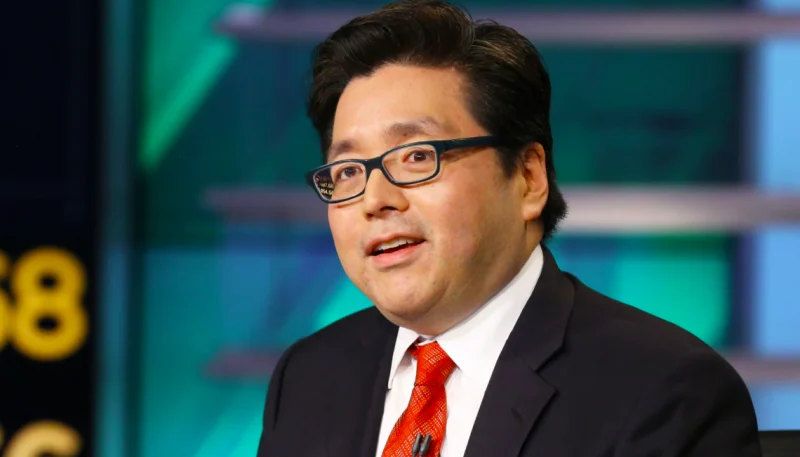
Tom Lee, the Head of Research at Fundstrat Global Advisors and a widely followed Wall Street strategist, has issued a comprehensive outlook for the US equity markets, suggesting a brief period of turbulence followed by a significant rally. In a detailed interview with CNBC, Lee noted that while the stock market may face a notable correction starting in mid-October and lasting through the midterm elections, the subsequent period is likely to be characterized by a "risk-on" environment. This shift is expected to be driven by a more favorable political stance toward emerging technologies and a pivot in Federal Reserve policy as inflationary pressures subside. Lee’s projections include a substantial year-end surge for the S&P 500, potentially reaching levels between 8,200 and 8,400, supported by accelerating corporate earnings and a normalization of bond yields.
The Mid-October Correction and Political Uncertainty
The anticipated market correction in mid-October is largely attributed to the uncertainty inherent in the US midterm election cycle. Historically, markets tend to experience volatility leading up to elections as investors price in potential shifts in legislative priorities and regulatory environments. Lee suggests that the current stagnation in cryptocurrency and artificial intelligence (AI) stocks is a direct result of "excessive pessimism" regarding the Democratic Party’s stance on key growth sectors.
Market participants have expressed concerns that a Democratic-controlled or influenced legislature might stifle the expansion of data centers and resist the implementation of the CLARITY Act—a pivotal piece of legislation for the digital asset industry. However, Lee argues that these concerns are misplaced. He posits that the "contrarian take" is that the Democratic platform will inevitably align with these sectors due to their undeniable economic benefits. Data centers, which serve as the backbone for AI development, are increasingly seen as engines for local economic growth, providing jobs and tax revenue.
Lee believes that the post-midterm landscape will provide a "greenlight" for major technological projects. Once the political posturing of the election season concludes, the pragmatic necessity of supporting high-growth industries like AI and blockchain will likely lead to bipartisan support for infrastructure and regulatory clarity.
The Legislative Catalyst: The CLARITY Act and AI Infrastructure
A central component of Lee’s bullish thesis for the technology sector is the potential advancement of the CLARITY Act. Formally known in various legislative iterations as efforts to provide "Clarity for Digital Assets," the act seeks to establish a firm regulatory framework for stablecoins and other digital assets in the United States. For years, the crypto industry has operated under a cloud of regulatory ambiguity, which has deterred institutional capital and slowed the integration of blockchain technology into mainstream finance.
Lee points out that the CLARITY Act has historically enjoyed support from many Democratic lawmakers. By providing a clear legal structure, the act would mitigate the "regulation by enforcement" approach that has characterized the US landscape recently. For investors, this represents a significant de-risking event.
Simultaneously, the expansion of data centers is critical for the "AI revolution." As companies like Nvidia, Microsoft, and Alphabet continue to pour billions into large language models and generative AI, the demand for physical infrastructure—servers, cooling systems, and massive power grids—has skyrocketed. Lee contends that the change in Congress following the midterms will likely result in a more streamlined approval process for these projects, as both parties recognize that maintaining a lead in AI is a matter of national economic competitiveness.
Shifting Macroeconomic Backdrop: The Fed and Bond Yields
Beyond politics, the macroeconomic environment is showing signs of a major transition that favors risk assets. Lee highlights the recent US jobs report as a turning point in market sentiment. Prior to the report, markets were pricing in a "maximum-hawkish" scenario for the Federal Reserve. This scenario included the possibility of three additional interest rate hikes and a 75% probability of a rate increase as early as October.
However, Lee argues that the cooling labor market and the rolling off of one-off inflationary factors suggest that the worst of the inflation cycle is in the rearview mirror. As inflation readings continue to soften over the next six months, the Federal Reserve will have the necessary breathing room to move away from its aggressive tightening stance.
The most significant impact of this shift will be felt in the bond market. Lee anticipates that the 10-year Treasury yield, which has been a major headwind for tech stocks, will begin to "normalize." He specifically identified the 5% mark as a psychological and technical threshold. "Anything under 5% would be interpreted by markets as really positive for risk-on," Lee explained. If yields settle below this level, it lowers the discount rate used to value future earnings, which is particularly beneficial for high-growth AI and tech companies whose primary value lies in long-term cash flows.
Corporate Earnings and the Path to S&P 8,200
While some analysts worry about a potential recession, Lee’s outlook is bolstered by what he describes as "accelerating" earnings growth. Fundstrat’s internal projections suggest that third-quarter earnings for US companies could approach a staggering 30% growth rate. Furthermore, 2027 earnings estimates have already been revised upward by more than 20% since the beginning of the year.
This robust fundamental performance provides the foundation for Lee’s ambitious S&P 500 target of 8,200 to 8,400 by year-end. To put this in perspective, such a rise would represent an approximate 9% gain from the levels seen in early October. Lee’s confidence stems from the belief that the "Magnificent Seven" (Apple, Microsoft, Alphabet, Amazon, Nvidia, Meta, and Tesla) and the broader tech sector will continue to exceed expectations as AI implementation moves from the "hype phase" to the "monetization phase."
Historical Context and Market Sentiment
Lee’s forecast aligns with several historical market patterns. Historically, the fourth quarter of a midterm election year is often one of the strongest periods for US equities. Once the uncertainty of the election is resolved, regardless of which party gains power, the market tends to rally as it gains a clearer picture of the legislative path forward for the next two years.
Moreover, the "October Effect"—the historical tendency for the market to bottom or experience significant volatility during this month—often serves as a springboard for a year-end "Santa Claus rally." Lee’s strategy involves navigating the mid-October dip to position for this seasonal strength.
However, his view is not without its detractors. Other Wall Street firms have cautioned that if the Fed does not pivot quickly enough, the high-interest-rate environment could eventually break something in the financial system, leading to a harder landing than Lee anticipates. Critics also point to the high valuations of AI stocks as a potential bubble risk. Lee counters this by focusing on the earnings-to-growth (PEG) ratios, arguing that as long as earnings growth remains near 30%, the current valuations are justified by historical standards.
Implications for Investors and the Broader Economy
The implications of Lee’s forecast are profound for both retail and institutional investors. If his "contrarian take" on the Democrats’ support for technology proves correct, it could lead to a significant reallocation of capital into digital assets and AI infrastructure.
- Crypto Sector: A successful passage or movement on the CLARITY Act would likely trigger a massive influx of institutional "dry powder." This would provide the liquidity needed for Bitcoin and Ethereum to test new highs, while also benefiting the broader ecosystem of decentralized finance (DeFi) and infrastructure providers.
- AI and Semiconductors: If data center projects receive a "greenlight" post-midterms, the demand for high-performance chips will remain insatiable. This supports continued growth for semiconductor giants and the utility companies providing the massive energy loads required by these facilities.
- The "Risk-On" Sentiment: A decline in bond yields below 5% would signal a broader return to risk-taking. This typically benefits small-cap stocks and emerging markets, which have struggled under the weight of a strong dollar and high US interest rates.
In conclusion, Tom Lee’s outlook presents a vision of a market that is currently "climbing a wall of worry." By looking past the immediate noise of the midterm elections and the hawkish rhetoric of the Fed, Lee identifies a potent combination of political pragmatism, technological advancement, and macroeconomic normalization. While the path through October may be rocky, the strategist remains steadfast in his belief that the year will end on a high note, driven by the transformative power of AI and a clearer regulatory future for the digital economy.