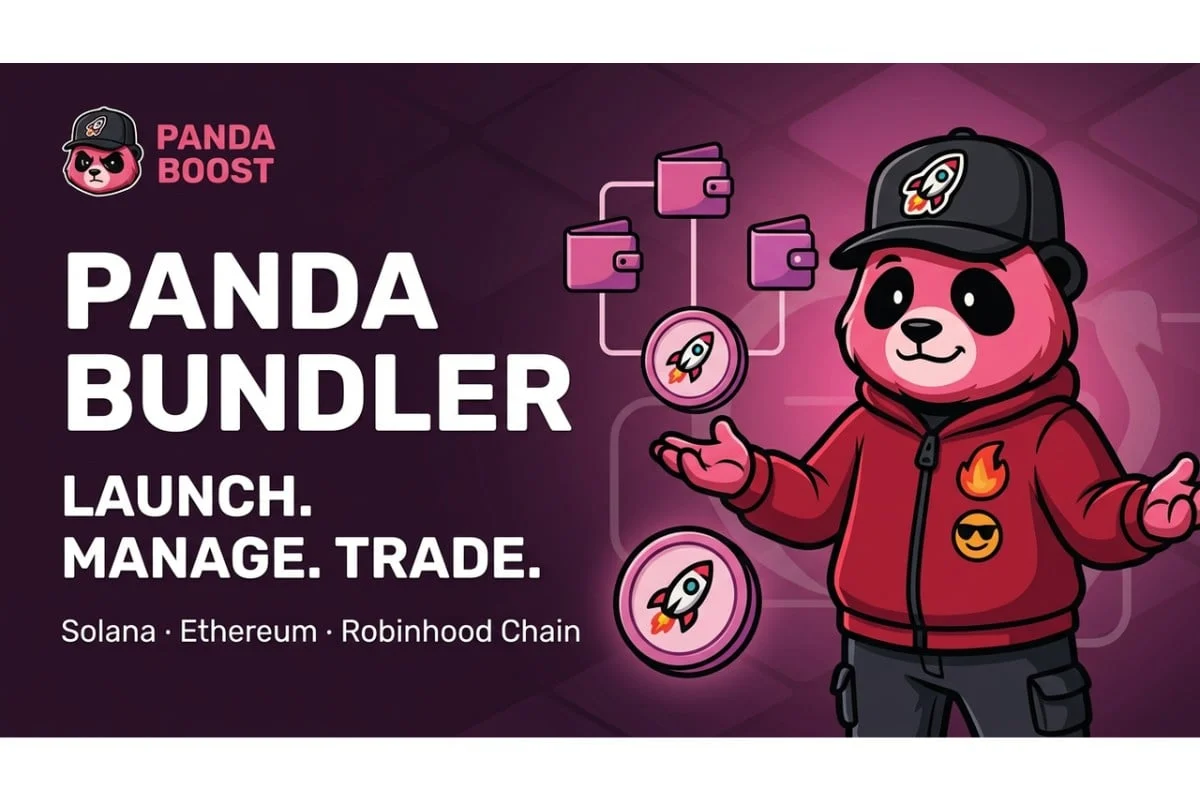
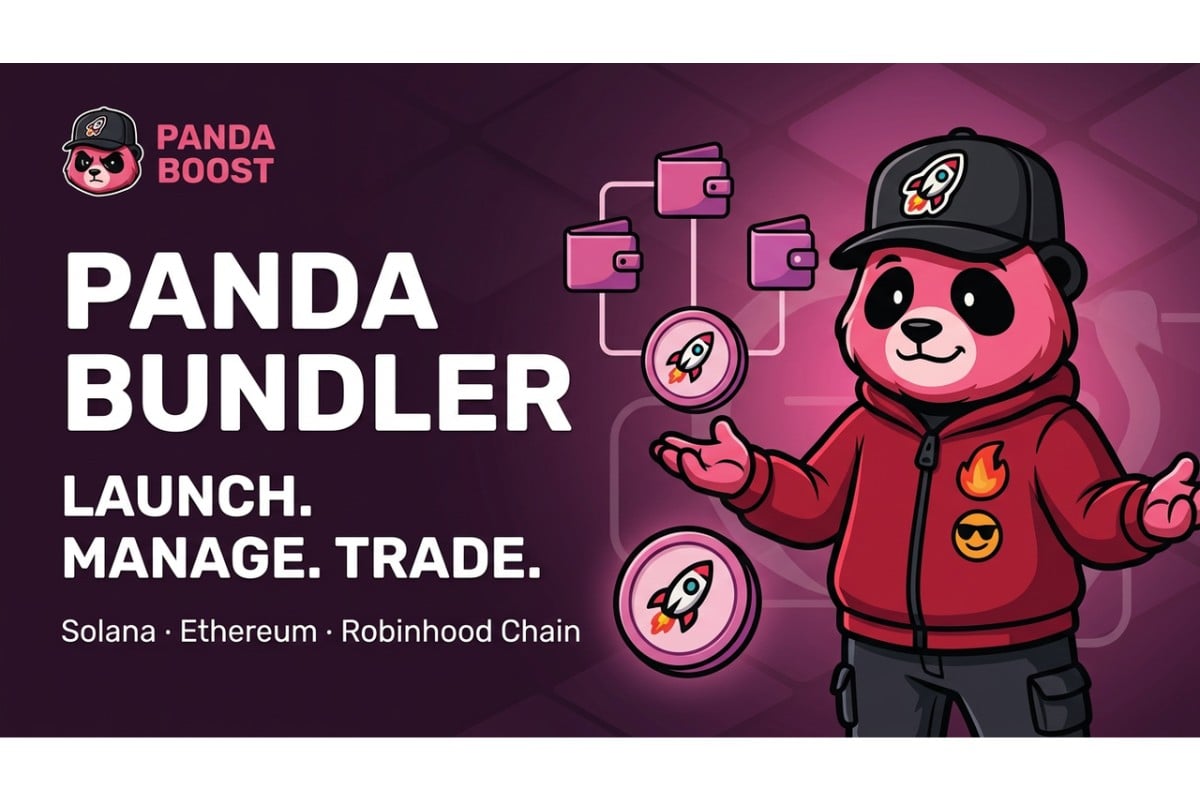
Panda Bundler, the innovative web-based token launch and trading application developed by PandaBoost, has officially entered the market, offering a unified workspace for project teams to manage token deployments across three distinct blockchain ecosystems: Solana, Robinhood Chain (Pons), and Ethereum (Uniswap). This new platform aims to address the growing fragmentation in the decentralized finance (DeFi) landscape by consolidating the complex processes of preparing launches, configuring wallets, and overseeing post-launch operations into a single, intuitive interface. The introduction of Panda Bundler marks a significant step towards streamlining the multi-chain token issuance process, a critical need identified by numerous developers and entrepreneurs navigating the diverse and often disparate blockchain environments.
The platform’s core value proposition lies in its ability to bring together the unique functionalities of leading launchpads and decentralized exchanges (DEXs) — Pump.fun on Solana, Pons on Robinhood Chain, and Uniswap on Ethereum — under one operational umbrella. This integration is designed to reduce the logistical burden on teams, allowing them to focus more on project development and community engagement rather than the intricacies of chain-specific deployment. For its initial offering, Panda Bundler is waiving its platform fees for the very first launch, provided activation is coordinated through support prior to initiation. Subsequently, a standard platform fee of 5% will be applied to all sell transactions, with provisions for higher-volume users to negotiate reduced rates directly with PandaBoost support. This flexible fee structure aims to attract a broad spectrum of projects, from nascent startups to more established entities seeking efficient deployment solutions.
Navigating the Multi-Chain Landscape: A Unified Approach
The proliferation of blockchain networks, each with its own technical specifications, community, and liquidity pools, has presented both opportunities and formidable challenges for token issuers. While the concept of multi-chain functionality is gaining traction, Panda Bundler’s documentation meticulously clarifies its approach as "multi-chain support" rather than a "cross-chain bridge." This distinction is paramount: the platform facilitates independent launches on different networks, acknowledging and adapting to their unique operational requirements, rather than attempting to create a single, synchronized execution across disparate chains. This means that features, launch modes, wallet limits, and funding routes will inherently vary by venue, reflecting the underlying architectural differences of Solana, Ethereum, and Robinhood Chain.
For instance, an operator launching on Solana must account for SOL reserves, account rent, and Jito tips — specific requirements that do not apply to EVM-compatible chains like Ethereum or Robinhood Chain. Conversely, Ethereum-based launches involve gas fees and network congestion dynamics that differ considerably from Solana’s transaction model. Panda Bundler’s design explicitly guides operators through these venue-specific considerations, preventing common budgeting errors and operational missteps that often arise from a one-size-fits-all approach. This nuanced understanding of each blockchain’s ecosystem is crucial for successful deployment and highlights Panda Bundler’s commitment to practical, effective solutions.
Secure Access and Operational Control
Access to the Panda Bundler platform is managed through an invite-key system, eschewing traditional login methods such as email/password combinations, Telegram bots, or WalletConnect. Users are required to paste a unique invite key into the web application, which serves to identify their Bundler account and grant access to their configured launches and managed wallets. This security model emphasizes privacy and control, with access requests handled directly through PandaBoost support. The documentation strongly advises treating the invite key as a private credential, warning against its exposure in screenshots, public chats, code repositories, or shared documents. Importantly, PandaBoost support will never request a user’s seed phrase or private key, reinforcing a commitment to user asset security. This invite-only model suggests a focus on verified projects and teams, aiming to maintain a controlled and secure environment for token launches.
It is also noteworthy that Panda Bundler operates exclusively as a web-based application, distinct from PandaBoost’s broader service-ordering API. This strategic decision underscores its specialized function as a dedicated launch and management interface, optimizing the user experience for its specific purpose.
Sophisticated Launch Settings and Automation Capabilities
The platform offers a comprehensive suite of launch settings designed to provide project teams with granular control over their token distribution strategies. Within the draft workspace, "Block-0 Mode" enables the preparation of configured creation and initial-buy transactions as a coordinated launch sequence. While this feature aims to optimize launch timing, the documentation prudently qualifies it as an execution setting rather than an absolute guarantee. Factors such as network conditions, launchpad behavior, bundle inclusion, third-party trading activity, and transaction failures can all influence the ultimate outcome, reminding users of the inherent volatility and unpredictability of blockchain environments.
Beyond Block-0 Mode, operators can configure parameters such as the total token-buy target, developer allocation, and various preset or custom allocation patterns. For Solana-based launches, additional controls for Jito tips and pacing are available, allowing for fine-tuning of transaction priority. However, the platform reiterates that higher tips do not guarantee inclusion or execution, and funding requirements must be meticulously rechecked after any adjustments to tips, delays, or wallet counts. These detailed settings empower teams to implement sophisticated launch strategies while maintaining a realistic understanding of potential network-related variables.
Wallet Management and Holder Distribution
Panda Bundler supports the configuration of up to 200 holder wallets per launch, offering flexibility in managing token distribution. These wallets can be designated for various roles, and their allocation is managed via a "Token Buy % per wallet" mechanism. The interface provides a clear overview of the total allocated percentage, required network assets per wallet, role labels, and the status of each wallet (generated vs. imported, and whether it’s assigned elsewhere). This detailed management capability is crucial for projects aiming to achieve a broad and decentralized holder base, a common goal for community-driven tokens.
A significant aspect of token launches, particularly in the context of "fair launch" narratives, is the perception of holder distribution. While Panda Bundler’s allocation features allow teams to influence this, the documentation explicitly states that it cannot guarantee a "clean graph" or conceal on-chain relationships. Funding paths, transfers, timing, token accounts, and subsequent trades remain publicly visible on the blockchain, and third-party analytics tools like Bubblemaps may group these activities differently. The platform positions "Clean Bubblemaps" as a configuration goal, not a concealment guarantee, underscoring the transparent and immutable nature of public ledger data. This transparency is a double-edged sword: it allows for verifiable distribution but also exposes all related on-chain activity.
Automated Safeguards and Trading Strategies
Panda Bundler integrates advanced automation features designed to assist teams in managing post-launch dynamics. "Sniper Guard" is one such tool, configured to monitor external buys and trigger a predefined response when the accumulated external amount crosses a specified threshold. Its controls include activation/deactivation, the external buy threshold, and the type of automated response (e.g., selling a portion of tokens). While Sniper Guard offers a conditional layer of automation, it does not prevent third-party transactions, guarantee an exit price, ensure inclusion, or eliminate launch risk. Automated sells can also create price impact and incur the standard 5% sell fee, a factor teams must consider.
The "Auto Trade Strategies" feature allows for the execution of automated buy and sell orders across selected launch wallets. Three distinct types of strategies are available, and multiple strategies can be stacked within a single plan, each with its own wallet scope, amount, trigger, and end conditions. These strategies enable teams to implement dynamic market responses without constant manual oversight. However, the platform cautions that automation, while powerful, does not guarantee execution, fill price, timing, profit, or protection from market volatility.
Furthermore, "Activity Generation" facilitates configured buy-and-sell cycles across selected managed wallets. Each run can be customized by volume per trade, loop count, delay between cycles, funding options, and sell-after-buy behavior. The platform provides estimated SOL requirements, transaction counts, and durations, though these estimates are subject to shift based on network conditions and potential failures. This feature is designed to create public transactions and market activity, which can be beneficial for liquidity and price discovery. However, Panda Bundler clearly states that Activity Generation does not make wallets unrelated, conceal control, guarantee how analytics classify them, or assure any specific financial outcome. This transparency about the limitations of automation is critical for managing user expectations.
Transparent Fee Structure and External Costs
Panda Bundler operates on a transparent fee model designed to align with user activity. As a promotional incentive, the first token launch initiated through the platform incurs 0% platform fees. This offer is activated by contacting support before commencing the launch, and it applies solely to Panda Bundler’s fees, with network, gas, launchpad, and DEX fees remaining separate.
Beyond the initial offer, the standard platform fee is 5% on sell transactions. There are no buy fees, subscription fees, or platform fees for launch creation itself, distinguishing it from many other launchpads that may charge upfront or recurring costs. For projects with higher-volume activity, PandaBoost offers the flexibility to negotiate a reduced sell-fee rate directly with support. This individual arrangement, rather than an automatic discount or a published tiered system, allows for customized agreements tailored to specific project needs. Users are advised to confirm their agreed rate and verify the fee displayed in the application before submitting any transactions.
It is crucial for users to understand that external costs are not covered by the first-launch offer or the platform’s standard fee structure. These external expenses include, but are not limited to, network and gas fees, priority fees (common on congested networks), launchpad or DEX trading fees, exchange withdrawal fees, and account-creation costs. Solana-specific launches also entail SOL reserves, account rent, and Jito tips, all of which are external to Panda Bundler’s service fees. This clear delineation of costs helps project teams budget accurately and avoid unexpected expenditures.
Strategic Positioning and Market Impact
Panda Bundler is explicitly positioned as an "operator tool," designed for professional teams who previously had to coordinate complex token launch processes across multiple, disparate tools. Its core value proposition is coordination, bringing together wallet management, fund preparation, token configuration, automated launch sequences, and post-launch trading strategies into a cohesive workflow.
The platform makes no claims of offering an undetectable launch, a sniper-free environment, a guaranteed block position, a particular chart shape, or any specific financial outcome. This pragmatic approach acknowledges the immutable and transparent nature of public blockchain activity. By centralizing operations, Panda Bundler aims to enhance efficiency, reduce human error, and provide a more structured environment for teams, ultimately allowing them to focus on the strategic aspects of their token’s growth and community building.
The introduction of such a comprehensive multi-chain platform comes at a pivotal time for the cryptocurrency market. The past few years have seen an explosion in the number of new tokens, particularly on high-throughput chains like Solana, often driven by community sentiment and viral trends. Simultaneously, established ecosystems like Ethereum continue to attract innovative projects, while emerging chains like Robinhood Chain seek to carve out their niche. The ability to deploy and manage tokens across these diverse environments from a single interface could significantly lower the barrier to entry for new projects and enhance the operational efficiency for existing ones.
Industry analysts suggest that platforms like Panda Bundler could play a crucial role in standardizing best practices for token launches, even amidst the inherent risks of market volatility and network congestion. By providing sophisticated tools for managing distribution, liquidity, and automated responses, it empowers teams to execute more controlled and strategic launches, potentially leading to more stable project foundations and healthier market dynamics. However, the success of any token launch ultimately depends on the project’s fundamentals, community engagement, and long-term vision, areas where even the most advanced tools can only facilitate, not guarantee, success. The detailed, venue-specific guides, such as PandaBoost’s Pons bundler guide for Robinhood Chain, further underscore the platform’s commitment to providing granular, actionable insights tailored to each blockchain’s unique operational nuances, cementing its role as a vital resource for the evolving multi-chain crypto ecosystem.