Two Bitcoin (BTC) wallets that lay dormant for over 12 years have recently become active, facilitating the transfer of a combined 417 BTC, a transaction valued at approximately $33.85 million. This resurgence of long-inactive digital assets has coincided with a period of significant market analysis, with on-chain data suggesting a potential decrease in selling pressure from more recent investors, a trend that could influence Bitcoin’s price trajectory.
The Return of Early Adopters
The significant transactions were first brought to light by the blockchain analytics platform Lookonchain. In a tweet dated [Insert Date of Tweet, e.g., Sunday, November 12, 2023], Lookonchain reported that the two wallets had returned a staggering 638 and 229 times their original value, respectively. This remarkable appreciation underscores the immense growth of Bitcoin since its early days. Records indicate that the Bitcoin within these wallets was accumulated when the cryptocurrency’s price hovered around $127 and $355 per coin, highlighting the substantial profits realized by these early adopters.
The exact intentions behind these transfers remain undisclosed. It is unclear whether the owners plan to liquidate their substantial holdings, diversifying into other assets or fiat currency, or if they are simply migrating their funds to newer, more secure wallet addresses. Regardless of the motive, the movement of such a considerable volume of "cold" Bitcoin – assets held offline for extended periods – often attracts significant attention within the cryptocurrency community, sparking discussions about potential market impacts.
A Pattern of Dormant Wallet Activity
This recent reactivation is not an isolated incident. It adds to a growing pattern of older Bitcoin wallets becoming active after years of inactivity. Just a day prior to these transfers, another wallet that had remained untouched for over a decade initiated a transaction involving 411.45 BTC, a sum valued at approximately $34 million at the time of the movement. Blockchain data, as attributed to Arkham Intelligence, indicated that the majority of these coins were acquired in September 2013, a period when Bitcoin was trading near the $131 mark.
The emergence of these "whale" wallets, holding vast quantities of Bitcoin, from dormancy is a recurring theme in the cryptocurrency’s history. These movements can be influenced by various factors, including shifts in market sentiment, the need for liquidity, or simply the evolution of digital asset management strategies. For early investors who have held their assets through significant market cycles, the decision to move or sell can be a carefully considered one, often reflecting a long-term perspective on their investment.
Shifting Selling Pressure: An Analysis of Recent Investor Behavior
Beyond the movements of these long-term holders, data from CryptoQuant, a prominent on-chain analytics firm, suggests a notable decrease in selling pressure emanating from more recent Bitcoin investors. This observation is critical, as the behavior of newer market participants can significantly influence short-term price dynamics.
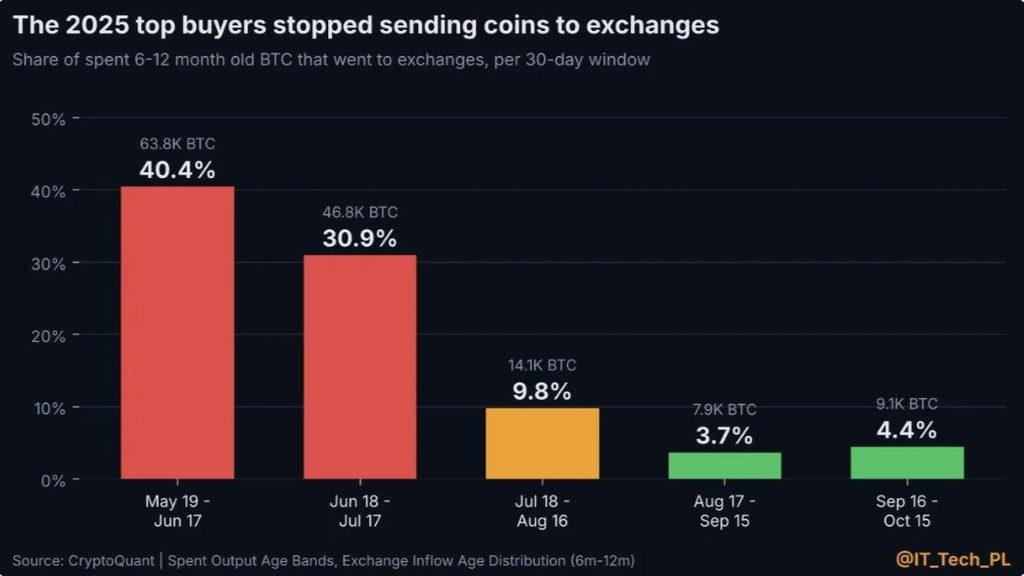
According to analyst IT Tech, in the 30-day period concluding on October 15th, only a modest 4.4% of Bitcoin aged between 6 and 12 months that changed hands was directed to exchanges. This equates to approximately 9,100 BTC out of a total of 205,400 BTC moved during that timeframe. This figure stands in stark contrast to the 30-day window ending on June 17th, where 40.4% of the moved coins, equivalent to 63,800 BTC, were transferred to exchanges, signaling a much higher propensity for selling.
The trend of decreasing exchange inflows from this cohort of investors has been consistent over recent months. Following the June high, the proportion of coins moved to exchanges fell to 30.9% in July, further declining to 9.8% in August and a mere 3.7% in September. While there was a slight recovery in October, the overall trajectory indicates that fewer of these relatively younger Bitcoin holdings are reaching platforms where they can be easily sold.
IT Tech further highlighted the distinction between the sheer volume of Bitcoin on the move and its ultimate destination. During the most recent 30-day period analyzed, 205,400 BTC had been transacted, a figure considerably higher than the 157,700 BTC that moved during the June window. However, the fact that a smaller percentage of these coins are ending up on exchanges suggests that holders are opting to retain their assets rather than liquidate them. This reduction in readily available supply on exchanges can be a significant factor in supporting Bitcoin’s price, particularly if demand remains robust.

Market Valuation and Historical Context: The MVRV Metric
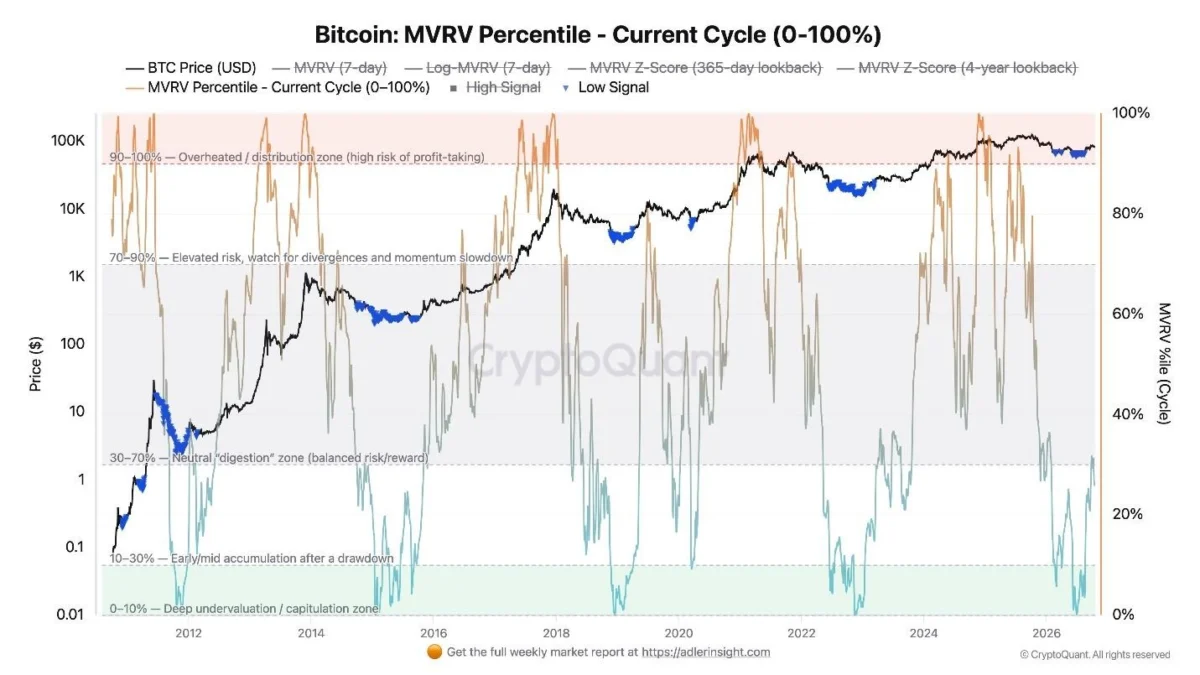
In parallel with these observations on investor behavior, CryptoQuant analyst Darkfost has provided insights into Bitcoin’s current market valuation using the Market Value to Realized Value (MVRV) metric. The MVRV ratio compares the current market capitalization of Bitcoin to its realized capitalization, which represents the aggregate value of all Bitcoin at the price they were last moved on the blockchain. This metric helps to contextualize Bitcoin’s price relative to its historical performance.
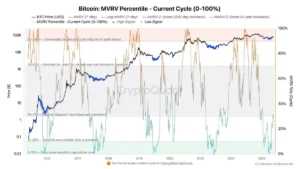
Darkfost noted that after experiencing a rejection near the $87,000 mark, Bitcoin’s price has fallen back below the 30th percentile of its MVRV metric. He explained that this particular interpretation of the MVRV metric places Bitcoin’s valuation within its historical context, moving beyond a simple ratio to analyze the distribution of valuations over time.
"By falling back below the 30th percentile, Bitcoin is returning to a zone where it has spent only about 25% of its time at this valuation level," the analyst stated. This indicates that the current valuation is relatively less common in Bitcoin’s history, suggesting a potential divergence from typical market cycles.
Darkfost further elaborated that this level remains consistent with an accumulation zone, a period where investors historically see value in acquiring Bitcoin. However, he also pointed out that Bitcoin had moved out of the "extreme undervaluation range" that has historically been associated with market bottoms.
The analyst’s assessment suggests that Bitcoin has returned to a valuation range that is historically less frequented, even as the broader market continues to seek stronger, sustained demand. This nuanced view of the MVRV metric provides a more sophisticated understanding of Bitcoin’s current market position, suggesting that while opportunities for accumulation may exist, the cryptocurrency is not trading at the deeply discounted levels seen at previous market capitulations.
Broader Implications and Market Outlook
The simultaneous activation of long-dormant wallets and the observed shift in selling pressure from recent investors present a complex picture of the current Bitcoin market. The influx of millions of dollars worth of Bitcoin from early adopters, while potentially leading to some profit-taking, also signifies a long-term conviction in the asset’s value. Simultaneously, the reluctance of newer investors to offload their holdings onto exchanges could create a tighter supply environment, potentially bolstering prices if demand continues to grow.
At the time of reporting, Bitcoin was trading at approximately $82,146, reflecting a modest increase of 1.02% over the preceding 24 hours. This price action, coupled with the on-chain data, suggests a market that is navigating multiple influences. The sustained interest from early investors, combined with a more cautious approach from recent participants, could set the stage for continued price discovery.
The coming weeks and months will likely see continued scrutiny of these on-chain metrics, particularly the behavior of both long-term holders and newer market entrants. The interplay between these different investor groups, alongside macroeconomic factors and regulatory developments, will be crucial in determining Bitcoin’s trajectory as it continues to mature as a global digital asset. The resurgence of these ancient wallets serves as a potent reminder of Bitcoin’s enduring legacy and the significant wealth creation it has facilitated for its earliest supporters.