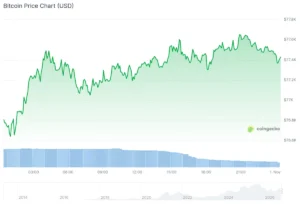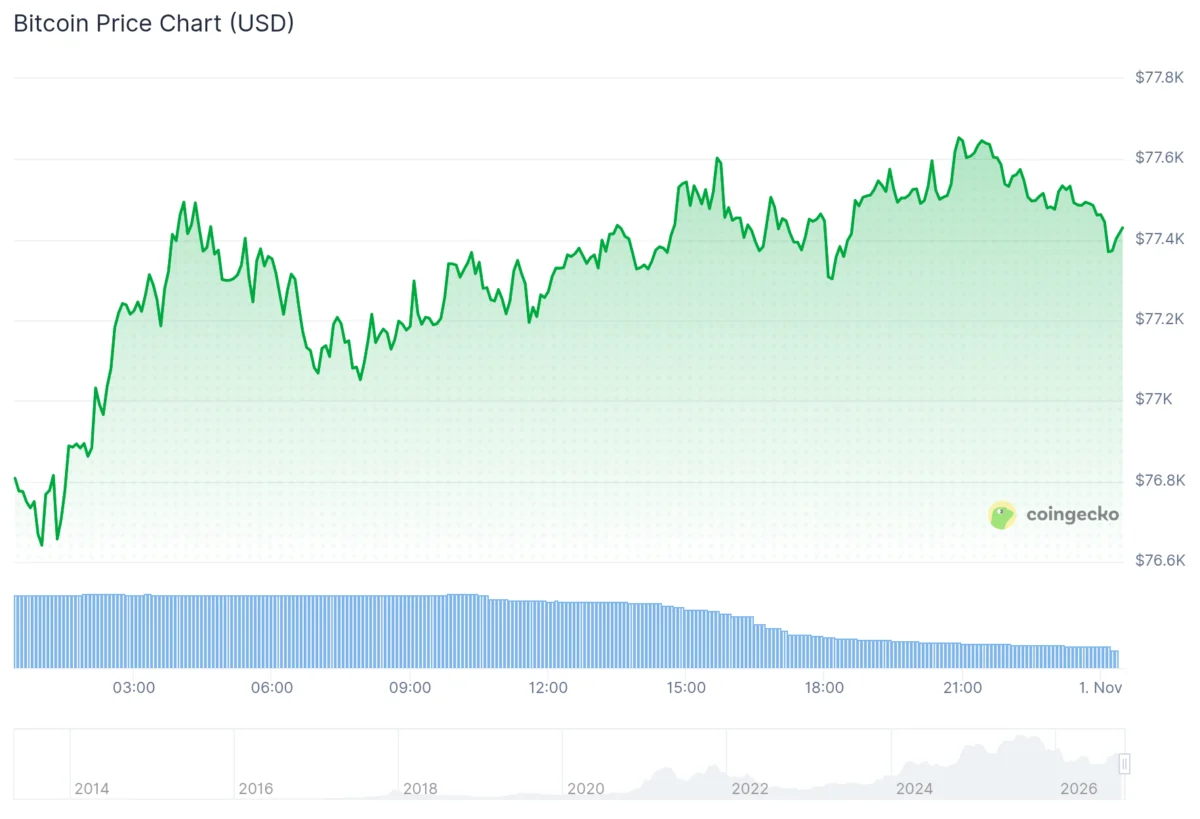
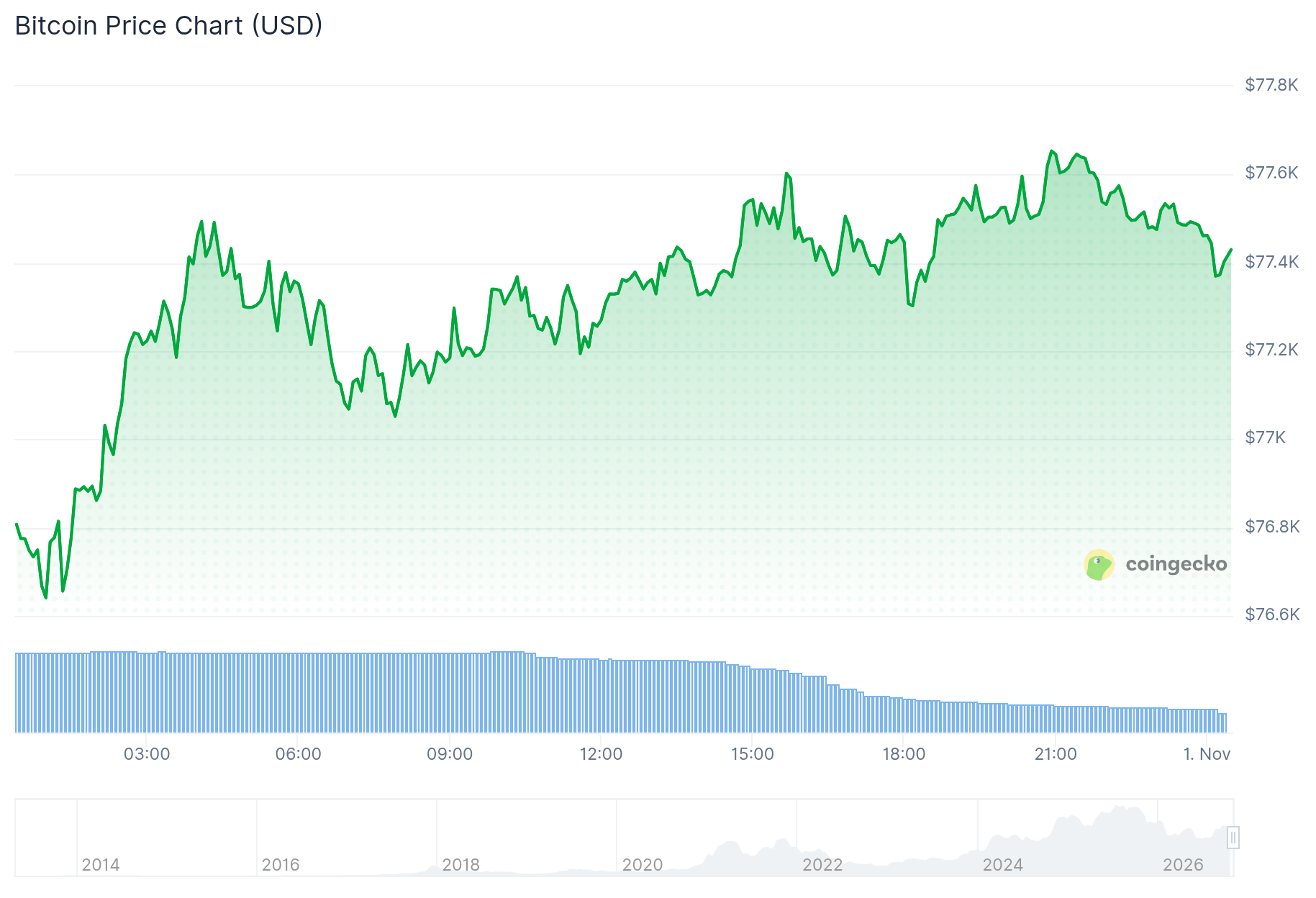
Friday witnessed a dramatic reversal in investor sentiment within the cryptocurrency market, as US spot Bitcoin Exchange Traded Funds (ETFs) recorded significant net outflows totaling $643.33 million. This substantial withdrawal abruptly ended a four-day streak of consecutive inflows and marked the first full trading session response to a major security breach affecting Binance, one of the world’s largest cryptocurrency exchanges. The widespread sell-off pushed Bitcoin’s price below $77,000 on Friday, though it recovered slightly to trade near $77,600 on Saturday. The contagion extended beyond Bitcoin, with Ether and Solana funds also experiencing notable net withdrawals, underscoring a broader market retreat fueled by security concerns and renewed volatility.
Anatomy of a Market Reversal: Bitcoin ETF Performance
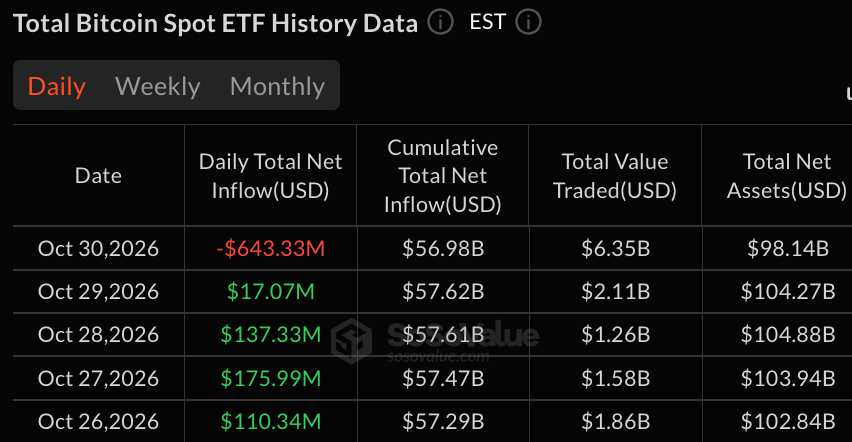
The $643.33 million in outflows on Friday effectively erased the $440.73 million in net inflows accumulated from Monday through Thursday, leaving US spot Bitcoin funds with a net deficit of approximately $202.6 million for the week, according to data compiled by SoSoValue. This abrupt shift highlights the sensitivity of these nascent investment vehicles to significant market events, particularly those impacting the underlying infrastructure of the crypto ecosystem.
The outflows were not concentrated in a single fund but rather spread across several major players. BlackRock’s iShares Bitcoin Trust (IBIT), which has frequently led in attracting new capital, paradoxically led the redemptions with $233.70 million in outflows. Fidelity’s FBTC followed closely, registering an outflow of $201.04 million. Other prominent funds also saw significant withdrawals: ARK 21Shares’ ARKB recorded $129.55 million in net redemptions, Grayscale’s GBTC, despite its historical pattern of outflows, still saw $53.32 million depart, and Bitwise’s BITB lost $25.72 million. This broad-based selling across multiple funds indicates a collective investor reaction, whether driven by direct concerns over the Binance incident, broader market de-risking, or a combination of factors.
The substantial redemptions coincided with a sharp increase in trading activity for these Bitcoin funds. The total trading value for US spot Bitcoin ETFs surged to $6.35 billion on Friday, a threefold increase from the $2.11 billion recorded the previous day. This spike in volume underscores the intensity of the selling pressure and the rapid adjustment by investors. As a result of both fund flows and the decline in Bitcoin’s market value, the total net assets held by these ETFs dipped below the crucial $100 billion mark, settling at $98.14 billion. These funds, launched in January 2024, have provided traditional investors with an accessible avenue to gain exposure to Bitcoin via brokerage accounts, making their flow figures a critical barometer of institutional and retail demand for the digital asset.
The Binance Breach: A $6.3 Billion Security Shock

The catalyst for Friday’s market turmoil was a significant security incident involving Binance, which came to light after the US stock market close on Thursday. The exchange reported a breach affecting approximately $6.3 billion in cryptocurrency held within its "hot wallets." Hot wallets are online, internet-connected cryptocurrency wallets used by exchanges for rapid transactions and daily operations, contrasting with "cold wallets" which are offline and considered more secure for long-term storage of the vast majority of assets. The compromise of such a substantial amount from a hot wallet, even if a fraction of Binance’s total holdings, represents a critical security failure and a severe blow to investor confidence.
Binance’s Co-CEO acknowledged the attack, noting that the attackers utilized "self-destruct tools" to obscure their tracks, complicating forensic analysis. The scale of the breach is among the largest in cryptocurrency history, instantly raising alarms across the industry and among regulatory bodies. This incident serves as a stark reminder of the persistent security challenges facing centralized cryptocurrency exchanges, despite their advanced security protocols and significant investments in safeguarding user assets. The vulnerability of hot wallets, while necessary for operational liquidity, remains a perennial concern for both exchanges and their users.
Binance’s Immediate Response and Recovery Plan
In the wake of the breach, Binance moved quickly to reassure its users and the broader market. The exchange issued a series of statements outlining its response and recovery plan. Crucially, Binance pledged to cover all losses for its customers, emphasizing that user funds would not be impacted. To fulfill this commitment, the exchange announced it had replenished approximately 90% of the affected assets using its company resources, setting aside more than $6.34 billion in corporate funds specifically for this purpose. This swift financial commitment was designed to mitigate the immediate panic and maintain trust, a critical factor for any financial institution, especially in the volatile crypto space.
As part of its recovery strategy, Binance temporarily suspended withdrawals across its platform to conduct thorough security checks and implement enhanced protective measures. The exchange outlined a phased resumption of withdrawals, tentatively scheduled to begin on November 1. This methodical approach, while causing temporary inconvenience for users, aims to ensure the integrity and security of the platform before full operations are restored. Such incidents often trigger comprehensive internal audits and external security reviews, potentially leading to the implementation of new security protocols and infrastructure upgrades to prevent future occurrences.
Broader Market Retreat and Altcoin Vulnerability
The impact of the Binance breach and the subsequent Bitcoin ETF outflows was not confined to Bitcoin alone. The broader cryptocurrency market experienced a significant retreat, with other major digital assets and their corresponding investment products also suffering. US spot Ether ETFs, for instance, recorded $155.85 million in outflows on Friday, marking their fifth consecutive session of net withdrawals. BlackRock’s ETHA, similar to its Bitcoin counterpart, accounted for a substantial portion of this, with $76.64 million in redemptions. For the full week, Ether fund withdrawals reached approximately $431.5 million, illustrating a pervasive decline in demand for altcoin exposure through regulated investment products.
Solana ETFs also felt the pressure, posting $10.74 million in outflows on Friday, contributing to weekly withdrawals of about $71.5 million. Even XRP products, which typically exhibit different market dynamics, recorded a smaller net outflow. This synchronized decline across various crypto investment products indicates a flight to safety or a general de-risking strategy by investors, who perceive increased systemic risk following such a high-profile security breach.
Beyond ETFs, individual cryptocurrencies experienced significant price corrections. While Bitcoin’s pullback from its recent highs was approximately 6.5%, other major tokens saw deeper declines. BNB, Binance’s native token, which is often closely tied to the exchange’s performance and sentiment, dropped roughly 14%. Ether fell about 20.6% from its recent peak, while XRP experienced an approximate 23% decline. These comparisons, while using different starting points, underscore the heightened vulnerability of altcoins to market shocks, often exhibiting greater volatility than Bitcoin during periods of uncertainty.
Market Analysis and Price Action: Navigating Volatility
Following Friday’s sharp decline, Bitcoin’s price exhibited some recovery on Saturday, trading near $77,600 after briefly falling below $77,000. However, it remained significantly below the $81,000 to $82,000 resistance area that had been identified prior to the sell-off. Market analysts are closely watching key technical levels to gauge the potential for further price movements. The $76,000 region has emerged as a critical support zone after the recent decline. A sustained move back above $78,000 would be interpreted as an initial sign of stabilization, potentially signaling a rebound in investor confidence. Conversely, a breach below $76,000 could expose lower support levels, potentially triggering further selling pressure and a deeper correction.
For other major tokens, specific support zones are also under scrutiny. BNB traders are monitoring the $690 area for potential stabilization. XRP faces a crucial support level near $1.20, while Ether’s immediate support zone is identified between $2,170 and $2,200. The ability of these assets to hold these levels in the coming days will be indicative of their resilience against the prevailing negative sentiment.
Implications for Investor Confidence and Regulatory Scrutiny
The Binance breach and the subsequent market reaction carry significant implications for investor confidence in the cryptocurrency ecosystem. Security incidents of this magnitude erode trust, particularly among institutional investors and those new to the digital asset space who rely on centralized platforms for custody and trading. While Binance’s swift action to cover losses is commendable, the mere occurrence of such a breach raises fundamental questions about the robustness of security measures, even at the industry’s largest exchanges.
This event is also likely to intensify regulatory scrutiny globally. Regulators have consistently expressed concerns about consumer protection, market integrity, and the prevention of illicit finance within the crypto sphere. A $6.3 billion hack on a leading exchange provides fresh ammunition for calls for stricter oversight, more stringent licensing requirements, and enhanced cybersecurity mandates for all crypto service providers. The incident could accelerate the development and implementation of comprehensive regulatory frameworks aimed at mitigating systemic risks and safeguarding investor assets.
Furthermore, the outflows from spot Bitcoin ETFs, often seen as a gateway for traditional finance into crypto, underscore the delicate balance between accessibility and perceived risk. While ETFs offer regulatory compliance and ease of access, their performance remains intrinsically linked to the underlying crypto market and its inherent volatilities, including security risks. This incident may prompt some investors to reconsider their allocation to crypto assets or to prioritize self-custody solutions over centralized exchange holdings, reinforcing the ethos of "not your keys, not your coins."
The Path Forward: Rebuilding Trust and Enhancing Security
The immediate aftermath of the Binance breach presents a critical test for the cryptocurrency industry. For Binance, the priority will be to meticulously execute its recovery plan, ensuring the secure and phased resumption of withdrawals while continuously enhancing its security infrastructure. The market will be watching closely for any further developments, particularly regarding the recovery of stolen funds and the identification of the perpetrators.
For the broader crypto market, the challenge lies in rebuilding investor confidence. This will require not only robust security measures from exchanges but also transparent communication, effective risk management, and a collective commitment to fostering a more secure and resilient ecosystem. The performance of Bitcoin and altcoins in the coming weeks will indicate how quickly the market can absorb this shock and resume its growth trajectory, or if it will face a more prolonged period of consolidation and uncertainty. The incident serves as a potent reminder that while the promise of decentralized finance is immense, the journey towards its full realization is fraught with complex challenges, especially in the realm of security.