On October 30, 2023, the Balancer decentralized finance (DeFi) protocol initiated a significant phase of its planned wind-down, transitioning most of its liquidity pools to withdrawals-only mode. This move was part of an overarching strategy for an "orderly exit" approved by the Balancer DAO (Decentralized Autonomous Organization) through a series of governance proposals. While the process has largely been described as methodical, a closer examination of the DAO’s published "Closing the Books" asset inventory against actual on-chain activity reveals several notable discrepancies, particularly concerning certain DAO-owned positions that remained active or unaddressed post-cutoff. These findings underscore the intricate challenges of asset management and transparency in decentralized governance during a protocol shutdown.
The official "Closing the Books" list, disseminated on October 23 by Balancer contributor mendesfabio, aimed to provide a comprehensive ledger of the DAO’s remaining assets and their intended disposition. However, a comparative analysis with the Ethereum governance payloads executed by the DAO’s multisig and its public on-chain wallets suggests that not all assets were immediately frozen or processed as anticipated. Specifically, a significant liquidity position within Balancer’s Ethereum v3 buffers continued to exhibit value fluctuations, while approximately $70,000 worth of BEETS tokens remained unburned, despite a corresponding governance proposal. These nuances raise important questions about the practical execution of decentralized wind-down strategies and the imperative for real-time, on-chain verification.
Background: The Balancer Protocol and its Strategic Wind-Down
Balancer emerged as a prominent automated market maker (AMM) protocol within the DeFi ecosystem, enabling users to provide liquidity to pools with custom weightings and earn trading fees. Unlike traditional AMMs that often rely on a 50/50 split between two assets, Balancer’s innovation lay in its flexible pool configurations, allowing for multi-token pools and dynamic rebalancing. This flexibility attracted significant liquidity and innovation, positioning Balancer as a key player in decentralized exchange and yield generation.
The decision to wind down Balancer, while not publicly detailed with specific reasons for cessation of operations, is understood to be a strategic choice by the DAO. In the dynamic and competitive DeFi landscape, such decisions can stem from various factors, including evolving market conditions, shifts in core development focus, regulatory uncertainties, or the pursuit of alternative ventures by key contributors. The emphasis on an "orderly exit" signaled the DAO’s commitment to a responsible conclusion, prioritizing user asset safety and the systematic distribution of remaining treasury assets to BAL token holders. This approach aimed to set a precedent for mature protocol management in the decentralized space, avoiding abrupt closures that have, in the past, led to significant user losses and reputational damage.
The "orderly winddown" was formally approved under Balancer Improvement Proposal (BIP)-928, titled "Orderly Winddown of Balancer and Distribution of the Treasury." This foundational proposal outlined the high-level strategy for decommissioning the protocol, including rules for asset distribution to BAL holders and a timeline for various operational halts. The objective was to methodically de-risk the protocol, retrieve and consolidate DAO-owned assets, and ensure a fair return to the community that had supported Balancer.
Chronology of the Shutdown and Technical Implementation
The wind-down process has unfolded over several weeks, guided by a series of interconnected governance proposals:

- October 23, 2023: Balancer contributor mendesfabio published the "Closing the Books on Balancer DAO-Owned Assets" post on the Balancer forum. This post served as a public ledger, detailing the DAO’s remaining assets, their estimated values, and the proposed actions for each (e.g., withdrawal, burning, transfer). This document became a critical reference point for assessing the transparency and execution of the wind-down.
- October 30, 2023: This date marked a significant operational cutoff for the Balancer protocol. The technical work underpinning this cutoff was outlined in BIP-936, which specified the Ethereum payloads to be executed. These payloads were designed to perform three core functions:
- Disable Pool Creation: Preventing the establishment of any new liquidity pools on the Balancer protocol. This was a crucial step in freezing the protocol’s expansion and focusing on winding down existing operations.
- Pause Pausable Pools: Many Balancer pools had built-in "pausability" features, allowing the DAO to halt certain operations in emergencies or during planned shutdowns. The payloads initiated the pausing of these eligible pools, effectively stopping trading and new liquidity provisions, while allowing existing liquidity providers to withdraw their assets.
- End Protocol Fee Income: The protocol’s mechanism for generating fees from trading activity was deactivated. This ensured that no new revenue accrued to the DAO from ongoing operations post-cutoff, streamlining the final accounting.
It is important to note that the October 30th cutoff, as implemented by BIP-936, specifically addressed the operational aspects of the Balancer protocol’s user-facing services. It did not, by its nature, directly cover the collection or disposition of all DAO-owned assets, which were separately detailed in the "Closing the Books" list. This distinction is central to understanding the observed discrepancies.
Discrepancies Emerge: DAO-Owned Assets Under Scrutiny
Following the October 30th operational freeze, a detailed comparison between the "Closing the Books" list and the actual on-chain status of DAO wallets and executed payloads revealed several items that did not immediately align with the general narrative of a fully frozen and settled environment. While many assets had indeed been moved or were pending action as described, a few significant positions presented ongoing activity or delays.
The "Closing the Books" ledger provided a snapshot of the DAO’s asset portfolio as of late October. Let’s examine the status of these assets as of October 31, juxtaposing the stated intentions with on-chain realities:
Already Moved Assets:
- The Grants Safe (Gnosis Safe): The funds held within the Grants Safe, intended for distribution or consolidation, were reported as successfully moved. This represents a straightforward asset transfer, indicating efficient execution for liquid, fungible tokens held in a standard multi-signature wallet.
- Balancer Innovation Fund: This fund, designated for supporting innovative projects within the Balancer ecosystem, had its assets consolidated. The "Closing the Books" post noted its value at approximately $155,692 as of a September 20 snapshot. Comprising 92,822 USDC and 25.58 WETH, its value fluctuated slightly with market movements. At an ETH price of roughly $2,200 around the cutoff, the fund was valued at approximately $149,000. This minor variance is consistent with typical cryptocurrency price volatility between the snapshot date and the actual transfer, indicating a largely successful and timely consolidation.
Still Pending Assets (with observed nuances):
- DAO’s liquidity in Ethereum v3 buffers: This was identified as a "time-sensitive" withdrawal due to fluctuating balances.
- Timeless veBAL grant USDC fees: These were pending collection via BIP-933.
- Leftover Aave rewards: Pending collection via BIP-935.
- 10,000,000 BEETS held by the Balancer DAO on Sonic: Pending a burn vote via BIP-934.
Deep Dive into Unsettled Assets
The pending items, particularly the v3 buffer liquidity and the BEETS tokens, highlight the complexities inherent in winding down a sophisticated DeFi protocol.
The Volatile V3 Buffer Position

Balancer’s v3 buffers are a unique architectural component designed to optimize liquidity routing for swaps involving yield-bearing tokens. Unlike standard tokens held in a wallet, the DAO’s share in these buffers resides "in internal Vault accounting," meaning its value is dynamically calculated based on ongoing swap activity. The "Closing the Books" post explicitly cautioned about the "time-sensitive" nature of withdrawing these funds, as "balances shift as swaps pass through the buffers."
This sensitivity proved to be a critical factor. The published figures illustrate a significant decline in value:
- September 20 estimate: Approximately $400,000.
- October 23 review: Approximately $352,000.
This represents a substantial drop of roughly $48,000, or about 12%, in just over a month. Critically, this position was the largest single item on the DAO’s asset list. The October 30th protocol cutoff, which paused many pools, did not fully halt this dynamic. BIP-928, the overarching wind-down proposal, allowed partner-requested v3 pools to remain live until November 30. As long as swaps continued to route through these buffers, the DAO’s share remained exposed to value fluctuations.
The continued volatility of this asset presents a clear risk to the final distributable treasury value. The sooner the Balancer Treasury Council can arrange and execute the signing session for its withdrawal, as reportedly planned, the less exposure this significant asset will have to further depreciation. This situation underscores the challenge of liquidating complex, interconnected DeFi positions that are not simple token holdings.
Pending Claims: Timeless veBAL and Aave Rewards
Two smaller, but still significant, claims were found to be pre-programmed as executable payloads, indicating a fixed amount and a clear path to collection:
- BIP-933 – Claim Timeless veBAL Grant USDC Fees: This proposal specifically calls the
claimFeesfunction on the Timeless veBAL grant contract (identified as0x89f6…16f6). The objective is to claim USDC from Balancer’s FeeDistributor and transfer it directly to the DAO’s multisig. The forum post estimated approximately 10,000 USDC remaining after the Timeless position was unwound. This amount, while modest in the context of the entire treasury, represents a clean, executable claim that does not depend on ongoing pool activity. - BIP-935 – Claim Leftover Aave Rewards: This proposal focuses on collecting residual AAVE tokens. It calls the
claimRewardsfunction on the stkAAVE contract, directing exactly 9.306104517152944285 AAVE to the Treasury Safe. This precise figure aligns perfectly with the "~9.3061 AAVE" mentioned in the asset review. Like BIP-933, this payload passed Tenderly simulations in Balancer’s operations repository, confirming its technical viability. Neither of these claims is affected by the October 30th cutoff, as they involve static contract interactions rather than active pool operations.
The Unmoved 10 Million BEETS Tokens
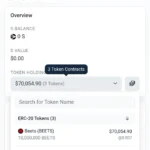
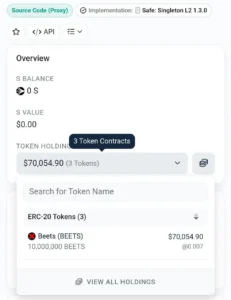
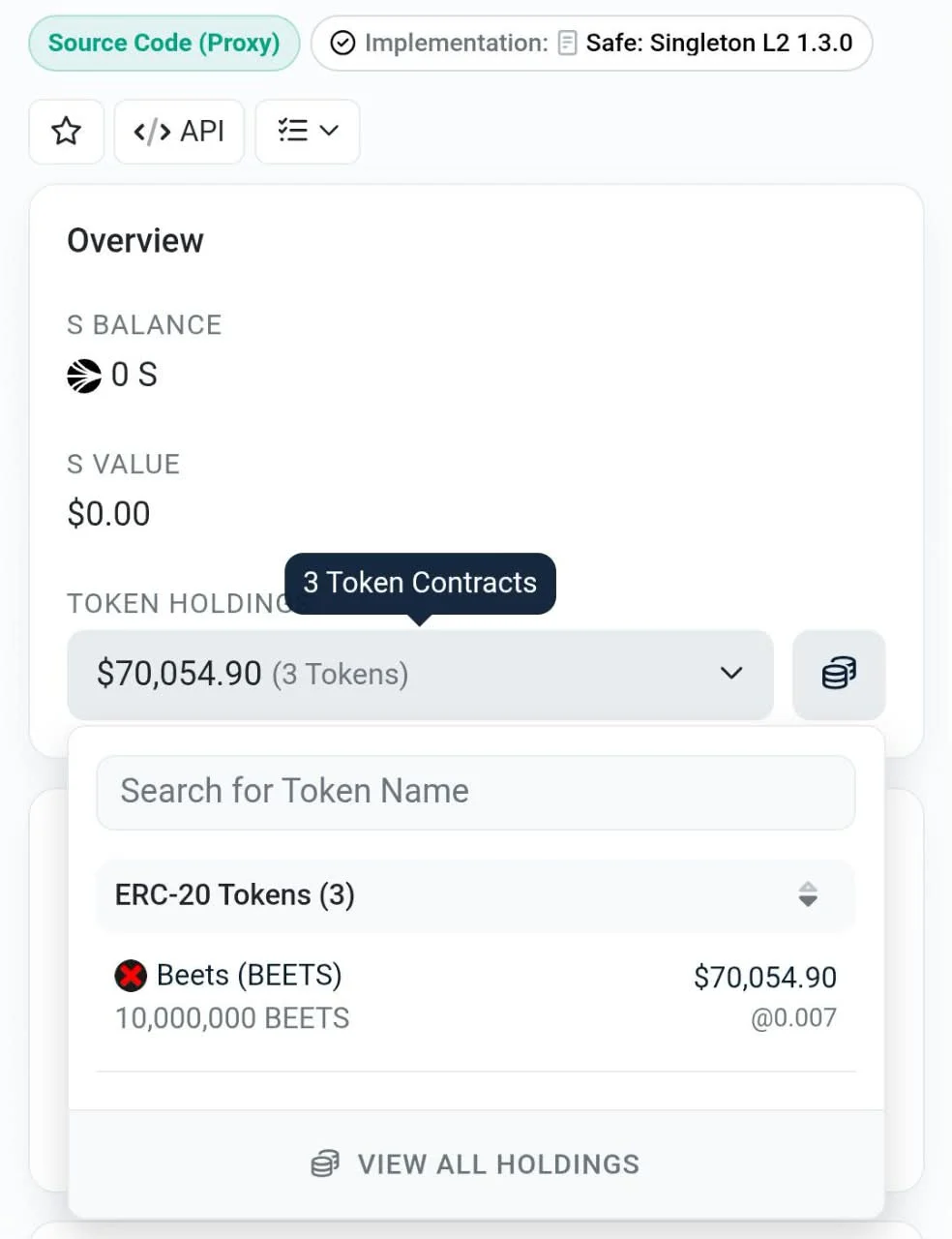
Perhaps the most visible and easily verifiable pending item is the 10,000,000 BEETS tokens held by the Balancer DAO on the Sonic network. As of October 31, the DAO’s Safe on Sonic, identified as 0x4f22…3c2e, still held this exact amount. Sonicscan, an explorer for the Sonic network, valued this holding at approximately $70,055, with each BEETS token priced at roughly $0.007. This represents the Safe’s sole priced asset, with no other significant token holdings.
The proposed action for these tokens was not a sale or distribution, but a burn. BIP-934, titled "Burn the 10M BEETS held by the Balancer DAO on Sonic," was listed alongside the main wind-down proposals. The asset review indicated that a Snapshot vote for this proposal was expected the weekend following October 23. However, a week later, the tokens remained in the Safe, awaiting the community’s decision.

The decision to burn rather than sell or distribute these tokens is a deliberate governance choice. While $70,000 might seem a relatively small sum compared to the overall treasury, it is larger than the combined value of the Grants Safe and the Timeless fees. If burned, this value would be removed from circulation, potentially benefiting the remaining BEETS token holders through reduced supply, but would not contribute to the final BAL distribution. Divided across the approximately 63 million redeemable BAL tokens estimated in BIP-928, this $70,000 equates to about a tenth of a cent per token. The delay in the vote means this amount remains in limbo, highlighting the practical execution challenges of decentralized decision-making processes, even during a structured shutdown.
Analysis of Transparency and Governance
The detailed comparison of Balancer’s announced wind-down actions with on-chain data offers several insights into the realities of decentralized governance:
- Importance of On-Chain Verification: The discrepancies observed, particularly with the v3 buffers and BEETS tokens, underscore the critical need for independent, on-chain verification in DeFi. While DAOs strive for transparency through forum posts and proposals, the ultimate truth lies in the immutable ledger of the blockchain. This case serves as a valuable reminder for users and auditors to cross-reference public statements with actual contract executions.
- Complexity of DeFi Asset Management: Winding down a sophisticated DeFi protocol is far more complex than liquidating a traditional corporate entity. Assets are not merely static entries on a balance sheet; they can be dynamic (like v3 buffers), entangled in multiple protocols (like Aave rewards), or reside on different blockchains (like BEETS on Sonic). Each asset type requires a specific, often technical, on-chain action, which adds layers of complexity and potential points of delay.
- Challenges of Decentralized Execution: Even with clear governance proposals, the execution phase in a DAO can encounter hurdles. Delays in multisig signing sessions (for the v3 buffer), or in launching a community vote (for the BEETS burn), can prolong the wind-down process and expose assets to market fluctuations. This highlights the tension between the ideal of rapid, efficient execution and the deliberate, multi-stakeholder nature of decentralized decision-making.
- Nuance of "Orderly": While Balancer’s exit is largely orderly, these findings introduce nuance to the term. An "orderly exit" implies not just a plan, but also its meticulous execution. The ongoing volatility of the v3 buffer and the delayed BEETS vote suggest that "orderly" is an ongoing process that requires continuous monitoring and proactive management until all assets are fully settled.
Implications for Stakeholders and the Broader DeFi Ecosystem
The Balancer wind-down holds several implications:
- For BAL Holders: The final value distributed to BAL holders, estimated at approximately $9.96 million (or $0.158 per BAL based on a September 20 update), will be directly affected by the resolution of these pending assets. The $48,000 loss already incurred in the v3 buffer and the $70,000 decision regarding BEETS represent non-trivial amounts that, if mishandled or further depreciated, could slightly reduce the per-token distribution. The prompt and efficient resolution of these outstanding items is therefore in the best interest of all BAL token holders.
- For Other DAOs and Protocols: Balancer’s experience offers a case study for other decentralized autonomous organizations contemplating or undergoing similar strategic shifts. It underscores the importance of not only comprehensive planning but also robust monitoring and agile execution mechanisms for asset repatriation and distribution. Establishing clear, auditable processes for every asset type, especially those with dynamic values, is paramount.
- Precedent for DeFi: As the DeFi space matures, more protocols may reach natural end-of-life cycles or undergo significant transformations. The manner in which Balancer conducts its "orderly exit" will contribute to the best practices and precedents for future protocol wind-downs. Transparency, consistent communication, and verifiable on-chain actions are crucial for maintaining trust and confidence in the decentralized ecosystem.
- Transparency and Trust: The fact that independent analysis can pinpoint these discrepancies, even minor ones, reinforces the inherent transparency of public blockchains. This transparency, while sometimes revealing imperfections in execution, ultimately strengthens trust by allowing stakeholders to verify actions independently.
Conclusion
Balancer’s wind-down is a complex undertaking, largely proceeding as an "orderly exit" designed to protect user assets and return value to the community. The October 30th cutoff successfully paused core protocol functions, but the ongoing activity and delayed decisions surrounding certain DAO-owned assets highlight the intricate challenges of decommissioning a sophisticated DeFi protocol. The fluctuating value of the v3 buffer and the pending burn vote for 10 million BEETS tokens underscore the imperative for continuous monitoring and decisive action from the Balancer Treasury Council.
While the amounts involved in these pending items are relatively small compared to the total distributable treasury, their management serves as a crucial test of decentralized governance’s ability to execute a complex strategic wind-down effectively and transparently. The insights gained from this process will undoubtedly contribute to the evolving best practices for asset management, governance, and orderly transitions within the rapidly maturing DeFi landscape. The Balancer community and the broader DeFi ecosystem will continue to observe how these final chapters of the protocol’s operations unfold, learning valuable lessons about the practicalities of true decentralization.