The Ethereum Name Service (ENS) Decentralized Autonomous Organization (DAO) has officially approved the activation of ENSv2, marking a pivotal moment for the foundational Web3 protocol. The decisive vote concluded with an overwhelming 1.69 million ENS tokens cast in favor of the upgrade, against a solitary opposing vote representing 24.94 ENS from a single wallet. This robust support not only ensured the proposal’s passage but also cleared the required quorum by a substantial 69%, a metric that had appeared uncertain just a week prior. The implementation of ENSv2, a significant architectural overhaul, is set to commence around October 27, following the expiry of a two-day timelock, ushering in a new era for decentralized naming on the Ethereum blockchain.
Decisive Mandate: The Vote Unpacked
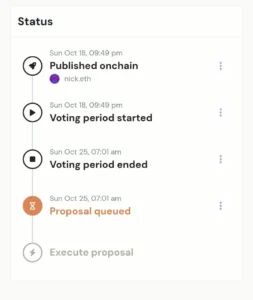
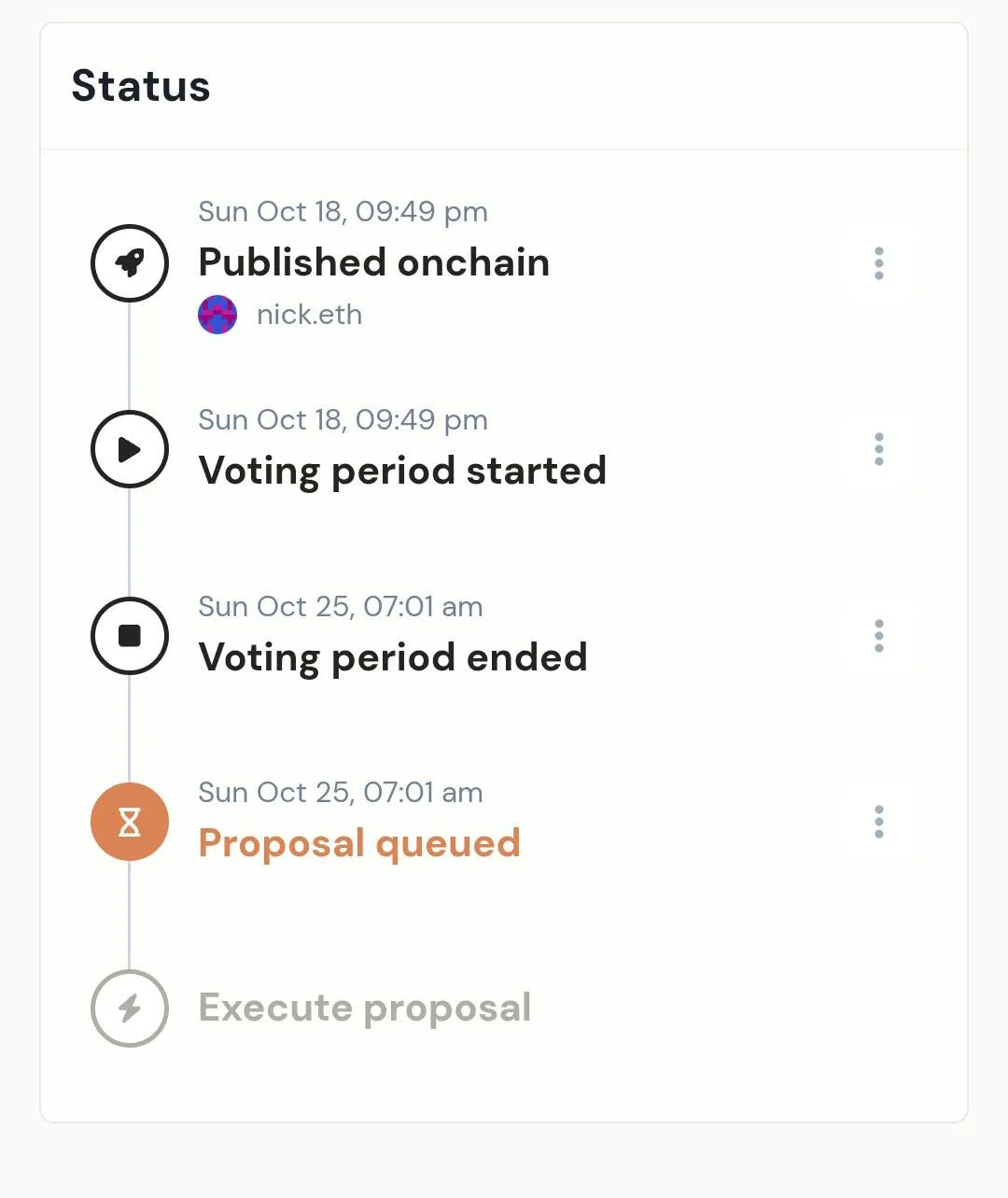
The "Activate ENSv2" proposal, published on-chain by ENS core contributor nick.eth on October 18, opened for voting the same evening. For the proposal to pass, it required a minimum of 1 million ENS votes – approximately 1% of the total 100 million ENS token supply – in addition to a simple majority in favor. Despite early indications of a slow start, the community rallied in the final days, pushing the vote count well beyond the necessary threshold. The final tally of 1.69 million "For" votes represented a resounding endorsement for the next generation of ENS.
While the outcome demonstrated strong consensus, the distribution of voting power highlighted a common challenge within DAO governance. A total of 62 unique addresses participated in the vote. Notably, the three largest wallets collectively contributed approximately 570,780 votes, accounting for 33.8% of the total "For" votes and a significant 57% of the votes required to meet quorum. When including a fourth major delegate, coltron.eth, with 117,920 votes, a mere handful of delegates collectively supplied over 40% of the affirmative votes. This concentration of voting power, while not uncommon in token-weighted governance systems, drew commentary from within the community regarding the influence wielded by a limited number of stakeholders.
ENS: A Cornerstone of Web3 Identity
To fully appreciate the significance of the ENSv2 upgrade, it’s essential to understand the role ENS plays in the broader Web3 ecosystem. The Ethereum Name Service acts as a decentralized, human-readable naming system for cryptocurrency wallets, decentralized websites, and other Web3 resources. Instead of cumbersome alphanumeric addresses like 0x..., ENS allows users to associate simple, memorable names such as alice.eth or mywebsite.eth with their on-chain identities. This functionality is crucial for enhancing user experience, reducing the risk of errors in transactions, and fostering a more accessible and intuitive decentralized internet.

ENSv1, while revolutionary in its inception, was designed at an earlier stage of blockchain technology. As the Ethereum ecosystem matured and the demands on decentralized infrastructure grew, the need for a more robust, scalable, and feature-rich naming architecture became apparent. ENSv2 aims to address these evolving requirements by introducing significant architectural improvements, paving the way for advanced features, greater flexibility, and enhanced security measures. These improvements are critical for ENS to remain a foundational layer for decentralized identity and naming as Web3 continues its rapid expansion.
Chronology of a Critical Governance Event
The journey to activate ENSv2 was a meticulously planned process, culminating in a dramatic surge of participation in the final days of voting:
- October 18: The "Activate ENSv2" proposal (ID: 51915723803355532053585313225201979004629663092454892570706465301184496475762) was formally published on-chain by nick.eth. Voting commenced on the same evening.
- Early Voting Period (October 18 – October 20): Initial engagement was modest. By the end of the first day, only six wallets had cast 531,252 ENS tokens. By October 20, support had increased to approximately 619,420 votes, still falling short of the 1 million ENS quorum requirement by about 380,000 votes.
- Final Surge (October 20 – October 25): The community witnessed a significant influx of votes. Over 1 million additional votes were cast in the final five days, nearly tripling the total support for the proposal. This late-stage engagement proved crucial in ensuring the successful passage of the upgrade.
- October 25, Approximately 06:01 UTC: The voting period officially concluded. Immediately upon conclusion, the proposal was "queued" on the ENS DAO timelock, initiating a mandatory two-day waiting period before execution.
- October 27, Approximately 06:00 UTC: The two-day timelock is set to expire, allowing any authorized entity to execute the approved transaction, which consists of 15 distinct contract calls.
Concentration of Influence: A DAO Governance Debate
The analysis of voter turnout reveals that while the total number of "For" votes was substantial, the decision was heavily influenced by a relatively small number of large token holders and delegates. Among the prominent voters were Jeff Lau, a co-founder of ENS, and liubenben.eth, who publicly endorsed the upgrade on the proposal’s forum thread.
This dynamic sparked discussions about the concentration of voting power within the ENS DAO, a recurring theme in decentralized governance models. FireEyes, a notable delegate who voted in favor of the proposal, articulated this concern on the forum thread, cautioning that "ENS Labs’ delegated voting power was concentrating influence in the DAO." This observation underscores the ongoing tension between ensuring efficient decision-making for critical infrastructure upgrades and upholding the principles of broad decentralization and equitable participation. While the approval of ENSv2 is a clear step forward for the protocol’s technical evolution, it also serves as a case study in the evolving challenges and compromises inherent in large-scale DAO governance. Despite these concerns, the minimal opposition and the strong majority in favor indicate a general consensus among active participants regarding the necessity and direction of the ENSv2 upgrade.
The Technical Mandate: Deconstructing the 15 Contract Calls

The approval of the "Activate ENSv2" proposal translates into the execution of 15 specific contract calls, all bundled into a single transaction that will originate from the DAO timelock address. These calls represent the technical backbone of the ENSv2 activation, meticulously designed to transition control and functionality from the old system to the new. The forum post accompanying the proposal grouped these calls into several critical categories, providing a roadmap for the architectural shift.
A key aspect of this upgrade is the freezing of new .eth registrations on the v1 registrar. This is not merely a temporary pause but a fundamental restructuring of control. Calls 7 through 11, for instance, are dedicated to systematically removing every existing account and contract that held controller authority over the v1 registrar. This includes not only publicly known entities but also an older multisig that many users might not have realized still possessed such power. After call 14 is executed, the v1 registrar will be effectively neutered, with its only remaining functionalities being name renewals through ETHRenewerV1 and the reclamation of expired names via a designated Graveyard contract.
The sequence of these calls is paramount. Specifically, calls 12 and 13, which handle ownership transfers, must precede call 14. This ensures that once ownership of the v1 registrar passes to ETHRenewerV1, the old owner is no longer able to add or remove controllers, preventing any potential misuse or interference during the transition.
The forum post openly acknowledged certain trade-offs and irreversible changes associated with this activation. While the freeze on new v1 registrations can theoretically be reversed before the full migration begins (by the DAO having ETHRenewerV1 return the registrar and re-adding old controllers), some actions are permanent. For instance, v1 tokens that are migrated and subsequently held by the Graveyard contract "cannot be returned." Furthermore, the v1 emergency disable path, a critical security feature of the old system, will no longer be applicable after the ownership handover. During this crucial transition phase, ENS Labs will temporarily hold administrative rights over the new v2 system, and a dedicated security council will administer the intermediate resolver proxy, ensuring oversight and stability.
Transition Period and Immediate Operational Impact
The execution of the 15 contract calls, anticipated around 06:00 UTC on October 27, will initiate a brief but important transition period for the ENS ecosystem. Users should be aware of a temporary "short gap" in new .eth registrations. As soon as the transaction executes, new registrations on the v1 registrar will cease. However, registrations will not immediately become available on ENSv2. This gap is expected to last "a few hours" as ENS Labs performs a final synchronization and brings the v2 system fully online.
During this interim period, existing functionalities like renewals will continue uninterrupted through the ETHRenewerV1 contract. Other name operations on v1, such as updating records for already registered names, are also expected to function normally. Once the v2 system is fully operational, ENS Labs will conduct a final data sync, enable new registrations on v2, switch the primary .eth resolution to point to the ENSV2Resolver, and crucially, hand over all administrative roles for v2 to the ENS DAO. This final step is vital for ensuring the long-term decentralization and community governance of the new system.

To provide transparency and allow for community verification, the forum post also outlined specific checks that anyone can perform after the execution of the transaction. These checks include confirming that the v1 BaseRegistrar owner has correctly been transferred to ETHRenewerV1, verifying that the five previously removed controllers now show a "false" status, and ensuring that the ETHRenewerV1 and Graveyard contracts show a "true" status for their respective authorities. Finally, the .eth resolver should correctly point to the ENSV2Resolver, confirming that the new system is in place and actively resolving names. These verifiable checkpoints ensure that the executed actions precisely match the proposal approved by the DAO.
Security and Governance Scrutiny: Blockful’s Review
In a testament to the ENS DAO’s commitment to transparency and security, Blockful, an independent delegate team, conducted a thorough review of the "Activate ENSv2" proposal. They meticulously rebuilt all 15 contract calls directly from the on-chain calldata, confirming that they precisely matched the published proposal. Their review, detailed on the forum thread, also flagged several "open items" that, while not blocking the proposal’s passage, represent important considerations for future governance and development.
Blockful’s flagged items included:
- Broader V2 Roles: The initial administrative roles defined for ENSv2 were noted to be "broader than needed long-term." This implies that while necessary for a smooth launch, these roles might grant more power than is ideal for a fully decentralized system in the long run.
- ENS Labs’ Extended Roles: Similarly, ENS Labs’ own administrative roles during the transition were identified as "broader than needed long-term." This temporary concentration of power is a necessary evil for managing a complex migration but requires careful management and eventual divestment.
- Security Council’s Intermediate Role: The security council’s intermediate administrative role over the resolver proxy was also highlighted, indicating another temporary control point that will need to be addressed in subsequent governance actions.
Crucially, voters approved the proposal with these items explicitly on record. This demonstrates a collective understanding that the ENSv2 activation is a multi-stage process. The flagged points serve as a clear agenda for ENS Labs’ follow-up work, which includes a planned proposal approximately one month after launch. This subsequent proposal is intended to refine and remove v2 roles that are broader than strictly necessary for long-term operation, gradually decentralizing control further. This proactive approach to addressing potential centralization points, even in the context of a critical upgrade, reinforces the DAO’s commitment to its decentralized ethos.
Broader Implications for ENS and the Web3 Ecosystem
The successful activation of ENSv2 carries profound implications not just for the Ethereum Name Service itself, but for the wider Web3 ecosystem. This upgrade is poised to significantly enhance the functionality, scalability, and security of decentralized naming.

Enhanced Functionality and User Experience: ENSv2 is expected to unlock a new suite of features and capabilities. This could include more efficient gas usage for various operations, greater flexibility in managing subdomains, and potentially more sophisticated resolution logic that can better integrate with evolving layer-2 solutions and other blockchain networks. For end-users, this translates to a smoother, more cost-effective, and versatile experience when managing their decentralized identities. For developers, it opens up new possibilities for building dApps that leverage ENS in more complex and powerful ways.
Scalability and Future-Proofing: As the Web3 space expands, so does the demand for robust and scalable infrastructure. ENSv2’s architectural improvements are designed to accommodate a larger number of registrations and more complex interactions, ensuring that ENS can continue to serve as a foundational identity layer for a rapidly growing user base. This upgrade positions ENS to adapt to future technological advancements and increased network load, safeguarding its long-term relevance.
Decentralization Trajectory: While the vote highlighted concerns about concentrated voting power, the ultimate goal of ENSv2 is to move towards greater decentralization. The temporary administrative roles held by ENS Labs and the security council are explicitly slated for review and reduction post-launch. This iterative approach to decentralization—where critical upgrades are managed with temporary centralized oversight, followed by subsequent proposals to hand control back to the DAO—represents a pragmatic pathway for large-scale Web3 infrastructure projects. The commitment to further refining governance roles demonstrates a clear long-term vision for a truly community-controlled system.
Precedent for DAO Governance: The successful passage and planned execution of such a complex and critical upgrade through DAO governance sets an important precedent. It showcases the capability of decentralized organizations to make decisive technical advancements, even while navigating internal discussions about power distribution and operational challenges. This experience will likely inform future governance models and best practices within the broader Web3 space, demonstrating both the strengths and the areas for continuous improvement in decentralized decision-making.
Conclusion and Outlook
The approval and impending activation of ENSv2 represent a monumental step forward for the Ethereum Name Service. This upgrade is not merely a technical facelift but a strategic evolution designed to future-proof ENS, enhance its capabilities, and solidify its position as a cornerstone of decentralized identity in Web3. While the concentration of voting power during the proposal’s passage underscored ongoing debates within DAO governance, the overwhelming support for ENSv2 signals a unified community vision for progress.
As the timelock expires and the 15 contract calls execute, the ENS ecosystem will enter a new phase. The temporary pause in new registrations will be followed by the launch of a more resilient, flexible, and feature-rich naming service. The subsequent proposals to decentralize administrative roles further will be crucial milestones to watch, demonstrating the ENS DAO’s commitment to its core principles. The successful deployment of ENSv2 will not only benefit its direct users but will also serve as a powerful testament to the maturity and potential of decentralized autonomous organizations in shaping the future of the internet.