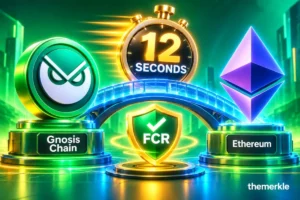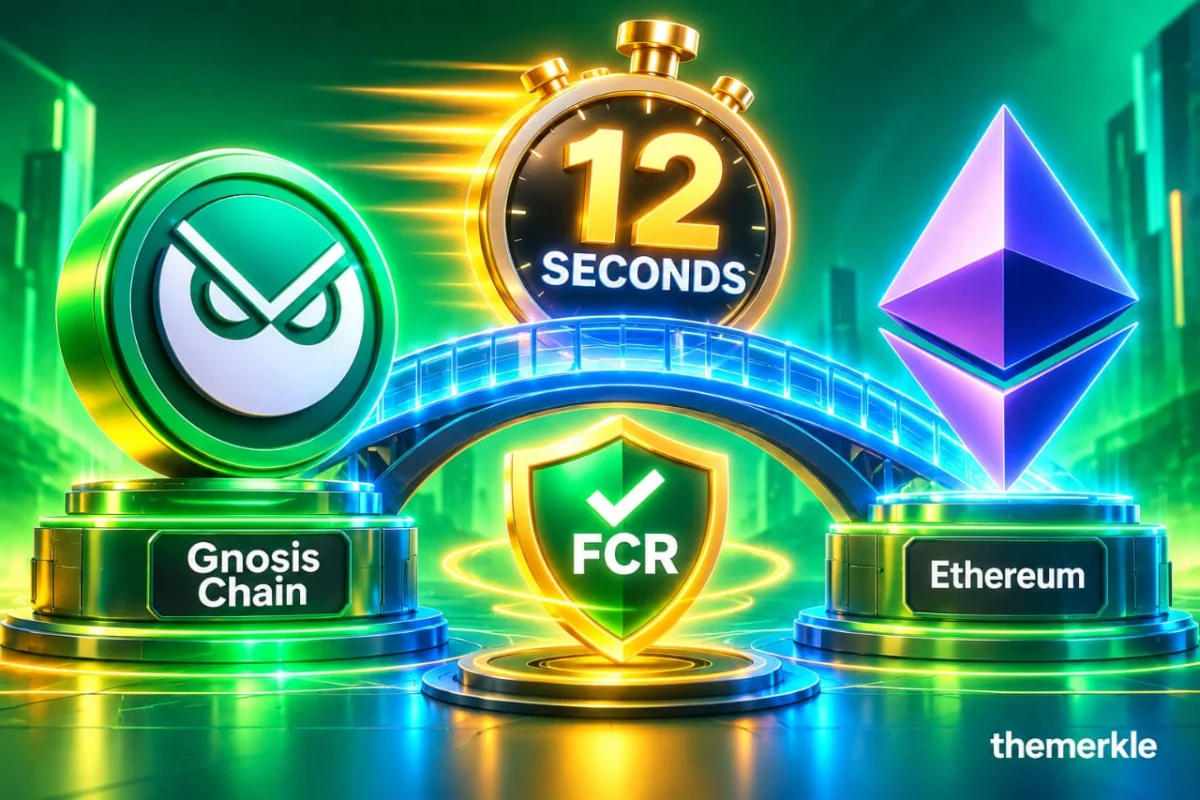
Gnosis Chain has announced a significant advancement in cross-chain interoperability, integrating Ethereum’s Fast Confirmation Rule (FCR) into its official xDAI bridge and Omnibridge. This pivotal implementation, a first in a production system within the Ethereum ecosystem, dramatically reduces the time required for deposits to traverse from Ethereum to Gnosis Chain from approximately 13 minutes to a mere 12 seconds. This nearly 98% reduction in waiting time represents a substantial leap forward for user experience and liquidity flow within the decentralized finance (DeFi) landscape.
Understanding the Fast Confirmation Rule (FCR)
To fully grasp the magnitude of this development, it’s essential to understand the mechanics and implications of Ethereum’s Fast Confirmation Rule. Ethereum, operating on a Proof-of-Stake (PoS) consensus mechanism since The Merge in September 2022, processes transactions in blocks, with each block typically produced every 12 seconds in what is known as a "slot." Validators, responsible for proposing and attesting to blocks, play a crucial role in maintaining network security and finality.
Traditionally, cross-chain bridges have waited for Ethereum’s "finality" before processing assets. Finality on Ethereum is a strong economic guarantee that a block, once finalized, cannot be reverted without at least one-third of the total staked ETH being slashed – a severe penalty designed to deter malicious behavior. This process typically takes two epochs, translating to approximately 13 minutes (each epoch consists of 32 slots, so 2 epochs 32 slots/epoch 12 seconds/slot = 768 seconds, or 12.8 minutes). While offering robust security, this waiting period has been a significant bottleneck for applications requiring rapid asset transfers, particularly for sidechains and Layer 2 solutions.
The Fast Confirmation Rule, outlined in the Bellatrix fast-confirmation spec within Ethereum’s consensus-specs repository, introduces a new, quicker way to ascertain the safety of a block. At its core, FCR leverages the real-time aggregation of validator attestations. In every 12-second slot, validators publish attestations, essentially votes, for the block they perceive as the current head of the chain. FCR tallies these attestations, and once a block garners overwhelming support and passes additional robustness checks, it is designated as "fast-confirmed."
This fast-confirmed status implies that the block, and the execution-layer transactions it contains (such as a bridge deposit), is considered "safe." The critical distinction here is that a fast-confirmed block is guaranteed not to be reorganized under normal network conditions. While it does not carry the same economic finality guarantee as a truly finalized block, it provides a sufficient level of certainty for applications willing to accept a conditional guarantee in exchange for speed. The get_safe_execution_block_hash function, introduced by FCR, returns the hash of the execution payload within the most recently confirmed block, which is then passed to the execution engine as a safe block. Crucially, fast-confirmed blocks are exposed through the existing safe block tag of the JSON-RPC API, meaning no hard fork or new endpoint was required for Gnosis Chain to integrate this functionality.
The Genesis of Gnosis Chain and Its Bridging Imperative
Gnosis Chain, originally known as xDai Chain, emerged as a pioneering EVM-compatible sidechain designed for fast, low-cost transactions, primarily using the xDai stablecoin for gas. Its origins trace back to the POA Network, focusing on decentralization and community governance. Over the years, Gnosis Chain has evolved into a robust ecosystem supporting a diverse range of DeFi protocols, NFTs, and decentralized applications (dApps). As of early 2024, Gnosis Chain boasts a significant number of daily transactions and a Total Value Locked (TVL) in the hundreds of millions of dollars, underscoring its importance as a vibrant hub for on-chain activity.
The success of any Layer 2 solution or sidechain is inextricably linked to its ability to seamlessly and securely transfer assets to and from the main Ethereum network. This interoperability is not just a convenience; it’s a fundamental requirement for liquidity, user onboarding, and the overall health of the ecosystem. Historically, bridging has presented a "trilemma" balancing security, decentralization, and speed. Traditional bridges often prioritize the highest level of security, leading to prolonged waiting times, which can deter users and hinder capital efficiency. The long delays for transferring assets from Ethereum to Gnosis Chain, typically around 13 minutes, posed a significant hurdle, especially for new users who needed to acquire xDai for gas fees before interacting with the network.
A Chronology of Integration: From Ethereum Specification to Production Deployment
The journey of FCR from an Ethereum consensus specification to a production-ready feature on Gnosis Chain highlights a collaborative effort within the wider Ethereum ecosystem. The Bellatrix upgrade, implemented in September 2022, laid the groundwork for FCR by introducing the necessary consensus-layer changes. Following this, discussions and specifications around FCR evolved, recognizing its potential to enhance the responsiveness of applications built on Ethereum.
Gnosis Chain, known for its pragmatic approach to innovation, identified FCR as a critical opportunity to address its bridging speed limitations. The project began exploring the integration of FCR into its existing bridge infrastructure, including the xDAI bridge and the Omnibridge, which facilitates transfers for a wider array of tokens. The development and testing phases focused on ensuring the robust and secure application of FCR, particularly given its conditional guarantee compared to full finality.
The official integration and activation of FCR on Gnosis Chain’s bridges occurred recently, in early 2024. This made Gnosis Chain the first production system to leverage FCR in the Ethereum ecosystem, marking a significant milestone for both Gnosis Chain and the broader interoperability landscape. The decision to integrate FCR underscores Gnosis’s commitment to improving user experience without compromising the fundamental security principles of decentralized bridging.
Technical Underpinnings: How Gnosis Engineered the Solution
Gnosis Chain’s implementation of FCR was not a simple flip of a switch; it involved a carefully engineered approach to integrate the new rule while maintaining the highest security standards. The existing bridge contracts for xDAI and Omnibridge remained unchanged, ensuring continuity and avoiding the introduction of new smart contract risks. The primary modification occurred at the validator level: bridge validators, instead of waiting for Ethereum finality, now consider an Ethereum block safe as soon as it is fast-confirmed via FCR.
To bolster the reliability and security of this expedited process, Gnosis implemented several critical safeguards:
- Independent Node Operation: Each Gnosis Chain bridge validator operates its own Ethereum nodes. This independence ensures that validators are not reliant on third-party RPC (Remote Procedure Call) providers, which could introduce single points of failure or latency. By running their own nodes, validators have direct access to the most up-to-date and verified state of the Ethereum blockchain.
- Client Diversity: The Gnosis bridge validators are configured to run different Ethereum consensus clients (e.g., Prysm, Lighthouse, Teku, Nimbus). This client diversity is a vital defense against potential bugs or vulnerabilities in any single client implementation. If one client were to malfunction or provide an incorrect fast confirmation, the other clients, running different software, would prevent the bridge from acting on a false confirmation, thus preserving the integrity of the bridge. This significantly reduces the risk of a safety failure due to client software issues.
- Fallback to Finality: Recognizing that network conditions can be unpredictable, especially during major Ethereum hard forks or periods of instability, the Gnosis bridges are programmed to automatically revert to the traditional method of waiting for full Ethereum finality. This pragmatic safeguard ensures that during times of heightened risk, the bridge prioritizes maximum security over speed, preventing potential issues arising from an unstable FCR signal.
- Public FCR Monitoring System: Gnosis has deployed a public FCR monitor (accessible at
fcr.bridge.gnosischain.com) that continuously observes the bridge nodes every slot. This monitor is designed to detect any anomalies in the fast confirmation process. Specifically, it raises critical alerts if a fast-confirmed block is subsequently replaced at the same height (indicating a potential reorg), which can be caught minutes before finality. It also alerts if the finalized block ultimately differs from the initially fast-confirmed one. This real-time, transparent monitoring system provides an additional layer of oversight and enables rapid response to any detected inconsistencies, further reinforcing the reliability of the FCR integration.
These layered security measures demonstrate a comprehensive approach to risk management, acknowledging the conditional nature of FCR while maximizing its benefits.
Supporting Data and Empirical Validation
The decision to adopt FCR was not made in a vacuum; it is backed by empirical analysis and a deep understanding of Ethereum’s network behavior. The FCR guarantee relies on two primary assumptions:
- Network Synchrony: Attestations from honest validators must reach the network within approximately 8 seconds, well before the 12-second slot ends. This ensures that the FCR mechanism has sufficient time to tally votes and confirm a block. Ethereum’s robust network infrastructure and high uptime generally support this assumption.
- Honest Majority: At least 75% of the total staked ETH must belong to honest and participating validators. This threshold is slightly higher than the 66% required for Ethereum’s full finality (which can tolerate up to 33% malicious stake). While FCR’s margin is narrower, the vast majority of Ethereum validators are honest, making this a highly probable condition.
If both assumptions hold, a fast-confirmed block is virtually guaranteed to be finalized. In scenarios where these assumptions are temporarily violated (e.g., due to severe network congestion or a significant validator outage), the most likely outcome is a "liveness failure," where confirmation simply takes longer or falls back to finality, rather than a "safety failure" where a fast-confirmed block is reorged. A safety failure would require extreme, coordinated conditions, such as a large-scale malicious attack or an unprecedented network partition.
Empirical evidence supports the rarity of such safety failures. A notable study by ethPandaOps involved replaying a year of historical Ethereum beacon chain data through an FCR simulator. The results were highly encouraging, recording zero false confirmations. While a replay simulation cannot perfectly replicate the dynamics of a live adversarial environment, it provides strong evidence of FCR’s robustness under real-world network conditions. This data gave Gnosis Chain the confidence to proceed with its integration, understanding the trade-off between speed and the conditional nature of the guarantee.
Implications for Users and the Broader Ecosystem
The integration of FCR on Gnosis Chain’s bridges carries profound implications for users, developers, and the wider blockchain ecosystem:
User Experience and Liquidity Flow
For end-users, the most immediate and tangible benefit is the drastically reduced waiting time. A deposit from Ethereum to Gnosis Chain now takes roughly 12 seconds, making the cross-chain experience nearly instantaneous. This is particularly impactful for new users entering the Gnosis Chain ecosystem, who can now fund their wallets with xDai (the gas token) and begin interacting with dApps almost immediately, eliminating a frustrating 13-minute delay. This frictionless onboarding is crucial for attracting and retaining users in a competitive DeFi landscape.
Faster bridging also facilitates more dynamic liquidity management. Capital can flow more quickly between Ethereum and Gnosis Chain, enabling faster arbitrage opportunities, more responsive trading strategies, and more efficient utilization of assets across different protocols. This could attract more liquidity providers and increase the overall capital efficiency within the Gnosis ecosystem.
Limitations and Unidirectional Speedup
It’s important to note that the speedup is currently unidirectional. While transfers from Ethereum to Gnosis Chain benefit from FCR, transfers from Gnosis Chain back to Ethereum still adhere to Gnosis Chain’s own finality rules, which typically take about five minutes. Additionally, while the theoretical minimum is 12 seconds, practical execution times may be slightly longer due to validator processing, signature thresholds, and client-side logic. However, even with these additional few seconds, the reduction from 13 minutes remains transformative.
Gnosis Chain has also clarified that this FCR integration is distinct from its long-term plans to transition to an Ethereum Economic Zone rollup. While both initiatives aim to enhance Gnosis Chain’s integration and efficiency within the Ethereum ecosystem, FCR provides an immediate, independent improvement to bridging speed, while the rollup transition represents a more fundamental architectural shift.
Precedent for Other Bridges and Layer 2s
Gnosis Chain’s successful implementation of FCR sets a significant precedent for other Layer 2 solutions, sidechains, and cross-chain bridges. As the first production system to leverage this Ethereum primitive, Gnosis Chain demonstrates the viability and security of FCR for accelerating inter-chain asset transfers. This could inspire other projects to explore similar integrations, leading to a broader improvement in cross-chain interoperability across the entire ecosystem. The "conditional guarantee" offered by FCR presents a compelling trade-off for many bridging use cases where speed is paramount and the risk of a highly improbable reorg is deemed acceptable given the robust safeguards.
Contribution to Ethereum’s Scalability Roadmap
The FCR itself is a testament to Ethereum’s ongoing evolution towards a more scalable and interconnected network. By providing a secure yet faster confirmation mechanism, FCR contributes to the overall efficiency of asset movement, indirectly supporting Ethereum’s broader scalability roadmap. It offers a stepping stone for future cross-shard communication and more enshrined bridging solutions, highlighting the network’s commitment to enabling seamless interaction across its expanding ecosystem.
Statements and Reactions
While official statements from Gnosis Chain directly on the FCR integration are typically found in their documentation and blog posts, the project’s emphasis on being the "first production system" to implement FCR underscores its pioneering spirit. The Gnosis team has consistently highlighted the meticulous engineering and comprehensive security measures undertaken to ensure the reliability of this update. This commitment to a "careful, well-instrumented use of a new primitive" rather than a blanket claim of finality being obsolete reflects a balanced and responsible approach to innovation.
The broader cryptocurrency community has largely reacted positively to the news, recognizing the immediate benefits for user experience and liquidity. While some discussions naturally revolve around the security trade-offs between FCR’s conditional guarantee and full finality, the detailed safeguards implemented by Gnosis Chain have largely assuaged concerns. The empirical evidence from ethPandaOps also contributes to community confidence. This development is seen as a positive step towards a more interconnected and user-friendly multi-chain future.
Looking Ahead: The Future of Gnosis Chain and FCR
The integration of FCR is a pivotal moment for Gnosis Chain, solidifying its position as an innovator in the Ethereum ecosystem. It represents a concrete step towards making decentralized applications more accessible and responsive. As Gnosis Chain continues its journey towards becoming an Ethereum Economic Zone rollup, potentially leveraging advanced zero-knowledge proof technologies, the FCR integration provides an immediate and substantial enhancement to its existing bridge infrastructure. It demonstrates a strategy of continuous improvement, layering new capabilities on top of existing robust systems.
For the Ethereum ecosystem, FCR’s successful deployment on Gnosis Chain may catalyze its wider adoption. As more projects seek to optimize their cross-chain operations, the proven reliability and security model established by Gnosis Chain could become a blueprint. The ongoing evolution of FCR itself, potentially with further refinements or expanded use cases, will be a key area to watch as Ethereum continues to scale and enhance its interoperability features.
In conclusion, Gnosis Chain’s implementation of Ethereum’s Fast Confirmation Rule for its xDAI and Omnibridges marks a significant leap in cross-chain interoperability. By transforming a 13-minute wait into a 12-second transfer, Gnosis Chain has dramatically enhanced user experience and liquidity flow, setting a new benchmark for speed while maintaining robust security. This careful and well-instrumented application of a novel Ethereum primitive underscores a pragmatic approach to innovation, balancing conditional guarantees with comprehensive safeguards. The success of this integration will undoubtedly influence the trajectory of other Layer 2 solutions and the broader future of decentralized bridging.
Disclosure: This is not trading or investment advice. Always do your research before buying any cryptocurrency or investing in any services.