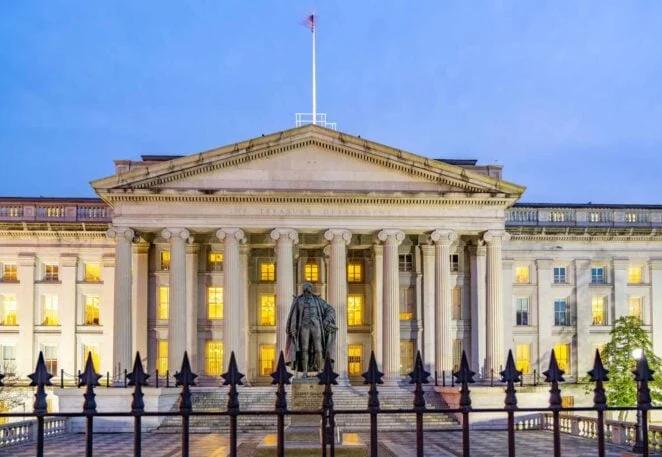
The United States Department of the Treasury has taken a decisive step to isolate the cryptocurrency exchange MEXC Global from the domestic financial sector, following an investigation that uncovered massive systemic failures in the platform’s regulatory compliance. On Friday, the Financial Crimes Enforcement Network (FinCEN) issued an official order prohibiting U.S. financial institutions from processing fund transfers involving MEXC. The move is a direct response to findings that the exchange facilitated at least $16 billion in transactions linked to illicit activity, including large-scale sanctions evasion by Russian, Iranian, and North Korean entities.
This enforcement action represents one of the most significant moves against an offshore cryptocurrency platform in recent years. By invoking Section 9714(a) of the Combating Russian Money Laundering Act, the Treasury is effectively designating MEXC as a primary money laundering concern in the context of international sanctions. The order is set to take effect 30 days after its formal publication in the Federal Register, giving domestic banks and payment processors a narrow window to sever ties with the exchange or face severe civil and criminal penalties.
The Scope of Illicit Activity: A $16 Billion Allegation
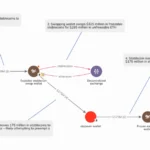
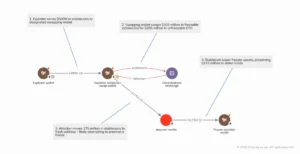
According to the Treasury’s comprehensive report, MEXC Global functioned as a critical hub for high-risk financial flows between May 2021 and May 2026. During this period, the exchange allegedly processed a staggering $16 billion in transactions associated with illicit finance. Of this total, approximately $1.5 billion was directly linked to efforts by Russian actors to bypass international sanctions imposed following the invasion of Ukraine.
The investigation highlighted that $232 million of these transactions were conducted directly with entities specifically designated as sanctioned by the U.S. Treasury’s Office of Foreign Assets Control (OFAC), as well as authorities in the European Union and the United Kingdom. This suggests that MEXC did not merely fail to catch suspicious activity through negligence, but rather maintained active channels for entities that had already been blacklisted by the world’s leading financial regulators.
FinCEN’s findings specifically called out MEXC’s continued relationship with Garantex, a notorious Russian cryptocurrency exchange. Garantex was sanctioned by the U.S. in April 2022 for its role in laundering proceeds from ransomware attacks and darknet markets. Despite this, Treasury officials found that MEXC continued to process transactions for Garantex and its successor entity, Grinex, as recently as June 2026. This persistent engagement with a sanctioned peer exchange served as a primary catalyst for the current ban.
Iranian and North Korean Sanctions Evasion
While the Russian connection accounted for a significant portion of the illicit volume, the Treasury’s report also detailed extensive activity involving Iranian financial networks. Between 2021 and 2026, MEXC reportedly facilitated roughly $1 billion in transfers involving more than 40 different Iranian cryptocurrency exchanges. Several of these exchanges are currently subject to international sanctions due to their ties to the Iranian government’s efforts to bypass the global banking system.
The Treasury further identified $22 million in transactions that directly benefited the Central Bank of Iran and the Islamic Revolutionary Guard Corps (IRGC), specifically the Qods Force. The IRGC is a designated Foreign Terrorist Organization, and its Qods Force is known for conducting unconventional warfare and intelligence operations. By providing a platform for these funds, MEXC is accused of indirectly supporting state-sponsored activities that threaten international security.
The order also touched upon transactions benefiting the A7 network, a sophisticated procurement and financial network used by Iran to evade sanctions. MEXC reportedly facilitated $26 million for this network and nearly $200 million through A7A5, a specialized stablecoin utilized by the network to move value across borders without detection by traditional financial monitoring systems.
Operation Economic Outcast and the Regulatory Crackdown
The action against MEXC Global is not an isolated event but a cornerstone of "Operation Economic Outcast." Launched by the Treasury Department in August, this campaign is a multi-agency effort designed to dismantle the financial infrastructure supporting the Iranian government and its various proxies. By targeting the digital asset platforms that these networks use, the U.S. government aims to close the "crypto loophole" that has historically allowed sanctioned regimes to access global liquidity.
The use of Section 9714(a) of the Combating Russian Money Laundering Act is a strategic choice. This specific legal authority allows the Treasury to impose "special measures" against foreign financial institutions if they are found to be of primary money laundering concern in connection with Russian illicit finance. These measures range from increased record-keeping requirements to the total prohibition of correspondent or payable-through accounts in the United States—the latter being the "nuclear option" applied to MEXC.
A Timeline of Compliance Failures
To understand the severity of the FinCEN order, one must look at the chronology of MEXC’s operations and the warnings issued by global regulators.
- May 2021: The beginning of the primary period of concern identified by FinCEN, during which MEXC allegedly began scaling its volume without commensurate improvements in its Anti-Money Laundering (AML) and Know Your Customer (KYC) protocols.
- April 2022: The U.S. Treasury sanctions Garantex. Despite this, MEXC allegedly maintains transactional links with the platform.
- August 2025: The U.S. Treasury officially launches "Operation Economic Outcast," signaling an intensified focus on Iranian financial conduits.
- Early 2026: MEXC reportedly continues to facilitate transactions for "Grinex," the successor to the sanctioned Garantex, showing a pattern of ignoring the "rebranding" tactics of sanctioned entities.
- June 2026: FinCEN records the latest instances of MEXC processing transactions for sanctioned Russian and Iranian entities.
- September 2026: The Treasury issues the final order effectively cutting MEXC off from the U.S. financial system.
Throughout this timeline, MEXC publicly maintained that it adhered to strict compliance policies and prohibited users from sanctioned jurisdictions. However, FinCEN’s order explicitly states that "deficiencies in its anti-money laundering controls" made these stated policies ineffective, allowing prohibited transactions to continue at scale.
MEXC’s Market Position and the Impact of the Ban
As of September, MEXC Global was a major player in the international cryptocurrency market. The exchange boasted a daily trading volume exceeding $1 billion and held approximately $5 billion in reserves. With a catalog of over 3,000 cryptocurrencies and tokenized assets, it was particularly popular among retail traders looking for "small-cap" gems and high-leverage trading options.
The FinCEN order creates an immediate crisis for the exchange’s operations and its users. The prohibition means that:
- U.S. Banks: No U.S. bank can accept a wire transfer or ACH deposit originating from MEXC or send funds to the exchange.
- Payment Processors: Companies like Visa, Mastercard, and various third-party "on-ramps" that operate within the U.S. jurisdiction must cease processing transactions for MEXC users.
- Institutional Liquidity: U.S.-based institutional investors and market makers will likely be forced to withdraw their liquidity from the platform to avoid violating the order.
For the average user, this effectively "geofences" the exchange. While MEXC may continue to operate in other jurisdictions, its inability to access U.S. dollars or the U.S. banking system significantly diminishes its utility and liquidity. Historically, when the U.S. Treasury takes such action, other international banks often follow suit to avoid "secondary sanctions," which could eventually lead to a total global banking "de-risking" of the exchange.
Broader Implications for the Cryptocurrency Industry
The move against MEXC sends a clear message to the broader digital asset industry: "offshore" status does not provide immunity from U.S. law, especially when transactions involve sanctioned states. For years, many exchanges have operated with minimal KYC requirements, attracting users who prioritize privacy or reside in restricted regions. This order suggests that the era of "no-KYC" exchanges operating at a billion-dollar scale is coming to an end.
Furthermore, the focus on the A7A5 stablecoin highlights the Treasury’s growing sophistication in tracking blockchain-based sanctions evasion. Regulators are no longer just looking at Bitcoin or Ethereum; they are identifying specific, niche assets used by sanctioned networks. This will likely lead to increased pressure on stablecoin issuers (such as Tether or Circle) to freeze assets associated with these networks even more aggressively.
Industry analysts suggest that this action could lead to a migration of volume toward "compliant" exchanges like Coinbase or Kraken, or conversely, drive illicit activity further into the decentralized finance (DeFi) ecosystem, where there is no central entity for FinCEN to target. However, the Treasury has also signaled that it is looking at ways to regulate DeFi protocols that function as "mixers" or facilitators for money laundering.
Conclusion and Next Steps
As the 30-day countdown to the Federal Register publication begins, the financial world will be watching MEXC’s response. While the exchange has yet to issue a formal rebuttal to the specific $16 billion figure, the weight of the Treasury’s evidence suggests a difficult legal battle ahead. For U.S. financial institutions, the priority is now risk mitigation. Any institution found in violation of the order after the deadline faces not only the loss of their charter but also the prospect of massive fines that could exceed the value of the transactions in question.
The case of MEXC Global serves as a landmark example of the U.S. government’s resolve to use every tool in its arsenal—from traditional banking regulations to specialized anti-money laundering acts—to ensure that the digital economy does not become a safe haven for sanctioned regimes and criminal organizations. For the crypto market, it is a stark reminder that regulatory compliance is no longer optional, but a prerequisite for survival in the global financial ecosystem.