AI stocks staged a noticeable comeback on Friday, offering a much-needed respite after a brutal week-long rout that reverberated from Wall Street to Asia. However, this single green session hardly provided definitive answers, leaving investors grappling with a critical question heading into the weekend: Was the recent downturn merely an overdue market correction, or does it signal the ominous beginning of an AI bubble bursting? The answer carries profound implications for the global technology sector and broader economic stability.
The Week’s Tumultuous Ride for Tech Giants
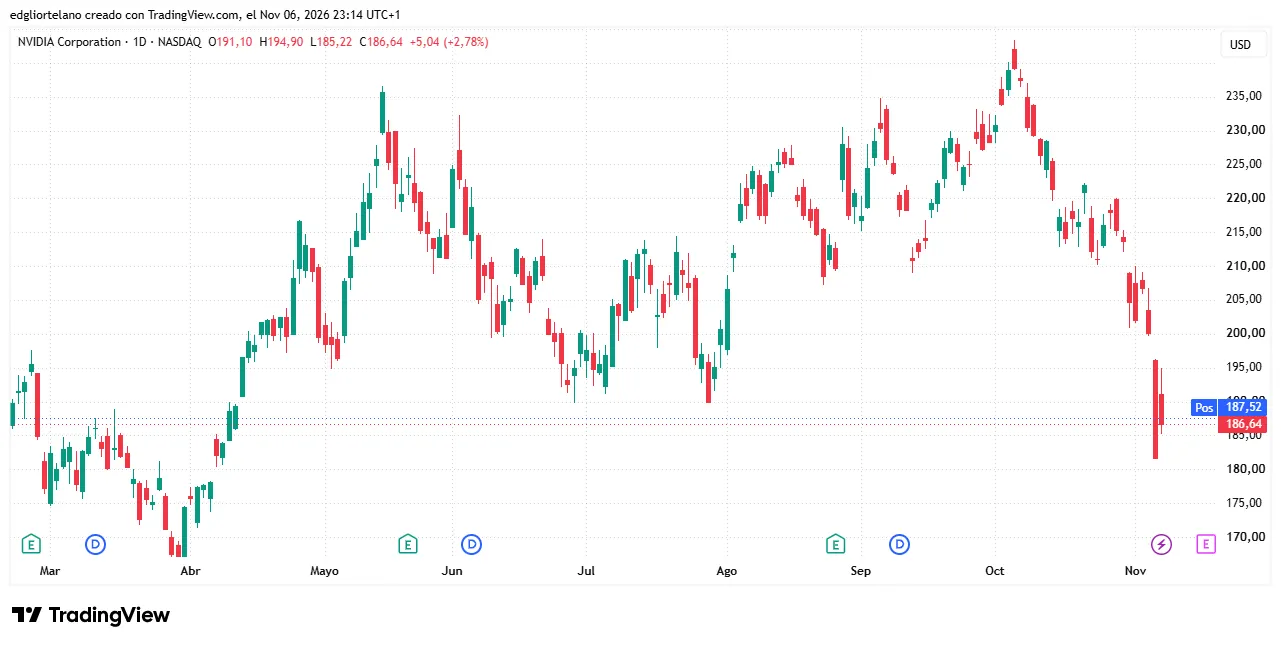
The market volatility was starkly evident in the performance of bellwether AI chip manufacturers. Nvidia, a titan in the AI hardware space, saw its shares rise 2.78% to $186.64 on Friday. This uptick followed a precipitous 9.3% plunge on Thursday alone, which had erased billions from its market capitalization. Similarly, Advanced Micro Devices (AMD), another key player in the semiconductor industry, bounced to $449.04 after experiencing a staggering 17.3% collapse just a day earlier. Despite Friday’s relief rally, both stocks remained significantly below their October peaks, underscoring the limited restorative power of a single positive trading session against a backdrop of severe losses.
These sharp fluctuations highlight the intense investor sentiment surrounding companies at the forefront of the artificial intelligence revolution. For months, the promise of generative AI and its vast applications had fueled unprecedented growth in these stocks, pushing valuations to historic highs. Companies like Nvidia, whose graphics processing units (GPUs) are essential for training and running complex AI models, had become market darlings, with their performance often dictating the broader tech sector’s trajectory. The recent rout, therefore, represented a significant test of investor conviction in the sustained growth narrative of AI.
A Global Contagion: Asia Feels the Brunt
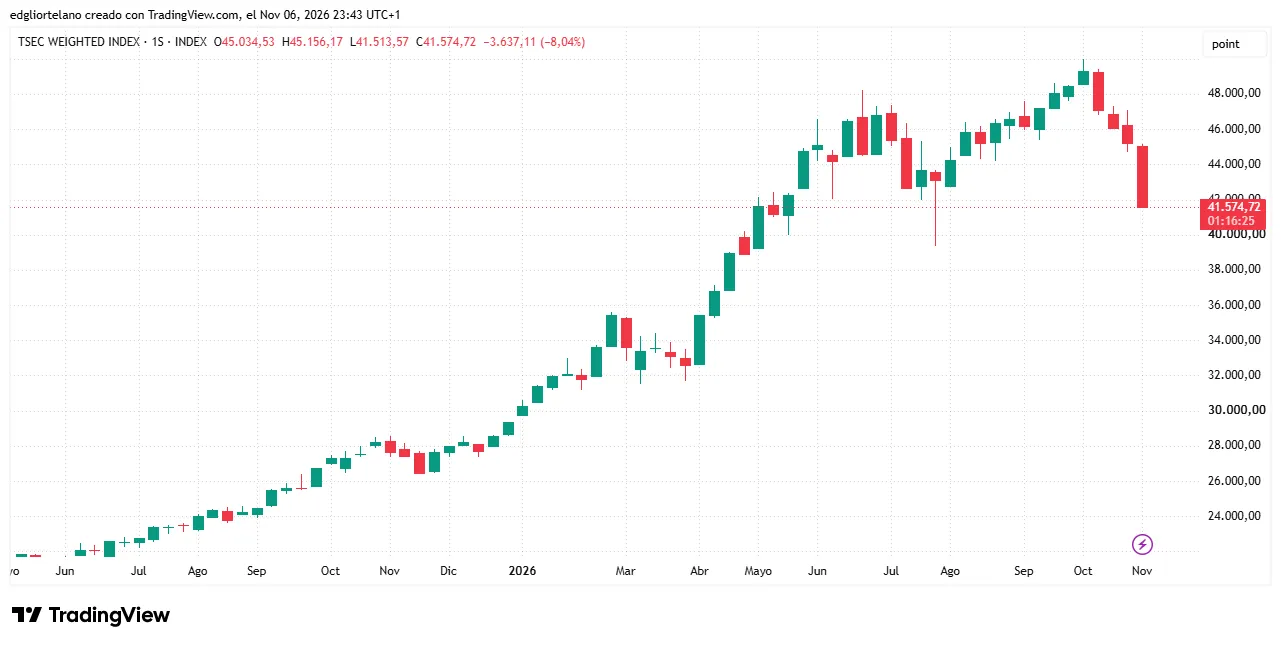
The AI-driven sell-off was not confined to U.S. markets; its ripples spread across global bourses, particularly impacting Asian technology hubs. South Korea’s KOSPI index, heavily weighted by semiconductor and tech exports, lost a significant 6% on Friday, reflecting the pervasive fear gripping investors. Taiwan, a critical node in the global semiconductor supply chain, experienced an even more severe downturn. Its benchmark index dropped more than 8% over the course of the week, marking its worst weekly performance in months.

Taiwan Semiconductor Manufacturing Company (TSMC), the world’s largest contract chipmaker and a crucial supplier to giants like Nvidia and Apple, was particularly hard hit. During the rout, TSMC’s stock hit its daily limit-down threshold, a rare event indicating extreme selling pressure. The sheer scale of the decline prompted intervention from local authorities. Reuters reported that Taiwanese officials took the unusual step of asking state-owned banks to help support prices, highlighting the government’s concern over the stability of its vital technology sector and its potential impact on the national economy. This intervention underscores the systemic importance of these AI-related companies not just to their respective markets but to global supply chains and economies.
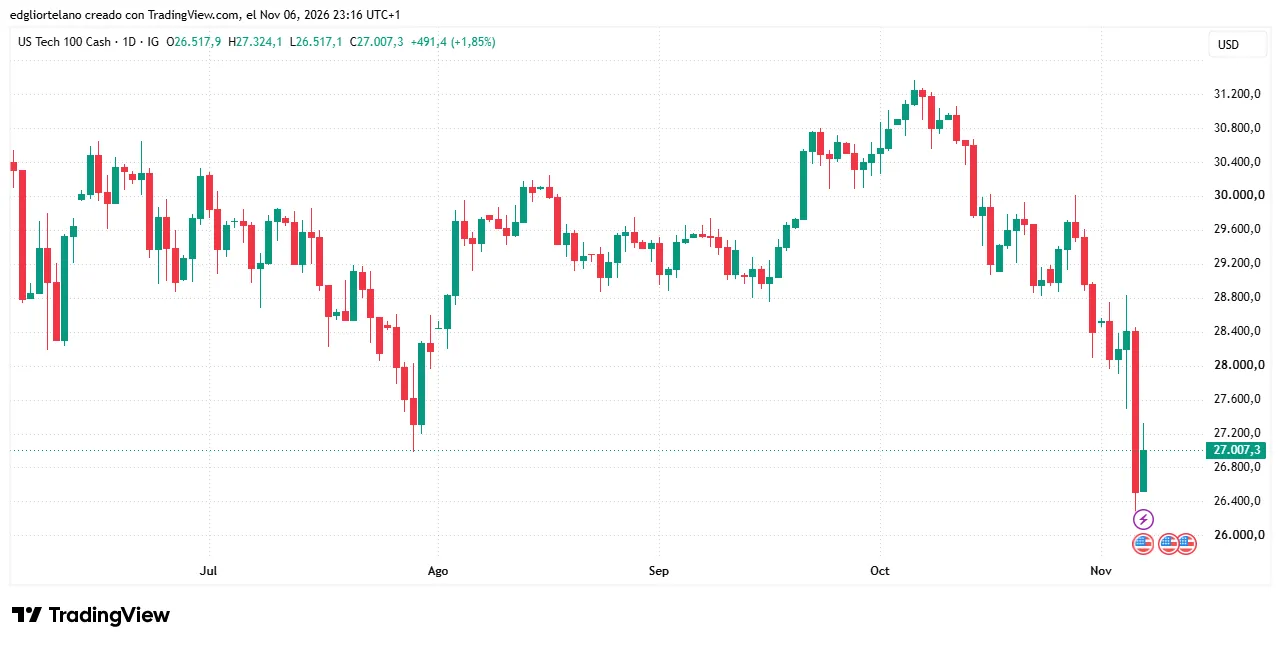
Beyond individual stocks, broader market indicators also reflected the widespread panic. The US Tech 100 cash-market proxy, which broadly tracks the performance of the largest technology and growth companies, managed to recover on Friday, gaining 1.85% to reach 27,007.3. However, despite this daily gain, the index was still down more than 5.5% for the week. An analysis of its daily candles revealed that Friday’s bounce represented a minor rebound after a much larger slide from its October highs, rather than a definitive return to its previous upward trend. This pattern suggested that while some buying interest emerged, the underlying sentiment remained cautious, with investors reassessing the rapid gains seen in prior months.
Unpacking the Causes: Why the AI Trade Unraveled
Several converging factors appear to have triggered the widespread sell-off in AI stocks, pushing them from their lofty valuations. One significant catalyst was the outcome of the U.S. midterm elections on November 3. The results accelerated existing fears that Democratic gains could lead to tougher regulatory scrutiny, particularly concerning the development of data centers.
A key finding by Ballotpedia indicated a clear political message: in 40 out of 41 local ballot contests on November 3, voters overwhelmingly favored limiting development, often by rejecting pro-construction measures. While some of these votes were advisory, the collective sentiment was unmistakable. This matters profoundly for chip companies like Nvidia and AMD because data centers represent their most significant growth story. Each new data center project requires immense capital expenditure on advanced processors, servers, power infrastructure, and cooling systems. Restrictions on development could lead to delays in orders, force construction to less desirable or more expensive locations, or even halt projects altogether, directly impacting the revenue streams of semiconductor manufacturers and other AI infrastructure providers.
Beyond political concerns, a broader unease about the sustainability of current AI valuations had been brewing for some time. AI companies and their customers have been spending aggressively to build capacity, often making substantial investments before the full scope of returns is clear. This aggressive expansion, coupled with a macroeconomic environment characterized by more expensive borrowing, makes the gamble harder to sustain. Rising interest rates, implemented by central banks globally to combat inflation, increase the cost of capital, making future earnings less valuable and pressuring companies that rely on debt for expansion. Market strategist Steve Sosnick was quoted by Reuters warning that many heavily owned stocks were already "priced to perfection," implying that their valuations factored in flawless execution and continued exponential growth, leaving little room for error or disappointment.
Correction or Bubble Burst? A Critical Distinction
The central debate among investors now revolves around whether the recent market action represents a healthy correction or the beginning of a more severe bubble burst. Understanding the distinction is crucial.
A correction is generally defined as a market downturn of at least 10% from a recent peak. It does not necessarily imply that the underlying business fundamentals are shrinking. Instead, it often reflects a repricing of assets based on changing investor sentiment, risk appetite, or macroeconomic conditions. For example, imagine a chipmaker whose shares trade at an elevated 60 times annual earnings because investors anticipate explosive growth. If, due to new information or a shift in market psychology, investors become willing to pay only 40 times those same earnings, the stock can lose a third of its value without any decline in its actual profits. This is a common occurrence in growth-oriented sectors where valuations are heavily dependent on future expectations.
A bubble bursting, on the other hand, is a far more serious event. It occurs when expectations prove fundamentally unrealistic, and the speculative money supporting an unsustainable boom begins to rapidly disappear. This often leads to a prolonged and dramatic decline in asset prices, with many companies failing outright.
History offers a potent warning. During the infamous dot-com crash of the early 2000s, the Nasdaq Composite index, heavily weighted by technology stocks, lost roughly 77% of its value between March 2000 and October 2002. The internet was not a fad; it was a transformative technology. However, investors had vastly overestimated how quickly companies could translate this technological promise into sustainable profits. Telecom operators, for instance, spent fortunes laying fiber-optic cables, betting on a surge of customers that had yet to materialize. Companies like Global Crossing, which built an international fiber-optic network, filed for bankruptcy in 2002. The underlying technology of the internet survived and thrived, but many of the companies and their shareholders did not.
Parallels and Divergences with the Dot-Com Era
The parallels between the current AI enthusiasm and the dot-com bubble are often drawn, and for good reason. Both periods saw a revolutionary technology capturing the public imagination, leading to massive capital inflows and soaring valuations based on future potential rather than immediate profits. However, there are also significant differences.
One key distinction lies in the financial health of the major players. Today’s AI landscape is dominated by tech giants like Microsoft, Alphabet (Google), Amazon, and Meta. Unlike many of the speculative dot-com startups that had little to no revenue, these companies are highly profitable businesses with established customer bases, diversified revenue streams, and substantial cash flows. They are investing heavily in AI, but they are doing so from a position of financial strength, which allows them to withstand setbacks far better than smaller, more fragile AI-cloud providers or pure-play AI startups that depend almost entirely on repeated borrowing to expand.
However, AI could still face a similar mismatch between its long-term transformative promise and its near-term financial returns. While the technology is undoubtedly revolutionary, the path to widespread profitability for every company betting on AI is not guaranteed. The RAM shortage, particularly for high-bandwidth memory (HBM) crucial for AI accelerators, exemplifies both a challenge and an opportunity. It limits immediate growth for some but creates a lucrative business for others. Former crypto miners are now renting out their powerful GPU hardware, and a plethora of new cloud providers and AI inference startups are emerging, all vying for a piece of the burgeoning AI infrastructure market.
Consider a hypothetical scenario: a company borrows billions to construct a data center packed with Nvidia chips, expecting to rent out that computing power at premium prices for years. If customer demand falls short of expectations, if borrowing costs become prohibitive, or if construction faces unexpected delays, the substantial debt still needs to be repaid. This ripple effect can be severe: the operator might cancel chip orders, its contractors lose work, and utilities that planned new capacity based on the data center’s needs lose anticipated customers. Lenders and investors holding the company’s debt could also incur significant losses. In such a scenario, a concentrated stock-market selloff could metastasize into a broader problem for the wider economy, impacting credit markets and investment cycles.
Flickering Warning Lights and Future Tests
The financial warning lights are indeed beginning to flicker, particularly in the riskier corners of AI financing. Reuters reported on Friday that the cost of insuring against a default by AI-cloud provider CoreWeave had climbed above 1,000 basis points. Credit default swaps (CDS) act much like insurance on a loan; as the price of this protection rises, it signals that investors are growing increasingly concerned about the borrower’s ability to repay its debts. A CDS spread above 1,000 basis points is typically considered a significant indicator of heightened credit risk.
Yet, broader bond markets were still operating relatively normally, suggesting that while specific segments of AI financing are under growing strain, there isn’t immediate proof of a system-wide crisis. This dichotomy implies a discerning market, separating the financially robust from the more speculative ventures.
The coming week promises more concrete tests than another day of fluctuating green or red candles. Key earnings reports are expected from companies directly involved in the AI ecosystem, including CoreWeave, Applied Materials (a major supplier of manufacturing equipment for semiconductors), and Cisco (a networking giant crucial for data center infrastructure). These results will offer invaluable insights into whether enterprise customers are continuing to order capacity and equipment at previous rates, or if there’s a slowdown in investment. Simultaneously, upcoming inflation data will heavily influence expectations for future borrowing costs. Stable orders and manageable debt levels would lend strong support to the "correction" argument, suggesting a temporary repricing rather than a fundamental flaw. Conversely, repeated project cancellations, failed refinancing attempts, and shrinking sales figures would strongly suggest that the financial foundations of the AI boom are indeed cracking.
Ultimately, the question is not whether artificial intelligence has a future – its transformative potential is widely accepted. Rather, the more pertinent question for investors and the economy is whether every company currently betting billions on that future can afford to get there, and if the market has correctly priced the inherent risks and timelines involved in this monumental technological shift. The coming months will likely provide clearer answers, shaping the investment landscape for years to come.