The Ethereum Name Service (ENS) Decentralized Autonomous Organization (DAO) has decisively approved the activation of ENSv2, marking a pivotal moment for the foundational Web3 naming protocol. The governance vote concluded with an overwhelming majority, tallying 1.69 million ENS tokens in favor of the upgrade, against a singular dissenting wallet that cast a mere 24.94 ENS. This landslide victory not only secured the necessary mandate but also cleared the required quorum by a substantial 69%, a feat that had appeared uncertain in the early stages of the voting period. The approved proposal initiates a complex sequence of 15 contract calls designed to transition the core infrastructure of .eth name registration, with execution slated to commence around October 27, following a mandatory timelock period.
A Decisive Mandate for ENSv2
The "Activate ENSv2" proposal, formally published on-chain by core contributor nick.eth on October 18, set in motion a critical governance process for the ENS ecosystem. To achieve passage, the proposal required a minimum of 1 million ENS votes, representing approximately 1% of the total ENS token supply, in addition to a simple majority in favor. The final tally significantly surpassed this threshold, demonstrating robust community support for the next generation of the naming service.
The voting dynamics, however, revealed a concentrated distribution of influence. While 62 unique addresses ultimately cast their votes in favor of the proposal, a significant portion of the affirmative votes originated from a limited number of large holders. Specifically, the three largest wallets collectively contributed approximately 570,780 votes, accounting for a notable 33.8% of the total ‘For’ votes. This concentration alone represented over half (57%) of the votes required to meet the quorum threshold. Including coltron.eth’s 117,920 votes further underscores this pattern, with a handful of delegates collectively wielding more than 40% of the voting power that determined the outcome.

This distribution of power has been a recurring theme in DAO governance and was acknowledged by some delegates during the discussion phase. FireEyes, a prominent delegate, publicly stated their intention to vote yes but simultaneously voiced concerns regarding the potential for voting power concentration within the ENS DAO, particularly stemming from ENS Labs’ delegated holdings. Despite these observations, the outcome stands as a clear endorsement, with effective opposition registering as negligible. The process highlights both the efficiency of decentralized governance in reaching consensus on critical upgrades and the ongoing discussions around voter participation and influence within DAOs.
Understanding the Ethereum Name Service (ENS) and the Need for ENSv2
To fully appreciate the significance of this vote, it’s essential to understand the role of the Ethereum Name Service. ENS provides a decentralized, human-readable naming system for the Ethereum blockchain, akin to the Domain Name System (DNS) for the traditional internet. Instead of cumbersome hexadecimal addresses (e.g., 0xAbc...123), ENS allows users to register simple, memorable names like alice.eth to represent their cryptocurrency wallets, websites, or other decentralized applications. This dramatically improves usability and accessibility within the Web3 space, serving as a cornerstone of digital identity in the decentralized ecosystem.
ENSv1, the current iteration, has been instrumental in establishing this naming standard since its inception. Launched in 2017, it quickly became the go-to solution for human-readable Ethereum addresses, facilitating easier transactions and broader adoption of decentralized technologies. However, as the Ethereum ecosystem has matured and evolved, certain limitations of ENSv1 have become apparent. These include:
- Architectural Constraints: ENSv1’s design, while innovative for its time, was not inherently optimized for the complex, multi-chain future of Web3, particularly regarding Layer 2 scaling solutions and cross-chain interoperability. Its monolithic structure posed challenges for future upgrades and integration.
- Gas Efficiency: Registering, renewing, and managing names on ENSv1 can incur relatively high gas fees, a common challenge on the Ethereum mainnet. This can be a barrier to entry and ongoing use for some users.
- Feature Limitations: The original architecture imposed restrictions on implementing advanced features like more flexible subdomain management, enhanced security mechanisms, and dynamic name resolution capabilities that are increasingly demanded by a rapidly evolving Web3 landscape.
- Governance Integration: While ENSv1 operates under DAO governance, the upgrade to ENSv2 aims to streamline and deepen this integration, ensuring greater future adaptability and responsiveness to community needs.
ENSv2 is envisioned as a comprehensive overhaul, designed to address these challenges and future-proof the protocol. Key improvements and new features anticipated with ENSv2 include:

- Enhanced Flexibility and Scalability: A more modular and extensible architecture will allow for easier integration with Layer 2 solutions and other blockchain networks, fostering a more interconnected and efficient Web3 experience.
- Improved Gas Efficiency: While not explicitly detailed in the immediate proposal, the new architecture lays the groundwork for more optimized operations, potentially leading to reduced gas costs for name management in the long run.
- Advanced Features: ENSv2 is expected to support more sophisticated name management, including dynamic record types, improved subdomain delegation, and better support for evolving Web3 identity standards such as verifiable credentials and decentralized identifiers (DIDs).
- Simplified User Experience: The underlying architectural changes aim to create a more seamless and intuitive experience for users registering, renewing, and managing their .eth names, reducing friction in Web3 adoption.
- Robust Security Model: The upgrade involves a careful transfer of control and implementation of new security features to ensure the integrity, resilience, and long-term trustworthiness of the naming system.
The "Activate ENSv2" proposal therefore represents a critical step in evolving ENS from its pioneering v1 state to a more robust, scalable, and feature-rich foundation capable of supporting the next wave of Web3 adoption and solidifying its position as a core public good.
The Path to Activation: A Detailed Chronology of the Vote
The journey to ENSv2 activation unfolded over several days, characterized by an initial period of uncertainty followed by a decisive surge of support.
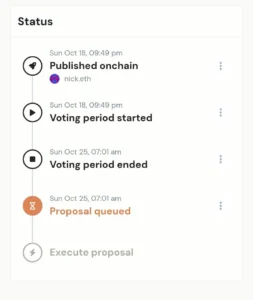
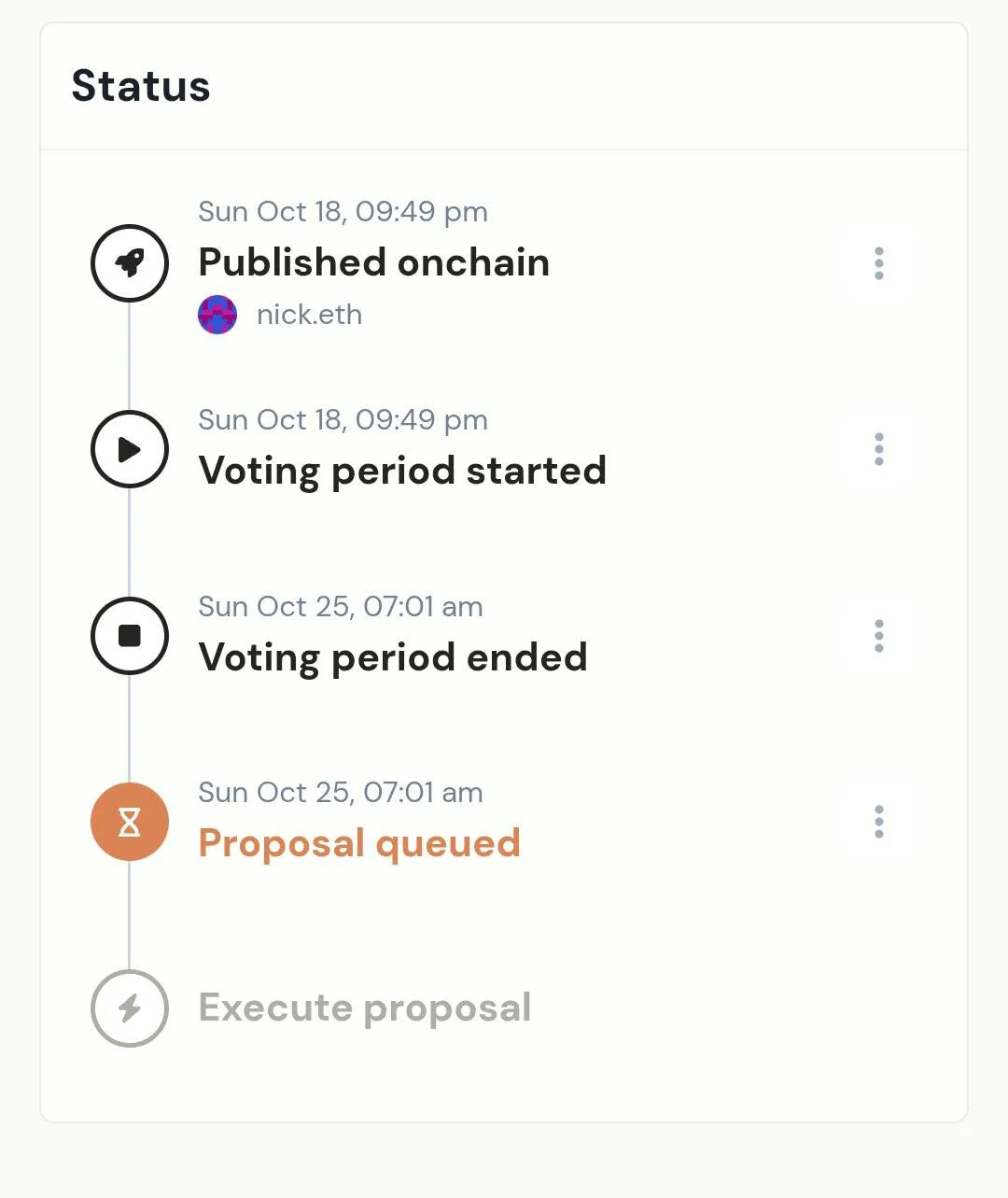
- October 18: The proposal, formally titled "Activate ENSv2," was officially published on-chain by core contributor nick.eth. This marked the initiation of the formal governance process, and voting commenced on the same evening, allowing ENS token holders to cast their ballots.
- Early Voting (October 18 – October 20): The initial days of the voting period saw slow traction, raising concerns about voter engagement. By October 20, only six wallets had cast their votes, accumulating approximately 531,252 ENS. This figure, while substantial, left the proposal considerably short of the 1 million ENS quorum requirement. Support had marginally increased to about 619,420 votes by the end of October 20, still requiring an additional 380,000 votes to meet the threshold. This early phase sparked discussions among community members regarding the potential for the proposal to fail due to insufficient participation, despite widespread conceptual support.
- Mid-to-Late Voting Surge (October 20 – October 25): The narrative shifted dramatically in the latter half of the voting window. Over the final five days, a significant influx of votes occurred, with more than 1 million additional ENS tokens being cast in favor. This late surge almost tripled the total vote count, swiftly pushing the proposal beyond the quorum and ensuring its passage. The rapid increase in votes in the final days underscored the effectiveness of large token holders and delegates in galvanizing support when crucial deadlines approach.
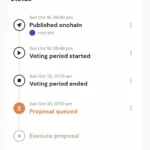
- October 25, Approximately 06:01 UTC: The voting period officially concluded. At this precise moment, the proposal was marked as "queued" on Tally, the governance platform, signifying its successful passage and the commencement of the mandatory two-day timelock. This timelock is a security feature, providing a buffer period before any approved changes can be executed on-chain.
- October 27, Approximately 06:00 UTC: With the two-day timelock expiring, the proposal is scheduled to become executable. At this point, any authorized entity can trigger the single transaction that will execute all 15 contract calls, officially activating ENSv2 and initiating the complex transition process.
This timeline illustrates the dynamic nature of DAO governance, where crucial decisions can hang in the balance until the final hours, often requiring significant coordination and engagement from large token holders and active delegates to reach consensus.
The Mechanics of Change: Deconstructing the 15 Contract Calls

The heart of the "Activate ENSv2" proposal lies in a meticulously designed series of 15 distinct contract calls. These calls are engineered to execute together within a single, atomic transaction initiated from the ENS DAO timelock. This single transaction represents a fundamental reshaping of the underlying mechanics of .eth name registration and management. The forum post detailing the proposal groups these calls into several categories, each serving a critical function in the transition.
The most impactful of these calls involve the transfer of ownership and the freezing of new registrations on the v1 registrar. Calls 7 through 11 are particularly significant as they systematically remove every existing account and contract that currently holds controller authority over the v1 registrar. This comprehensive removal includes not only commonly known controllers but also an older multisig wallet whose continued authority might not have been widely recognized by the broader user base. This action effectively halts any new .eth registrations on the v1 system, ensuring a clean break and preventing parallel registration processes or potential conflicts during the transition.
A crucial aspect highlighted by the technical review is the precise sequence of execution. Calls 12 and 13, which likely involve preparatory steps or transfers of certain permissions within the v1 registrar, must precede call 14. Call 14 is responsible for transferring the ownership of the v1 BaseRegistrar to ETHRenewerV1, a specialized contract designed solely for the renewal of existing names. Once this transfer of ownership is complete, the old owner (the DAO prior to execution) loses the ability to add or remove controllers. This ensures that ETHRenewerV1 becomes the definitive, singular authority for v1 renewals, preventing any unintended or unauthorized modifications to the v1 registrar’s controller list post-handover.
After the full sequence of 15 calls is executed, the v1 registrar will operate under a significantly constrained model. The only entities capable of interacting with it will be ETHRenewerV1 for the renewal of existing names and Graveyard, a contract specifically designed to reclaim expired names. This structural shift is more profound than a simple pause; it represents a complete overhaul of the v1 registrar’s operational authority, centralizing control over its remaining functions to specific, purpose-built contracts that align with its new, limited role.
While the freeze on new v1 registrations is designed to be reversible—the DAO could, theoretically, instruct ETHRenewerV1 to return ownership and reinstate old controllers—certain aspects of the upgrade are explicitly irreversible. For instance, v1 tokens that are migrated and subsequently held by the Graveyard contract "cannot be returned." Furthermore, the v1 emergency disable path, a critical security mechanism in the previous iteration, will no longer apply after the ownership handover. During this transitional phase, ENS Labs will temporarily hold administrative rights over v2, and a security council will administer the intermediate resolver proxy, underscoring the layered approach to managing risk during such a significant protocol upgrade.

Governance and Centralization Concerns Amidst Overwhelming Support
The successful passage of the ENSv2 activation proposal, while a clear demonstration of community consensus for the upgrade, also reignited discussions within the DAO regarding the concentration of voting power. As previously noted, a small number of wallets held a disproportionate amount of influence in the vote, with the top three contributing over a third of all affirmative votes.
This dynamic is not unique to the ENS DAO; it’s a common characteristic of many token-weighted governance systems across the decentralized landscape. Large token holders, often early investors, core contributors, or institutional participants, naturally command more voting power proportional to their holdings. While this can sometimes lead to efficient decision-making, especially on complex technical upgrades where informed voting is crucial, it also raises pertinent questions about decentralization ideals and the equitable distribution of influence.
Concerns voiced by delegates like FireEyes highlight the ongoing tension between practical governance efficiency and the philosophical commitment to broad, decentralized participation. When a significant portion of quorum can be met by just a few entities, it suggests that the fate of critical proposals could, in certain scenarios, hinge on the decisions of a concentrated few rather than a widely distributed base of individual token holders. This can lead to a perception, valid or not, that the DAO’s direction is primarily steered by a select group.
However, it is also important to consider