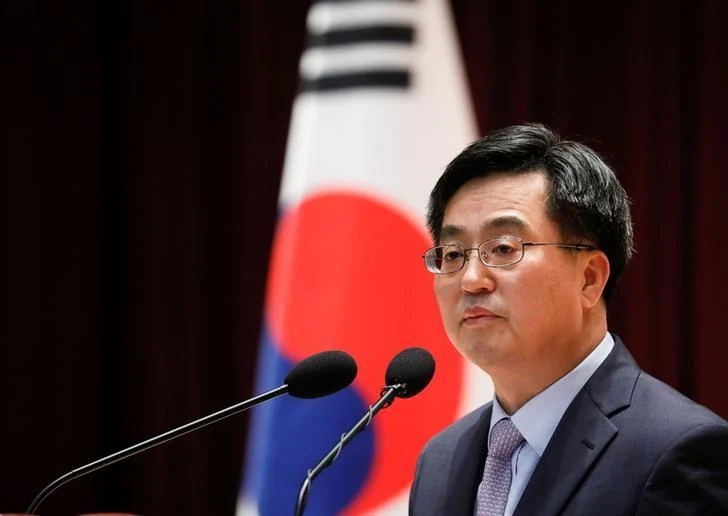
The South Korean government is reportedly preparing to lift its comprehensive ban on Initial Coin Offerings (ICOs), signaling a significant pivot in the nation’s regulatory approach toward the digital asset ecosystem. According to reports emerging from the region, most notably through The Korea Times, financial authorities have initiated high-level discussions with the country’s tax agency, the Ministry of Justice, and other relevant governmental bodies. These deliberations aim to establish a framework that would allow domestic companies to launch ICOs under specific, strictly regulated conditions. This potential policy shift marks a departure from the hardline stance adopted by the Moon Jae-in administration in late 2017, suggesting that Seoul is seeking a middle ground between investor protection and the promotion of the burgeoning blockchain industry.
The 2017 Crackdown and Its Aftermath
To understand the magnitude of this potential policy reversal, it is essential to examine the climate of 2017. During that period, South Korea emerged as one of the world’s most vibrant hubs for cryptocurrency trading, often accounting for a disproportionate share of global Bitcoin and Ethereum volume. The "Kimchi Premium"—a phenomenon where digital assets traded at significantly higher prices on Korean exchanges compared to international markets—became a symbol of the nation’s "crypto-fever."
However, this rapid adoption was met with extreme caution and hostility from regulators. In September 2017, the Financial Services Commission (FSC) issued a blanket ban on all forms of ICOs, citing concerns over financial fraud, speculative bubbles, and a lack of investor safeguards. The FSC’s stance at the time was unequivocal: the act of raising funds through the issuance of new digital tokens was deemed a violation of the Capital Markets Act.
The regulatory pressure intensified in early 2018 when Justice Minister Park Sang-ki suggested that the government was preparing legislation to shut down domestic cryptocurrency exchanges entirely. These statements, combined with high-profile security breaches at exchanges like Youbit and reports of hacking attempts from external actors, triggered a massive sell-off in the global markets. Bitcoin prices plummeted, and altcoins followed suit, as investors feared that one of the industry’s most critical liquidity hubs was being permanently shuttered.
A Gradual Shift in Regulatory Sentiment
Despite the aggressive rhetoric of late 2017, the beginning of 2018 saw a cooling of tensions. The South Korean government faced immense public pressure, including a "Blue House" petition signed by over 200,000 citizens demanding that the government stop its "unjust" regulation of virtual currencies. This public outcry, coupled with the realization that blockchain technology was a cornerstone of the "Fourth Industrial Revolution," forced a recalibration of the official narrative.
The current discussions regarding the legalization of ICOs are the most concrete evidence of this shift. An anonymous source familiar with the matter stated that the government is exploring a plan to permit ICOs provided they meet stringent criteria. These criteria are expected to include rigorous disclosure requirements, institutional audits, and the implementation of robust Anti-Money Laundering (AML) and Know Your Customer (KYC) protocols.
Kang Young-soo, the official overseeing cryptocurrency trading policies at the FSC, recently addressed these rumors. While maintaining a cautious tone, Kang noted that there is no "official" government policy that identifies all ICOs as inherently illegal. Instead, he suggested that projects not expressly violating existing laws could theoretically operate, though he clarified that a formalized regulatory framework is still in the works. "The FSC has acknowledged a third-party view regarding the issue, but there’s nothing that we can say officially at the moment," Kang remarked during an industry forum at the National Assembly.
Maintaining the Integrity of the Financial System
While the government appears open to ICOs, it remains steadfast in its commitment to financial security and the prevention of illicit activities. The "Real-Name Verification System," introduced in January 2018, remains a cornerstone of the Korean regulatory environment. This system requires cryptocurrency traders to link their exchange accounts to verified bank accounts, effectively ending anonymous trading.
Furthermore, the ban on foreigners and minors participating in the South Korean crypto markets remains in effect. These measures are designed to curb capital flight and prevent the country from becoming a conduit for international money laundering. Given South Korea’s proximity to various geopolitical risks and its high volume of financial transactions, the government views these restrictions as non-negotiable, even as it seeks to foster innovation.
The separation of "blockchain technology" from "cryptocurrency speculation" has been a recurring theme in government rhetoric. Officials have repeatedly emphasized that while they wish to curb the "irrational" speculative mania associated with coin trading, they are deeply invested in the underlying ledger technology. The National Assembly has seen various proposals to increase state funding for blockchain research and development, viewing it as a vital sector for job creation and economic modernization.
Chronology of South Korea’s Crypto Regulation
- September 2017: The FSC announces a total ban on ICOs, citing the risk of scams and financial instability.
- December 2017: The government introduces emergency measures to regulate exchanges, including the ban on anonymous accounts.
- January 2018: Justice Minister Park Sang-ki mentions a potential exchange shutdown, causing global market turmoil. Shortly after, the Blue House clarifies that a shutdown is only one of many options under consideration.
- February 2018: The FSC begins implementing the real-name verification system. Government officials begin to distinguish between "speculation" and "technological advancement."
- March 2018: Reports surface that the FSC, the Ministry of Justice, and tax authorities are discussing a pathway to legalize regulated ICOs.
Economic and Global Implications
The potential legalization of ICOs in South Korea would have profound implications for the global digital asset market. As a major technological powerhouse, South Korea’s move to embrace ICOs would likely put pressure on other jurisdictions, such as China, to reconsider their own bans. It would also position South Korea to compete more effectively with regional neighbors like Japan and Singapore, both of which have established clearer regulatory frameworks for digital assets.
From a domestic perspective, allowing ICOs would provide a vital lifeline for Korean startups. Many blockchain entrepreneurs have been forced to "offshore" their projects to jurisdictions like Switzerland or Singapore to avoid legal repercussions at home. This "brain drain" has been a point of contention for local industry advocates, who argue that the current ban is stifling South Korea’s competitive edge in the global tech race.
The tax implications are also significant. By bringing ICOs into a regulated environment, the South Korean tax agency (the National Tax Service) would be able to more effectively track and tax the proceeds of token sales and trading profits. This would provide a new stream of revenue for the state while bringing the crypto-economy into the formal financial fold.
Fact-Based Analysis of the Path Forward
The path to a fully regulated ICO market in South Korea is fraught with legislative hurdles. Any move to lift the ban will likely require amendments to the Capital Markets Act or the creation of a new, bespoke legal framework for digital assets. Lawmakers are currently debating several bills that aim to define the legal status of cryptocurrencies—whether they should be treated as securities, commodities, or a new class of digital property.
Market analysts suggest that the government’s "conditional" approval will likely favor institutional players and established tech firms over small, independent projects. This "top-down" approach is intended to minimize the risk of retail investors falling victim to the "exit scams" that plagued the global ICO market in 2017.
In conclusion, while the FSC and other agencies remain cautious in their public statements, the momentum in South Korea is clearly shifting toward a more nuanced and permissive regulatory environment. By moving away from a total ban and toward a structured, conditional framework, South Korea aims to protect its citizens from financial harm without sacrificing its position as a leader in the global digital economy. The world of cryptocurrency will be watching closely as Seoul navigates this delicate balance, as the outcome could serve as a blueprint for other nations grappling with the rise of decentralized finance.