


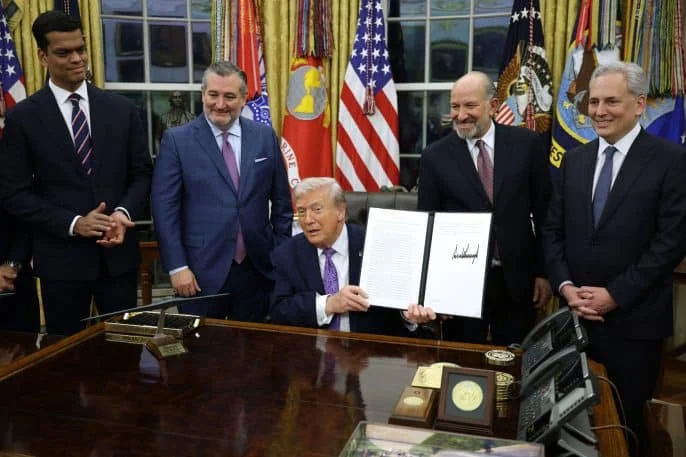
The Trump administration is finalizing an expansive new executive order that will mandate heightened collaboration between United States government agencies and leading artificial intelligence developers to fortify national network security against AI-augmented cyber threats. This forthcoming directive represents a critical pivot in the administration’s technology policy, transitioning from a primary focus on rapid innovation and deregulation toward a more structured integration of private-sector AI capabilities into the nation’s defensive infrastructure. As the digital landscape faces an era of increasingly sophisticated automated attacks, the administration seeks to leverage the same technologies used by adversaries to build a more resilient domestic defense perimeter.
This upcoming security-focused order is designed to integrate seamlessly with a series of executive actions already set in motion by the Trump White House. Since the beginning of 2025, the administration has pursued a multi-pronged strategy to ensure American dominance in the artificial intelligence sector while simultaneously streamlining the regulatory environment. The latest move highlights a growing recognition within the federal government that the dual-use nature of AI—its ability to both secure and compromise digital systems—requires a unified national response.
A Chronology of AI Policy Under the Current Administration
To understand the context of the new security order, one must look at the sequence of executive actions that have defined the administration’s approach to technology over the past year. The strategic foundation was laid on January 23, 2025, with the signing of Executive Order 14179. This initial directive was characterized by its aggressive focus on removing what the administration termed "unnecessary bureaucratic barriers" to American AI leadership. EO 14179 was largely viewed as a deregulatory victory for Silicon Valley, aimed at accelerating the deployment of large-scale models and ensuring that the United States remained the global hub for AI research and development.
Following the January directive, the administration significantly expanded its scope on December 11, 2025, with the issuance of a second major order titled “Ensuring a National Policy Framework for Artificial Intelligence.” This order moved beyond mere deregulation and began the process of building a centralized federal infrastructure for AI oversight. A key component of the December order was the establishment of an AI Litigation Task Force, designed to navigate the complex legal landscape of intellectual property, liability, and civil disputes arising from AI deployment.
Furthermore, the December order tasked the Secretary of Commerce with a rigorous review of state-level AI laws, with a deadline set for March 11, 2026. This review is a cornerstone of the administration’s effort to prevent a "patchwork" of conflicting state regulations—such as those proposed in California and New York—which the White House argues could stifle innovation and create compliance nightmares for American companies.
Centralized Leadership: The Roles of Sacks and Kratsios
Central to the implementation of this framework is a leadership duo with deep ties to both the technology sector and the federal government. David Sacks, appointed as the administration’s AI and Crypto Czar, and Michael Kratsios, who previously served as the Chief Technology Officer of the United States, have been entrusted with drafting the federal AI framework. Their primary mission is to create a cohesive national standard that preempts state-level intervention, providing a stable and predictable environment for tech giants and startups alike.
The December 11 order also placed a significant burden on the Federal Communications Commission (FCC). The FCC Chairman was given a 90-day window to initiate formal proceedings regarding federal AI model reporting standards. These standards are expected to define how companies disclose the compute power, data sources, and safety protocols associated with their most advanced models. While the administration remains philosophically opposed to heavy-handed regulation, these reporting standards are seen as necessary safeguards to ensure the government has visibility into the capabilities of frontier models that could impact national security.
The Rising Threat of AI-Enabled Cyber Warfare
The motivation for the upcoming security order is rooted in a rapidly deteriorating global cyber-threat environment. Security analysts have documented a surge in AI-enabled attacks, which utilize machine learning to automate the discovery of software vulnerabilities, generate highly convincing phishing campaigns, and create polymorphic malware that can evade traditional signature-based detection systems.
According to data from several leading cybersecurity firms, the time required for a threat actor to move from initial entry to full system compromise has decreased significantly due to AI automation. Furthermore, state-sponsored actors from adversarial nations are increasingly utilizing large language models to refine their social engineering tactics and write more effective exploit code. The Trump administration’s new order acknowledges that the federal government’s current defensive posture is insufficient to counter these high-speed, adaptive threats without the direct assistance of the companies that build the AI tools themselves.
The proposed order is expected to facilitate a two-way exchange of information. Government agencies, including the Cybersecurity and Infrastructure Security Agency (CISA) and the National Security Agency (NSA), would share threat intelligence with AI companies. In return, these companies would be required to collaborate on developing defensive AI "shields" capable of identifying and neutralizing malicious traffic in real-time.
Red-Teaming and the Question of Mandates
A critical element of the forthcoming executive order involves the concept of "red-teaming"—the practice of rigorously testing AI models for potential vulnerabilities or unintended behaviors before they are deployed. While many AI companies already conduct internal red-teaming, the administration is considering more formalized requirements for these safety checks, particularly for models that will be integrated into critical infrastructure or government networks.
However, this move toward collaboration has raised concerns among industry observers regarding "scope creep." What begins as a voluntary partnership for national defense could evolve into broader federal mandates. Investors and tech executives are closely monitoring the language of the order to see if it will include requirements for:
- Mandatory Model Disclosure: Requiring companies to provide the government with back-door access or detailed architectural blueprints of their models.
- Pre-Deployment Certification: A process where the government must "clear" an AI model before it can be released to the public.
- Liability Shifting: Clauses that could hold AI developers legally responsible for cyberattacks facilitated by their models, even if those models were used by third parties.
The administration has signaled that it intends to avoid the "precautionary principle" often cited by European regulators, which emphasizes stopping technology if it might cause harm. Instead, the Trump framework appears to favor a "pro-innovation risk management" approach, where the government and private sector share the responsibility for security without halting the pace of development.
Broader Implications for the Global AI Race
The administration’s focus on AI-enabled cybersecurity is not just a domestic policy issue; it is a vital component of the broader geopolitical competition with China. The Chinese government has integrated AI into its national security apparatus with a high degree of centralization, often blurring the lines between state and private enterprises. By mandating collaboration in the US, the Trump administration is attempting to create a Western alternative to this model—one that leverages the power of the private market while ensuring that national interests are protected.
Economically, the order could create a windfall for cybersecurity firms and AI developers that specialize in defensive applications. As federal agencies are directed to upgrade their systems, billions of dollars in government contracts are likely to be diverted toward AI-driven security solutions. This could lead to a new "defense-tech" boom, further cementing the relationship between Silicon Valley and the Pentagon.
Conclusion and Outlook
The forthcoming executive order represents a sophisticated balancing act. On one hand, the Trump administration remains committed to a deregulatory agenda that empowers American corporations to lead the world in AI. On the other hand, the existential threats posed by AI-augmented cyberattacks have made a "hands-off" approach to security untenable.
By tasking figures like David Sacks and Michael Kratsios with the creation of a national framework, the administration is betting that a centralized, federal-first approach will provide the security the nation needs without the stifling effects of state-level oversight. As the March 11, 2026, deadline for the Commerce Department’s review approaches, and as the FCC begins its reporting proceedings, the industry will gain more clarity on where the line between collaboration and regulation truly lies.
For investors, the primary takeaway is that AI has officially moved from a purely commercial endeavor to a core pillar of national defense. The companies that can successfully navigate these new federal requirements while continuing to innovate will likely emerge as the dominant players in the next decade of the digital economy. The era of "move fast and break things" is being replaced by an era of "move fast and secure the perimeter," as the US government seeks to ensure that the AI revolution does not become a national security liability.














