


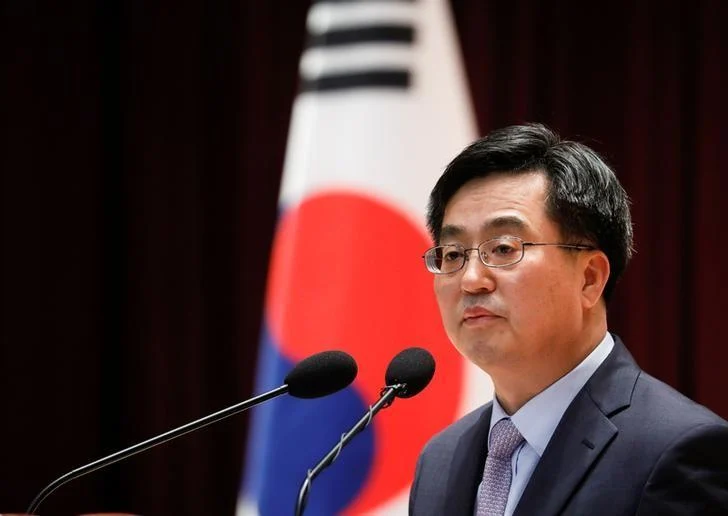
The South Korean government is reportedly moving toward a significant policy reversal regarding its stance on Initial Coin Offerings (ICOs), signaling a transition from a prohibitive regulatory environment to one defined by structured oversight and institutional support. Reports emerging from Seoul indicate that financial authorities, in coordination with multiple government agencies, are discussing a framework that would lift the blanket ban on ICOs imposed in late 2017. This potential shift follows months of intense internal debate and pressure from the domestic technology sector, which has argued that the current restrictive environment has forced local innovation offshore and stifled the growth of the country’s burgeoning blockchain ecosystem.
According to sources familiar with the matter, the South Korean Financial Services Commission (FSC) has initiated high-level consultations with the National Tax Service, the Ministry of Justice, and other relevant administrative bodies. The objective of these discussions is to establish a set of stringent conditions under which cryptocurrency projects can legally raise capital from the public. While the government has not yet issued a formal decree, the narrative within the Sejong government complex has noticeably shifted from total prohibition to a nuanced approach centered on investor protection and anti-money laundering (AML) compliance.
The Evolution of South Korea’s Regulatory Stance
To understand the magnitude of this potential policy shift, it is necessary to examine the historical context of South Korea’s relationship with the digital asset market. In 2017, South Korea emerged as one of the most active cryptocurrency markets globally, at one point accounting for a disproportionately large share of global Bitcoin and Ethereum trading volumes. This period saw the rise of the "Kimchi Premium," a phenomenon where cryptocurrencies traded at significantly higher prices on South Korean exchanges compared to international platforms due to high demand and strict capital controls.
However, the rapid influx of retail capital into the market raised alarms within the Moon Jae-in administration. Regulators expressed concerns over speculative manias, the potential for large-scale fraud, and the use of digital assets in illicit activities. In September 2017, the FSC issued a comprehensive ban on all forms of ICOs, regardless of the project’s merit or technical foundation. This move was followed by a series of aggressive statements from high-ranking officials, including the Justice Minister, who at one point suggested the possibility of shutting down domestic cryptocurrency exchanges entirely.
The impact of these measures was profound. The uncertainty generated by government rhetoric, combined with high-profile security breaches at exchanges like Coincheck in neighboring Japan and local platforms within Korea, contributed to a significant correction in global market prices. Furthermore, the ban led to a "brain drain," as South Korean blockchain startups relocated their operations to crypto-friendly jurisdictions such as Singapore and Switzerland to conduct their token sales.
Internal Deliberations and Official Responses
The current reports suggest that the period of reactionary prohibition is being replaced by a period of pragmatic regulation. Kang Young-soo, a senior official overseeing cryptocurrency trading policies at the FSC, recently addressed the speculation surrounding the lifting of the ICO ban. Speaking at an industry forum held at the National Assembly, Kang clarified that while there is no official government policy change to announce yet, the authorities are actively monitoring the industry’s evolution and considering "third-party views" on the matter.
"The financial authorities have been talking to the country’s tax agency, justice ministry, and other relevant government offices about a plan to allow ICOs in Korea when certain conditions are met," a source told The Korea Times on the condition of anonymity. This statement highlights the collaborative nature of the new approach, involving tax authorities to ensure proper revenue collection and the justice ministry to maintain legal integrity.
Kang Young-soo emphasized that the government’s primary concern remains the prevention of illegal activities. Under the proposed framework, ICOs that are not expressly identified as fraudulent or in violation of existing financial laws would theoretically be allowed to operate. This "negative list" approach—where everything is permitted unless specifically forbidden—would represent a radical departure from the current "positive list" environment where all activity is halted until specifically authorized.
The Two-Track Strategy: Blockchain vs. Speculation
A critical component of South Korea’s evolving policy is the distinction between blockchain technology as an industrial tool and cryptocurrency as a speculative asset. The government has consistently maintained a "two-track" strategy: aggressively promoting the development of blockchain technology for use in logistics, public administration, and the "Fourth Industrial Revolution," while remaining cautious about the volatile nature of the crypto-asset market.
The South Korean government has allocated significant budgetary resources toward blockchain research and development. Officials believe that the underlying distributed ledger technology (DLT) is essential for the country’s future economic competitiveness. However, the 2017 ICO ban created a paradoxical situation where the government encouraged the technology but banned the primary mechanism used to fund its development.
Industry leaders have argued that blockchain and cryptocurrency are inextricably linked, particularly in the context of public, decentralized networks that require tokens to incentivize participants. By reconsidering the ICO ban, the South Korean government appears to be acknowledging that a total separation of the two may be counterproductive to its goal of becoming a global technology leader.
Supporting Data and Market Impact
The significance of the South Korean market cannot be overstated. At the height of the 2017-2018 market cycle, the Korean Won (KRW) was frequently the second or third most traded fiat currency for Bitcoin, trailing only the U.S. Dollar and occasionally the Japanese Yen. The country’s high internet penetration, tech-savvy population, and robust financial infrastructure made it an ideal incubator for digital asset adoption.
The potential lifting of the ICO ban is expected to have several immediate impacts on the domestic economy:
- Capital Repatriation: Startups that moved to Singapore or Zug may return to Seoul, bringing back high-paying jobs and tax revenue.
- Institutional Entry: Clearer regulations are likely to encourage traditional South Korean financial institutions and "Chaebols" (large family-owned conglomerates) to integrate blockchain services or invest in the sector.
- Market Liquidity: A regulated ICO market would likely increase the volume of activity on domestic exchanges like Upbit, Bithumb, and Korbit, further cementing South Korea’s role as a regional financial hub.
- Investor Protection: By moving ICOs into the light of regulation, the government can mandate disclosures, audits, and KYC (Know Your Customer) protocols, which are currently absent in the "underground" or offshore markets used by Korean investors.
Challenges and Remaining Restrictions
Despite the optimistic outlook, significant hurdles remain. The South Korean government has shown no intention of relaxing its strict Anti-Money Laundering (AML) and Counter-Terrorism Financing (CTF) laws. The "Real-Name Verification System," introduced in early 2018, remains a cornerstone of the regulatory framework. This system requires that cryptocurrency traders use bank accounts that match the identity of their exchange accounts, effectively ending anonymous trading.
Furthermore, the ban on foreigners trading on South Korean exchanges remains in effect. This policy was designed to prevent the country from being used as a conduit for capital flight and to stabilize the domestic currency. While this isolationist approach is at odds with the globalized nature of the cryptocurrency market, South Korean regulators argue it is a necessary measure given the unique geopolitical and economic risks the country faces, including its proximity to North Korea and its reliance on export-led growth.
Global Context and Regional Competition
South Korea’s move to reconsider its ICO ban comes at a time when other Asian nations are also refining their digital asset policies. Japan has already established a licensing system for exchanges and is working on a framework for "Initial Exchange Offerings" (IEOs). Conversely, China has maintained a total ban on both ICOs and domestic cryptocurrency trading, focusing instead on its Central Bank Digital Currency (CBDC), the digital yuan.
By opting for a regulated middle ground, South Korea is positioning itself as a sophisticated alternative to both the unregulated markets of the past and the prohibitive markets of its neighbors. If the FSC successfully implements a conditional ICO framework, it could provide a blueprint for other G20 nations struggling to balance innovation with financial stability.
Analysis of Implications
The transition from a ban to a regulated framework is a sign of institutional maturity. It suggests that the South Korean government no longer views cryptocurrency as a transient fad or a mere tool for fraud, but as a permanent fixture of the modern financial landscape that requires sophisticated governance.
For the global cryptocurrency market, a "pro-crypto" South Korea provides a powerful counter-narrative to regulatory crackdowns elsewhere. It reinforces the idea that digital assets can be integrated into a traditional economy if the right safeguards are in place. For South Korean entrepreneurs, the lifting of the ban would mean the end of legal ambiguity and the beginning of a period where they can raise capital domestically to build the next generation of decentralized applications.
As the FSC continues its deliberations with the Ministry of Justice and the National Tax Service, the international community remains focused on Seoul. The specific "conditions" mentioned by officials—likely involving minimum capital requirements, mandatory security audits, and strict investor accreditation—will determine whether this policy shift truly fosters innovation or simply replaces a total ban with an equally stifling bureaucratic hurdle. Nevertheless, the direction of travel is clear: South Korea is preparing to reopen its doors to the future of digital finance.














