


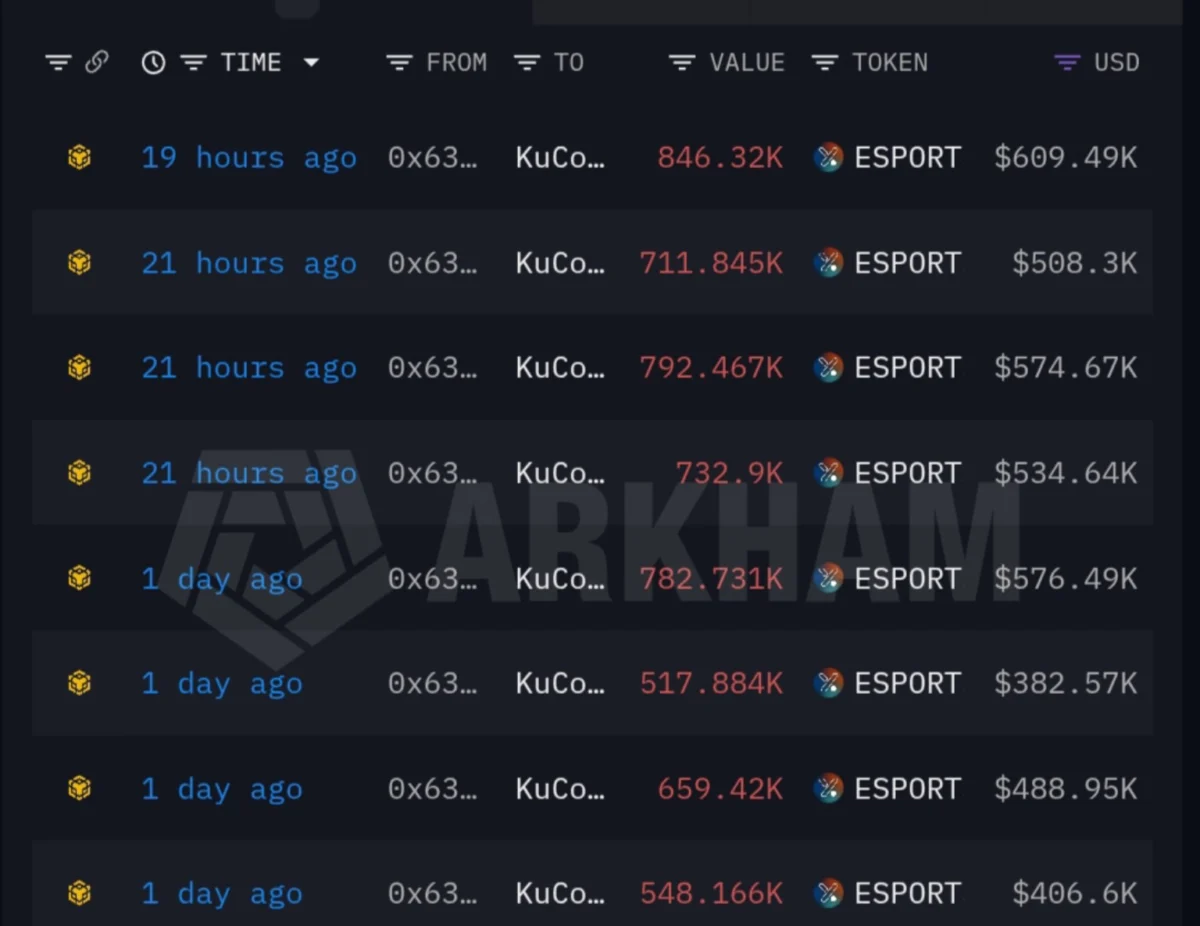
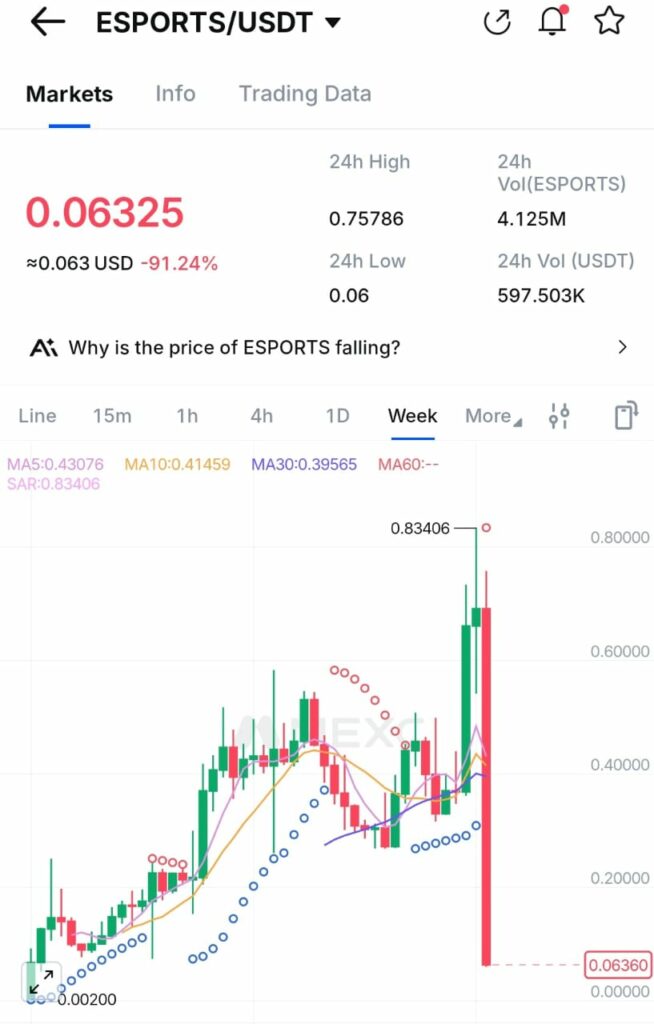
The ESPORTS native token, operating on the robust BNB Smart Chain, suffered a catastrophic collapse, its value decimated by over 90% in a mere two hours following an organized dump from wallets allegedly linked to project insiders. This precipitous decline, which wiped out an estimated $12.7 million in market value, has ignited a firestorm of confusion and alarm within the broader cryptocurrency community, raising critical questions about internal governance, transparency, and investor protection in nascent digital asset projects.
The liquidation event was precisely pinpointed by on-chain data to 18:18 UTC, initiating a brutal sell-down that sent shockwaves through the market. When the digital dust settled, the token’s market capitalization had plummeted from an initial approximate value of $178 million to a mere $12.76 million. This rapid destruction of value not only left countless retail investors in financial ruin but also cast a long shadow over the integrity of the project and the wider decentralized finance (DeFi) ecosystem. Real-time tracking of wallet activity by diligent crypto analysts provided early and compelling clues, with comprehensive accounts making rounds shortly after publication via platforms like X (formerly Twitter), vividly illustrating the sheer speed and scale of the coordinated sell-off.
The Unfolding Crisis: A Chronology of Collapse
The demise of the ESPORTS token was not an isolated, instantaneous event but rather the culmination of several critical developments, culminating in a strategically executed dump.
- Days Prior: On-chain metrics began exhibiting anomalous behavior. Wallets associated with the project’s core team members, early investors, or significant backers started to move substantial quantities of tokens. These movements, often involving the splitting of large holdings into smaller chunks and distributing them across multiple fresh wallets, are classic precursors to large-scale sell-offs designed to obfuscate true ownership and avoid triggering immediate red flags. Community members monitoring these patterns on social media platforms like X began to raise concerns, noting the steady accumulation of liquidity on exchanges.
- Three Days Before the Crash: The ESPORTS token made its highly anticipated debut on KuCoin, a prominent centralized cryptocurrency exchange. This listing was a significant milestone, typically viewed as a bullish indicator that enhances a token’s legitimacy, accessibility, and liquidity. For many retail investors, such a listing signals growth potential and often sparks renewed interest and investment. The timing of this listing, however, would later become a focal point of intense scrutiny, as it inadvertently created the perfect exit liquidity for those orchestrating the dump.
- The Day of the Dump (May 25, 2026): At precisely 18:18 UTC, the coordinated selling began. Allegedly, the insiders, having pre-positioned their tokens on various exchanges, initiated a massive sell-off. The rapid succession of sell orders overwhelmed buy-side demand, creating a cascading effect that accelerated the price collapse. Within two hours, the token’s value plunged by over 90%, leaving little to no opportunity for retail investors to react or mitigate their losses. The speed and synchronization of the dump strongly suggested a premeditated, organized effort rather than a spontaneous market reaction.
Pre-Emptive Warnings: The On-Chain Signals That Were Missed (or Ignored)
While the collapse of the ESPORTS token may have appeared sudden and unforeseen to many retail investors, a closer inspection of on-chain data reveals that the signs of an impending storm had been steadily accumulating in the days preceding the catastrophic event. Crypto analysts specializing in on-chain forensics meticulously tracked unusual movements of tokens among several wallets that were demonstrably linked to either members of the project’s development panel, early investors, or individuals closely associated with the initial enthusiasm and special backers of the project.

These analyses revealed that a substantial 23 million worth of ESPORTS tokens had been strategically moved and accumulated on various exchanges, most notably KuCoin, in the lead-up to the dump. This pre-positioning of such a significant volume of tokens on centralized exchanges is a critical red flag, strongly suggesting a deliberate, strategic plan rather than organic market behavior driven by individual retail decisions. It indicated that large holders were preparing to offload their assets en masse.
Community members, particularly those actively engaged in monitoring on-chain developments, had flagged these patterns well in advance. Discussions began to surface on social media, with prominent crypto analysts like WiseAdviceSumit providing detailed breakdowns on X, highlighting concerns over how liquidity was steadily building on exchanges, signaling a potential large-scale sell-off. Wise Advice’s analysis, for instance, detailed how "Team/VC wallets started moving size," "Funds split into fresh wallets," and "Tokens slowly sent to exchanges," culminating in the approximate "$23M reportedly hit KuCoin before the dump." These warnings, unfortunately, did not reach or were not fully comprehended by a significant portion of the retail investor base, who remained vulnerable to the impending crash.
KuCoin Listing: A Catalyst for Collapse?
The timing of the ESPORTS token’s catastrophic crumbling, occurring merely three days after its highly anticipated debut on KuCoin, has intensified scrutiny and fueled accusations of deliberate manipulation. The listing on a major exchange like KuCoin typically provides an exponential increase in attention, liquidity, and, critically, a surge in speculative interest from investors drawn to the high potential of a token bridging the burgeoning worlds of gaming and blockchain. This confluence of factors creates an optimal environment for large holders to exit their positions.
For many, the coinciding of a major exchange listing with such a massive sell-off is not a coincidence but rather evidence of purposeful timing designed to exploit newly unlocked liquidity and the heightened retail excitement that accompanies such an event. Major exchange listings, often backed by significant hype and promising high trading volumes, frequently represent the most favorable exit points for large, early holders. These "liquidity exits," as they are known in the crypto lexicon, have been a recurring feature throughout the history of crypto markets, particularly during previous bull market cycles. Insiders strategically capitalize on newly available liquidity by selling large stakes at advantageous prices, often just as retail interest peaks.
The question now looms: Did the alleged insiders deliberately wait for the KuCoin listing to create sufficient market depth and retail demand, thereby ensuring maximum profitability for their exit, regardless of the devastating impact on new investors? This scenario highlights a significant ethical and operational challenge within the crypto space, where the promise of decentralization often clashes with the centralized power held by a project’s early backers and developers.
Anatomy of a Coordinated Sell-Off Strategy
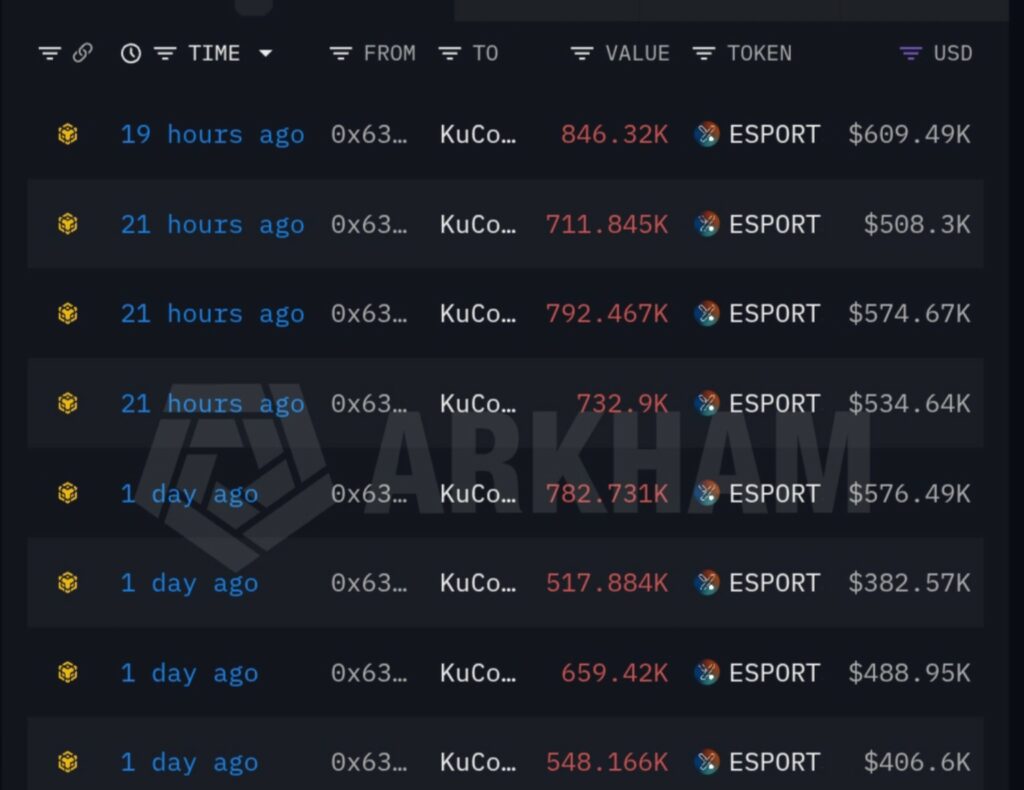
The meticulous manner in which the sell-off occurred suggests a highly thoughtful and measured response rather than an impulsive, panic-driven reaction. The alleged insiders employed a sophisticated strategy designed to minimize detection until the point of no return.
Firstly, they spread their tokens across a multitude of distinct wallets. This technique, known as "wallet splitting" or "dusting," makes it significantly more challenging for automated on-chain monitoring tools and individual analysts to trace the true origin and ultimate ownership of the assets. By fragmenting their holdings, the perpetrators aimed to avoid triggering immediate alerts that might have been incurred by a single, gigantic transaction moving from one identifiable wallet.
Secondly, these fragmented holdings were then deposited onto various centralized exchanges, including KuCoin, in incremental stints rather than a single, large transfer. This gradual accumulation of tokens on trading platforms further masked the scale of the impending dump, allowing liquidity to build without immediately signaling a large sell order that could spook the market. The goal was to patiently accumulate enough sellable volume on exchanges to execute a rapid, market-altering event.
Once sufficient liquidity had been accumulated on the trading platforms, the coordinated dump commenced. This involved a rapid, synchronized execution of sell orders across multiple accounts and potentially multiple exchanges. The sheer volume and speed of these sales quickly overwhelmed existing buy-side demand, leading to a precipitous price drop within minutes. This rapid execution effectively denied latecomers and retail investors any opportunity to realize their bags, trapping them in a rapidly depreciating asset. The consequence was a flood wave of price collapse, crushing those who had invested recently or were unable to react in time.
Attribution of these actions is further complicated by the use of multiple wallets, as it becomes incredibly difficult to definitively ascertain the exact person or company behind each address. However, the remarkable consistency in the "how" and "when" these wallets behaved – the synchronized movements, the strategic deposits, and the rapid, coordinated selling – strongly indicates that these actions were orchestrated and coordinated rather than a collection of independent decisions by disparate market participants. This systematic approach underscores the premeditated nature of the event, distinguishing it from organic market volatility.
The Aftermath: Erosion of Trust and Community Backlash
The fallout from the ESPORTS token’s collapse was immediate and severe, sparking a wave of indignation and ridicule across the crypto community. Social media platforms became arenas for widespread angst, disillusionment, and angry calls for accountability. A number of recurring themes emerged from the torrent of discussions, with many community members vociferously calling attention to the urgent need for better transparency and more robust governance norms across nascent token projects. The incident has tragically reinforced the perception that the crypto space, despite its innovative potential, remains plagued by insider-led collapses that disproportionately harm retail investors.
The incident has had a profound impact on investor sentiment, further entrenching skeptical attitudes among retail participants, particularly towards new tokens that undergo explosive hype cycles without a proven track record or verifiable performance history. The perception that insiders are leveraging their privileged positions to execute "liquidity exits" at the expense of the wider community has significantly eroded the fragile trust within the ESPORTS project specifically, and the broader DeFi ecosystem in general. This breach of trust can have long-lasting repercussions, deterring future investment and stifling innovation if not adequately addressed.
More than a one-off anomaly, this episode sheds glaring light on a systemic problem inherent within the crypto ecosystem: the highly skewed information and power asymmetry that exists between project insiders and the general public. While blockchain technology inherently promises transparency by making all transactions visible on a public ledger, this "transparency" is often superficial. The complex, raw data on a blockchain is largely inaccessible and unintelligible to the average person, who lacks the specialized tools and expertise to translate this intricate information into actionable real-time insights. This inherent gap means that while data exists, true transparency – the ability for all participants to understand and react to critical movements – is severely lacking for the majority.
Lessons Learned for Investors and the Industry Going Forward
The devastating collapse of the ESPORTS token serves as a stark and painful reminder that on-chain transparency, by itself, is insufficient protection for investors. While public ledgers make suspicious activity visible, linking complex data patterns to actionable insights requires a level of sophistication and vigilance that much of the retail circle currently lacks.
For individual investors, this event unequivocally demonstrates the critical need for enhanced due diligence. It underscores the importance of actively monitoring wallet activity, scrutinizing token distribution dynamics, and exercising a healthy degree of caution with newly-listed assets that attract rapid inflows and intense hype. Key warning signs that often precede significant market manipulations include:
- Wallet Splitting: Large token holdings being divided into numerous smaller wallets.
- Incremental Deposits: Gradual and sustained deposits of significant token volumes onto exchange platforms.
- Sudden Large Liquidity Movements: Unexplained large transfers of tokens from team or early investor wallets.
These patterns are often precursors to major market moves and should trigger immediate scrutiny.
The ESPORTS incident also amplifies calls for stronger accountability frameworks within the crypto industry. This includes the implementation of better disclosure rules for project teams and early investors, mandating transparency around vesting schedules, token lock-ups, and insider holdings. Furthermore, there is an urgent need for the development and widespread adoption of robust, user-friendly tooling that empowers ordinary investors to more easily read, interpret, and react to on-chain data in real time. Without such protections and educational resources, instances of alleged insider trading and market manipulation are highly probable to continue, further undermining investor confidence and delaying the wider adoption of legitimate blockchain technologies.
Extending the view to the wider blockchain world, this crash is not merely the tale of a single token. The ESPORTS collapse points more broadly to a struggling marketplace attempting to find a sustainable equilibrium between radical innovation and essential investor access and protection. As the digital asset sector matures, the collective ability of both investors and the market as a whole to detect these critical signs and act accordingly will be paramount. Regulators, too, will likely intensify their focus on market manipulation tactics, potentially leading to stricter oversight of centralized exchanges and token issuance processes. The incident serves as a crucial case study, pushing the industry towards a more responsible and transparent future, where the benefits of decentralized technology can be realized without disproportionately penalizing the everyday investor.














