An experienced cryptocurrency trader, known within the digital asset community by the pseudonym @ika_xbt, has become the latest victim of a sophisticated phishing campaign, losing their entire digital portfolio valued at over $400,000. The devastating loss occurred after the trader clicked on a seemingly legitimate sponsored Google ad that mimicked the official Uniswap website with uncanny accuracy, a stark reminder of the evolving threats within the decentralized finance (DeFi) ecosystem. This incident, which surfaced on May 26th, highlights a persistent and increasingly damaging pattern of malicious actors exploiting search engine advertising to defraud unsuspecting users.
The phishing operation utilized meticulously cloned versions of Uniswap’s user interface, strategically promoted through Google Search advertisements. While the exact timeline of fund transfer remains under scrutiny, blockchain analysis has identified two distinct wallets associated with the perpetrators. At the time of their discovery, these wallets collectively held approximately 146 Ether (ETH), which translated to roughly $306,000, indicating that the total stolen funds significantly surpassed the $400,000 mark. This incident is not an isolated event but rather a chilling manifestation of a broader trend that has seen increasingly elaborate and financially impactful phishing schemes targeting prominent DeFi protocols.
The Mechanics of Deception: How the Scam Unfolds
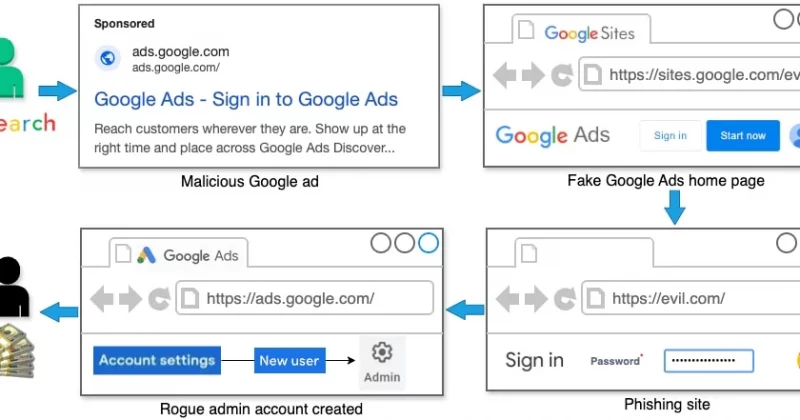
The modus operandi of this particular phishing campaign is deceptively simple yet highly effective. Attackers strategically purchase sponsored advertisements on Google, meticulously targeting the highly sought-after keyword "Uniswap." When users, seeking to access the popular decentralized exchange, type "Uniswap" into their search queries, the fraudulent sponsored result is deliberately positioned to appear prominently above the legitimate, organic search listings. The deceptive brilliance of the scam lies in the visual fidelity of the fake website. It is designed to be an exact replica of the real Uniswap interface, making it virtually indistinguishable to the casual observer.
Once a user lands on the counterfeit website, the crucial moment of vulnerability arrives when they attempt to interact with the platform. The scam requires the user to connect their cryptocurrency wallet to the fraudulent site. Following this connection, the attacker prompts the user to approve a transaction. This is the critical juncture where the deception culminates. Upon the user authorizing this seemingly innocuous transaction, the malicious smart contract embedded within the fake interface is triggered. This contract is designed to systematically drain all accessible assets from the connected wallet, effectively emptying the user’s entire portfolio.
The inherent nature of blockchain technology, while celebrated for its transparency and immutability, presents a significant challenge in such scenarios. Unlike traditional financial systems, there is no central authority, no customer service hotline to contact, no mechanism for filing a chargeback, and crucially, no "undo" button for blockchain transactions. Once a transaction is confirmed and recorded on the ledger, it is permanent and irreversible. This fundamental characteristic of decentralized systems means that once a user falls victim to such a phishing attack and approves a malicious transaction, their funds are effectively lost forever.
In the specific case of @ika_xbt, a single, seemingly routine approval was sufficient to liquidate their entire digital asset holdings. It is crucial to understand that this attack did not exploit any underlying vulnerabilities within Uniswap’s smart contracts or its core infrastructure. The protocol itself remained secure and uncompromised. Instead, the scam cleverly exploits a fundamental human factor: trust. By leveraging the perceived legitimacy of Google’s sponsored search results and the visual accuracy of the cloned website, the attackers prey on users’ trust in familiar platforms and their haste in executing transactions within the fast-paced crypto environment.
A Recurring Nightmare: The Persistent Threat of Phishing
The Security Alliance, widely known by its acronym SEAL, has been meticulously documenting a disturbing surge in Google Search-based phishing campaigns targeting various cryptocurrency protocols. This trend has been observed to be on a significant upward trajectory since March 2026, indicating a well-established and evolving threat landscape. The playbook employed by these malicious actors remains remarkably consistent across different incidents. It typically involves the acquisition of sponsored ad placements on search engines, the meticulous cloning of trusted DeFi interfaces, and then a patient waiting game for unsuspecting users to connect their wallets and fall into the trap.
The financial repercussions of these attacks are not to be underestimated. As recently as February 2026, phishing attacks executed through Google sponsored ads were responsible for losses amounting to six figures. Looking further back, a similar scheme orchestrated in July 2025 resulted in an astounding $1.2 million being stolen from users, underscoring the escalating scale and impact of these fraudulent activities.
Prominent figures within the cryptocurrency space have been increasingly vocal in their condemnation of search platforms’ perceived inaction. Hayden Adams, the founder of Uniswap, has been a staunch advocate, repeatedly criticizing search engines for their failure to implement more robust measures to identify and remove scam advertisements. His frustration, amplified by earlier incidents of similar attacks, reflects a growing sentiment within the industry that these platforms have a significant responsibility to protect their users from such blatant exploitation. The delay in decisive action from these powerful tech giants leaves the crypto community vulnerable.
Safeguarding Digital Assets: What This Means for Investors
In the face of these sophisticated and persistent threats, investors in the cryptocurrency space must adopt proactive and diligent security practices. The single most effective defense against this particular type of phishing attack is remarkably simple and costs nothing: bookmarking the correct URLs for any DeFi protocol you use regularly. By consistently accessing these platforms through pre-saved, trusted links, users can bypass the deceptive sponsored ads entirely. This practice takes mere seconds to implement and can serve as an invaluable safeguard.
Users who employ hardware wallets for their digital asset management possess a partial advantage in this ongoing battle. Many reputable hardware wallets necessitate explicit, on-device confirmation of transaction details before execution. This built-in security feature acts as a critical final checkpoint, allowing users to carefully review the proposed transaction on the physical device itself. This can provide a crucial opportunity to identify and reject a malicious approval that might have been initiated on a fraudulent website. However, even this advanced layer of security is not foolproof. It relies heavily on the user’s vigilance in meticulously scrutinizing the information presented on the hardware wallet before confirming any transaction. A hasty or inattentive review can still lead to unintended approvals.
The immutable and irreversible nature of blockchain transactions, a cornerstone of decentralized finance, transforms into its most significant liability in these dire situations. Traditional financial systems have long incorporated robust fraud protection mechanisms, including chargebacks and insurance, precisely because human error is an acknowledged reality. These safeguards are designed to mitigate the impact of mistakes and malicious activities. In contrast, DeFi, by its very design, offers none of these conventional protections. This fundamental difference places a far greater burden of responsibility on the individual user to remain vigilant, informed, and meticulously cautious in all their digital asset interactions. The onus of security rests squarely on the shoulders of the investor, demanding a level of awareness and proactive defense that is paramount in navigating the evolving landscape of cryptocurrency.
The ongoing prevalence of these phishing schemes underscores a critical need for increased collaboration between cryptocurrency platforms, search engines, and cybersecurity researchers. While individual vigilance remains paramount, a more systemic approach is required to build a safer digital asset environment. This includes enhanced content moderation policies by search engines, greater transparency in advertising practices, and continued public education campaigns on the evolving tactics of crypto scammers. As the DeFi ecosystem continues to grow and attract a wider range of participants, the imperative to fortify its defenses against these persistent threats becomes ever more urgent. The financial and personal toll of these attacks is a stark reminder that in the realm of digital assets, security is not merely a feature; it is a fundamental prerequisite for participation.