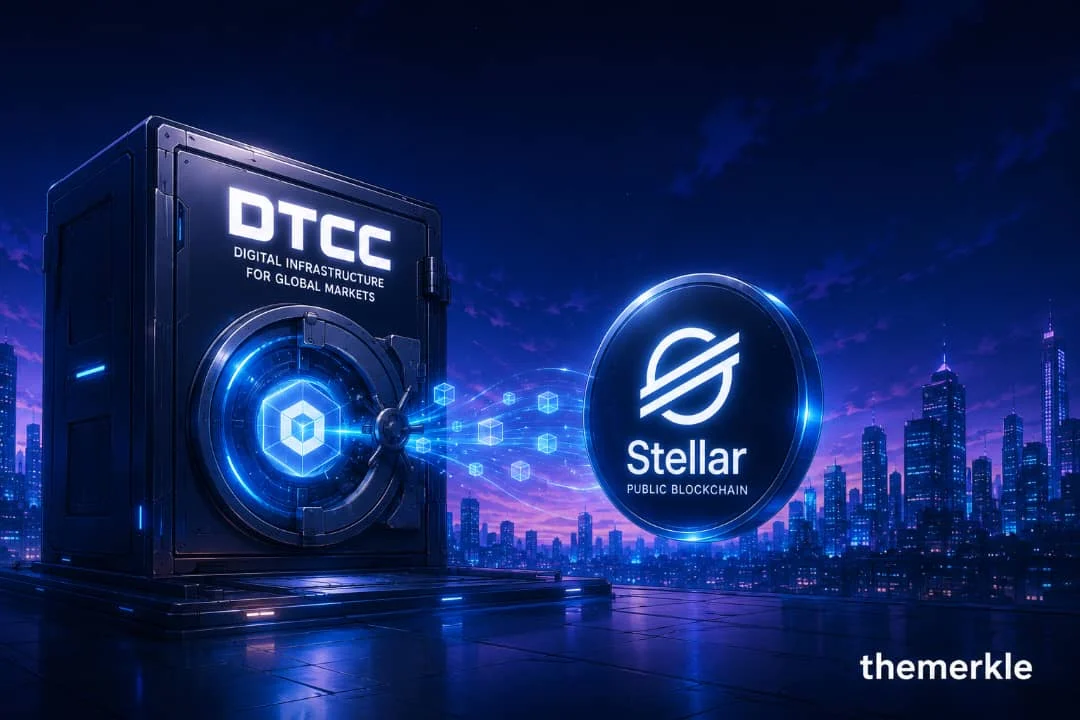
This groundbreaking collaboration, unveiled in late May 2026, marks a pivotal moment in the convergence of traditional capital markets infrastructure with public blockchain networks. The Depository Trust Company (DTC), a subsidiary of the Depository Trust & Clearing Corporation (DTCC), the global post-trade market infrastructure for the U.S. securities industry, intends to make token representations of assets available for issuance directly on the Stellar blockchain by the first half of 2027. This move is part of DTCC’s overarching multi-chain strategy, designed to redefine how financial assets are transferred, cleared, settled, and managed within digital ecosystems, effectively decoupling the concept of crypto from the broader potential of tokenization in traditional finance.
A New Epoch for Institutional Asset Tokenization
The announcement signifies a major step forward for institutional-grade capital markets infrastructure integrating with distributed ledger technology (DLT). DTCC stands at the very heart of the global financial settlement systems, annually clearing and settling quadrillions of dollars in securities transactions for U.S. markets. Its strategic pivot towards embedding tokenized asset infrastructure directly into public blockchain networks like Stellar positions it for a future where traditional securities, treasury instruments, and other institutional financial products are seamlessly integrated into interoperable on-chain environments.
This initiative is not merely an experimental pilot but a fundamental re-imagining of financial plumbing. DTCC’s intent to explore tokenization across a wide spectrum of asset types underscores its commitment. These include highly liquid and significant asset classes such as Russell 1000 constituents, Market Index (ETF) trackers, and U.S. Treasury securities (including Treasury bills, bonds, and notes). The selection of these asset types, among the largest and most actively traded in global finance, indicates that this endeavor transcends simple exploration, aiming instead for system-scale financial infrastructure modernization.
The Crucial Regulatory Green Light: SEC Approval Paves the Way
The regulatory framework underpinning this ambitious initiative was meticulously established prior to the public announcement, providing a critical foundation for DTCC’s advancement into blockchain-based tokenization. A significant breakthrough occurred in December 2025 when DTCC revealed it had secured a no-action letter from the U.S. Securities and Exchange Commission (SEC). This landmark regulatory clearance explicitly permitted DTC to offer and operate tokenization services that associate in-kind real-world assets held on its existing infrastructure with corresponding digital tokens.
This no-action letter was transformative. It effectively laid down the legal groundwork, providing DTCC with the necessary regulatory certainty to proceed with these blockchain-based tokenization systems. For years leading up to late 2023, tokenization within institutional finance remained largely experimental, hampered by considerable regulatory uncertainty. The ambiguity surrounding how tokenized securities and blockchain settlement systems would integrate into existing financial regulations had significantly limited the development and availability of tangible products. The SEC’s guidance, in the form of the no-action letter, granted DTCC a robust and much firmer legal footing, enabling it to confidently expand such blockchain infrastructure into regulated capital markets.
Furthermore, this regulatory development signals a broader shift in the regulatory landscape, moving from apprehension and wariness towards tokenized forms of traditional assets. This shift is particularly pronounced when such initiatives are undertaken not by crypto-native platforms operating independently from the established financial system, but by heavily regulated banking and market infrastructure players like DTCC. It demonstrates a growing recognition by regulators that innovation can be fostered responsibly within existing compliance and oversight mechanisms, paving the way for mainstream adoption.
A Chronology of Convergence:
- December 2025: DTCC receives a pivotal no-action letter from the U.S. Securities and Exchange Commission (SEC), granting regulatory clarity for DTC to operate tokenization services linking real-world assets to digital tokens. This marks a turning point, providing the legal framework for subsequent initiatives.
- May 2026: DTCC and the Stellar Development Foundation publicly announce their strategic partnership. The plan details the integration of DTC’s asset custody with the Stellar public blockchain to enable direct asset tokenization.
- First Half of 2027: Target date for the initial implementation, when token representations of assets issued through DTC are expected to become available on the Stellar public blockchain. This marks the commencement of operationalizing the partnership.
Stellar’s Expanding Institutional Footprint
The collaboration with DTCC represents a significant milestone for the Stellar network, further solidifying its role within the institutional finance infrastructure. While many public blockchains have historically focused on retail trading, decentralized finance (DeFi) speculation, or consumer-centric crypto applications, Stellar has strategically carved out a niche centered on enterprise-grade solutions. Its core strengths lie in payments, settlement systems, cross-border financial infrastructure, and the issuance of tokenized assets. This focused approach aligns seamlessly with the requirements of institutional players.
By teaming up with DTCC, Stellar gains direct access to one of the most critical and systemically important financial infrastructure providers globally. This strategic alliance is poised to enable market participants to develop a diverse array of traditional financial products that can be operated within native blockchain environments while simultaneously maintaining robust linkages to the established custodial and settlement infrastructures managed by DTCC. This dual benefit—leveraging blockchain’s efficiency and immutability while retaining the security and regulatory oversight of traditional systems—is a compelling proposition for institutional adoption.
The Stellar Development Foundation (SDF) has consistently articulated its vision for Stellar as a foundational layer for global financial services. Denelle Dixon, CEO and Executive Director of the SDF, is likely to have emphasized in internal or inferred statements that this partnership is a testament to Stellar’s robust technology, security, and scalability, proving its capability to meet the stringent demands of global financial institutions. "Our collaboration with DTCC," an inferred statement from Dixon might read, "validates Stellar’s position as a trusted network for enterprise-grade tokenization, opening new avenues for efficiency and innovation in traditional capital markets."
The Multi-Chain Paradigm: A Core Institutional Strategy
This initiative also underscores a fundamental shift in institutional blockchain adoption: the unequivocal move towards a multi-chain financial infrastructure. The initial paradigm of searching for a single, all-encompassing blockchain network capable of handling every type of institutional finance activity has largely been superseded. Instead, financial institutions are increasingly exploring architectures that enable tokenized assets to flow freely and securely across interoperable blockchain environments, all while meticulously maintaining compliance, custody standards, and operational security.
DTCC has explicitly framed the Stellar integration as a crucial connective piece within its broader multi-chain strategy. This strategy acknowledges that no single blockchain network is likely to prevail for every conceivable institutional finance use case. Rather, the future will likely see the development of a new tokenized financial ecosystem that spans between interoperable chains, each optimized for specific functions, regulatory landscapes, or settlement contexts.
In this evolving paradigm, public blockchains such as Stellar are envisioned not as direct replacements for existing financial systems but as critical settlement and interoperability layers, seamlessly attached to traditional custodial infrastructure. This hybrid system offers a pragmatic and realistic pathway to institutional adoption, allowing traditional financial institutions to incrementally embrace blockchain technology without being forced into a complete overhaul of their established compliance methodologies and operational structures. The focus on interoperability—ensuring that tokenized assets can move efficiently and at scale across various applications, trading platforms, liquidity venues, and settlement systems—is paramount to unlocking the full potential of this new financial ecosystem.
The Transformative Potential of Tokenization
The convergence of DTCC’s institutional heft with Stellar’s robust public blockchain infrastructure marks a significant transition from abstract discussions about tokenization to tangible, real-world implementation within mainstream finance. The potential benefits stemming from widespread tokenization are profound and far-reaching.
Tokenized assets inherently possess the capability to offer solutions such as near-instant settlement, dramatically reducing the settlement cycles that currently tie up capital and introduce counterparty risk. They enable programmable ownership rights, allowing for automated compliance controls and complex rule sets to be embedded directly into the asset. This also enhances collateral mobility, facilitating more efficient use of capital across different financial applications and jurisdictions. Furthermore, tokenization promises superior interoperability between disparate financial systems, breaking down silos that currently impede efficiency.
Simultaneously, public blockchain infrastructure introduces new vectors for market access, transparency, and composability that traditional settlement systems struggle to replicate effectively. The immutable and transparent nature of distributed ledgers can foster greater trust and reduce operational complexities.
DTCC’s decisive leap into this space carries immense legitimizing power for the entire nascent sector. Given DTCC’s central and indispensable role in U.S. securities settlement—a role that few other institutions can rival in terms of systemic importance—its willingness to roll out tokenization initiatives atop public blockchain infrastructure is a powerful indicator. It signifies a growing and increasingly confident consensus among institutions that blockchain-based capital markets are not a fleeting trend but a durable, long-term evolution of finance.
Market Implications and Future Outlook
The market for tokenized assets is projected to grow exponentially in the coming years. Major financial institutions, consulting firms, and market analysts have increasingly highlighted tokenization as a key driver of efficiency and innovation. A report by the Boston Consulting Group (BCG) and ADDX, for instance, projected that the market for tokenized illiquid assets alone could reach $16 trillion by 2030. While this partnership focuses on liquid assets, it contributes significantly to the broader legitimization and infrastructure development necessary for such growth across all asset classes.
The potential for this initiative to catalyze global institutional capital markets towards deeper, principle-based adoption of tokenized securities and public blockchain settlement systems on interoperable digital asset infrastructure is substantial. If successful, with its first base layer expected to be operational in the first half of 2027, this collaboration between DTCC and Stellar could become one of the most closely watched tokenization implementations in global finance. Its success could serve as a powerful blueprint, encouraging other major financial players and market infrastructures to accelerate their own digital transformation strategies, ultimately leading to a more efficient, transparent, and interconnected global financial system.
This monumental step by DTCC, a bastion of traditional finance, in partnering with a public blockchain like Stellar, underscores a future where the lines between conventional and digital assets blur, creating unprecedented opportunities for efficiency, liquidity, and innovation across capital markets worldwide. The industry now keenly awaits the operational launch in 2027, anticipating the transformative impact it promises to deliver.