The cryptocurrency market may be on the cusp of significant structural changes, with a veteran analyst predicting a substantial downturn for Bitcoin (BTC) and a notable "flippening" event led by stablecoins. Mike McGlone, Senior Commodity Strategist at Bloomberg Intelligence, has articulated a bearish outlook for the flagship cryptocurrency, forecasting a potential return to $10,000 by 2026. This projection is underpinned by his analysis of evolving market dynamics, macroeconomic headwinds, and the burgeoning influence of stable digital assets.
McGlone’s recent commentary, disseminated through his platform on X (formerly Twitter), suggests a reversion to historical price points for Bitcoin, drawing parallels to its valuation prior to the significant liquidity injections of 2020-2021. He posits that the $10,000 level holds historical significance, representing Bitcoin’s most traded price since the inception of futures trading in 2017. This perspective challenges the prevailing narrative of perpetual upward momentum for the digital asset, emphasizing the cyclical nature of markets and the potential for rebalancing.
Bitcoin’s Potential Descent: A Reversion to Historical Norms
The core of McGlone’s argument for a $10,000 Bitcoin by 2026 lies in the idea of market reversion. He notes that before the massive influx of capital into the crypto market during the 2020-2021 bull run, Bitcoin’s price action often revolved around the $10,000 mark. This period, he suggests, may represent a more fundamental valuation for the asset, free from the speculative exuberance that characterized subsequent periods.
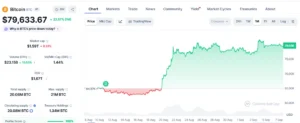
"Potential $10,000 Bitcoin in 2026. Prove me wrong – stay above $75,000," McGlone stated, issuing a direct challenge to the optimistic market sentiment. He further elaborated, "Before the biggest money pump in history in 2020–21, Bitcoin hovered around $10,000, and it may be reverting. Roughly $10,000 is also the first-born crypto’s most traded price since 2017, when futures were launched."
This assertion is significant because it frames Bitcoin’s current valuation as potentially inflated, susceptible to a correction driven by broader economic forces and intrinsic market pressures. The reference to the "biggest money pump in history" alludes to the unprecedented quantitative easing and fiscal stimulus measures implemented by central banks globally in response to the COVID-19 pandemic. This influx of liquidity is widely believed to have fueled the speculative asset boom, including cryptocurrencies. McGlone’s hypothesis suggests that as this extraordinary monetary environment normalizes, assets that benefited disproportionately may experience a recalibration.
The Rise of Stablecoins and the "Flippening" Phenomenon
A central tenet of McGlone’s thesis is the ascendant role of stablecoins, particularly dollar-backed tokens like Tether (USDT). He argues that these assets represent "a most enduring trend in the space," citing their growing assets under management (AUM). This trend, he believes, is creating significant headwinds for Bitcoin, which faces competition from an ever-expanding universe of digital assets with increasingly diverse use cases.
"Unlimited crypto supply and use-case rivals are Bitcoin headwinds," McGlone contends. He predicts a "flippening" where Tether’s AUM surpasses that of Ethereum (ETH) in 2026, and potentially even Bitcoin’s market capitalization in the long term.
What is the "Flippening"?
The term "flippening" in the cryptocurrency context typically refers to the hypothetical scenario where a cryptocurrency other than Bitcoin surpasses it in market capitalization. Historically, this term has been most closely associated with Ethereum potentially overtaking Bitcoin. However, McGlone’s use of the term extends to stablecoins, specifically highlighting the potential dominance of Tether over other established cryptocurrencies based on their sheer volume and utility as a medium of exchange and store of value within the digital asset ecosystem.
Supporting Data for Stablecoin Growth
The growth of stablecoins has been a remarkable feature of the cryptocurrency market. As of early 2024, the total market capitalization of stablecoins has reached hundreds of billions of dollars. Tether, the largest stablecoin by market cap, has consistently seen its circulating supply expand. This growth is driven by several factors:
- On-Ramps and Off-Ramps: Stablecoins serve as crucial bridges between traditional fiat currencies and the volatile world of cryptocurrencies. They allow traders to enter and exit the crypto market without the friction of converting back to fiat, and to hold value within exchanges.
- DeFi Ecosystem: Decentralized Finance (DeFi) applications heavily rely on stablecoins for lending, borrowing, and trading. Their stability makes them ideal for these financial operations.
- International Remittances: Stablecoins offer a potentially faster and cheaper alternative for cross-border payments compared to traditional remittance services.
- Inflation Hedge (in some regions): In countries experiencing high inflation, stablecoins pegged to the US dollar can offer a perceived safe haven for individuals seeking to preserve their purchasing power.
While Bitcoin has a fixed supply of 21 million coins, making it theoretically deflationary, the increasing utility and adoption of stablecoins offer a different form of digital asset value proposition. McGlone’s argument suggests that Bitcoin’s fixed supply, once seen as a primary bullish factor, may not be enough to counteract the structural pressures from the rapid evolution and adoption of other digital assets, particularly those with stable value.
Macroeconomic Headwinds and Market Volatility
Beyond internal market dynamics, McGlone identifies broader macroeconomic risks as key catalysts that could exacerbate downward pressure on cryptocurrency prices. He specifically points to the potential for a stock market rollover and a subsequent recovery in volatility.
Historical Correlation with Traditional Markets
Cryptocurrencies, particularly Bitcoin, have shown an increasing correlation with traditional financial markets, especially equities, in recent years. During periods of heightened market uncertainty or economic downturns, investors often move towards safer assets, leading to sell-offs in riskier assets like tech stocks and, by extension, cryptocurrencies.
- 2022 Downturn: The cryptocurrency market experienced a significant downturn in 2022, mirroring a broader sell-off in global equity markets as central banks began aggressively raising interest rates to combat inflation. This period saw Bitcoin fall from its all-time highs to significantly lower levels.
- Interest Rate Hikes: The aggressive monetary tightening policies enacted by the U.S. Federal Reserve and other central banks have historically had a dampening effect on speculative assets. As the cost of capital increases, investors become more risk-averse.
- Recession Fears: Lingering concerns about a potential global recession continue to cast a shadow over financial markets, increasing the appeal of defensive assets and reducing appetite for high-risk investments.
McGlone’s prediction of a "potential stock market rollover" suggests a scenario where equity markets experience a significant decline. If this materializes, the historical pattern indicates that Bitcoin and other cryptocurrencies are likely to follow suit, potentially accelerating the downward trend he forecasts.
Bitcoin’s Consecutive Down Years and the Challenge to its Dominance
McGlone’s analysis also touches upon Bitcoin’s performance in recent years. He mentions the possibility of "Bitcoin’s first-ever consecutive down years in 2026 may be leading the way." This observation, if accurate, would represent a significant departure from Bitcoin’s historical performance, which has typically seen strong recovery phases after periods of decline.
- 2021-2022: Bitcoin experienced a substantial decline in 2022 after reaching its all-time high in November 2021. If the market continues its downward trajectory through 2023 and into 2024 and 2025, it could indeed mark a period of prolonged underperformance.
- Impact of Institutional Adoption: While institutional adoption has been a key bullish narrative for Bitcoin, its price performance has also been susceptible to broader market sentiment. If macro conditions worsen, even institutional inflows might not be enough to shield Bitcoin from significant price erosion.
The implication of consecutive down years would be a significant erosion of confidence among some investors and a potential shift in the dominant narrative surrounding Bitcoin from a guaranteed growth asset to one that is highly sensitive to macroeconomic cycles.
Broader Implications and Future Outlook
McGlone’s stark predictions, while bearish for Bitcoin, highlight a potential maturation of the cryptocurrency market. The increasing differentiation between various digital assets—with stablecoins offering utility and stability, and other cryptocurrencies developing specific use cases—could lead to a more nuanced market structure.
- Diversification of Value: The crypto market may be moving beyond a singular focus on Bitcoin as the primary store of value and speculative asset. The growth of platforms and technologies built on other blockchains, and the increasing utility of stablecoins, suggest a more diversified digital asset landscape.
- Regulatory Scrutiny: The growth of stablecoins also brings increased regulatory attention. As they become more integrated into the global financial system, governments worldwide are likely to implement stricter regulations, which could impact their growth trajectory and operational frameworks.
- Technological Innovation: The ongoing development of blockchain technology and its applications could lead to new forms of digital value and utility that compete with or complement existing assets like Bitcoin.
While McGlone’s forecast for Bitcoin is significantly lower than many current market expectations, his analysis is grounded in historical price action, macroeconomic principles, and observable trends in the evolving digital asset space. His emphasis on stablecoins as a significant, enduring trend suggests a potential reallocation of capital and attention within the crypto ecosystem. Investors and market participants will be closely watching to see if Bitcoin can indeed remain above $75,000 as McGlone challenges, or if the confluence of market forces he describes will indeed lead to a substantial recalibration of its valuation.
Disclaimer: Opinions expressed at The Daily Hodl are not investment advice. Investors should do their due diligence before making any high-risk investments in Bitcoin, cryptocurrency or digital assets. Please be advised that your transfers and trades are at your own risk, and any losses you may incur are your responsibility. The Daily Hodl does not recommend the buying or selling of any assets including cryptocurrencies, nor is The Daily Hodl an investment advisor. Please note that The Daily Hodl participates in affiliate marketing.