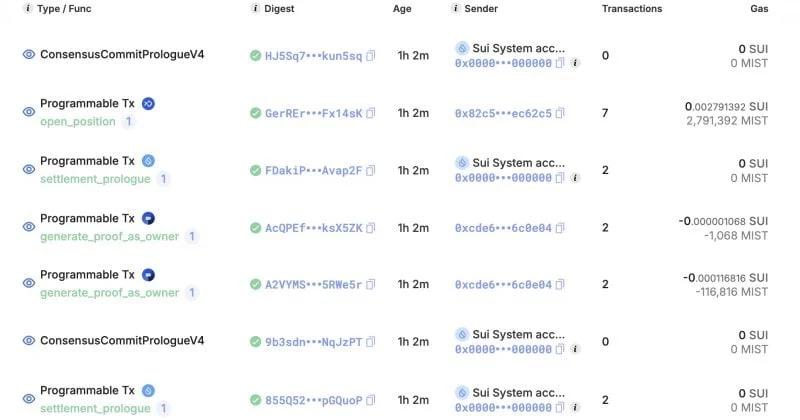
The Sui blockchain successfully brought its mainnet back online on May 29, following an extensive outage that lasted approximately 5 hours and 55 minutes. The network grind to a halt due to a critical bug discovered in the gas charging logic within its latest software release, version 1.72. This flaw in the mechanism responsible for calculating transaction fees inadvertently prevented the network from processing new blocks and finalizing transactions, effectively freezing all activity. Validators, the decentralized network of entities responsible for maintaining the blockchain’s integrity, collaborated swiftly to identify the issue, develop a patch, and coordinate an upgrade to the corrected software version, thereby restoring normal checkpoint production and blockchain operations.
The Genesis of the Outage: A Flaw in Transaction Cost Calculation
The disruption commenced on May 28, when validators running the newly deployed 1.72 software update encountered an unexpected error. The core of the problem lay within the intricate system that governs gas fees – the mechanism users pay to execute transactions on the Sui network. When this gas logic failed to function as intended, it triggered a cascade failure, halting the creation and finalization of new blocks. Consequently, the entire network became unresponsive to new transaction requests, leaving existing operations in a state of suspended animation.
The resolution was far from instantaneous, demanding a coordinated effort from the decentralized validator community. Sui’s robust consensus mechanism, designed to ensure security and prevent malicious takeovers, mandates that a supermajority – specifically, more than two-thirds of all staked tokens – must agree on and adopt a software upgrade for the network to resume normal functionality. This threshold, while crucial for network security, means that achieving consensus on a fix can be a time-consuming process, especially when a critical bug necessitates a rapid, coordinated deployment across a global network of validators.
Timeline of the Disruption and Recovery Efforts
The incident began to unfold on May 28, though the precise start time was not immediately detailed in initial reports. Validators performing the 1.72 update began experiencing issues, leading to the cessation of new checkpoint production. This critical failure meant that no new transactions could be confirmed and added to the blockchain.
The immediate aftermath saw the Sui network in a state of complete paralysis. DeFi protocols, decentralized exchanges, and any application relying on the continuous flow of transactions on Sui were effectively frozen. Users could not execute trades, adjust existing positions, or initiate new activities. The lack of transaction finalization meant that even automated processes like liquidations within DeFi protocols were unable to function, potentially exposing users to increased risk if the outage were to persist for an extended period.
The recovery process was initiated as soon as the bug was identified. Development teams at Mysten Labs, the primary creators of Sui, worked diligently to diagnose the root cause of the gas logic failure. Simultaneously, the Sui Foundation and the broader validator community engaged in urgent discussions to strategize the patching and deployment process.
A patched version of the software was developed and distributed to the validator network. The critical phase of the recovery involved validators staking more than two-thirds of the total SUI tokens coordinating to download, verify, and implement the patched software. This process required careful execution to ensure that the fix itself did not introduce new vulnerabilities or inconsistencies. Once the required threshold of validators upgraded, the network began the process of resuming normal operations, which included the production of new checkpoints and the re-establishment of transaction finality.
Normal operations were officially confirmed to be restored on May 29, marking the end of the nearly six-hour disruption.
Network Integrity and User Fund Security: A Testament to Sui’s Design
Despite the significant downtime, a crucial aspect of the incident was the continued assurance of network integrity and user fund security. Sui’s architectural design, particularly its emphasis on safety guarantees, played a pivotal role in mitigating potential fallout. During the entire period of the outage, no user funds were reported as lost or compromised. The network’s underlying mechanisms prevented any data inconsistencies from accumulating or corrupting the blockchain’s state while it was stalled. This robust safety net is a key selling point for Sui, aiming to provide a reliable foundation for complex decentralized applications.
The temporary paralysis of DeFi protocols, however, underscored the direct impact of network outages on the usability and functionality of the ecosystem. For participants in these protocols, the inability to manage their assets or execute trades during the downtime would have been a significant concern, especially in volatile market conditions.
A Recurring Pattern: Previous Outages and Validator Coordination Challenges
This recent incident is not the first time the Sui network has experienced significant downtime. Notably, on January 14, 2024, the network suffered a similar multi-hour stall, lasting approximately six hours. That earlier outage was attributed to a different issue: a consensus commit bug.
The recurrence of extended outages within a relatively short timeframe – two major disruptions of several hours each within approximately five months – raises questions about the robustness and stability of the Sui network’s software updates. Both incidents shared a common characteristic: a bug introduced via a software update, followed by a complex and time-consuming process of coordinating validator upgrades across the distributed network. This pattern suggests potential challenges in the rigorous testing and deployment protocols for new software releases on Sui.
Market Reaction: The SUI Token’s Volatility
The cryptocurrency market often reacts swiftly to news of network disruptions, and the Sui ecosystem was no exception. During the outage, the price of the SUI token experienced a noticeable decline, reportedly falling to approximately $0.89. This represented a price drop in the range of 6-8%. This volatility highlights investor sentiment and the market’s sensitivity to perceived risks associated with network stability. Following the resumption of normal operations, the SUI token saw a partial recovery, indicating that the market’s confidence is somewhat tethered to the network’s operational status.
Implications for Investors and the Sui Ecosystem
Sui has been strategically positioned as a high-throughput Layer 1 blockchain, designed to be a foundational infrastructure capable of supporting demanding decentralized finance (DeFi) applications and attracting substantial institutional capital. Since its mainnet launch, the total value locked (TVL) across the Sui ecosystem has grown to hundreds of millions of dollars, a testament to the burgeoning activity and developer interest in the platform.
However, frequent and extended network outages, even if ultimately resolved without loss of funds, can erode investor confidence and create a perception of unreliability. For traders and investors, the observed price action – a decline during the outage followed by a partial recovery – suggests a potential market playbook. If a third significant incident were to occur, the market might anticipate a similar pattern of price depreciation and subsequent partial recovery, making the SUI token’s price susceptible to fluctuations tied to network stability events.
The repeated nature of these disruptions prompts a critical examination of Sui’s software development lifecycle. While the network’s safety features have held up, preventing permanent damage, the operational interruptions themselves can have significant economic consequences for users and developers building on the platform. For Sui to achieve its ambitious goals of becoming a leading blockchain for institutional adoption and high-performance DeFi, demonstrating consistent and uninterrupted network uptime will be paramount.
Looking Ahead: Enhancing Stability and Trust
The Sui Foundation and Mysten Labs will undoubtedly face increased scrutiny regarding their strategies for preventing future outages. This may involve:
- Enhanced Testing and Quality Assurance: Implementing more rigorous pre-release testing protocols, including more comprehensive stress tests and simulated real-world scenarios, to catch bugs before they impact the live network.
- Improved Rollback Mechanisms: Developing and refining mechanisms for quickly rolling back to a stable previous version of the software in the event of a critical bug discovery post-deployment.
- Validator Communication and Education: Strengthening communication channels with validators to ensure they are fully informed and prepared to handle software updates and potential issues.
- Decentralized Governance and Bug Bounty Programs: Further empowering the decentralized community through robust governance processes and potentially expanding bug bounty programs to incentivize early discovery of vulnerabilities.
The successful recovery from this latest outage demonstrates the resilience of Sui’s core design and the dedication of its validator community. However, the recurring nature of these disruptions serves as a critical reminder that maintaining a stable and reliable blockchain network is an ongoing challenge, particularly for nascent but rapidly evolving Layer 1 protocols. The ability of Sui to learn from these incidents and demonstrably improve its stability will be a key determinant of its long-term success in the competitive blockchain landscape. The ecosystem’s growth and the attraction of further capital will heavily depend on building and maintaining a reputation for consistent operational excellence.