Ethereum (ETH) has maintained a relatively stable trading range over the past week, a period characterized by broader volatility across the cryptocurrency market. Despite a general downturn impacting major digital assets, ETH has demonstrated resilience, registering a modest gain of approximately 1%. This steady performance suggests underlying demand, even as market sentiment has wavered.
Unveiling a Complex Whale Transaction
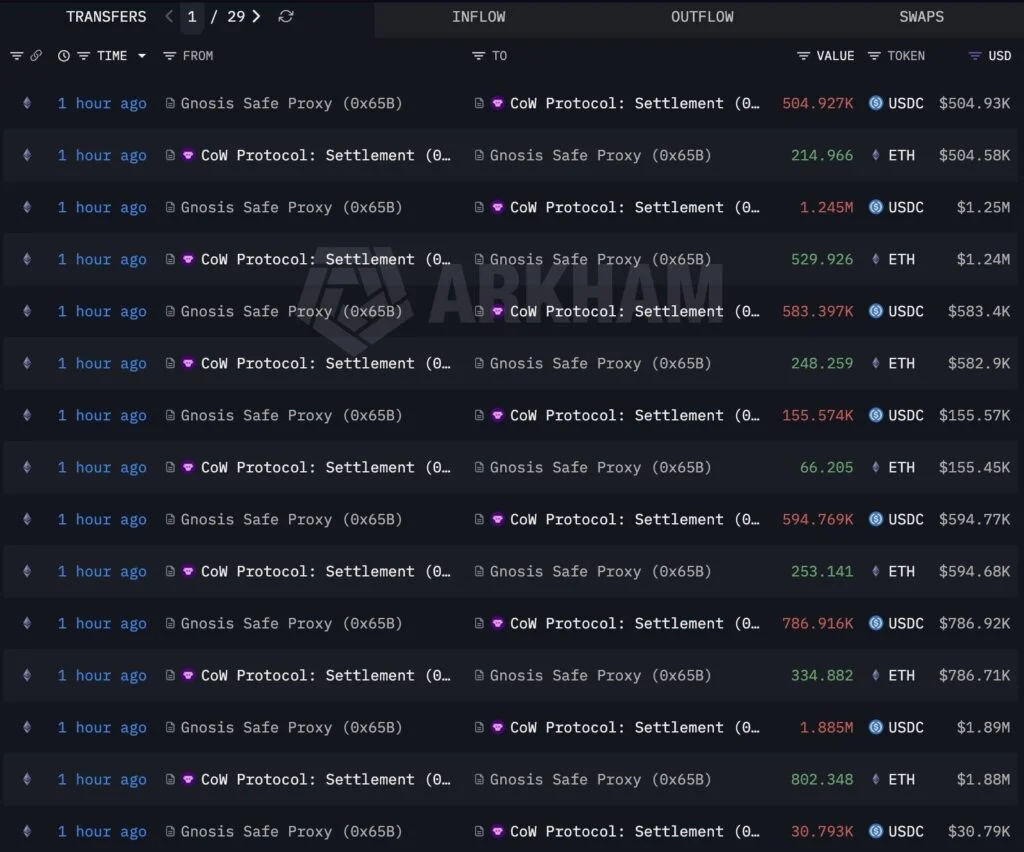
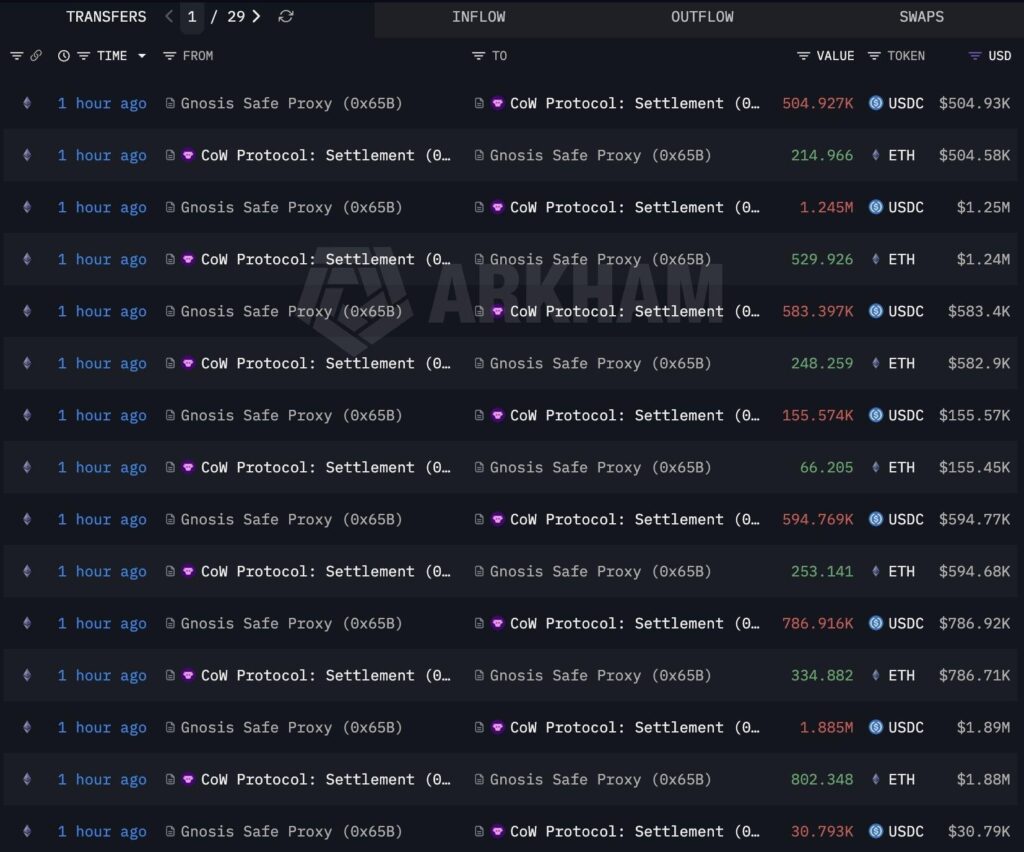
Recent on-chain data has brought to light a series of intricate movements by a significant Ethereum holder, colloquially known as a "whale." Analysis from the blockchain analytics firm Lookonchain revealed that a wallet identified by the code "0x65B4" executed a series of 10,829 transactions, offloading a substantial amount of Ethereum valued at approximately $24.91 million, based on an estimated ETH price of $2,300. This substantial divestment initially fueled speculation about a potential bearish sentiment from this large player.
However, the narrative took a swift turn as the same whale re-entered the market shortly after this sell-off. In a remarkably rapid repositioning, the wallet purchased back 7,448 ETH, amounting to roughly $17.5 million. This re-acquisition occurred at a slightly higher price point, with the whale paying approximately $2,350 per ETH. This quick turnaround has captured the attention of market observers and traders, who interpret such behavior not as a definitive exit, but rather as a strategic maneuver.
The swift buy-back following a significant sell-off indicates a sophisticated trading strategy. Instead of signaling a loss of faith in Ethereum’s long-term prospects, this pattern suggests the whale may have been capitalizing on short-term price fluctuations. The objective appears to be a tactical repositioning to optimize holdings or to profit from minor market swings, while critically, maintaining substantial exposure to Ethereum. This approach highlights the advanced strategies employed by large-scale investors in navigating the volatile cryptocurrency landscape, often aiming to extract value from intra-day or short-term price discrepancies.
Broader Whale Activity and Exchange Withdrawals
The actions of the "0x65B4" wallet are not isolated incidents within the broader Ethereum ecosystem. In a separate development, blockchain intelligence firm Arkham reported that three distinct whale addresses collectively moved a staggering 100,000 ETH. This significant transfer, valued at approximately $234 million, was moved out of BitGo wallets.
The withdrawal of such substantial ETH holdings from custodial services like BitGo, often associated with institutional and large-scale investors, is generally interpreted as a bullish signal for the cryptocurrency. When large holders choose to move their assets off centralized platforms and into self-custody or decentralized wallets, it often implies an intention to hold these assets for the long term. Such a move reduces the immediate selling pressure on exchanges, as these coins are less likely to be traded or sold quickly. This practice can contribute to market stability and foster a more robust demand for the underlying asset.
The identities behind these large-scale BitGo withdrawals have naturally become a subject of speculation within the crypto community. While official confirmation remains elusive, some market participants have floated the names of prominent investors, such as Tom Lee, as potential holders of these significant ETH reserves. Such discussions underscore the keen interest in understanding the motivations and strategies of major players in the Ethereum market.
High-Leverage Bets and Potential Liquidation Risks
Adding another layer of complexity to the recent whale activity, analysis from independent sources has revealed aggressive leveraged trading strategies being employed. Gordon, the founder of Crypto Crib, highlighted that a whale recently established a substantial long position in ETH, reportedly worth $90.9 million, utilizing a formidable 20x leverage.
This particular leveraged trade is notable not only for its size but also for its past performance. Reports suggest that this strategy has been profitable in recent months, yielding approximately $16.6 million for the whale. However, the utilization of high leverage inherently introduces significant risk. A leveraged position, especially one at 20x, is highly susceptible to liquidation if the underlying asset’s price moves against the trader’s position. In this specific instance, if Ethereum’s price were to fall to approximately $1,392, this substantial leveraged position could be entirely liquidated. While this liquidation price is currently well below the prevailing market rate, it represents a critical threshold to monitor, particularly in the event of a sudden and sharp market downturn.
The conviction behind such a high-stakes trade has been further emphasized by analyst CryptoJack. He pointed out that this $90 million leveraged position serves as a strong indicator of the confidence that large market participants have in Ethereum’s continued upward trajectory. The aggressive nature of the bet suggests a belief in sustained price appreciation. However, CryptoJack also sounded a note of caution, underscoring the inherent fragility of highly leveraged trades. He warned that an unexpected adverse price movement could trigger one of the most significant liquidation events witnessed in recent market history, potentially leading to cascading sell-offs.
Market Context and Current Trading Performance
At the time of reporting, Ethereum (ETH) was trading at approximately $2,318. This price point reflects a slight decline of 0.48% over the preceding 24-hour period. The current trading activity occurs within a broader market context where cryptocurrencies are navigating a period of adjustment and consolidation.
The resilience of ETH, despite the general market headwinds, can be attributed to several factors. The ongoing development and upgrades within the Ethereum network, particularly related to scalability and efficiency improvements following "The Merge" and subsequent enhancements, continue to bolster investor confidence. Furthermore, the increasing adoption of Ethereum for decentralized finance (DeFi) applications, non-fungible tokens (NFTs), and various Web3 initiatives provides a fundamental basis for its value proposition.

The actions of large whales, whether involving offloading, re-acquiring, or engaging in highly leveraged trades, serve as crucial indicators for market participants. While individual transactions can be complex and subject to various interpretations, the aggregate behavior of these significant holders often shapes market sentiment and provides insights into the perceived future direction of the asset. The recent movements highlight a dynamic interplay between tactical trading, long-term holding strategies, and high-risk, high-reward bets, all contributing to the ongoing evolution of the Ethereum market.
Implications for Market Stability and Future Outlook
The observed whale activities have several potential implications for the Ethereum market. The substantial withdrawal of ETH from BitGo wallets, suggesting a long-term holding strategy, could contribute to greater price stability by reducing the circulating supply available for immediate trading. This act of "hodling" by major players can create a more supportive environment for price appreciation.
Conversely, the aggressive leveraged position, while indicative of strong bullish conviction, also represents a significant point of vulnerability. A sharp price correction could trigger a cascade of liquidations, potentially amplifying downward price movements and creating a period of increased volatility. The magnitude of the potential liquidation underscores the interconnectedness of large trades and their capacity to influence market dynamics.
The ability of Ethereum to maintain its value and even post modest gains during a broader market downturn speaks to its growing maturity and fundamental strength. As the ecosystem continues to expand and attract developers and users, the underlying demand for ETH is likely to persist. However, the presence of highly leveraged positions and the strategic maneuvers of large whales will continue to be critical factors to monitor, as they can introduce short-term volatility and influence the overall trading landscape. The coming weeks and months will likely reveal whether the bullish bets placed by some whales will pay off or if market corrections will necessitate significant adjustments. The strategic decisions of these large holders will undoubtedly play a pivotal role in shaping Ethereum’s price trajectory and its position within the broader digital asset market.