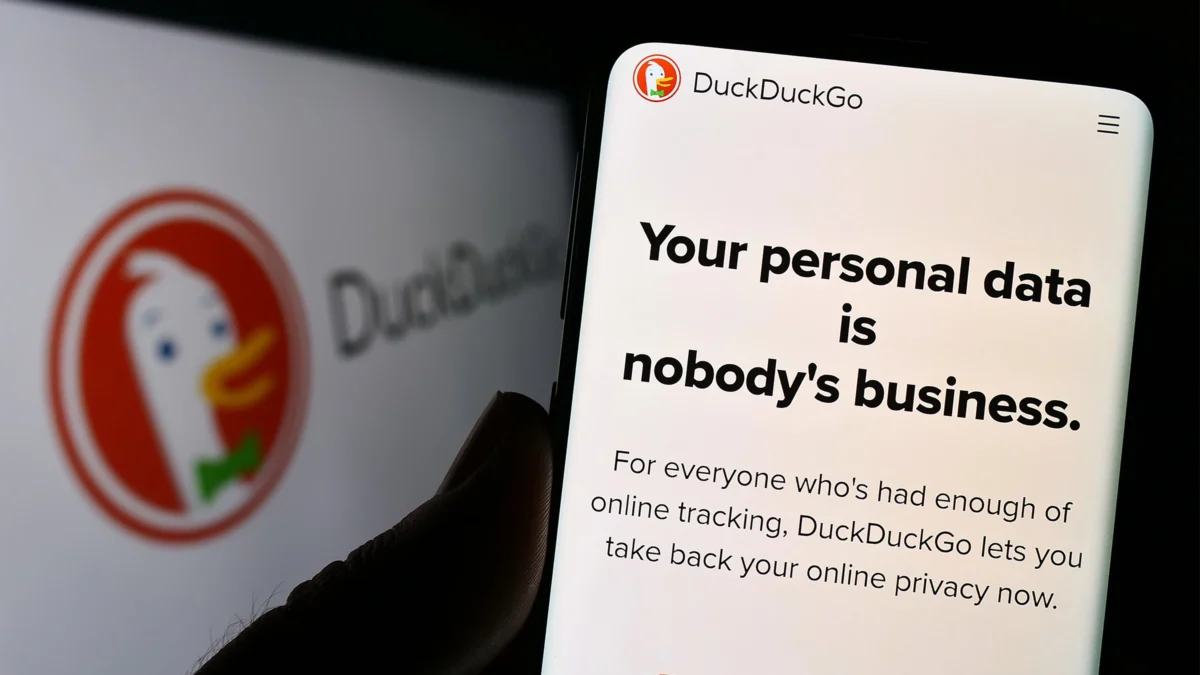
In a significant move that underscores a growing user desire for more control over their digital interactions, DuckDuckGo has launched its "No-AI Search" Chrome and Firefox extensions. This development follows a year-long effort by the privacy-focused company to build its own anonymous chatbot, Duck.ai, which allows private interactions with AI models from industry giants like OpenAI, Anthropic, and Meta. However, the concurrent release of a tool designed to effectively "banish" AI from the search experience highlights a strategic pivot towards offering users an explicit choice in an increasingly AI-saturated digital landscape. The timing of this launch is not coincidental, arriving just weeks after Google unveiled its ambitious, AI-centric overhaul of its search engine, a move that has met with a mixed, and often critical, reception from users.
The Genesis of "No-AI": Google’s Bold AI Leap and User Backlash
The impetus for DuckDuckGo’s "No-AI Search" extension can be traced directly to Google’s I/O 2026 conference, held earlier in May. During this event, the tech behemoth announced what it heralded as "the biggest upgrade to its Search box in over 25 years." This monumental transformation promised to fundamentally reshape the search experience, moving away from the traditional "ten blue links" model towards one dominated by AI agents, expansive text boxes, and conversational summaries. The vision presented by Google involved an AI-powered Search Generative Experience (SGE) that would answer complex queries directly, often before a user even finished typing, by synthesizing information and presenting it in comprehensive, AI-generated summaries.
While Google framed this as a leap forward in efficiency and user convenience, a significant segment of the internet community reacted with apprehension, and in many cases, outright disapproval. Concerns quickly emerged regarding the reliability of AI-generated summaries, the potential for "hallucinations" or factual inaccuracies, the de-emphasis of traditional website results, and the overall impact on content creators and the open web. Users expressed a feeling of being "force-fed" AI, with little to no option to opt out of the new experience. This sentiment of lacking control resonated deeply, creating a fertile ground for alternatives that prioritize user choice.
DuckDuckGo CEO Gabriel Weinberg was among the vocal critics of Google’s approach. "Google is force-feeding AI with no way to opt out. As a result, their results are getting worse, not better," Weinberg stated, as reported by Paul Therrot. He articulated DuckDuckGo’s counter-philosophy, asserting, "We want to be the place that puts users in charge and allows them to decide how much or how little AI they want." This statement not only critiques Google’s strategy but also clearly defines DuckDuckGo’s evolving mission in the age of AI.
DuckDuckGo’s Strategic Counter-Move and Immediate Impact
Launched just this past weekend, the DuckDuckGo No-AI Search extension immediately resonated with a segment of users disenchanted with AI’s pervasive integration into search. The extension functions by setting a user’s default search engine to noai.duckduckgo.com, a dedicated subdomain engineered to be entirely free of AI features. This means users get the same core search index, the familiar interface, and the reliable results DuckDuckGo is known for, but crucially, without any AI-generated image results, AI Assist summaries, or any other AI-driven features that the company itself had incorporated over the preceding two years. A Firefox version of the extension was released simultaneously, ensuring cross-browser compatibility for a broader audience.
The immediate uptake and positive reception were striking. DuckDuckGo’s official Twitter account, now X, announced on May 29, 2026, that "Since Google revealed its plans for an AI search overhaul, visits to our ‘No AI’ search page have tripled…and they’re still rising!" This public statement was accompanied by an image promoting the new No-AI extensions, directly linking the surge in interest to Google’s I/O announcements.
Indeed, the data corroborates this claim. Traffic to noai.duckduckgo.com experienced an unprecedented surge, tripling on May 28 alone, marking a new record for the subdomain. This elevated interest was not a fleeting spike; traffic has since averaged 84% above its normal baseline, indicating a sustained shift in user behavior. Beyond direct website visits, the broader impact on DuckDuckGo’s ecosystem was evident in app installs. In the U.S., DuckDuckGo app installs jumped an average of 18.1% week-over-week between May 20 and May 25. On a single day, iOS installs peaked at an impressive 69.9% increase, signaling a strong user migration towards the privacy-focused search engine in the wake of Google’s AI push. These figures, reported by TechCrunch, underscore the significant market demand for AI-optional or AI-free digital services.
For users who prefer a more granular control over AI features rather than an all-or-nothing approach, DuckDuckGo also offers its full-featured Privacy Essentials extension. This extension, which also blocks trackers, allows users to toggle individual AI features on or off according to their preferences, demonstrating DuckDuckGo’s commitment to user choice across its product suite.
The Nuance in DuckDuckGo’s AI Stance: A Strategic Paradox
Despite the strong anti-AI messaging associated with the "No-AI Search" extension, DuckDuckGo’s actual position on artificial intelligence is far more nuanced and, arguably, strategically paradoxical. The company has, in fact, invested significantly in AI development throughout 2024, culminating in the creation of Duck.ai. This anonymous chatbot provides users with private access to a range of leading AI models, including GPT-4o mini, Claude 4.5 Haiku, Meta’s Llama 4 Scout, and Mistral Small 3 24B, all available for free within daily usage limits. For more demanding users, premium plans unlock access to even more advanced models like Claude Sonnet 4.5, GPT-5.2, and, at the top tier, Claude Opus.
Furthermore, DuckDuckGo also developed DuckAssist, an AI-generated search summary tool designed to provide quick answers within its main search interface. This dual approach – offering both advanced AI tools and a dedicated AI-free search option – encapsulates DuckDuckGo’s core philosophy: "AI should be optional." This statement, prominently featured on the extension’s Chrome listing, serves not only as a product philosophy but also as an implicit acknowledgment that the company itself has integrated enough AI into its offerings to necessitate an explicit opt-out mechanism for users who prefer to avoid it. This positions DuckDuckGo not as anti-AI, but as pro-choice when it comes to AI integration in user-facing products.
A Broader Trend: Brave and Mozilla Join the Fray
DuckDuckGo is not alone in recognizing and capitalizing on the burgeoning "anti-AI" or "AI-optional" sentiment among internet users. Other prominent browser developers and tech companies are also introducing products and features that cater to this growing demographic, albeit through different models.
Brave, known for its privacy-centric browser and built-in ad blocker, launched "Brave Origin" in April. This offering represents a distinct approach: a premium, one-time purchase of $59.99 that strips its browser down to the absolute essentials. Brave Origin users get core functionalities like ad blocking and Brave Shields, but critically, it removes all AI-powered features, crypto integrations, and other add-ons that Brave has developed. This includes the Leo AI assistant, the crypto wallet, Brave Rewards, the VPN, and any telemetry. Essentially, Brave Origin is a minimalist version of the browser, designed for users who want a lean, unadorned, and AI-free browsing experience.
Brave CTO Brian Bondy openly acknowledged the inherent tension in this strategy. Brave’s revenue streams are diverse, generated from features like the Leo AI, Brave Wallet, Brave Talk, its VPN service, and various crypto partnerships. Origin’s removal of all these features necessitates the $60 fee to compensate for the lost revenue potential. Brave Origin is available across major platforms including Windows, Mac, Android, and iOS. In a nod to its open-source roots, the company offers Brave Origin completely free on Linux, recognizing that the open-source community often possesses the technical acumen to configure their systems to achieve similar minimalist setups independently. This move by Brave further solidifies the notion that a segment of users is willing to pay for the absence of certain features, particularly AI.
Mozilla, the organization behind the Firefox browser, is taking a more subtle, yet equally significant, route. Its upcoming "Project Nova," slated to be Firefox’s first major redesign since 2021, will include a crucial feature: a single Settings toggle that allows users to disable every current and future AI feature within the browser at once. This elegant solution provides comprehensive control without requiring a separate extension or a paid subscription.
While Mozilla is embracing the "off by default" approach for AI features, it is not abandoning AI altogether. Its free built-in VPN and summarization tools will remain available for users who wish to utilize them. However, by making AI features opt-in rather than opt-out, Mozilla is strategically framing user choice and control as a competitive advantage. This approach aligns with Firefox’s long-standing commitment to empowering users and maintaining an open, customizable web experience. Project Nova is expected to roll out later this year, further diversifying the options available to users seeking AI-optional browsing.
The Emerging "AI-Optional" Market and Its Implications
What DuckDuckGo, Brave, and Mozilla are collectively offering, albeit in different packaging and with varied business models, is fundamentally the same product: the right to use software that does not inherently assume or force AI integration upon the user. This emerging market segment, driven by concerns over privacy, data usage, computational overhead, potential biases, and a general preference for simplicity and human control, represents a significant counter-narrative to the prevailing industry trend of aggressive AI adoption.
The implications of this movement are far-reaching:
- Market Segmentation: The digital services market is becoming increasingly segmented. Beyond traditional divisions like operating systems or device types, a new fault line is forming around AI integration. Companies that offer clear AI-free or AI-optional pathways are carving out a distinct niche, appealing to users who feel alienated by the "AI-first" strategies of tech giants.
- User Autonomy and Control: This trend underscores a broader societal demand for greater user autonomy in the digital realm. As AI becomes more sophisticated and ubiquitous, users are seeking mechanisms to maintain agency over their data, their experiences, and the very tools they use to navigate the internet.
- Competitive Differentiation: For companies like DuckDuckGo, Brave, and Mozilla, offering AI-free options serves as a powerful differentiator. It allows them to stand out in a crowded market dominated by companies that are heavily invested in AI. This strategy leverages public apprehension about AI, turning a potential weakness (not being at the absolute forefront of AI integration) into a strength (being at the forefront of user choice).
- Business Model Innovation: Brave Origin demonstrates how companies can monetize the removal of features, suggesting that value can be derived not just from adding functionality, but also from meticulously curating a minimalist, user-controlled experience.
- Ethical Considerations: The demand for AI-free options indirectly highlights ongoing ethical concerns surrounding AI, such as data privacy, algorithmic bias, the potential for misinformation, and the "black box" nature of complex AI models. Users opting out of AI may be doing so out of a desire to mitigate these perceived risks.
- Future of Digital Services: This movement challenges the assumption that "more AI" inherently equates to "better service." It suggests that for a significant portion of the user base, simplicity, privacy, and control over their digital environment are paramount, potentially even over the perceived conveniences offered by advanced AI.
Conclusion: A Fork in the Digital Road
The rapid success of DuckDuckGo’s "No-AI Search" extension, coupled with similar initiatives from Brave and Mozilla, signals a pivotal moment in the evolution of digital services. While the broader tech industry continues its fervent embrace of artificial intelligence, a vocal and growing segment of users is actively seeking alternatives that prioritize choice, privacy, and an AI-free experience.
This emerging trend creates a distinct fork in the digital road. On one path, tech giants like Google push forward with increasingly sophisticated and deeply integrated AI, aiming for a seamless, predictive, and intelligent user experience. On the other path, companies like DuckDuckGo, Brave, and Mozilla are championing user agency, offering tools that allow individuals to consciously opt out of or selectively engage with AI. The immediate market response suggests that the demand for this "AI-optional" path is not merely a niche preference but a significant market force that will continue to shape the development and adoption of digital technologies in the years to come. The future of the internet may not be a monolithic AI-driven landscape, but rather a diverse ecosystem where users can truly decide how much, or how little, artificial intelligence they wish to invite into their daily digital lives.