


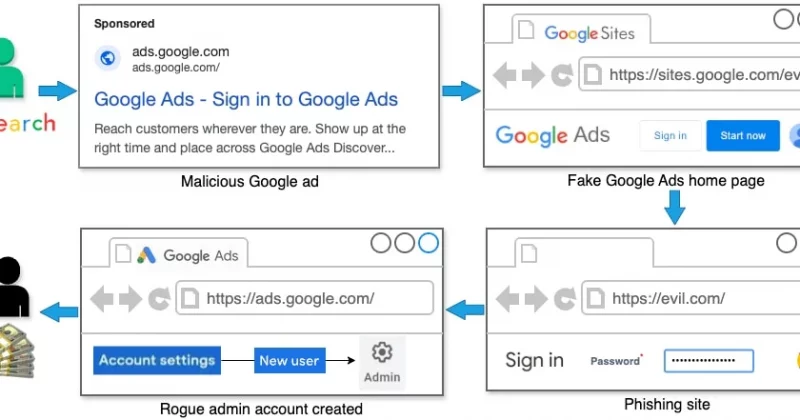
An experienced cryptocurrency trader, known online as @ika_xbt, has fallen victim to a sophisticated phishing campaign, losing their entire digital asset portfolio, valued at over $400,000 USD, after clicking on a seemingly legitimate sponsored Google advertisement for the decentralized exchange Uniswap. The deceptive ad, which mimicked the official Uniswap website with uncanny accuracy, led the trader directly into a trap designed to drain their connected wallet.
The sophisticated phishing operation, which gained prominence on May 26th, leveraged Google Search ads to promote cloned versions of the Uniswap interface. This tactic preyed on user trust in search engine results, positioning the fraudulent link above the genuine organic listing for the popular decentralized exchange. Law enforcement and blockchain security analysts have since identified two cryptocurrency wallets believed to be controlled by the perpetrators, which collectively hold approximately 146 Ether (ETH). At the time of their discovery, this amount represented roughly $306,000 USD, indicating that the total stolen funds surpassed the $400,000 mark.
The Anatomy of the Attack: Exploiting Trust in Search
The modus operandi of this particular scam is alarmingly straightforward yet highly effective. Attackers meticulously acquire sponsored ad placements on Google, specifically targeting the highly searched keyword "Uniswap." When users, seeking to access the decentralized exchange, perform a search, the fraudulent advertisement appears prominently at the top of the search results page. The critical element of the scam lies in the near-perfect replication of the Uniswap website’s visual design and user interface. This meticulous cloning ensures that unsuspecting users are unlikely to detect any discrepancies.
Once a victim lands on the fake website, the scam progresses as they are prompted to connect their cryptocurrency wallet. This is a standard procedure for interacting with decentralized applications like Uniswap. However, on the malicious site, this connection serves a sinister purpose. The subsequent step involves the user approving a transaction, a crucial action that, in this context, grants the attackers’ smart contract permission to access and drain the connected wallet’s assets.
The immutable nature of blockchain transactions renders these thefts irreversible. Unlike traditional financial systems, which offer recourse through fraud protection, chargebacks, and customer service, the decentralized ledger offers no such safety net. Once a transaction is confirmed on the blockchain, it is permanent. There is no "undo" button, no central authority to appeal to. In the case of @ika_xbt, a single transaction approval was sufficient to liquidate their entire portfolio, highlighting the devastating speed and finality of such exploits.
It is crucial to understand that this attack did not exploit any vulnerabilities within Uniswap’s underlying smart contracts or its core infrastructure. The Uniswap protocol itself remained secure and uncompromised. Instead, the scam masterfully exploited a more fundamental weakness: human trust in the perceived legitimacy of search engine results. Users, conditioned to trust the top listings on platforms like Google, inadvertently provided the attackers with the keys to their digital kingdom.
A Recurring Nightmare: The Escalation of Google Search Phishing
The incident involving @ika_xbt is far from an isolated event. Security experts have observed a disturbing and consistent pattern of phishing campaigns utilizing Google Search ads to target cryptocurrency users and protocols. The Security Alliance, known as SEAL, has documented a significant surge in such activities since March 2026, indicating a growing trend. The playbook remains remarkably consistent: attackers purchase prominent ad placements, meticulously clone the interface of a trusted decentralized finance (DeFi) platform, and patiently await unsuspecting users to connect their wallets.
The financial consequences of these attacks have been substantial and have been escalating. As recently as February 2026, similar phishing campaigns facilitated by Google sponsored ads resulted in six-figure losses for investors. A particularly egregious incident in July 2025 saw a similar scheme lead to the theft of approximately $1.2 million USD. These recurring losses underscore the persistent threat posed by this attack vector.
Prominent figures within the cryptocurrency space have repeatedly voiced their concerns and frustrations. Hayden Adams, the founder of Uniswap, has been a vocal critic of search platforms, including Google, for their perceived inaction in combating fraudulent advertisements. His public condemnations, often made following similar incidents, echo a broader sentiment within the industry regarding the responsibility of these tech giants to safeguard their users from malicious actors operating on their platforms. The repeated nature of these attacks suggests that current deterrents or enforcement mechanisms are proving insufficient.
Mitigating the Risks: Strategies for Investor Protection
In the face of such sophisticated and pervasive threats, investors must adopt proactive and robust security measures to protect their digital assets. The most effective and simplest defense against this specific type of phishing attack is to bookmark the official URLs of any DeFi protocols used regularly. This practice, which costs nothing and takes mere seconds, eliminates the need to rely on search engine results, thereby bypassing the primary vector of these scams. By navigating directly to the trusted website, users can significantly reduce their exposure to fraudulent advertisements.
For users employing hardware wallets, there exists a partial layer of defense. Many hardware wallets require explicit, on-device confirmation of transaction details before execution. This critical step can serve as a final checkpoint, allowing users to scrutinize the specifics of a proposed transaction before it is irrevocably committed. However, it is paramount to emphasize that this measure is not foolproof. The effectiveness of hardware wallets hinges on the user’s diligence in carefully reviewing the information presented on the device. A hasty or inattentive confirmation can still lead to a malicious approval, even with a hardware wallet.
The inherent design of blockchain technology, which prioritizes decentralization and immutability, presents a double-edged sword. While these characteristics are foundational to the appeal of cryptocurrencies and DeFi, they also mean that transactions, once confirmed, are irreversible. This stands in stark contrast to traditional financial systems, which have evolved to incorporate safeguards like fraud protection, chargebacks, and insurance mechanisms precisely to account for human error and malicious activity. The absence of these traditional safety nets in DeFi amplifies the impact of phishing attacks and underscores the critical importance of user education and robust personal security practices.
The ongoing prevalence of these phishing scams, facilitated by prominent advertising platforms, necessitates a multi-faceted approach to security. This includes enhanced vigilance from individual investors, increased responsibility from search engines and advertising platforms to police their networks, and continued innovation in user-friendly security solutions within the DeFi ecosystem. Until these measures are more effectively implemented, the risk of falling victim to such attacks remains a significant concern for all participants in the digital asset space.
Broader Implications and Future Outlook
The consistent success of these Google Ads-driven phishing campaigns has far-reaching implications for the broader adoption and perception of decentralized finance. Each high-profile loss erodes user confidence and amplifies concerns about the security and maturity of the crypto space. For new entrants to the market, encountering such sophisticated scams can be a discouraging and potentially financially ruinous introduction to digital assets.
The reliance of these scams on manipulating search engine results also raises questions about the responsibility of major technology platforms. While Google’s business model relies heavily on advertising, the unchecked proliferation of fraudulent ads directly targeting vulnerable users, particularly in a sector as nascent and volatile as cryptocurrency, presents a significant ethical and societal challenge. The continued pressure from industry leaders and regulators is likely to mount, potentially leading to stricter content moderation policies and more robust verification processes for advertisers.
Furthermore, the incident serves as a stark reminder that the "wild west" era of cryptocurrency, while evolving, still presents unique risks. The allure of high returns and the promise of financial freedom in DeFi must be balanced with a sober understanding of the inherent security challenges. Education remains a critical component of defense. Investors need to be constantly aware of emerging threats and the evolving tactics of malicious actors.
Looking ahead, it is probable that attackers will continue to refine their methods, seeking new vulnerabilities and exploiting human psychology. The sophistication of these phishing sites, coupled with the broad reach of search engine advertising, suggests that these threats will persist. Proactive security measures, continuous learning, and a healthy dose of skepticism will be indispensable for navigating the complex and often perilous landscape of decentralized finance. The industry, in turn, must continue to advocate for greater platform accountability and develop more intuitive and secure user experiences that minimize the potential for error and exploitation.














