


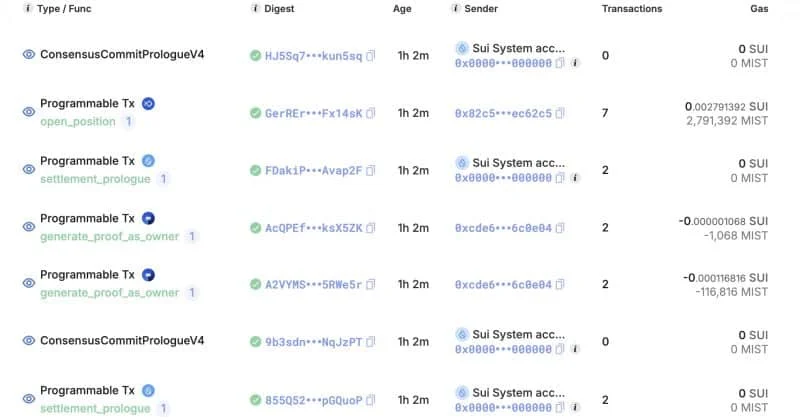
The Sui blockchain’s mainnet has resumed normal operations after a critical bug in its latest software release, version 1.72, caused a network-wide standstill for nearly six hours. The disruption, which began on May 28th and concluded on May 29th with the restoration of normal checkpoint production, stemmed from a fundamental flaw in the network’s gas charging mechanism. This incident, following a similar multi-hour outage in January, is raising questions about the robustness of Sui’s infrastructure and its ability to support the growing decentralized finance (DeFi) ecosystem built upon it.
The core of the issue, as identified by the Sui development team, was a bug within the gas charging logic. In simpler terms, the code responsible for calculating transaction fees malfunctioned, leading to an inability to process new blocks and finalize transactions. This effectively brought the entire network to a halt, freezing all activity on the Sui blockchain for an extended period of approximately 5 hours and 55 minutes.
A Detailed Chronology of the Outage and Recovery
The incident unfolded on May 28th when validators, the entities responsible for maintaining the Sui network’s integrity and processing transactions, began experiencing issues after upgrading to the 1.72 software release. These validators encountered the gas logic bug, which immediately impacted their ability to produce new checkpoints – the snapshots of the blockchain’s state that are crucial for its progression. As a result, no new transactions could be finalized, creating a de facto frozen state for the network.
The recovery process was far from instantaneous. Sui’s consensus mechanism, a sophisticated system designed to ensure agreement among validators, mandated a specific threshold for resuming operations. For the chain to restart and begin producing checkpoints once more, validators holding more than two-thirds of all staked tokens needed to successfully upgrade to a patched version of the software. This coordinated upgrade effort, requiring widespread validator participation and agreement, underscored the distributed nature of blockchain networks and the challenges associated with implementing network-wide fixes.
The Sui Foundation, the organization overseeing the development and promotion of the Sui blockchain, acknowledged the incident and communicated updates through its official channels. While specific real-time statements from individual validators are not publicly available, the coordinated nature of the fix implies continuous communication and collaboration among the network’s decentralized operators. The swiftness with which a patched version was developed and deployed, followed by the necessary validator consensus, speaks to the technical capabilities of the Sui team and its validator community.
Network Resilience and Safety Guarantees Tested
Despite the significant downtime, Sui’s fundamental safety guarantees appear to have held firm. Crucially, the network’s design prevented any loss of user funds during the disruption. This is a critical aspect for any blockchain aiming to host financial applications, as the immutability and security of assets are paramount. Furthermore, the network’s architecture prevented data inconsistencies from accumulating while the chain was stalled, ensuring that no "orphan" blocks or corrupt data emerged during the outage.
However, the impact on DeFi protocols built on Sui was immediate and substantial. During the roughly six-hour freeze, users were unable to interact with decentralized applications. This meant that open positions in decentralized exchanges (DEXs) could not be adjusted, new trades could not be executed, and critically, automated liquidation mechanisms, which are vital for maintaining the stability of lending protocols, were rendered inoperable. This highlights the direct, real-world consequences of blockchain network downtime on the financial activities it supports.
A Recurring Pattern: Outages and Validator Coordination
This latest incident is not an isolated event for the Sui network. This marks the second significant multi-hour outage experienced by Sui in 2024. On January 14th, the network encountered a similar prolonged stall, lasting approximately six hours. That earlier disruption was attributed to a consensus commit bug, a different but equally critical component of the blockchain’s operational integrity.
The occurrence of two such substantial outages within a span of roughly five months has begun to paint a concerning picture. Both incidents share a similar profile: a bug introduced through a software update, followed by a complex and time-consuming process of coordinating validator upgrades across the global network to implement a fix. This emerging pattern raises questions about the rigor of Sui’s testing and deployment processes for new software releases.
Market Reaction and Investor Sentiment
The cryptocurrency market is highly sensitive to network stability and operational integrity. The Sui token (SUI) reflected investor sentiment in real-time during the outage. Data indicates that the price of SUI experienced a decline, dropping to approximately $0.89. This represented a price correction in the range of 6-8% from its pre-outage levels. Following the successful restoration of normal operations, the SUI token saw a partial recovery, suggesting that the market’s reaction was directly correlated with the perceived risk introduced by the network’s downtime.
Implications for Sui’s Ecosystem and Future Development
Sui has ambitious goals, positioning itself as a high-throughput Layer 1 blockchain designed to support demanding DeFi applications and attract institutional capital. The network has seen significant growth in its ecosystem since its launch, with the total value locked (TVL) across its DeFi protocols reaching hundreds of millions of dollars. This latest outage, however, could cast a shadow over these aspirations.
For investors and developers alike, the repeated instances of extended downtime present a tangible risk. The ability of a blockchain to remain operational and secure is a fundamental prerequisite for building trust and facilitating large-scale financial applications. While the Sui team has demonstrated its ability to fix critical bugs and restore the network, the frequency of these disruptions could deter potential users and investors who prioritize stability and reliability.
The market’s reaction, a 6-8% price drop followed by a partial recovery, provides a potential playbook for future occurrences. If a third incident of similar magnitude were to transpire, it is plausible that the market would exhibit a similar pattern of sell-off and subsequent partial recovery. This suggests that while the community might be forgiving to a degree, sustained instability could lead to a more significant and lasting impact on the SUI token’s valuation and investor confidence.
Moving Forward: Addressing the Root Causes
The Sui team faces the critical task of not only addressing the immediate technical issues but also of bolstering confidence in the network’s long-term stability. This may involve a comprehensive review of their software development lifecycle, including more rigorous pre-release testing, enhanced auditing processes, and potentially more sophisticated mechanisms for canary releases or staged rollouts of new software versions.
Furthermore, the coordination of validator upgrades, while a testament to the decentralized nature of the network, also presents a bottleneck during crises. Exploring ways to streamline this process, perhaps through clearer communication protocols, automated upgrade mechanisms with robust fallback options, or even incentivizing faster adoption of critical patches, could be beneficial.
The Sui blockchain is still relatively young in the competitive Layer 1 landscape. Its ability to overcome these early stability challenges will be a key determinant of its success in attracting and retaining developers, users, and capital. The lessons learned from these outages must be translated into concrete improvements to ensure that Sui can fulfill its promise of being a robust and reliable platform for the future of decentralized finance. The network’s resilience in the face of these challenges, and its commitment to transparency and swift resolution, will be closely watched by the broader cryptocurrency community.
Disclosure: This article was edited by Editorial Team. For more information on how we create and review content, see our Editorial Policy.














