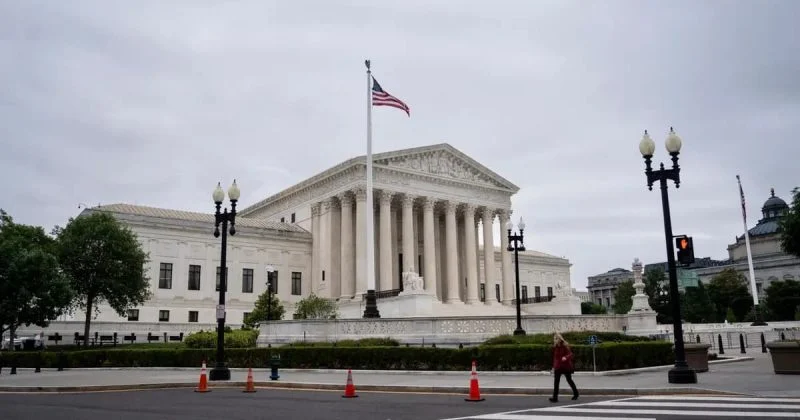
In a decision that significantly bolsters the regulatory reach of the U.S. Securities and Exchange Commission (SEC), the Supreme Court of the United States ruled unanimously on June 4 that the federal agency possesses the authority to compel securities law violators to surrender their illicit gains without a prerequisite showing that specific investors suffered quantifiable financial losses. The ruling in the case of Sripetch v. SEC represents a definitive victory for the commission, streamlining its ability to strip bad actors of their profits and resolving a long-standing point of contention across various federal appellate courts. Justice Neil Gorsuch, writing for the unanimous Court, clarified that the statutory framework governing SEC enforcement does not require the agency to identify specific victims or calculate individual damages before seeking the "equitable remedy" of disgorgement.
The high court’s decision effectively closes a perceived loophole that defense attorneys had increasingly utilized to shield clients from heavy financial judgments, particularly in cases involving complex financial instruments or market manipulation where direct harm is difficult to trace to a single individual. By affirming that the focus of disgorgement is the removal of "ill-gotten gains" rather than the compensation of specific losses, the Supreme Court has provided the SEC with a clear path to continue its aggressive pursuit of financial misconduct across traditional and emerging markets.
The Case of Sripetch v. SEC: From Penny Stocks to the High Court
The legal battle originated with Ongkaruck Sripetch, an individual implicated in a sophisticated "pump-and-dump" scheme involving various microcap or "penny" stocks. The SEC alleged that Sripetch and his associates engaged in deceptive practices to inflate the prices of these securities before selling their own holdings at a significant profit, leaving the broader market to deal with the subsequent price collapse. Following a successful enforcement action, the SEC obtained a judgment from the U.S. District Court for the Southern District of California, which was later upheld by the Ninth Circuit Court of Appeals.
The lower courts ordered Sripetch to disgorge approximately $2 million in illicit profits, representing the gains he accrued through the fraudulent scheme. Sripetch challenged this order on appeal, arguing that the SEC had failed to demonstrate that any identifiable investor had actually lost money as a direct result of his specific trades. His defense rested on the premise that if the government cannot prove a victim was harmed, it should not be entitled to seize the proceeds of the activity.
The Supreme Court, however, found this argument inconsistent with the primary purpose of disgorgement in a regulatory context. Justice Gorsuch’s opinion emphasized that the objective of the SEC’s enforcement power is to ensure that "wrongdoers do not profit from their lawbreaking." The Court reasoned that requiring a "victim-by-victim" accounting of losses would not only be administratively impossible in many modern market scenarios but would also undermine the deterrent effect of securities laws. If a fraudster could keep their profits simply because they distributed the harm so widely that no single person could prove a specific loss, the integrity of the financial system would be compromised.
Resolving a Critical Circuit Split
The Sripetch ruling is particularly significant because it resolves a deep division among U.S. appellate courts that had created a "postcode lottery" for securities defendants. For years, the Ninth Circuit (covering much of the West Coast) and the First Circuit (covering parts of New England) had maintained a standard favorable to the SEC, allowing disgorgement without proof of loss.
Conversely, the Second Circuit Court of Appeals, which holds jurisdiction over New York and the heart of the American financial industry, had established a much higher bar. In the 2023 case SEC v. Govil, the Second Circuit ruled that the SEC could not seek disgorgement unless it could prove that "pecuniary harm" was suffered by investors. This decision was seen as a major blow to the SEC’s enforcement efforts in Manhattan, as it forced the agency to engage in exhaustive and often futile searches for specific victims in cases involving technical violations or market-wide manipulations.
With the Supreme Court’s unanimous decision, the Govil precedent is effectively overturned. The ruling ensures that a uniform standard applies nationwide, preventing defendants in New York from enjoying legal protections that were unavailable to those in California or Massachusetts. This uniformity provides the SEC with greater predictability when filing charges and calculating potential settlements.
Historical Context: The Evolution of Disgorgement
The concept of disgorgement has undergone significant legal refinement over the last decade. Historically, the SEC sought disgorgement as an "equitable remedy" derived from the inherent powers of the courts, rather than a specific power granted by statute. This ambiguity led to several Supreme Court challenges.
In the 2017 case Kokesh v. SEC, the Supreme Court ruled that disgorgement should be treated as a "penalty" for the purposes of the statute of limitations, meaning the SEC had to bring such claims within five years. Later, in the 2020 case Liu v. SEC, the Court narrowed the scope of disgorgement, ruling that the funds must generally be returned to victims and that the amount sought must be limited to the "net profits" of the wrongdoing, deducting legitimate business expenses.
Following the Liu decision, Congress stepped in to provide explicit statutory authority for the SEC. As part of the National Defense Authorization Act for Fiscal Year 2021 (NDAA), lawmakers amended the Securities Exchange Act of 1934 to formally authorize the SEC to seek disgorgement in federal court. The Sripetch ruling confirms that this statutory grant of power does not carry an implicit requirement to prove investor harm, thus finalizing a decade-long evolution of the agency’s primary financial enforcement tool.
Financial Impact: Record-Breaking Collections
The financial stakes of this ruling are immense. According to the SEC’s Division of Enforcement, the agency collected a record $6.185 billion in financial remedies during fiscal year 2024. This total includes $4.049 billion in disgorgement and $2.136 billion in civil penalties.
A significant portion of the 2024 total came from high-profile settlements, including the massive $4.5 billion settlement with Terraform Labs and its founder Do Kwon following the collapse of the TerraUSD stablecoin. However, the SEC’s ability to maintain these levels of recovery was viewed as being at risk if the "proof of harm" standard from the Second Circuit had been adopted nationwide.
The SEC’s enforcement data reveals a clear trend:
- FY 2022: $4.19 billion in total remedies.
- FY 2023: $4.95 billion in total remedies.
- FY 2024: $6.18 billion in total remedies.
With the Supreme Court’s latest affirmation, the agency is now unencumbered by the "harm" requirement, suggesting that future collections could remain at these historic highs or even increase as the agency tackles larger, more complex financial structures.
Implications for the Crypto and Digital Asset Sector
The Sripetch decision is expected to have an immediate and profound impact on the cryptocurrency industry. For several years, the SEC has been engaged in a broad crackdown on what it deems to be unregistered securities offerings by crypto projects. A common defense in these cases has been that the token purchasers were not "harmed" because the tokens increased in value or because the investors were sophisticated actors who understood the risks.
Under the Sripetch standard, such defenses are now largely irrelevant to the question of disgorgement. If a crypto company is found to have conducted an illegal, unregistered offering, the SEC can seek to claw back the total profits of that offering regardless of whether the investors made or lost money. This significantly raises the "exit cost" for crypto startups that have operated outside the SEC’s regulatory perimeter.
Furthermore, the ruling simplifies the SEC’s litigation strategy in Decentralized Finance (DeFi) and Automated Market Maker (AMM) cases. In these decentralized environments, identifying specific "victims" is often a technical impossibility due to the pseudonymous nature of blockchain transactions. By removing the need to prove individual loss, the Supreme Court has cleared a major hurdle for the SEC to pursue enforcement actions against decentralized protocols and their developers.
Reactions and Broader Implications
Legal experts and market participants have noted the unusual bipartisan consensus surrounding the case. Notably, the Trump administration’s Department of Justice had previously supported the SEC’s broad disgorgement powers, and the Biden administration continued that defense. The unanimous nature of the ruling—spanning the Court’s ideological spectrum—signals a clear judicial consensus that the SEC must be able to function as an effective deterrent against market fraud.
"The Court has sent a clear message that the focus of enforcement is the integrity of the market, not just the plight of individual investors," said a former SEC enforcement attorney. "This decision prevents the ‘victimless crime’ defense from becoming a standard shield in white-collar litigation."
However, some critics within the defense bar argue that the ruling could lead to "over-enforcement." They suggest that by allowing the SEC to seize profits without proving harm, the agency might be incentivized to pursue technical violations where the public interest in recovery is low, simply to pad its annual enforcement statistics.
Timeline of the Sripetch v. SEC Decision
- September 2017: The SEC files a complaint against Ongkaruck Sripetch and others for a penny-stock manipulation scheme.
- 2020: The Supreme Court decides Liu v. SEC, establishing that disgorgement is an equitable remedy limited to net profits.
- January 2021: Congress passes the NDAA, codifying the SEC’s authority to seek disgorgement.
- 2022: The Ninth Circuit Court of Appeals affirms the $2 million disgorgement order against Sripetch.
- October 2023: The Second Circuit decides SEC v. Govil, creating a circuit split by requiring proof of "pecuniary harm."
- April 20, 2024: The Supreme Court hears oral arguments in Sripetch v. SEC.
- June 4, 2024: The Supreme Court issues its unanimous 9-0 ruling in favor of the SEC.
Conclusion: A New Era of Enforcement
The Supreme Court’s decision in Sripetch v. SEC marks the beginning of a new era in securities enforcement. By untethering the recovery of illegal profits from the necessity of proving investor loss, the Court has reinforced the SEC’s role as a market policeman rather than a mere claims adjuster for private losses.
For the broader financial industry, the ruling serves as a stark reminder of the high stakes involved in regulatory compliance. The SEC now possesses a streamlined, legally unassailable mechanism to ensure that the proceeds of financial misconduct are surrendered to the state. As the agency continues to navigate the complexities of the digital age, this unanimous backing from the nation’s highest court provides it with the stability and authority necessary to pursue its mandate of protecting investors and maintaining fair, orderly, and efficient markets.