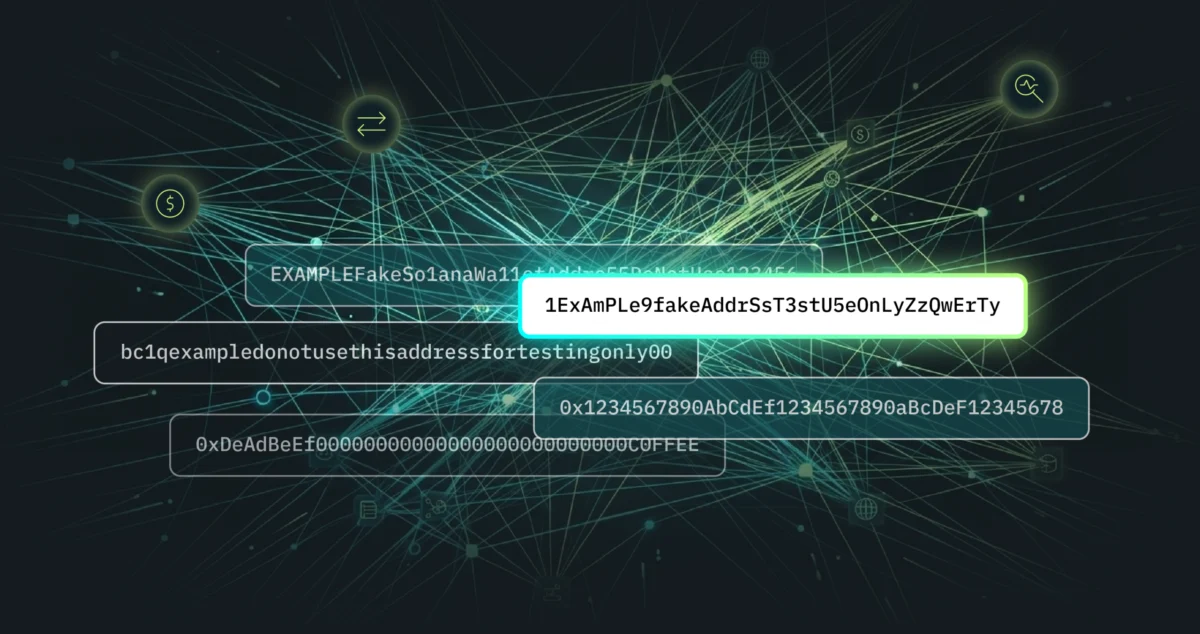
The inherent transparency of blockchain technology has long been touted as its greatest asset, yet for the global financial sector, this transparency remains a double-edged sword. While every transaction on a public ledger is recorded and visible to anyone with a block explorer, the raw data—consisting of alphanumeric strings and cryptographic hashes—offers little in the way of actionable intelligence. Without a layer of sophisticated analysis to decode these strings, a transaction involving a sanctioned entity or a money-laundering syndicate looks identical to a routine transfer between legitimate retail users. As the digital asset ecosystem matures and regulatory scrutiny intensifies, the gap between raw data and verifiable intelligence has become the primary battleground for blockchain analytics firms.
At the center of this effort is the concept of "ground truth" data, a foundational element that separates speculative mapping from high-confidence forensics. For organizations like Elliptic, which provides intelligence to over 700 of the world’s largest financial institutions and cryptoasset businesses, the challenge is not merely to collect data, but to ensure its absolute accuracy across billions of labeled addresses. In an era where a single misidentified wallet can lead to catastrophic compliance failures or the freezing of legitimate assets, the methodology behind data labeling has become a cornerstone of the modern financial infrastructure.
The Anatomy of Digital Intelligence and the Labeling Gap
The fundamental problem with public blockchains is the "intelligence gap." A standard block explorer provides a window into the movement of funds but fails to provide the context of ownership or intent. For example, an explorer can show that Address A sent 500 BTC to Address B, but it cannot independently verify that Address A is controlled by a state-sponsored hacking group like the Lazarus Group, or that Address B is a "hop" in a sophisticated laundering route designed to obfuscate the origin of funds.
Closing this gap requires a massive, curated dataset of labels. A label is essentially a digital tag that links a cryptographic address to a real-world entity, such as an exchange, a darknet market, a sanctioned individual, or a decentralized finance (DeFi) protocol. However, the sheer volume of transactions—spanning across more than 66 different blockchains—makes manual labeling of every address an impossibility. This has led to a bifurcated approach in the industry: human-led "ground truth" investigation and machine-led scaling.
The Foundation of Ground Truth: The Human Element
The integrity of any blockchain analytics platform begins with its "ground truth" dataset. These are near-certain facts regarding direct ownership and control, derived from the meticulous work of experienced analysts and researchers. Unlike automated scrapers, these investigators utilize a variety of techniques to turn raw activity into intelligence.
Ground truth is established through several investigative avenues:
- Direct Interaction: Analysts perform test transactions with known services to identify deposit and withdrawal addresses.
- Open-Source Intelligence (OSINT): Scouring the dark web, forums, and social media for leaked addresses associated with criminal activity or service providers.
- Collaborative Channels: Integrating intelligence from leading threat providers and shared-intelligence networks within the cybersecurity community.
By building a core of over a million high-confidence labels, researchers create the "seeds" from which larger datasets grow. These labels are treated as the ultimate benchmark; they are the gold standard used to train the machine learning models that will eventually handle the billions of other addresses in the ecosystem.
A Chronology of Blockchain Forensics and Regulatory Evolution
The necessity for such deep intelligence has evolved in tandem with the regulatory landscape. The timeline of blockchain forensics mirrors the shift from an unregulated "Wild West" to a highly monitored financial sector.
- 2009–2012: The Era of Anonymity. In the early days of Bitcoin, the prevailing belief was that the technology offered total anonymity. Forensics were rudimentary, and law enforcement largely ignored digital assets.
- 2013: The Silk Road Takedown. The seizure of the Silk Road darknet market proved that blockchain transactions could be traced. This served as a catalyst for the birth of the blockchain analytics industry.
- 2018: The FATF "Travel Rule" Guidance. The Financial Action Task Force (FATF) began issuing clear guidelines for Virtual Asset Service Providers (VASPs), mandating that they identify the originators and beneficiaries of transfers.
- 2021–2023: Sanctions and State Actors. The rise of North Korean hacking and the use of crypto by sanctioned nations like Iran and Russia led to an explosion in demand for real-time compliance tools. High-profile cases, such as the US Treasury’s sanctions on the Tornado Cash mixer, highlighted the need for "hop-based" risk assessment.
Scaling Intelligence Through Advanced Modeling
While human analysts provide the foundation, the scale of the modern crypto market requires automation. The transition from a million ground-truth labels to a dataset of billions is achieved through sophisticated modeling. However, as industry experts note, scaling carelessly is a primary cause of failure for many data providers. If a model is too aggressive, it produces "false positives," leading to the unfair blocking of innocent users. If it is too conservative, it misses critical risks.
To maintain accuracy at scale, the modeling process is typically divided into three layers:
1. Codifying Analyst Expertise
Certain patterns are clear enough that an analyst’s intuition can be translated into code. For instance, if an entity follows a specific, repetitive pattern for moving funds from a hot wallet to a cold storage vault, a model can be programmed with the necessary guardrails to identify all related addresses with high confidence.
2. Behavioral Detection and Obfuscation Tracking
Sophisticated actors use techniques like "peeling chains"—where a large amount of crypto is sent through a long series of transactions, peeling off small amounts at each stop—to hide their tracks. Modern models are designed to read these patterns straight from the data, identifying the behavior even if the specific identity of the actor is not yet known. This allows for the detection of money laundering in real-time across an entire blockchain.
3. Constant Monitoring and Anomaly Detection
The most critical aspect of scaling is the feedback loop. Models are not "set and forget." They are subject to constant monitoring. If a model begins to deviate from the expected behavior or if its outputs conflict with new ground-truth data, the system triggers an alert. This discipline ensures that accuracy is maintained even as the dataset expands into the billions of addresses.
Supporting Data: The Rising Stakes of Illicit Activity
The demand for these services is driven by the staggering volume of funds flowing through the ecosystem. According to industry reports, while illicit activity represents a small percentage of total crypto volume (often cited as less than 1%), the absolute dollar value remains significant. In 2023 alone, billions of dollars were linked to scams, hacks, and sanctioned entities.
Furthermore, the complexity of these transactions is increasing. The move toward "cross-chain" crime—where criminals jump between different blockchains to break the trail—has made it necessary for analytics providers to cover a wide array of networks. The ability to track a single entity across 66+ blockchains is no longer a luxury; it is a requirement for any bank or exchange operating under modern AML (Anti-Money Laundering) and KYC (Know Your Customer) regulations.
Official Responses and the Broader Impact on Global Finance
The reaction from the global financial community has been one of cautious integration. Major traditional banks, which were once hesitant to engage with crypto, are now utilizing blockchain analytics to "de-risk" their operations. By integrating high-accuracy datasets, these institutions can confidently process transactions, knowing they have a clear view of the risk profile of every wallet they interact with.
Regulatory bodies have also weighed in. In the United States, the Office of Foreign Assets Control (OFAC) has increasingly relied on blockchain intelligence to identify and sanction specific digital wallets. In the European Union, the Markets in Crypto-Assets (MiCA) regulation is set to further formalize the requirements for data transparency and reporting.
The broader implication is a move toward a more "institutionalized" crypto market. As the accuracy of these datasets improves, the "anonymity premium" of crypto is disappearing, replaced by a "transparency premium." This shift is essential for the eventual mass adoption of digital assets, as it provides the safety net required for pension funds, sovereign wealth funds, and retail banks to enter the space.
Conclusion: The Future of Blockchain Forensics
As we look toward the future, the reliance on ground truth and scaled intelligence will only grow. The next frontier in blockchain analytics involves the integration of Artificial Intelligence to predict criminal behavior before it occurs and the expansion of coverage into the increasingly complex world of DeFi and Non-Fungible Tokens (NFTs).
The ultimate goal of firms like Elliptic is to make blockchain as safe as—if not safer than—traditional finance. By bridging the gap between raw cryptographic data and human-verified intelligence, the industry is creating a new standard for financial integrity. In this context, a labeled address is more than just a tag; it is the fundamental unit of trust in a digital economy. For the 700+ customers relying on these billions of labels, the combination of human expertise and machine scale is the only way to navigate a landscape where the stakes are measured in billions and the rules are written in code.