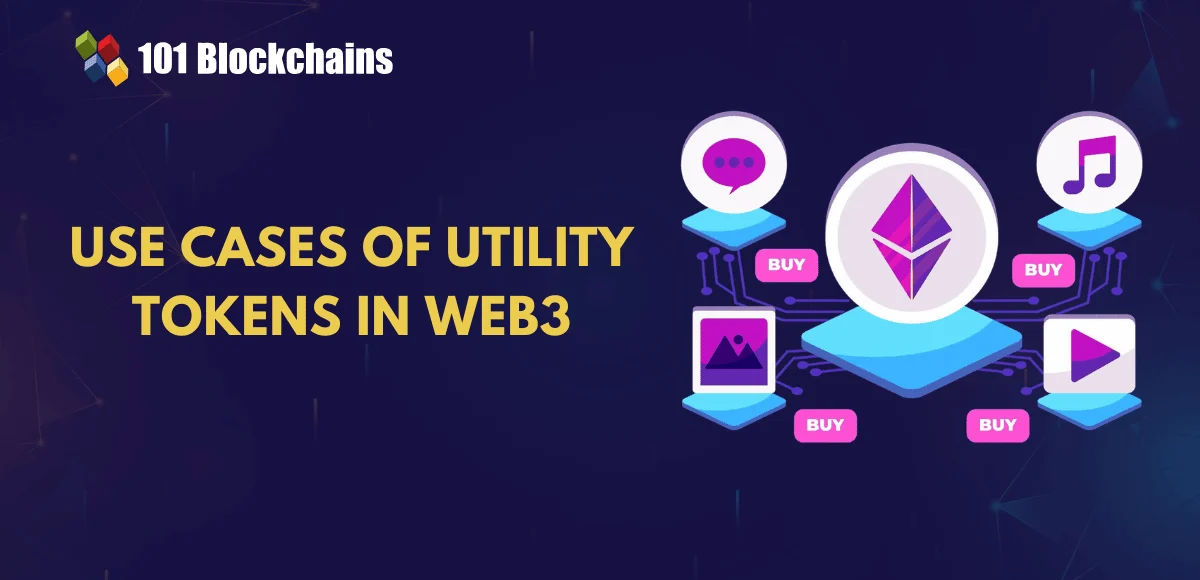
The expansion of the blockchain and crypto landscape has profoundly reshaped the digital economy, leading to the introduction of diverse token types with distinct applications. Among these, utility tokens have emerged as a pivotal force, particularly within the burgeoning Web3 ecosystem. Often misunderstood or conflated with speculative assets like memecoins or strictly regulated security tokens, utility tokens possess unique characteristics and functionalities that underpin the operations and growth of decentralized platforms. Their rise is not merely a byproduct of market hype but a fundamental driver behind the increasing market capitalization and trading volumes observed in the broader crypto space. Unlike cryptocurrencies designed primarily as stores of value or mediums of exchange, utility tokens are intrinsically linked to specific functionalities, enabling access to features, services, or actions within their respective blockchain ecosystems. Understanding the nuanced applications of utility tokens is crucial for anyone engaging with or building in the decentralized future.
The Genesis and Evolution of Digital Tokens
The concept of digital tokens has evolved significantly since the inception of Bitcoin in 2009, which primarily served as a decentralized peer-to-peer electronic cash system. Early cryptocurrencies largely focused on monetary functions. However, the introduction of platforms like Ethereum in 2015, with its smart contract capabilities, ushered in a new era of programmable money and digital assets. This innovation allowed developers to create custom tokens, known as ERC-20 tokens, on the Ethereum blockchain, standardizing their creation and interoperability.
The period between 2016 and 2018 saw a boom in Initial Coin Offerings (ICOs), a crowdfunding mechanism where startups issued new digital tokens to raise capital. Many of these tokens were designed as utility tokens, promising future access to a platform’s services or features. While some ICOs proved successful, the lack of clear regulatory frameworks and the speculative nature of many projects led to market volatility and scrutiny. This era, however, cemented the idea that tokens could represent more than just currency; they could embody specific rights, access, or functions within a digital ecosystem.
Utility tokens are fundamentally different from other token classifications. Payment tokens, like Bitcoin or Litecoin, are primarily intended as a medium of exchange. Security tokens, on the other hand, represent ownership in an underlying asset or enterprise and are subject to stringent financial regulations, akin to traditional securities. Utility tokens differentiate themselves by deriving their value from their practical use within a specific ecosystem. Their demand is driven by the desire to access the associated services, rather than by speculative investment returns or direct ownership claims on a company. This distinction is critical for both regulatory classification and understanding their economic mechanics.
Deconstructing "Utility": More Than Just a Digital Key
At its core, the "utility" of these tokens refers to their functional purpose within a decentralized application (dApp) or blockchain protocol. They act as digital assets specifically designed to facilitate access to particular services, features, or operations. Imagine a utility token as a membership card, a login credential, or even a form of in-game currency for a decentralized system. Its primary function is to "fuel" the operations of its ecosystem, enabling users to interact with and derive value from the platform.
The value of a utility token is, therefore, directly tied to the demand for its underlying service or feature. If a dApp offers compelling functionalities, the demand for its utility token, necessary to access those functionalities, will naturally increase. This creates a symbiotic relationship where the success of the platform directly influences the token’s perceived value, and vice versa. This model contrasts sharply with traditional speculative assets, where value might be driven by market sentiment alone or the promise of future dividends. As decentralized finance (DeFi), blockchain gaming, and broader Web3 applications continue to gain traction, utility tokens are increasingly recognized as indispensable drivers for these innovative ecosystems.
Industry experts widely agree that a well-designed utility token, supported by robust tokenomics, is crucial for the long-term sustainability and growth of Web3 projects. Tokenomics refers to the economic principles governing a cryptocurrency’s supply and demand, distribution, and incentive structures. Effective tokenomics ensure that the utility token aligns the interests of all participants – users, developers, and investors – fostering a self-sustaining and growing ecosystem.
Core Use Cases in the Web3 Landscape
The versatility of utility tokens makes them instrumental across a wide spectrum of Web3 applications. Their ability to enable microtransactions, facilitate governance, incentivize participation, and represent asset ownership highlights their multifaceted importance.
1. Enabling Decentralized Payments and Ecosystem Access
One of the most straightforward and fundamental applications of utility tokens is to serve as the native currency within a Web3 project, facilitating payments and granting access to specific services or features. This approach transforms Web3 projects into independent, self-contained economies, reducing reliance on traditional financial intermediaries and their associated fees.
For instance, users can leverage a project’s utility token to pay for computational resources, storage, bandwidth, or premium content directly within the ecosystem. This not only streamlines transactions but also enables microtransactions that might be economically unfeasible with conventional payment systems due to high processing fees. Filecoin (FIL) is a prime example; its utility token is used to pay for decentralized data storage on its network. Similarly, The Graph (GRT) token is used to pay for data querying services on its decentralized indexing protocol.
By creating a direct demand for the utility token through essential services, Web3 startups can cultivate a robust internal economy. This model fosters greater user engagement and loyalty, as participants become integral to the ecosystem’s financial flow. The adoption of token-based payment systems also contributes to reduced transaction costs and increased speed, enhancing the overall user experience and promoting broader adoption of decentralized services.
2. Fostering Community Governance and Ownership (DAOs)
Utility tokens have become indispensable tools for implementing decentralized governance models, particularly within Decentralized Autonomous Organizations (DAOs). In a significant departure from traditional corporate structures, DAOs leverage utility tokens to grant voting rights to their holders, empowering the community to collectively make decisions regarding the project’s future.
Governance tokens enable holders to propose and vote on critical issues, such as protocol upgrades, treasury expenditure, fee structures, and even strategic partnerships. This mechanism ensures that the platform evolves in alignment with the collective interests of its community, fostering transparency, trust, and decentralization – core tenets of the Web3 ethos.
Prominent examples include Uniswap (UNI), Aave (AAVE), and Compound (COMP), where token holders directly influence the development and direction of these leading DeFi protocols. This shift in power from a centralized executive team to a distributed network of token holders not only enhances accountability but also taps into the collective intelligence of the community, leading to more robust and innovative solutions. While challenges such as voter apathy or "whale" dominance (where large token holders wield disproportionate influence) exist, the DAO model, powered by utility tokens, represents a significant step towards truly democratic digital organizations.
3. Fueling Project Launches and Growth through Incentivization
Utility tokens are instrumental in the launch and scaling phases of new Web3 projects, acting as a powerful mechanism to align the interests of various stakeholders: users, developers, and early investors. Startups often face the daunting task of simultaneously attracting all these groups to kickstart their ecosystems. Utility tokens provide a flexible framework for incentivization.
Initial token distribution strategies, such as airdrops, ecosystem grants, and early investor rewards, are designed to encourage early participation and adoption. Developers can be rewarded with tokens for building applications on the platform, while partners receive tokens for expanding services or contributing to the network. This creates a continuous growth loop, where increased utility and adoption drive token demand, which in turn fuels further development and expansion.
Ethereum’s early success serves as a powerful testament to this model. Its native token, Ether (ETH), functions as a utility token, required to pay for transaction fees (gas) and to participate in network security through staking. Early incentives for developers and miners helped cultivate a massive decentralized ecosystem that continues to innovate and expand. This model demonstrates how utility tokens can effectively bootstrap a network, creating strong network effects that reinforce growth over time.
4. Driving User Engagement and Network Effects
Beyond initial rewards, utility tokens are foundational for ongoing user engagement and network growth, often outperforming traditional loyalty programs by offering tangible, liquid value. Web3 platforms can design sophisticated reward and incentive systems that directly link user participation to financial value.
The play-to-earn (P2E) gaming sector offers a compelling illustration. Games like Axie Infinity, for instance, allow players to earn utility tokens (such as Smooth Love Potion – SLP) by playing games, completing tasks, and participating in the in-game economy. These tokens can then be spent within the game to acquire digital assets, breed new characters, or be traded on external exchanges for other cryptocurrencies or fiat money. This model creates a robust digital economy where user engagement directly translates into real-world value, fostering deep loyalty and active communities.
Similarly, many DeFi platforms utilize token incentives, such as yield farming or liquidity mining, to attract users and capital. By staking or providing liquidity, users earn the platform’s utility token, encouraging early adoption and sustained participation. This strategy has proven highly effective in rapidly bootstrapping new platforms and accumulating significant total value locked (TVL), demonstrating the power of utility tokens to create strong network effects and drive exponential growth.
5. The Foundation for Asset Tokenization (Digital and Real-World)
Perhaps one of the most transformative applications of utility tokens lies in the tokenization of both digital and physical assets. Utility tokens provide a flexible model to represent various rights on a blockchain, including ownership, content access, product usage, and membership.
In the digital realm, this manifests through Non-Fungible Tokens (NFTs), which are a specific class of utility tokens representing unique digital or physical assets. NFTs can grant access to premium communities, exclusive content, or virtual assets within metaverses. Creator platforms, for example, can issue tokens that allow fans to support artists in return for special perks, merchandise, or even a share in future royalties.
For physical assets, utility tokens can represent fractional ownership of real estate, art, or commodities, increasing liquidity and accessibility for traditionally illiquid assets. They can also function as event tickets, loyalty points, or memberships, offering enhanced flexibility, transparency, and traceability compared to conventional systems. Many brands are exploring Web3 projects that leverage utility tokens to provide exclusive experiences, fostering brand loyalty and delivering ongoing value that extends beyond a single transaction. This ability to imbue diverse assets with digital utility is poised to revolutionize industries from finance and art to supply chain management and consumer engagement.
Challenges and Considerations for Utility Tokens
Despite their immense potential, utility tokens are not without their complexities and challenges. Navigating these aspects is crucial for their successful integration and broader adoption.
Regulatory Uncertainty: The classification of utility tokens remains a contentious issue in many jurisdictions. Regulators globally, including the U.S. Securities and Exchange Commission (SEC), often apply frameworks like the Howey Test to determine if a digital asset constitutes a security. If a utility token is deemed a security, it falls under strict regulatory oversight, which can significantly impact its issuance, trading, and legal compliance. The lack of a harmonized global regulatory approach creates uncertainty for project developers and investors alike.
Market Volatility: Like most cryptocurrencies, utility tokens are subject to high market volatility. Their value is intrinsically linked to the demand for the underlying platform’s services, but external factors like broader crypto market trends, macroeconomic conditions, and speculative trading can significantly influence their price. This volatility can pose risks for users who rely on the token for accessing services and for projects that use the token for internal economics.
Tokenomics Design Complexity: Designing sustainable and effective tokenomics is incredibly challenging. Poorly conceived token models can lead to issues such as inflation, concentrated ownership, lack of incentives for participation, or even "death spirals" where declining utility leads to a rapid loss of value. Projects must carefully consider supply mechanisms, distribution strategies, staking rewards, burning mechanisms, and governance structures to ensure long-term viability.
Security Risks: Utility tokens, being smart contract-based assets, are susceptible to security vulnerabilities. Bugs in smart contract code, protocol exploits, or vulnerabilities in associated platforms can lead to significant financial losses for token holders and undermine trust in the ecosystem. Regular audits and robust security practices are paramount.
Adoption Barriers: For many mainstream users, interacting with utility tokens and Web3 platforms still presents a steep learning curve. Complex wallets, seed phrases, gas fees, and the abstract nature of decentralized applications can deter adoption. Improving user experience (UX) and abstracting away technical complexities are essential for broader appeal.
The Future Outlook
The trajectory of utility tokens points towards increasing sophistication and integration within the digital economy. As Web3 technologies mature, we can anticipate more refined tokenomics models that better balance incentives, sustainability, and decentralization. The convergence of utility tokens with emerging technologies like artificial intelligence (AI) and the metaverse will likely unlock novel use cases, from AI-powered autonomous agents requiring tokens for computation to virtual economies where utility tokens facilitate ownership and interaction.
Ultimately, utility tokens are not merely a passing trend but a fundamental building block of the decentralized internet. They provide the economic and governance infrastructure necessary for Web3 projects to thrive, enabling permissionless innovation, community-driven development, and novel forms of digital ownership and interaction. For individuals looking to navigate or contribute to this rapidly evolving landscape, building expertise in blockchain and tokenomics, such as through specialized certifications, will be increasingly vital. The ongoing exploration and refinement of utility token use cases will continue to shape the future of digital economies, fostering a more open, transparent, and user-centric internet.
Disclaimer: The article should not be taken as, and is not intended to provide any investment advice. Claims made in this article do not constitute investment advice and should not be taken as such. 101 Blockchains shall not be responsible for any loss sustained by any person who relies on this article. Do your own research!