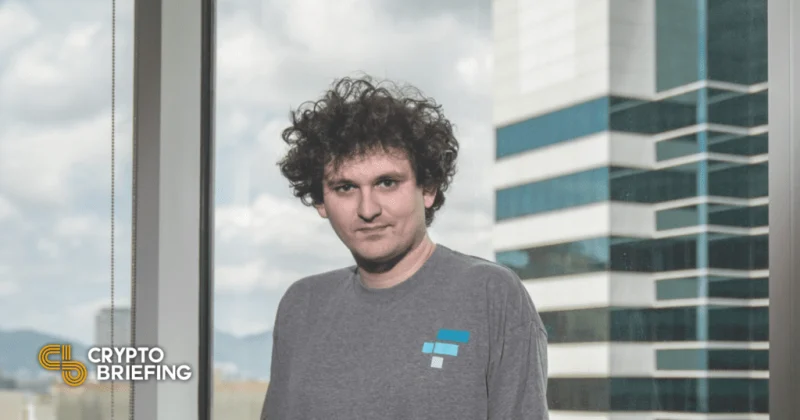
Sam Bankman-Fried, the co-founder and former chief executive of the defunct cryptocurrency exchange FTX, has formally submitted an application for a presidential pardon to the United States Department of Justice. The request, filed more than two years after the catastrophic implosion of his digital asset empire, marks a significant escalation in Bankman-Fried’s efforts to secure an early release from his 25-year federal prison sentence. Records maintained by the Justice Department’s Office of the Pardon Attorney indicate that the 34-year-old petitioner is seeking "pardon after completion of sentence," a designation often used in the administrative tracking of clemency requests, despite his current incarceration status.
The move comes at a pivotal moment in the American political and legal landscape. President Donald Trump, currently serving his second term, has demonstrated a robust willingness to exercise executive clemency powers, frequently extending pardons and commutations to high-profile white-collar defendants and political allies. Bankman-Fried’s legal team and family have reportedly been laying the groundwork for this petition through a series of media engagements and strategic public relations efforts aimed at reframing the narrative surrounding the FTX collapse.
The Downfall of a Crypto Titan: Context and Conviction
The petition follows one of the most high-profile financial criminal cases in American history. In November 2023, following a month-long trial in Manhattan, a jury found Bankman-Fried guilty on seven counts of fraud, conspiracy, and money laundering. The prosecution successfully argued that Bankman-Fried orchestrated a massive scheme to embezzle billions of dollars in customer deposits from FTX to cover losses at its sister hedge fund, Alameda Research, fund speculative venture investments, and finance lavish lifestyle expenses in the Bahamas.
In March 2024, U.S. District Judge Lewis Kaplan sentenced Bankman-Fried to 25 years in federal prison. During the sentencing hearing, Judge Kaplan noted that Bankman-Fried had shown a "pervasive lack of remorse" and had engaged in "brazen" witness tampering and perjury during his testimony. The judge also ordered the forfeiture of $11 billion in assets, representing the scale of the financial devastation caused by the exchange’s bankruptcy.
The collapse of FTX in November 2022 sent shockwaves through the global financial system, leading to a "crypto winter" that saw the total market capitalization of digital assets plummet. At its peak, FTX was valued at $32 billion, and Bankman-Fried was heralded as a "white knight" of the industry, frequently appearing before Congress to advise on regulatory frameworks.
The Arguments for Clemency: Repayment and Remorse
In his recent outreach, including a televised interview with FOX Business from within his federal prison cell, Bankman-Fried has articulated a defense centered on the eventual recovery of customer funds. He argued that the prosecution’s portrayal of the loss was fundamentally flawed, asserting that because the FTX bankruptcy estate has since recovered significant assets—aided by the post-2022 surge in cryptocurrency prices—customers will eventually be made whole.
"I absolutely want a pardon," Bankman-Fried stated during the interview, while acknowledging that the final decision rests solely with the White House. He reiterated his long-standing claim that he never intended to defraud anyone and that the collapse was the result of a liquidity crisis rather than a deliberate criminal enterprise.
His arguments, however, face stiff opposition from legal experts and victims. Critics point out that the "repayment" argument ignores the fact that creditors are being paid back based on the value of their assets at the time of the 2022 bankruptcy filing, not the current, much higher market value. Furthermore, the recovery of funds was largely the result of the work of the new FTX management under CEO John J. Ray III, who famously described the internal controls under Bankman-Fried as a "complete failure of corporate oversight."
A Detailed Timeline of the FTX Saga
The journey from the founding of FTX to Bankman-Fried’s current petition for clemency is marked by several critical milestones:
- May 2019: Sam Bankman-Fried and Gary Wang found FTX, a cryptocurrency derivatives exchange based in Hong Kong (later moved to the Bahamas).
- 2021 – Early 2022: FTX experiences explosive growth, raising billions from venture capital firms like Sequoia Capital and Temasek. Bankman-Fried becomes a prominent political donor and public figure.
- November 2, 2022: A leaked balance sheet from Alameda Research reveals that the hedge fund is heavily reliant on FTT, a token created by FTX, sparking concerns about the solvency of both entities.
- November 8, 2022: Following a massive bank run by customers, Binance CEO Changpeng Zhao announces a non-binding letter of intent to acquire FTX, only to withdraw a day later after reviewing the company’s books.
- November 11, 2022: FTX, Alameda Research, and dozens of affiliates file for Chapter 11 bankruptcy. Bankman-Fried resigns as CEO.
- December 12, 2022: Bankman-Fried is arrested in the Bahamas and subsequently extradited to the United States.
- October 2023: The criminal trial begins. Key witnesses, including former Alameda CEO Caroline Ellison and FTX co-founder Gary Wang, testify against Bankman-Fried.
- November 2, 2023: Bankman-Fried is convicted on all counts.
- March 28, 2024: Judge Lewis Kaplan sentences Bankman-Fried to 25 years in prison.
- Late 2024 – Early 2025: Bankman-Fried begins a media campaign for clemency, culminating in a formal application for a presidential pardon.
Strategic Media Outreach and Conservative Appeals
Bankman-Fried’s decision to engage with conservative-leaning media outlets like FOX Business is viewed by many political analysts as a calculated attempt to align himself with the current administration’s skepticism of federal regulatory overreach. In these interviews, he has shifted his rhetoric toward praising American innovation and expressing regret for missing the "AI boom" that has occurred during his incarceration.

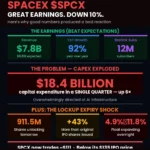
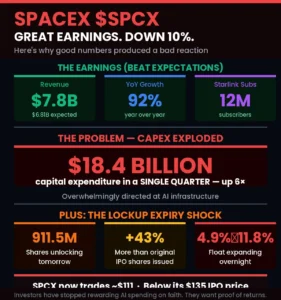
He has specifically lauded the execution and long-term vision of Elon Musk’s companies, including SpaceX, perhaps seeking to find common ground with the tech moguls who have found favor in the current political climate. This branding pivot—from a proponent of "effective altruism" to a champion of high-growth American technology—appears designed to appeal to the "pro-innovation" stance of the Trump administration.
Despite these efforts, Bankman-Fried has remained cautious about discussing the specific lobbying efforts of his parents, Joseph Bankman and Barbara Fried, both of whom are Stanford Law professors. His father was deeply involved in the operations of FTX, and the bankruptcy estate has previously sued the parents to recover millions of dollars in gifted funds and property.
Supporting Data: The Financial Impact
The scale of the FTX collapse remains one of the largest in corporate history. Supporting data from the bankruptcy proceedings highlights the complexity of the case:
- The Shortfall: At the time of filing, FTX faced a liquidity gap of approximately $8 billion.
- Customer Impact: More than 1 million creditors were identified, ranging from individual retail investors to major institutional funds.
- Asset Recovery: As of late 2024, the bankruptcy estate has clawed back or identified nearly $16 billion in assets, including cash, luxury real estate, and venture investments in companies like Anthropic, an AI startup.
- Political Contributions: Bankman-Fried was the second-largest individual donor to Democratic causes in the 2022 election cycle, contributing roughly $40 million. He later claimed to have made similar "dark money" contributions to Republicans to maintain a balanced public image.
The recovery of assets has become the cornerstone of Bankman-Fried’s petition. His legal team argues that if no one "lost" money in the long run, the 25-year sentence is disproportionately harsh. However, the Department of Justice has consistently maintained that the crime was the unauthorized use of customer funds, regardless of whether those funds were eventually replaced.
Official Responses and Potential Implications
While the White House has not issued a formal statement regarding Bankman-Fried’s specific application, the Department of Justice typically undergoes a rigorous review process for pardon requests. This process involves the Pardon Attorney making a recommendation to the Deputy Attorney General, who then passes it to the President.
The crypto industry remains divided on the prospect of a pardon. Some industry participants argue that a pardon would signal a "reset" for crypto regulation, moving away from what they perceive as the "regulation by enforcement" era of the previous administration. Others, however, fear that granting clemency to the industry’s most infamous figure would damage the credibility of the digital asset space and undermine efforts to prove that the sector can operate within the bounds of the law.
Legal analysts suggest that a full pardon is unlikely in the immediate future, given the severity of the charges and the recent nature of the conviction. However, a commutation—which would reduce the length of the sentence without vacating the conviction—is often viewed as a more plausible middle ground for presidents exercising clemency.
Analysis of the Road Ahead
Bankman-Fried’s petition for a pardon is more than just a legal maneuver; it is a test of the current administration’s philosophy on white-collar crime and the "administrative state." If the President were to grant clemency, it would be interpreted as a significant rebuke of the Department of Justice’s prosecution under the previous administration.
However, the political risks are substantial. The FTX collapse harmed thousands of everyday investors, many of whom remain vocal about the betrayal of trust they experienced. A pardon could be perceived as favoring a well-connected, wealthy individual over the interests of the public.
As the petition moves through the administrative channels of the Justice Department, Bankman-Fried remains incarcerated at the Metropolitan Detention Center in Brooklyn, and later potentially a lower-security facility, depending on his classification. His case continues to serve as a cautionary tale for the cryptocurrency industry, even as he seeks a path toward a second act outside of prison walls. The final determination on his request will likely be one of the most scrutinized executive decisions of the current presidential term, carrying implications for the future of financial regulation and the definition of justice in the digital age.