


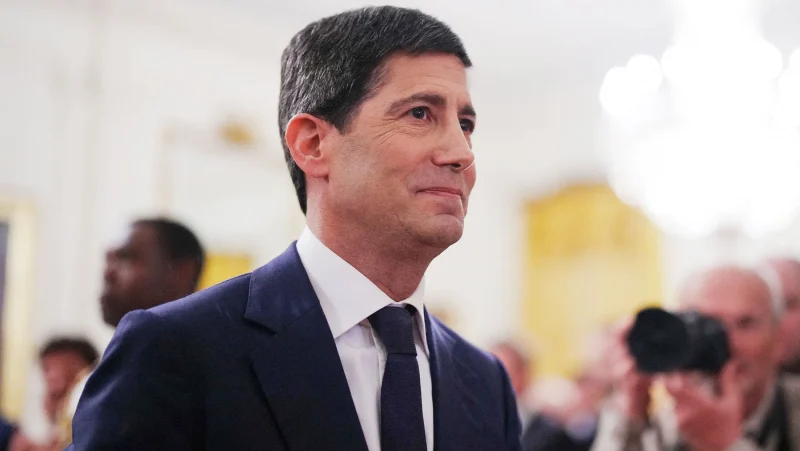
The Federal Open Market Committee (FOMC) concluded its two-day policy meeting on Wednesday, electing to maintain the target range for the federal funds rate at 3.50% to 3.75%. This decision marks a significant milestone in American monetary history, as it represents the first policy action under the leadership of Kevin Warsh, who recently assumed the role of Chair of the Federal Reserve. The unanimous 12-0 vote to pause rate adjustments was widely anticipated by institutional investors and economists, yet the nuances of the Committee’s statement and the subsequent market volatility underscore the high stakes facing the new administration as it navigates a complex landscape of persistent inflation and global instability.
In addition to the rate hold, the Committee reaffirmed its commitment to maintaining ample reserves within the banking system, a technical but crucial component of the Fed’s operational framework designed to ensure liquidity and stability in overnight lending markets. The decision to stay the course reflects a cautious "wait-and-see" approach, as the Fed attempts to balance the need to cool price pressures without stifling an economy that policymakers described as expanding at a "solid pace."
The Warsh Era: A Transition in Monetary Philosophy
Kevin Warsh’s ascension to the chairmanship comes at a pivotal juncture for the U.S. economy. Having previously served as a member of the Board of Governors and possessing a background in both private sector finance and public policy, Warsh is viewed by many on Wall Street as a pragmatist who may lean toward more "hawkish" or restrictive policies if inflation proves stubborn. This first meeting was scrutinized not just for the rate decision itself, but for the tone and rhetoric employed in the official statement.
The transition in leadership has led to a period of recalibration for global markets. Under the previous tenure, the Federal Reserve had navigated the post-pandemic recovery and the subsequent inflationary spike with a series of aggressive hikes followed by a period of relative stability. Warsh now inherits an economy where the "easy wins" against inflation have largely been realized, leaving the more difficult "last mile" of returning to the 2% target. The market’s reaction on Wednesday suggests that investors are still searching for a definitive understanding of how the "Warsh Fed" will react to incoming data compared to its predecessors.
Economic Indicators: Productivity Growth vs. Inflationary Persistence
The FOMC’s statement highlighted a dichotomy within the current economic landscape. On one hand, the Committee noted that economic activity has continued to expand robustly. This growth is bolstered by strong productivity gains and significant capital investment, suggesting that the supply side of the economy is expanding its capacity. Such productivity growth is often viewed as a "Goldilocks" scenario by economists, as it allows for wage growth and economic expansion without necessarily triggering higher prices.
However, the demand side and external shocks continue to present challenges. The unemployment rate has remained relatively stable, and job gains have stayed in lockstep with the growing workforce, indicating a labor market that is balanced but not necessarily cooling fast enough to alleviate all wage-push inflation.
The most prominent concern cited by the Fed remains the inflation rate, which continues to hover above the 2% long-term goal. The Committee explicitly pointed to supply shocks—specifically those originating in the energy sector—as a primary driver of recent price pressures. The statement’s inclusion of the phrase "will deliver price stability" served as a stern reminder to the markets that the Fed’s dual mandate currently prioritizes the containment of inflation over the further stimulation of growth.
Market Reaction: Crypto and Equities Retreat
Financial markets responded with notable trepidation to the Fed’s announcement and the accompanying statement. While the rate hold was priced in, the lack of a clear "dovish" signal regarding future rate cuts led to a sell-off in risk assets.
Bitcoin, often viewed as a barometer for global liquidity and investor sentiment toward central bank policy, fell by nearly 1% shortly after the news broke. This decline extended a period of weakness for the digital asset, which has struggled to find a foothold as high interest rates provide a compelling alternative in the form of yield-bearing Treasury instruments. The broader cryptocurrency market followed suit, trading with a heavy dose of caution as participants awaited Chair Warsh’s first press conference.
Traditional equities also faced downward pressure. The S&P 500 and the Nasdaq Composite both shed approximately 1% during the afternoon session. Traders appeared to be repositioning their portfolios in anticipation of the "dot plot"—the Summary of Economic Projections that outlines where individual FOMC members expect interest rates to be in the coming years. The anxiety in the equity markets is largely tied to the fear that the "higher-for-longer" narrative may be extended well into the second half of the year, potentially squeezing corporate margins and reducing the present value of future earnings.
Geopolitical Context: The Middle East and Energy Volatility
A critical factor in the Fed’s current calculus is the ongoing conflict in the Middle East. The FOMC statement explicitly mentioned "elevated uncertainty" tied to the region, a rare but necessary acknowledgment of how external political shocks can derail domestic monetary policy.
The conflict has had a direct impact on global energy markets, leading to fluctuations in oil and natural gas prices that complicate the Fed’s inflation-fighting efforts. Because energy is a fundamental input for almost every sector of the economy, supply-driven spikes in fuel costs can lead to "second-round effects," where businesses pass on higher transportation and production costs to consumers. This type of inflation is particularly difficult for central banks to manage, as raising interest rates does little to resolve physical supply chain disruptions or geopolitical blockades.
Chronology of the Federal Funds Rate (2024–2026)
To understand the context of the current 3.50% to 3.75% range, it is necessary to look at the trajectory of Fed policy over the last two years:
- Mid-2024 to Late 2024: The Federal Reserve maintained a restrictive stance, with rates peaking above 5% in an effort to break the back of the post-2022 inflation surge.
- Early 2025: As inflation began to show signs of cooling toward the 3% mark, the Fed initiated a series of "recalibration" cuts, gradually lowering the target range to support a "soft landing."
- Late 2025: Rates stabilized in the 3.50% to 4.00% range as the decline in inflation plateaued. The "last mile" problem became the primary focus of FOMC discussions.
- Early 2026: Kevin Warsh is nominated and confirmed as Chair, signaling a potential shift toward a more data-dependent and perhaps more hawkish oversight of the final descent to 2% inflation.
- June 2026 (Current): The FOMC holds rates at 3.50% to 3.75%, citing solid growth but persistent price pressures from energy and geopolitical risks.
Institutional Analysis and Expert Commentary
Prominent financial institutions have offered varying interpretations of the Fed’s latest move. Analysts at major investment banks suggest that the 12-0 vote indicates a high degree of consensus within the Committee, which may provide Chair Warsh with a strong mandate to maintain current levels until a definitive downward trend in core inflation is established.
"The Fed is in a difficult position," noted a senior economist at a leading New York brokerage. "They see the productivity gains, which are encouraging, but they cannot ignore the fact that the Middle East situation is a wild card for energy prices. By holding steady and using firm language regarding price stability, Warsh is signaling that he will not be bullied by the markets into cutting rates prematurely."
Other analysts pointed to the "ample reserves" reaffirmation as a sign that the Fed is keen to avoid the plumbing issues in the financial system that occurred in 2019. By ensuring the banking system remains liquid, the Fed can focus its policy tools on the broader economy rather than worrying about a breakdown in the repo markets.
The "Dot Plot" and the Path Forward
As the press conference and the release of the Summary of Economic Projections (SEP) loom, the primary question for investors is the "terminal rate" and the timing of any potential pivots. The "dot plot" will reveal whether the majority of Committee members still envision one or two rate cuts before the end of 2026, or if the median expectation has shifted toward holding steady through December.
If the projections show a shift toward higher rates for a longer duration, the initial market sell-off could intensify. Conversely, if the projections suggest that the Committee still sees a path toward easing by year-end, it could provide the catalyst for a recovery in both the crypto and equity markets.
The emphasis on "capital investment" in the statement is also a key area of interest. High interest rates typically discourage capital expenditure (CapEx), yet the Fed noted that investment remains strong. This suggests that businesses may be investing in automation and AI-driven technologies to offset labor costs, a trend that could fundamentally change the relationship between employment and inflation in the long term.
Conclusion: A High-Stakes Debut for Chair Warsh
The Federal Reserve’s decision to keep interest rates unchanged at 3.50% to 3.75% reflects a central bank that is confident in the current strength of the U.S. economy but remains deeply wary of the inflationary ghosts of the past. For Kevin Warsh, this first meeting was a test of his ability to project stability and resolve.
The road ahead remains fraught with variables beyond the Fed’s control. From the battlefields of the Middle East to the volatile charts of the Bitcoin market, the "Warsh Fed" is being watched with unprecedented intensity. The firm signal that policymakers are "not ready to declare victory" suggests that while the era of aggressive rate hikes may be over, the era of "easy money" is not returning anytime soon. Investors must now prepare for a prolonged period of high borrowing costs, where economic growth must be earned through productivity rather than fueled by central bank intervention.














