


In a decisive move aimed at addressing the dual challenges of a national housing shortage and the evolving landscape of digital finance, the United States Senate on Monday approved the 21st Century ROAD to Housing Act. The bipartisan legislation, which passed with an overwhelming 85-5 majority, represents one of the most significant shifts in federal housing policy in decades. While primarily focused on making homeownership more accessible for American families, the bill includes a high-profile provision that effectively halts the development of a US central bank digital currency (CBDC) until the end of the decade. The measure now moves to the House of Representatives, where it is expected to face a swift vote before arriving at the President’s desk for signature.
The legislation arrives at a critical juncture for the American economy. As mortgage rates remain elevated and the supply of entry-level homes continues to lag behind demand, the Senate’s action signals a rare moment of bipartisan consensus on the need for structural reform. By combining housing affordability measures with a moratorium on digital currency development, lawmakers have crafted a package that addresses both the immediate financial pressures on households and the long-term concerns regarding financial privacy and government overreach.
The CBDC Moratorium: A Strategic Pause on Digital Currency
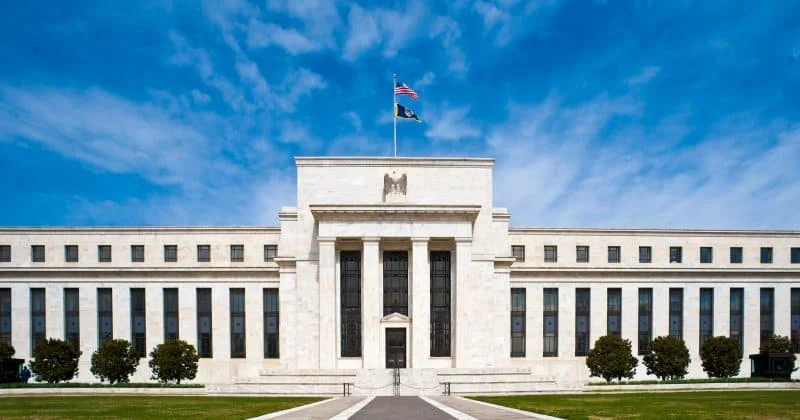
One of the most debated aspects of the 21st Century ROAD to Housing Act is a provision that prohibits the Federal Reserve from issuing a US central bank digital currency for a period of four years, extending through December 31, 2030. This restriction was a primary demand from Republican leadership, who have consistently argued that a government-backed digital dollar could serve as a tool for unprecedented financial surveillance.
Proponents of the moratorium argue that a CBDC would grant the federal government the ability to monitor every transaction made by American citizens, potentially leading to the "de-banking" of individuals based on political or social views. By codifying this restriction into the housing bill, lawmakers have ensured that any future move toward a digital dollar would require explicit and fresh authorization from Congress, rather than being initiated through administrative or central bank discretion.
This legislative wall comes at a time when other global powers, most notably China with its digital yuan, are aggressively expanding their own CBDC programs. However, the Senate’s vote reflects a domestic preference for private-sector innovation, such as stablecoins, over a state-managed digital currency. The four-year window is intended to provide Congress with ample time to study the implications of digital assets on the traditional banking system without the immediate threat of a Fed-issued competitor.
Behind-the-Scenes Digital Infrastructure Development
Despite the public and legislative pushback against a US CBDC, the technological foundations for such a system are still being explored. Former Commodity Futures Trading Commission (CFTC) Chairman Timothy Massad recently highlighted that while the official stance remains cautious, the US government and the Federal Reserve are quietly evaluating the infrastructure necessary for digital settlements.
Speaking at the Digital Money Summit 2026, Massad noted that the United States continues to participate in international pilot programs, including Project Agora. Led by the Bank for International Settlements (BIS), Project Agora involves several central banks and private financial institutions working to integrate tokenized commercial bank deposits with central bank money on a unified public-private platform. Massad suggested that the US cannot afford to be entirely absent from these conversations if it wishes to maintain the dollar’s status as the global reserve currency.
However, the political climate in Washington remains firmly opposed to a retail CBDC—a digital currency used by the general public. Federal Reserve Chair Kevin Warsh and President Donald Trump have both expressed public skepticism, with the President frequently citing the risks to personal liberty. Massad observed that while a retail CBDC appears dead for the remainder of the decade, the rise of tokenized financial markets and the widespread adoption of stablecoins may eventually force a reconciliation between current policy and the realities of modern financial technology.
Tackling the Housing Crisis: Restricting Institutional Investors
The core of the 21st Century ROAD to Housing Act focuses on the "financialization" of the American housing market. For years, housing advocates have pointed to the entry of large investment firms and private equity groups into the single-family rental market as a primary driver of price inflation. These firms, capable of making all-cash offers and outbidding individual families, have significantly reduced the inventory available to first-time homebuyers.
The new legislation seeks to curb this trend by implementing strict limits on the number of single-family homes that large institutional investors—defined as entities owning more than a specific threshold of residential properties—can acquire. The goal is to return "starter homes" to the hands of families rather than corporate portfolios.
Data from the last five years indicates that in certain high-growth markets, institutional investors accounted for nearly 25% of all single-family home purchases. This concentration of ownership has been linked to higher rents and a decrease in the overall homeownership rate among younger generations. By restricting these purchases, the bill aims to cool competition in the entry-level segment of the market, theoretically allowing prices to stabilize or decrease relative to local wages.
Stimulating Supply through Regulatory Reform
Beyond restricting demand from investors, the bill addresses the supply side of the housing equation. Economists generally agree that the US is facing a "housing deficit" of between 4 million and 7 million units. The 21st Century ROAD to Housing Act attempts to close this gap by:
- Streamlining Approvals: The bill provides federal grants to municipalities that agree to modernize and accelerate their permitting processes. By reducing the "red tape" that often delays construction by months or years, the government hopes to lower the overall cost of development.
- Reducing Regulatory Hurdles: The legislation calls for a review of federal environmental and zoning guidelines that may unnecessarily restrict the density of new housing developments.
- Funding for Infrastructure: Significant capital has been earmarked for the construction of infrastructure—such as roads, water lines, and sewage systems—necessary to support new large-scale residential projects in under-developed areas.
These provisions were the result of months of intense negotiations between senior Democrats and Republicans. While Democrats prioritized funding for affordable housing and protections for renters, Republicans focused on deregulation and market-based solutions to increase inventory.
A Chronology of the Legislation
The path to the 85-5 Senate vote was marked by significant compromise. The journey began in early 2026, when separate versions of housing reform were introduced in the House and Senate.
- January 2026: The House Financial Services Committee introduces a bill focused heavily on restricting institutional investors, while the Senate Banking Committee begins drafting the "ROAD" (Reimagining Opportunity, Affordability, and Development) Act.
- March 2026: Republican senators successfully negotiate the inclusion of the CBDC moratorium, arguing that financial privacy is an essential component of economic freedom.
- June 2026: A bipartisan "Gang of Eight" senators works through the summer to reconcile the two chambers’ approaches to housing subsidies versus tax incentives.
- August 2026: The Trump administration signals its support for the combined package, viewing it as a cornerstone of the President’s second-term domestic agenda.
- October 2026: The final text of the 21st Century ROAD to Housing Act is released, clearing the way for the decisive Senate floor vote on Monday.
Official Responses and Economic Outlook
The reaction from the White House was immediate and positive. In a statement released shortly after the vote, the administration praised the Senate for "putting the American family ahead of corporate interests and ensuring that the US dollar remains a symbol of freedom, not surveillance."
Senate Majority Leader John Thune (R-SD) characterized the bill as a "common-sense approach to the most pressing economic issue of our time." On the other side of the aisle, senior Democrats noted that while the bill does not include everything they hoped for—specifically regarding direct rental assistance—the restrictions on corporate buyers represent a major victory for the middle class.
Market analysts are cautiously optimistic. "This bill won’t fix the housing market overnight," said Sarah Jenkins, a senior economist at a leading financial research firm. "However, by simultaneously addressing the supply shortage and the institutional buyer phenomenon, it creates the most favorable conditions for homeownership we’ve seen in a decade. The CBDC moratorium is also a significant signal to the fintech industry that the US is betting on private-sector stablecoins for the foreseeable future."
Implications for the Future of US Finance
The passage of the 21st Century ROAD to Housing Act has implications that extend far beyond the real estate market. By legally barring a CBDC until 2030, the United States has effectively chosen a path of "private-led" digital innovation. This move is expected to accelerate the growth of the stablecoin market, as companies like Circle and Paxos now have a clear regulatory runway without the threat of a direct federal competitor.
Furthermore, the bill sets a precedent for how the US might handle the intersection of technology and civil liberties. The inclusion of the CBDC ban in a housing bill—a seemingly unrelated area—demonstrates the high level of concern among lawmakers regarding the potential for a "programmable" currency to be used for social engineering.
As the bill moves to the House, all eyes will be on the speed of its passage. If signed into law before the end of the year, the 21st Century ROAD to Housing Act will stand as a landmark piece of legislation, defining the economic landscape of the late 2020s by prioritizing traditional homeownership and safeguarding financial privacy against the tide of digital centralization.














